John Coltrane doesn’t need an introduction. His name is well known to all who listens to music. But then again, he is a jazz musician.

I’m pretty sure that I’ve known about John Coltrane since my early teens. And I’ve always known what he does. Well, that’s not completely true. I’ve always known that he was a jazz musician, not that he played the saxophone. Not that he used to have a drug addiction. And not that he changed jazz music in such a big way that he apparently did. I didn’t know this because I am a novice in this genre. A novice that wants to figure shit out. I don’t need to know everything, but I’d like to know more. So when I realized that Coltrane released one of his biggest masterpieces this month, I was more than happy to delve into this complex universe.
THE GREENSBORO FOUR AND OTHER THINGS
On the first day of this month, something pretty big happened. Even though this wasn’t the first time an event like this took place, this moment in history became a starting point for a revolution. The Greensboro Four, as they were called, had a sit-in (a peaceful protest) at a whites-only lunch counter at the F.C. Woolworth store in Greensboro, North Carolina. What made this particular event so paramount to the Civil Rights Movement is that it sparked the youth activism that eventually helped changed the nation.

Even though this struggle is still alive and kicking, we should be proud of the people who started this fight and keep fighting it. And remembering and re-telling this episode is definitively worth my time. While these guys and many more fought for Civil Rights I the US, some European country did something we shouldn’t be as grateful for. On February 13, France conducted their first nuclear test in the Sahara Desert, French Algeria. Not much good has come from that. And that was not the only big boom in Africa this month. A tragic earthquake hit the city of Agadir, Morocco, hard on February 29, killing over 10.000 people, injuring more, and left at least 35.000 people homeless. But I’ll stop talking about bombs and earthquakes now.
February 1960 also saw the birth of Holly Johnson, the lead singer in the band Frankie Goes To Hollywood. That’s something.
THE CHARTS
Billboard TOP 10 Singles Chart
Week 1 (February 1, 1960)

- Running Bear – Johnny Preston
- Teen Angel – Mark Dinning
- El Paso – Marty Robbins
Week 4 (February 22, 1960)

- The Theme From “A Summer Place” – Percy Faith
- Teen Angel – Mark Dinning
- Handy Man – Jimmy Jones
Week 2 (February 8, 1960)

- Teen Angel – Mark Dinning
- Running Bear – Johnny Preston
- Where Or When – Dion & The Belmonts
Week 5 (February 29, 1960)

- The Theme From “A Summer Place” – Percy Faith
- Handy Man – Jimmy Jones
- He’ll Have To Go – Jim Reeves
Week 3 (February 15, 1960)
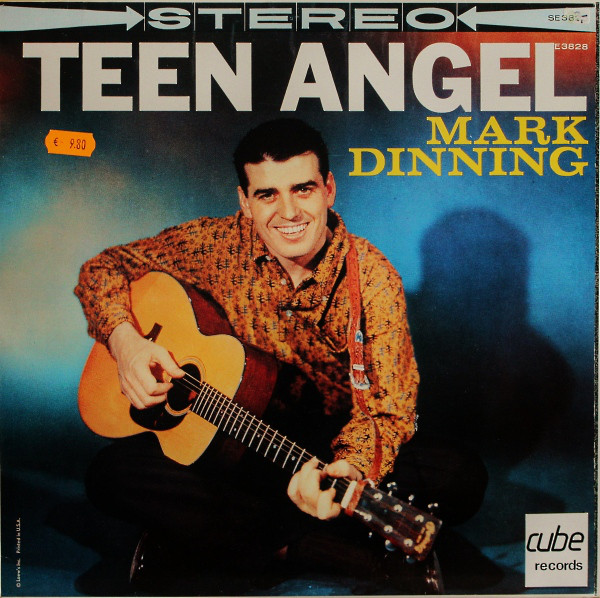
- Teen Angel – Mark Dinning
- Running Bear – Johnny Preston
- Handy Man – Jimmy Jones
The charts aren’t full of awesome songs at the moment. There are some classics though, but I’m not awed just yet. Teen Angel by Mark Dinning will run out this month as the winner, spending four weeks in the Top 3, but the song is not gonna become one of my favorites any time soon. Mark Dinning is what we would call a “one-hit-wonder” and never had any hits after this. The Theme From “A Summer Place” is a song written for the film…you guessed it, “A Summer Place”. It’s a melody a lot of you will remember. Probably won’t be able to place it though. But it’s one of those melodies that’s familiar to a lot of people. Nice tune, but not at all what I’m looking forward to in this decade. We’ll have to wait a couple more years before the monsters arrive.
Dion & The Belmonts sounds and looks like a sweet bunch, but during this time Dion Dimucci struggled with a serious heroin addiction. It’s not easy to tell while looking at him, at least not compared to the guys we’re used to seeing roaming the streets in Oslo. And another interesting fact about Dion is that he passed up a ride on the chartered plane, an event that is now known as “The Day The Music Died”, that ended in a devastating crash killing Buddy Holly, Ritchie Valens, and J.P. Richardson, also known as the “Big Bopper”
Curiously enough, Running Bear, by Johnny Preston, was actually written by J.P. Richardson aka the “Big Bopper, and the song is allegedly inspired by a Dove Soap commercial.
THE ALBUMS

It hasn’t been easy finding albums that were released in these first two months. I’ve spent a lot of time searching the internet and looking up books, but it just doesn’t seem like there were that many at this time. Other than John Coltrane‘s Giant Steps, the only album I’ve listened to is The Brothers Four and their self-titled album.
And, it’s not an amazing album, so I’m not gonna spend much time on it here. But according to Wikipedia the single Greenfields actually made it to number one on the Norwegian charts and number two on Billboard. A couple of high chart positions won’t change my mind though. The Brothers Four sound like a boring version of Simon & Garfunkel, and it made me think that this is a band that really lacks the “it”. Or the “X-Factor” if you’d like. It’s just sound with some melody. And the song Superman; Jeebus! Comedy? Or just bad taste?
So let’s get to John Coltrane and his masterpiece, Giant Steps. Like I said at the beginning; I’m not even close to being an expert on jazz. I’ve never really tried to be either. And to be perfectly honest, I never really got it. Jazz is difficult, man. It’s so intricate and floating. And my feeble mind has never been ready for it. This album though, I’ve listened to it a lot over the last couple of weeks, and it has grown on me.
I’m not gonna sit here and pretend that I love it and that I understand completely why it’s been labeled a masterpiece. But I do like it. I like it just enough to comprehend, just a little bit, that this is a great album. There’s more melody here than the other few jazz albums I’ve accepted to be played in my vicinity, and that goes a long way. I will not say too much about the music on this one, as I am a little out of my depth here. However, I would recommend everyone to put this on at some point and just listen, really listen, to this legend that is John Coltrane. And who knows, it might change your perspective on music as you know it.
Cause that’s what John did. I’ve read numerous articles, interviews, reviews, you name it, and everyone unanimously agrees that this is what he did. He changed jazz. If I remember correctly, it is first and foremost that he based his songs, at least on this album, on solos. And damn, he knows how to play solos.
John Coltrane learned from the best. Just months, maybe weeks, before this he had recorded another legendary album, Kind Of Blue, with none other than Miles Davis. He also managed to kick his drug addiction while playing with Thelonious Monk. The bottom line is that John Coltrane has opened a door for me, and I will go through it again and again. And I promise, on the memory of Coltrane, that I will never give up on trying to understand jazz.
Petter Milde
This Band Could Be Your Life
 This Band Could Be Your Life