I’m a big fan of The Band. No, I’m a huge fan of The Band. In my opinion, it’s the best band ever! Their first two records are nothing short of amazing, and no one has ever written songs better than those. Intricate, yet accessible. The songs have substance, and heart, and they are catchy as hell.
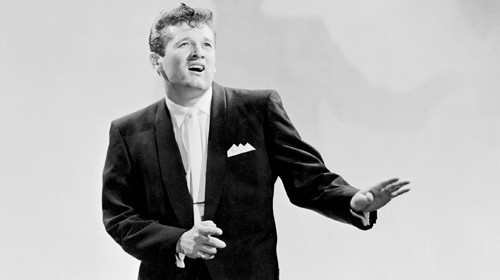
The Band is probably the only band that has three incredible vocalists with such a different range, and the musicianship these guys have is better than anyone. Levon Helm is one of the best drummers ever and he has an amazing voice, Rick Danko is magnificent on bass and his energy is touchable through sound, Richard Manuel has a voice that can break your heart, Garth Hudson is a magician, and Robbie…well, I accept the fact that Robbie Robertson was important to The Band. But I’m on Team Levon, and there’s not much that can change my mind there. I’ll get back to that much later. Cause right now The Band is not even thought of, but their history has kinda already started…
…and it starts with Ronnie Hawkins.
In the late ‘50s a young Levon Helm was playing music with his sister back in Arkansas, he played in a band called the Jungle Bush Beaters, and he played drums in a 25-piece high school band. He did some local shows, he helped stage a senior class musical that got so popular they ended up taking it around to other schools, he helped his dad, Diamond Helm, on the farm, but most of all he dreamt of becoming a rock ’n’ roll star. He was going to local shows a lot to catch the musicians coming through town and was inspired by artists like Conway Twitty (who he once got on stage with to sing a song). One night in the fall of 1957 Levon was asked to step in for a drunk drummer at a bottle club, and even though he considered himself to be a guitar player, he started thinking about becoming a drummer after that night. This was around the time he met Ronnie Hawkins.
The Hawk was only five years older than Levon, but he was already part-owner of various clubs and bars in Fayetteville. He had used his profits from selling bootleg whiskey to the dry counties of Oklahoma to invest in this venture. And even though he didn’t play any instruments, he opened up for the musical acts at these clubs with his famous camel walk, a funny-looking dance that he learned from a guy called Half Pint, and general entertainment. He was also a former competitive diver, so he was pretty good at somersaults and stuff like that. But Ronnie wanted to be a rock ’n’ roll star as well, so he tried putting a band together, and after a few failed tries he ended up in West Helena, close to where Levon lived.
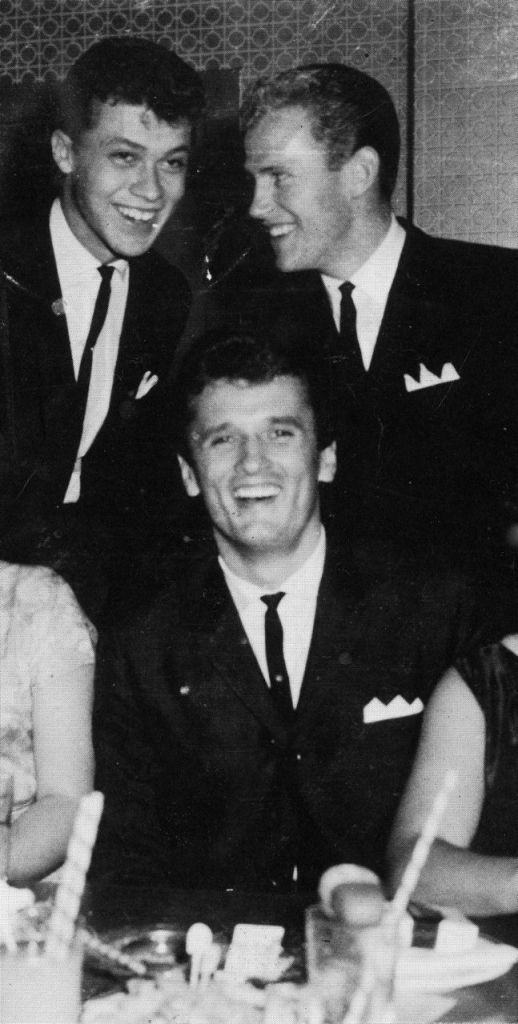
He rounded up some guys, and since all the drummers in the area were busy, Ronnie decided to give Levon a shot. Levon’s first show was at the Rebel Club, a rough place according to Levon’s biography «This Wheel’s On Fire», in Osceola. As he was under 21 at the time they had to sneak him in and out of the places they played, and he usually hung out in the kitchen or backrooms during breaks so the police wouldn’t find him and throw him out. As soon as he graduated from school, the band set off to Canada. The promised land, according to Ronnie Hawkins. He’d been told by Conway Twitty that the rockabilly scene was great up there, so they left the south and headed up north.
Canada was great for Ronnie Hawkins and The Hawks. There they weren’t just one of several good bands, as they were in the US, no, up there they could be stars. Rockabilly stars, but still. They played their way up to the coolest club in Toronto, Le Coq d’Or and it was after that they recorded their first single, a Bo Diddley tune, Hey! Bo Diddley. It wasn’t released as a single until later, but at least they were recording artists now. Soon enough Ronnie was the king of Toronto, and their agent booked them on a tour of the Jersey Shore back home. They, or Ronnie that is, were now being touted as the Next Big Thing. The void needed to be filled as the other big rockabilly names were either in the army, in jail, married to their underaged cousin, gone country, or dead. So now Ronnie was being courted by labels, and he ended up signing for Roulette Records. Their first single on Roulette was Forty Days, a rewrite of Chuck Berry’s Thirty Days. And when they went on American Bandstand to perform that one, and their second single Mary Lou, Ronnie Hawkins went crazy, as wild as possible while lip-synching, and Mary Lou went on to sell over 750.000 copies.
So that’s a quick recap of how Levon Helm started his music career and an introduction to Ronnie Hawkins. The debut album «Ronnie Hawkins», released in 1959, had an 18-year-old Levon behind the drums, and on the second album, «Mr. Dynamo» (released in 1960), he also wrote, and co-wrote, a couple of songs. Robbie Robertson had started hanging out with them at this point, but he was not in the band yet. He was credited with writing a couple of songs on «Mr. Dynamo», but it is not sure that he actually did. As the rockabilly craze was winding down, Ronnie Hawkins changed his style and started making folk music instead. It is considered a rather desperate attempt to market Ronnie Hawkins as a folk singer, but I think it’s quite alright. Levon Helm plays the drums on all the songs, and Robbie Robertson plays on four tracks. The last album released within my timeline is «Sings The Songs of Hank Williams». It’s a good album that features a lot of great Hank Williams songs, and Ronnie Hawkins does them justice. Levon Helm plays the drums on all the tracks, but Robbie Robertson did not participate. Instead, Ronnie opted for session musicians on this one, including Floyd Cramer.
Garth Hudson also made his debut around this point. He was playing with Paul London & The Capers, and they released a couple of singles in 1961. Rosie Lee is a rockabilly tune from this Canadian outfit, and it’s pretty cool. The second single, Sugar Baby, is not on any of the streaming sites I use but I did find it on YouTube.
THE ALBUMS
There’s gonna be two albums that stick out this month, and they’re both instrumental. One of them is jazz(!) and the last one is blues. The fact that I actually enjoy the jazz album tells me that I’m already starting to change a bit towards this elusive genre. So bring it on!
Ricky Nelson has turned 21 years old, and he announced that he will change his performing name to Rick. He’s a grown-up now, so he can’t be addressed as a kid anymore. I get that. Little Ricky, Big Rick. He’s still gonna score some hits, but this album, «Rick Is 21», is not all that. There are some tracks that might be worth checking out, like Travelin’ Man (the single from last month), Hello Mary Lou, Goodbye Heart, and My One Desire, but other than that it’s nothing much.
The biggest disappointment has to be Ben E. King’s debut solo album «Spanish Harlem». I read somewhere that he wasn’t planning on recording Stand By Me, and that he tried to give it to other artists. And thinking about that while listening to the opening track, Amor, makes me wonder how this guy (and probably the people around him) heard music. Cause damn, to open an album like this after releasing a song like Stand By Me can only be because of a brain hemorrhage or something. And it doesn’t get much better. I mentioned that he wouldn’t turn into the star it seemed obvious that he would, but this is just awful. The fall from Stand By Me to this album is massive, and Mr. King plunges into it. It actually pisses me off. For someone to sink so low, so quick, is unheard of. And his management, record label, whatever, should have been fired immediately. The audacity!

Freddy King, however, delivers a pretty good album. «Let’s Hide Away and Dance with Freddy King» is strictly instrumental, and it works really well. Freddy moved from Texas to Chicago and was influenced by a lot of local guitarists. Learning from all of the different techniques he’d seen, he developed his own and built up the reputation that would eventually make him a star. Now, when it comes to blues music, I’m not that well taught, but I know the most important ones. At least I thought I did. Cause Freddy King is new to me, and he has been a pretty important player in this blues game. This album in particular, has influenced a lot of artists over the years, and the Encyclopedia of Blues can tell me that the song Hide Away is one of the most influential blues songs of all time and that it has become a standard for a lot of blues and rock musicians playing today (2006).
There are a lot of good songs here, but Hide Away, as mentioned is great, Sen-Sa-Shun, San-Ho-Zay, and Heads Up round up my favorites. That was a tough choice though, as all of them are pretty good.
And there’s a Swedish/Danish band called Swe-Danes releasing a live album this month. The record, «Swe-Danes på Berns», does nothing to convince me. They were successful though, and played all around the world including England, Germany, and the US. It’s a kind of jazz/scat/vocal group, and it really has nothing to offer me.
THE FREDDIE REDD QUARTET – SHADES OF REDD
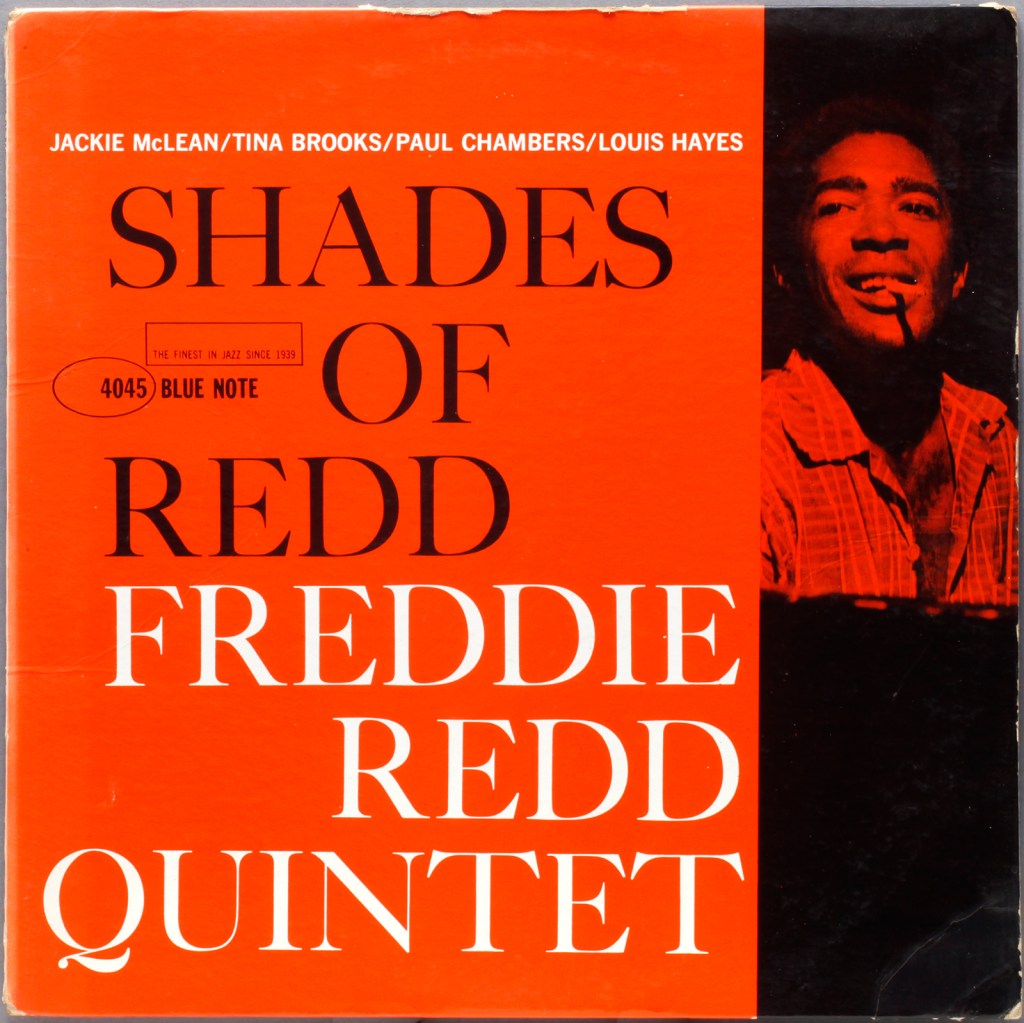
This is probably the jazz album I like best out of the ones I’ve listened to so far. It’s difficult to say why, but it could be that the melodies aren’t really hidden. The songs are a bit fast, at least some of them, and it just sits right with me. The reason I decided to add this album (cause it was not on my initial list over albums from May 1961) is because I saw a vinyl version was sold on Discogs for over $2000. So I figured I needed to check it out as I’ve never heard of Freddie Redd before.
Freddie got into jazz while in the military, and is a self-taught pianist. He never really managed to establish himself commercially but worked with a lot of artists, including Charlie Mingus. His most successful project was composing music to a play, and later film, called The Connection. In addition to making the music he also starred in the play, both on stage and screen. So while struggling to make a name for himself he moved around quite a bit and lived all over the world, not returning to the US until 1974. But this album is pretty good though, so he should get some more attention than he has.
Like I’ve mentioned countless times already, jazz is not really my cup of tea. But it’s starting to grow on me I think. And albums like this is definitively helping its cause. «Shades of Redd» is a relaxing piece of music without being difficult at all to listen to, and the tempo is just perfect mostly through the entire record. The opening track, The Thespian, kinda takes hold of me right away, and from there on it is just a nice trip all the way to the end.
THE SINGLES
I’m glad Elvis is getting back on track. After his abysmal album «His Hand In Mine», he is starting to produce some good singles again. And this months I Feel So Bad is pretty good. I like his style on this one, and even though it’s not his best, he is at least stepping away from that gospel shit.
Since Elvis’ debut single in 1954, That’s All Right (Mama), he has been a massive success. And he will become one of the greatest artists of all time through his career. So is there any point in trying to recap all the stuff that happened in his life up to 1961? No, I’ve decided that it’s not. I’m gonna follow Elvis from the ‘60s, and that has to be enough. I Feel So Bad is a blues song written, and originally released, by Chuck Willis in 1954. Elvis’ version is a bit more rock ’n’ roll, with a touch of R&B, than blues, but it does have that blues vibe for sure. I guess it’s the piano that gives it that blues sound.
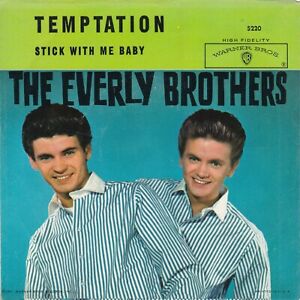
Temptation is the Everly Brothers’ last hit before they go into the US Marines. They only spent six months there, but their decline will start shortly after. But Temptation is a good song. It’s exactly what we’ve come to expect from these guys. The harmonies are still on point. The melody is good. It’s just plain and simple a good song. During their decline, which is prompted by the beat boom and Don’s drug abuse, they still release hit songs, but none as big as the ones they’ve already released. After their time in the US Marines Don supposedly tried killing himself twice by overdosing during a European tour, and Phil ended up finishing the tour solo. So yeah, it’s safe to say that things were going downhill after this single.
The last time I wrote about Brook Benton was back in September 1960. I kinda liked his song Kiddio back then, and now he’s back with a new track called The Boll Weevil Song. From the title, I guess you already know that this is a novelty song. And I’ve made my feelings about these types of songs abundantly clear. But this one isn’t all that bad. I mean, I hate the lyrics, and it sounds like a children’s song, but it has something that…I don’t really know. There’s just something here that makes it ok to listen to. I really can’t go any deeper than that. Seriously.
This is a traditional blues song, and from what I understand there used to be a lot of songs about the boll weevil. This guy is a kind of beetle that feeds on cotton buds and flowers, and at some point in the early 1900s, it had infested almost all the cotton fields in the US, kicking the cotton industry square in the balls. I guess that’s what they call karma.
Pat Boone was one of the best-selling artists in the ‘50s. He is actually still one of the best-selling artists when it comes to total single sales and relative chart positions. He and Elvis Presley were the best of both worlds in the ‘50s, where Elvis was the rebel, and Pat Boone was the clean-cut conformist. Elvis had long sideburns and greasy hair, making girls weak in the knees, and Pat was an always-smiling-happily-married Christian dude with nice shoes. Pat built his career on cover songs, mostly tame versions of R&B songs originally recorded by black artists, and there is a rather controversial question whether he helped open the door for the black originators or if he shut them out of the white market.

The song Moody River is one of his last major pop hits. His time in popular music was coming to an end, but this song (if it had been his last) would have been a good ending point. The song is a sad one about a girlfriend who took her own life in the Moody River cause she cheated on her boyfriend, but even with that somber message, the song is a good one.
The last single I’ll mention is Duane Eddy’s Ring of Fire. I brought this along as I thought it was a cover of the Johnny Cash song (written by June Carter Cash and Merle Kilgore), but I was mistaken. This was something else, and it’s not very good. Duane is one of the most famous rock ‘n’ roll instrumental guitarists, mostly because of his guitar sound, based on Bill Justis’ song Raunchy (supposedly the first song George Harrison learned to play). Working together with Lee Hazlewood he co-wrote a bunch of hits and created versions of other standards. But even though he had a great career, I can’t say that this song makes me want to check out any of that.
THE CHARTS
Billboard Top 10 Singles Chart
Week 1 (May 1, 1961)
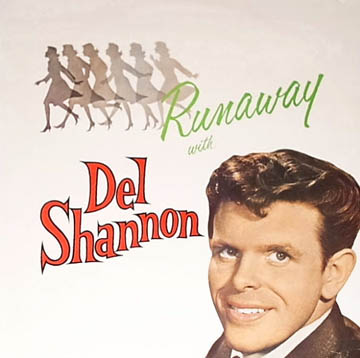
- Runaway – Del Shannon
- Mother-In-Law – Ernie K-Doe
- I’ve Told Every Little Star – Linda Scott
Week 2 (May 8, 1961)
- Runaway – Del Shannon
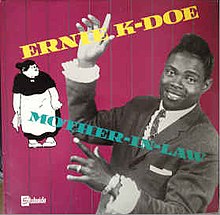
- Mother-In-Law – Ernie K-Doe
- A Hundred Pounds Of Clay – Gene McDaniels
Week 3 (May 15, 1961)

- Runaway – Del Shannon
- Mother-In-Law – Ernie K-Doe
- A Hundred Pounds Of Clay – Gene McDaniels
Week 4 (May 22, 1961)
- Mother-In-Law – Ernie K-Doe
- Runaway – Del Shannon
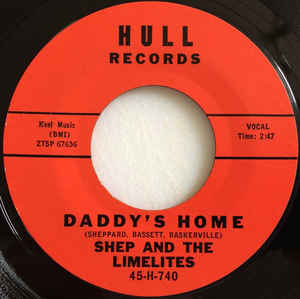
- Daddy’s Home – Shep And The Limelites
Week 5 (May 29, 1961)
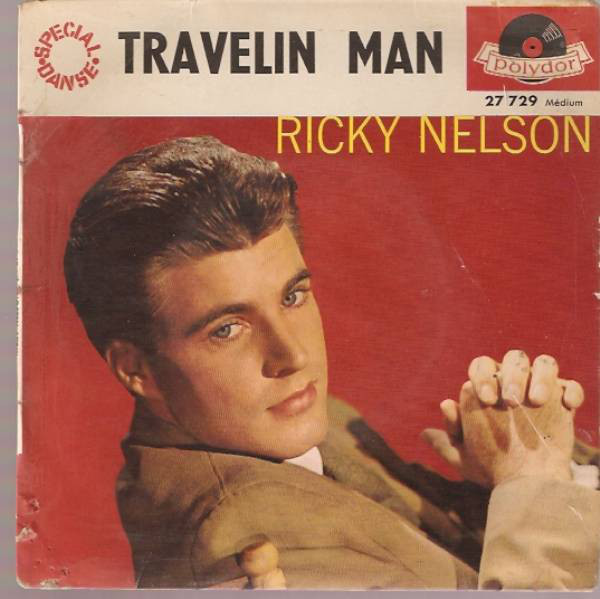
- Travelin’ Man – Ricky Nelson
- Daddy’s Home – Shep And The Limelites
- Running Scared – Roy Orbison
Nothing of interest has entered the charts this month. So let’s move the fuck on…
Petter Milde
This Band Could Be Your Life
 This Band Could Be Your Life