At a lunchtime show on November 9th, 1961, Brian Epstein saw The Beatles for the first time at The Cavern Club in Liverpool.
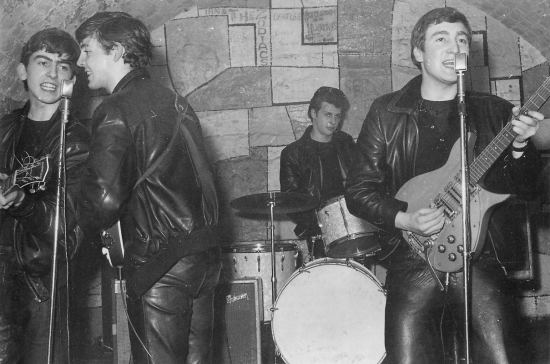
Even though Epstein only watched a show and talked with the lads afterward, this day has some significance as Epstein would later become their manager. In Epstein’s autobiography, he’s quoted from this day saying: ‘’I was immediately struck by their music, their beat, and their sense of humor on stage. And, even afterward, when I met them, I was struck again by their personal charm. And it was there that it really started’’. So this is kinda where, and when, it all started. From what I understand he attended a few more shows before asking them to sign with him, needing to see more I guess, but it didn’t take much to convince him that these guys were the real deal.
Good for him. Cause there are some that will pass on The Beatles. And it is pretty obvious that a decision to not join the Beatles on their journey is something everyone will live to regret.
THE ALBUMS
HANK CRAWFORD – MORE SOUL
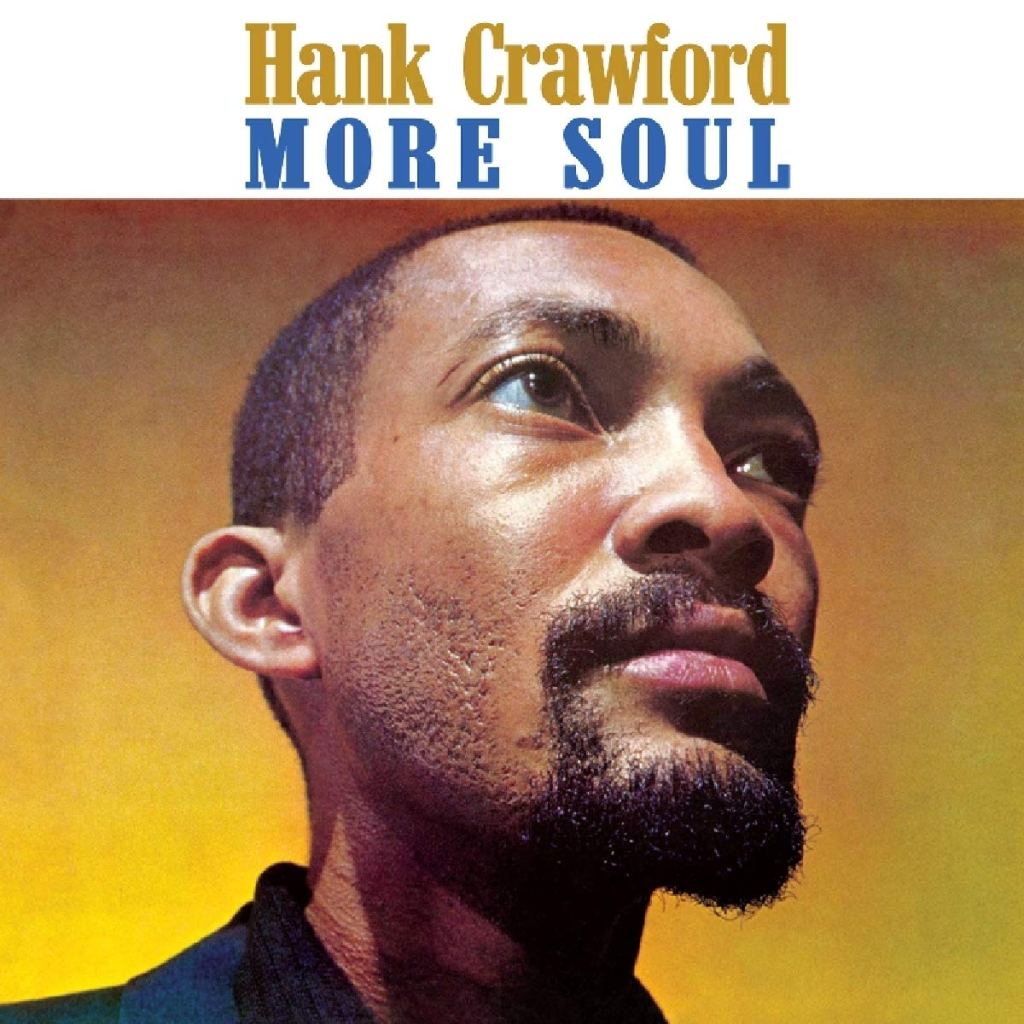
This guy’s debut album is not soul music. It’s jazz. So the title does not refer to the type of music he is playing. But the music has got soul. So I guess that’s what he tries to tell us. This is, of course, not important at all. ‘’Hank’’ got his name while playing in a rock’n’roll band where all his bandmates thought he looked like a guy called Hank O’Day, a legendary local saxophonist. Hank’s real name is Bennie Ross Crawford, and I guess Hank works better overall.
In 1958 Hank met Ray Charles and was hired to play the saxophone. He ended up staying with Ray until ’63 and eventually became his musical director. This album is released before he left Ray Charles to pursue his solo career, and it’s not bad at all. It’s jazz without too much fidgeting. It actually makes sense to call this album «More Soul», as it feels warm and tender all the way through.
Even though Hank impressed with directing Ray Charles’ band, a pretty good debut album, and some soothing jazz, it doesn’t make him one of my favorite jazz musicians. At least not yet. But this is good listening if you want to relax. It’s not easy picking out any favorite tracks here, but I could probably recommend Angel Eyes and Four Five Six.
PATSY CLINE – SHOWCASE
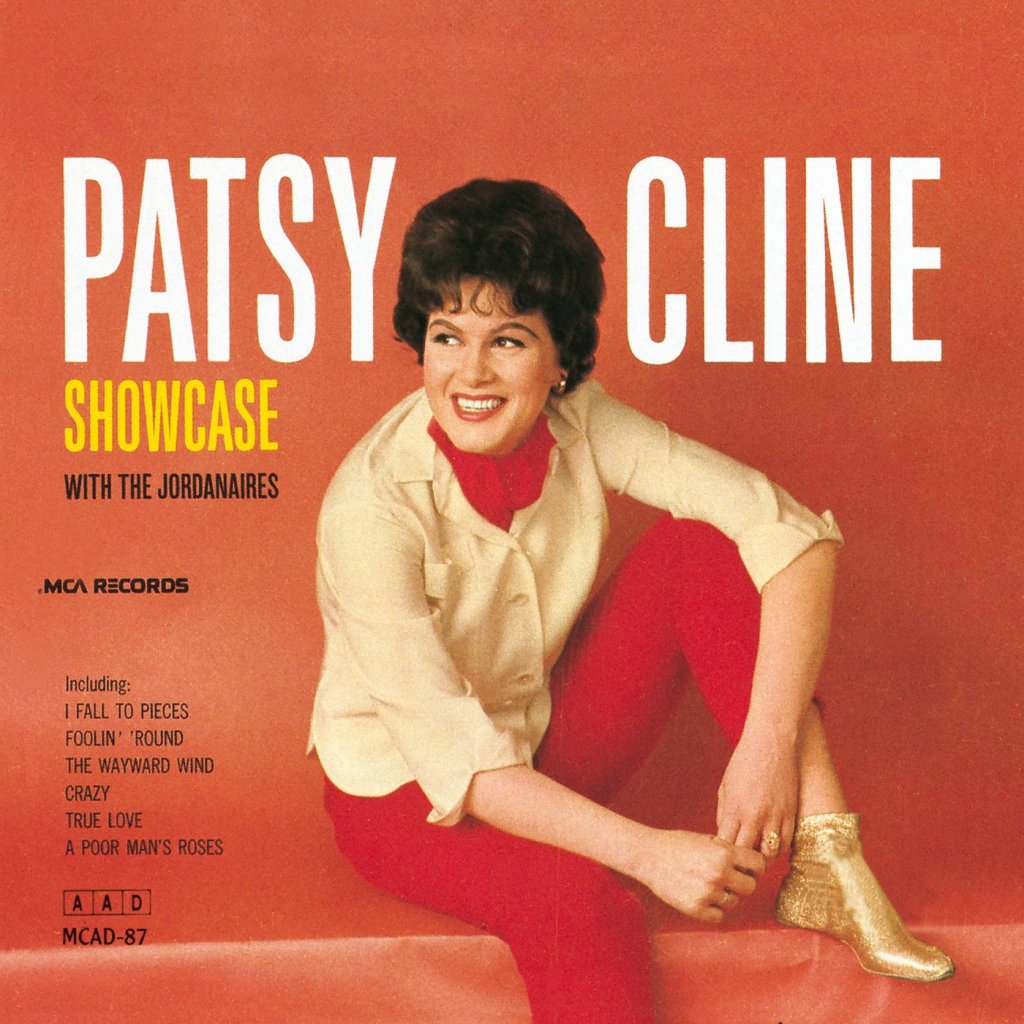
Virginia Patterson Hensley was her maiden name, but she ended up being called Patsy back in 1952 as a guy called Bill Peer, a disc jockey and musician, hired her as the lead vocalist in his band, Melody Boys And Girls, but didn’t like Virginia. He called her Patsy as he wrongly assumed that her middle name was Patsy. Cline is the name of her first husband.
Patsy started playing the piano at the age of eight, and she taught herself by ear. She was fascinated by country music from early on and dreamt of becoming an Opry star, and she managed to score an audition there at some point in 1948, but she did not make the cut. Nine years later she appeared on a TV show called «Arthur Godfrey’s Talent Scouts» and was subsequently signed by Decca Records. She did have a record deal before this as well, at Four-Star Records, but it didn’t go very well. According to the book «The Encyclopedia of Popular Music», William A. McCall, who was president of Four-Star, was not highly regarded in the music business.
«Showcase» was released shortly after a near-fatal car crash, or at least recorded, in 1961. The album includes the two singles Crazy and I Fall To Pieces, and her first hit single Walkin’ After Midnight, and it’s fair to say that these are the best tracks on there. Patsy has a great voice and backed by The Jordanaires, she manages to release an album that is worth checking out, although kinda boring at times as well. Another good song is Seven Lonely Days, and she does a version of San Antonio Rose (I’ve written about Floyd Cramer’s version before) with lyrics, that are at least different from Floyd’s.
Shirley Bassey, or Bassey the Belter, isn’t a very exciting artist. At least not if you just look at her self-titled album, «Shirley Bassey». And by not exciting, I don’t mean bad. Because she’s a terrific singer. But even though the content is good, it’s just too boring in the long run. I’d rather listen to her first hit single, Banana Boat Song, a traditional Jamaican work song made popular by Harry Belafonte. I guess this, her third album, works great as the backdrop to a romantic dinner or something like that, maybe a night alone in the bathtub, cause it has a lot of mood-setting tracks, like The Nearness Of You and Who Are We?, but the best one is probably Angel Eyes as it is a bit different and more bluesy. Not bad, Shirley, just not my cup of tea.
THE MIRACLES – COOKIN’ WITH THE MIRACLES
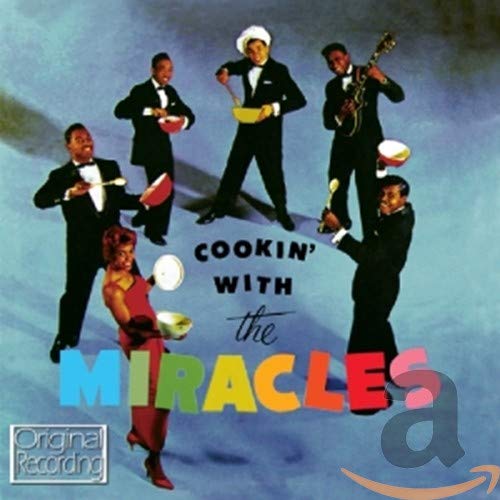
The Miracles’ second album of the year is not as cool as their debut. But that would have been pretty stupid if they managed that feat anyway. However, it’s not far off. Smokey Robinson has written, or co-written, all songs except Embraceable You, which coincidentally is the most boring song on the record by far. The song was originally sung by Ginger Rogers in a song and dance routine choreographed by Fred Astaire, but it is probably best known as performed by Billie Holiday in 1944.
I’m pretty sure that there are no other bands that could rival The Miracles when it comes to R&B music at this time. They seem to have this shit locked down and conquered. Songs like Ain’t It Baby, Everybody’s Gotta Pay Some Dues, and That’s The Way I Feel is proof of that. The thing that sets them back a bit on this release is that the ballads aren’t as good as on their first album.
All in all, though, this is a very good album, but an awesome debut is always difficult to match. So there is no shame in falling short by a few songs here. The Miracles are looking good at the start of their career, and Smokey Robinson’s songwriting skills are top-notch, so their future is gonna be bright if this is how they are gonna continue doing their stuff.
JUDY COLLINS – A MAID OF CONSTANT SORROW
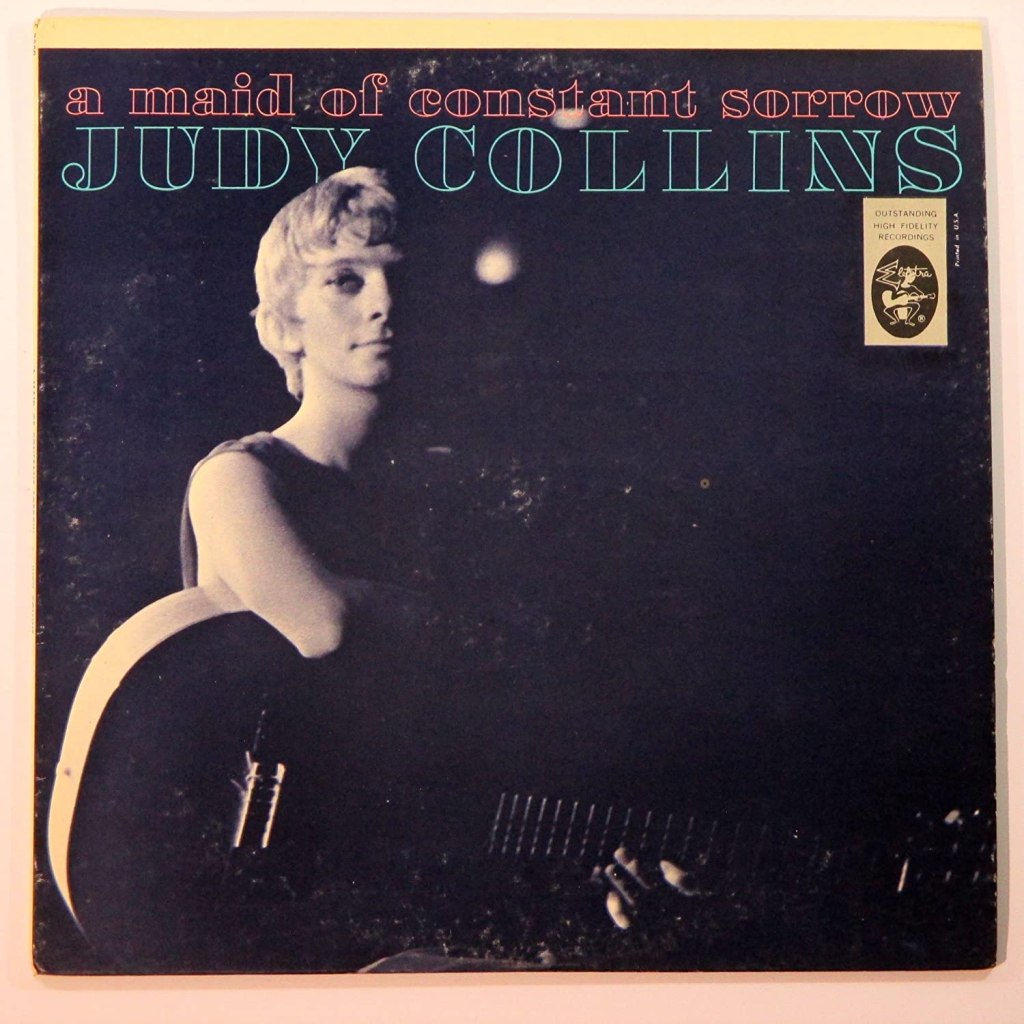
Just like Joan Baez, Judy Collins will emerge as one of the leading female singers in the American folk revival of the early-‘60s. She was trained as a classical pianist but as a teenager, she started singing traditional folk music around Colorado. She was soon playing at important folk venues like Gate of Horn in Chicago, and Gerde’s in New York. From there it was no way but up.
Her debut album «A Maid Of Constant Sorrow» is nothing short of a folk power move. It’s a record filled with traditional folk songs, and she truly brings them to life with her deep voice and guitar, accompanied sparsely by a second guitar, bass, and banjo.
The title song, A Maid Of Constant Sorrow, is a variant of A Man Of Constant Sorrow, and she manages to give it a great new life from her perspective as a woman. Whether she picks up the pace or slows it all down, it’s a joy to listen to. And the album is definitively a challenger to the folk throne in 1961. The best song has to be Tim Evans, a song about a man who is wrongfully hanged. Though O Daddy Be Gay, The Prickilie Bush, and Sailor’s Life are not far off.
I’m pleasantly surprised by this record and looking forward to the rest of her career. I didn’t know much about Judy before listening to this one, and since the cover looks pretty dull I kinda figured the songs would be as well. But this is just beautiful.
THE MARVELETTES – PLEASE MR. POSTMAN
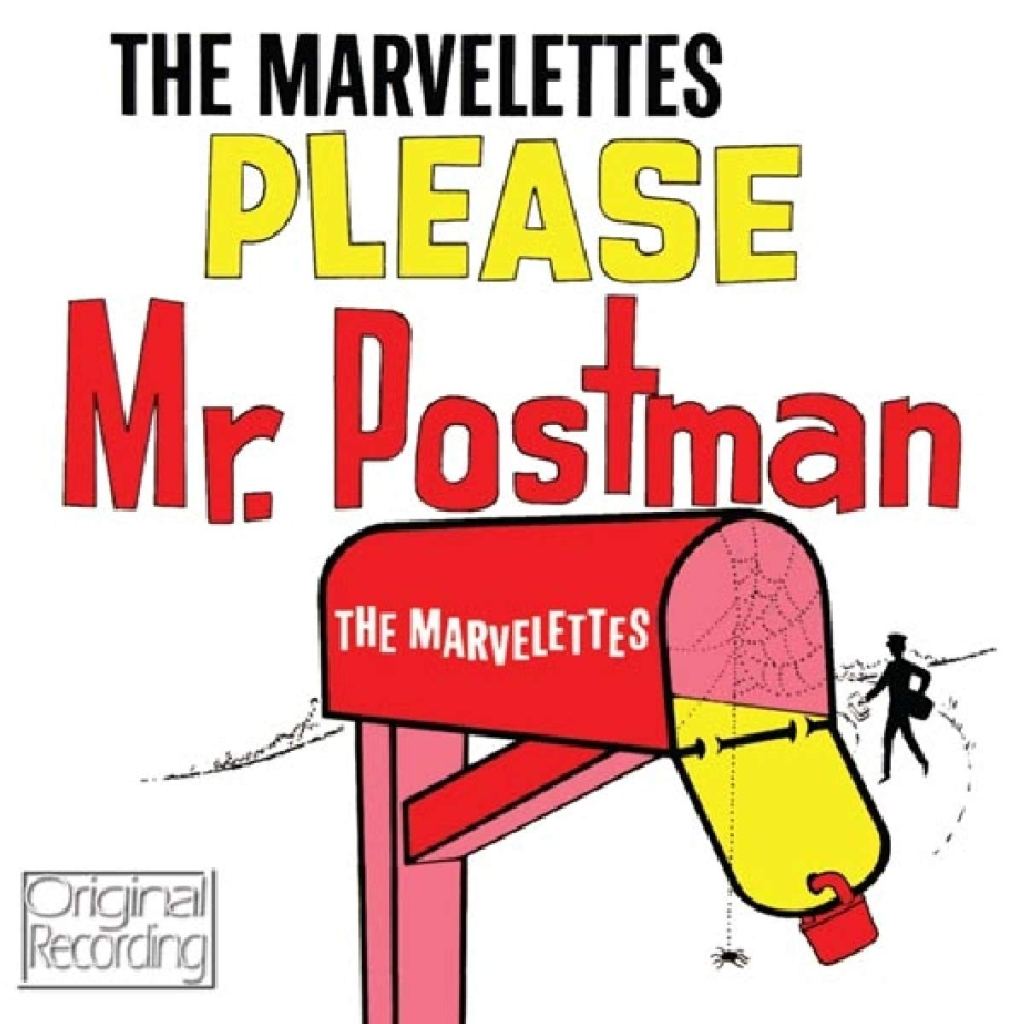
The Marvelettes blew up on the scene with their first hit Please Mr. Postman back in August, and they’ve decided to keep the momentum going by naming their debut album after that track. That’s probably not such a bad idea. But it doesn’t feel necessary as any band who shows up with a song like that will be kept a close eye on when they release their debut album.
The group was formed back in the late ’50s when they were still in high school. They were spotted at a school talent show by a guy who knew Berry Gordy, and just like that, they had a record contract with the Motown Records organization. After hitting the ground running with Please Mr. Postman it might sound tough to stay on your feet for the next round, but there are some good tracks on this album. Angel, the opening track, starts this album off well, and their version of The Supremes’ I Want A Guy is good, even though it’s not as good as the original. And I’ve gotta say that I find it pretty funny that the label keeps re-using hits they already had with other groups and artists.
There are a lot of good songs really, like You Don’t Want Me No More but they don’t manage to meet the expectations made by their immediate success in the wake of The Postman song. But the songwriting skills in the Motown group are evident in almost all of them, with Gordy himself, Smokey Robinson, Brian Holland, Robert Bateman, etc. It’s just something about this group that doesn’t make them as exciting as the other R&B groups out there right now though. If it’s the singing or the groove, I can’t pinpoint, but I’d much rather listen to The Miracles or The Supremes.
MARY WELLS – BYE BYE BABY I DON’T WANT TO TAKE A CHANCE

When Mary Wells was seventeen years old she wrote the song Bye Bye Baby and offered it to R&B star Jackie Wilson. Berry Gordy, who was his producer, was impressed enough to give this young lady a contract with the, then newly-formed, Motown Records. The song became one of the company’s first Top 50 hits in 1960, and Gordy would trust Smokey Robinson to help her on her way and mastermind all of her Motown releases.
But Smokey didn’t write everything on her debut album. I’m not saying because he didn’t, it doesn’t work, but from what I understand Mary Wells will hit her stride in a little while. And it might be because Smokey knows what the fuck he’s doing. But since I’m trying to follow the timeline here, I haven’t listened to anything Mary has done after this album. So this might all be hearsay. I don’t know.
The title to this album is a combination of two of her songs; the song that got her signed, Bye Bye Baby, and I Don’t Want To Take A Chance. Coincidentally they are the two best songs on this album. There are a couple of other songs that are pretty good as well, like the opening track Come To Me, and another song from Motown’s recycling plant, Shop Around. And Please Forgive Me is probably the best ballad on the record. Mary is not Motown’s coolest artist right now, but with the potential she is showing she might as well be at some point in the future.
THE SINGLES
There’s a couple of singles that aren’t all that interesting, and I’ll just try to move past them quickly. Andy Williams‘ version of Danny Boy is, if possible, one of the most boring ones that I’ve ever heard. I feel like this song works best when sung by drunk people at a funeral or something sad like that. Not as a ballad sung by a guy with a velvet voice. The Corsairs‘ Smokey Places isn’t all that either, but the most annoying thing about it is the “ra-pa-da-pa-da” sound that keeps going throughout the song. It just messes with my head. And I can’t say I’m a big fan of Happy Birthday Sweet Sixteen by Neil Sedaka. It’s just too goody-two-shoes.
Ernie K-Doe is back this month with a single where both the A-side, I Cried My Last Tear, and the B-side, A Certain Girl, charted. They didn’t go very high, but the A-side landed at #69, two spots above the B-side. Personally, I like A Certain Girl a lot better. It has a lot more personality to it, and it’s easy to wanna sing along to. So if I could decide it would be the A-side, and it should have charted higher.
A nice little country tune from Burl Ives called A Little Bitty Tear is released and it has a nice old-timey feel to it. This song will become one of Burl’s highest-charting songs early next year, and I gotta say I’m surprised that this hit the Top 10 on the Billboard Hot 100 chart. I would understand if it went high on the country charts, cause it’s a good country song, but I don’t know how this did so well on the popular music charts.
Duke Of Earl by Gene Chandler is pretty good, but at the same time, it just feels like it’s the same as a hundred other songs out there at this point in time. So I can’t really say that it is anything special. But it’s totally listenable, don’t worry.
I’m more excited about Gary U.S. Bonds’ new song, Dear Lady Twist, even though this one is kinda like a lot of other songs as well. Gary is the latest guy to make a song about the Twist. And that theme got old pretty quick really. But I like this one. I like it a lot better than Chubby’s The Twist as well. It’s just something about Gary U.S. Bonds that feels more genuine, more exciting, and just easier to like. So if you’re looking for a song about the Twist, for whatever reason, I’d recommend this one.

And now for a song that has had a much longer life than I expected, The Lion Sleeps Tonight (Wimoweh). It was originally recorded, and written, by South African singer Solomon Linda in 1939. The track was then called Mbube and performed in Zulu, an African language. I’ve written about this before when Miriam Makeba recorded a great version of the tune also called Mbube, but I didn’t know that it was recorded a bunch of times by American artists before this as well. The Weavers recorded their own version of it back in 1951 called Wimoweh, and the interesting thing is that they never credited Solomon for the song. They claimed it was a traditional song, and took credit for the arrangements themselves. That one is pretty tame compared to the original, and Miriam’s version. It has also been recorded by The Kingston Trio, Bill Hayes, Jimmy Dorsey, and Yma Sumac.
But it wasn’t until now, November 1961, that it blew up. The Tokens‘ version has added some lyrics in English that is known around the world, and those are of course “In the jungle, the mighty jungle, the lion sleeps tonight“. This version would rise to the top of the charts and eventually become a hit around the world. But I still think that the original/African versions, especially Miriam Makeba’s, are a lot better than this, and the Tokens’ version is far more annoying than anything else.
A guy that is not annoying, is Ray Charles. He’s back again with another hit called Unchain My Heart. A great tune, as expected by Ray Charles now, that once again thrills me. It’s not his best song, but I haven’t really listened to this before and it sat really well with me. His backup singers, The Raelettes, is a big part of making this song good, and David “Fathead” Newman on saxophone does his part as well. But they don’t take anything away from the genius Ray Charles.
And now for something pretty big. The start of The Beach Boys‘ career. This band, “America’s Band”, will end up becoming one of the greatest American rock bands ever. And I guess they shouldn’t need an introduction at all, but where’s the fun in that? Before The Beach Boys got their forever name, they were called a couple of other things; Carl and the Passions, Kenny and the Cadets (Brian Wilson was supposedly Kenny), and when they recorded their first single, Surfin’, they were called The Pendeltones.
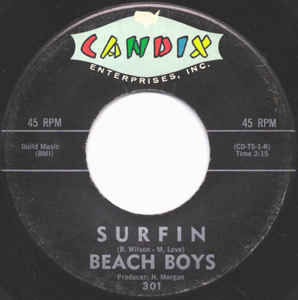
Since day one though, it has been the same line-up with the mastermind Brian Wilson, his brothers Dennis Wilson and Carl Wilson, their cousin Mike Love, and friend Al Jardine. The three Wilson brothers were encouraged by their mother to play music from an early age, and if my sources are correct, they bought their first instruments with food money they got from their parents (they were going away to Mexico City for three days). Now I know they can’t have gotten mad about that. Best spent money ever! But yeah, at some point after starting a band they recorded their first single, which became a regional hit, with “Luau” as the B-side.
Now The Beach Boys, which apparently was named so by their record label, Candix, as they felt The Beach Boys associated them more directly to surf music than The Pendeltones, didn’t kill it on their first try. Surfin’ is a pretty fun song, no doubt about that, but it wouldn’t have made me think that we’ve got one of the world’s biggest bands in the making here. My first thought was that Mike Love’s voice is pretty bleak, and it doesn’t really sound like his heart is into it, but after a while it doesn’t mess it up too much. The melody, with Chuck Berry licks, and harmonies (arranged by Brian) are on point, and that’s definitively the backbone of this song. The funniest part is the “bom-bom-dip-dip-dip” hook sung by Mike. It sounds crazy stupid at first, but it grows on you. According to the book “The Beach Boys and the California Myth”, by David Leaf, it took twelve takes to record the song, as Brian Wilson demanded that the song should be perfect. The track ended up charting at #75, and after the recording of this song the father of the Wilson brothers took over as their producer and manager. And from what I understand, Murry Wilson, was kind of abusive. So it will be interesting to see if that has any effect on these boys’ rise to fame.
The B-side, Luau, isn’t very cool. It’s just a B-side really. But still, the harmonies are on point as they should be, and there is at least one bridge in here that makes it ok.
THE CHARTS
Billboard Top 10 Singles Chart
Week 1 (November 6, 1961)
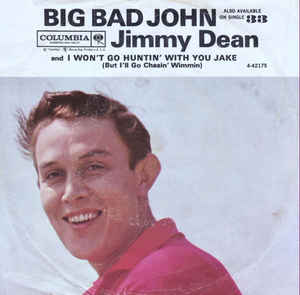
- Big Bad John – Jimmy Dean
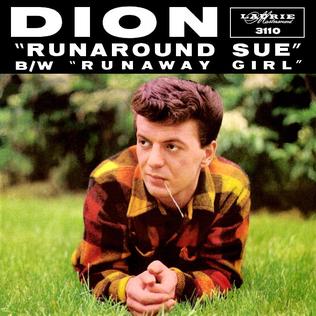
- Runaround Sue – Dion
- Bristol Stomp – The Dovells
Week 2 (November 13, 1961)
- Big Bad John – Jimmy Dean
- Runaround Sue – Dion
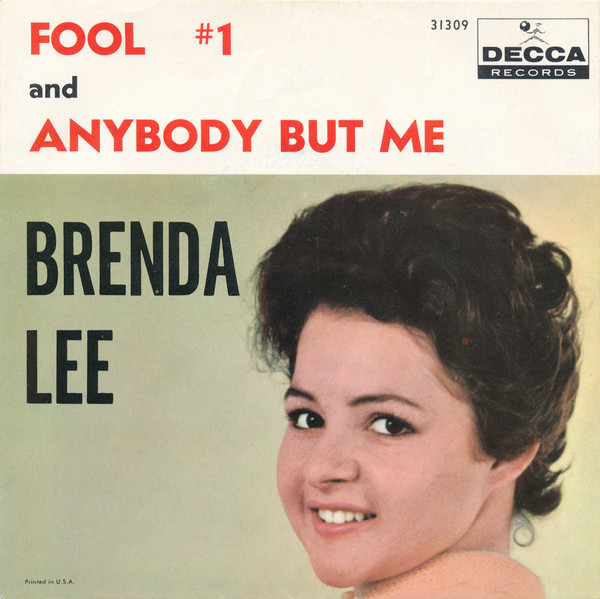
- Fool #1 – Brenda Lee
Week 3 (November 20, 1961)
- Big Bad John – Jimmy Dean
- Runaround Sue – Dion
- Fool #1 – Brenda Lee
Week 4 (November 27, 1961)

- Big Bad John – Jimmy Dean
- Runaround Sue – Dion
- Please Mr. Postman – The Marvelettes
There’s only one new song in the Top 10 that I haven’t written about yet, and that’s Heartaches by The Marcels. It’s the follow-up single to their hit Blue Moon, and some of it sounds exactly like that one as well, which did confuse me a bit. But it isn’t that similar. It’s just the “dum-dum-dum” part I guess. The single sold over a million copies, but I can’t say I’m a big fan of it. I wouldn’t need it in my collection.
Petter Milde
This Band Could Be Your Life
 This Band Could Be Your Life