There are some heavy names releasing music this month. We’ve got Aretha Franklin, Ike & Tina Turner, Little Richard, and last, but not even close to least, the debut album of Bob Dylan.
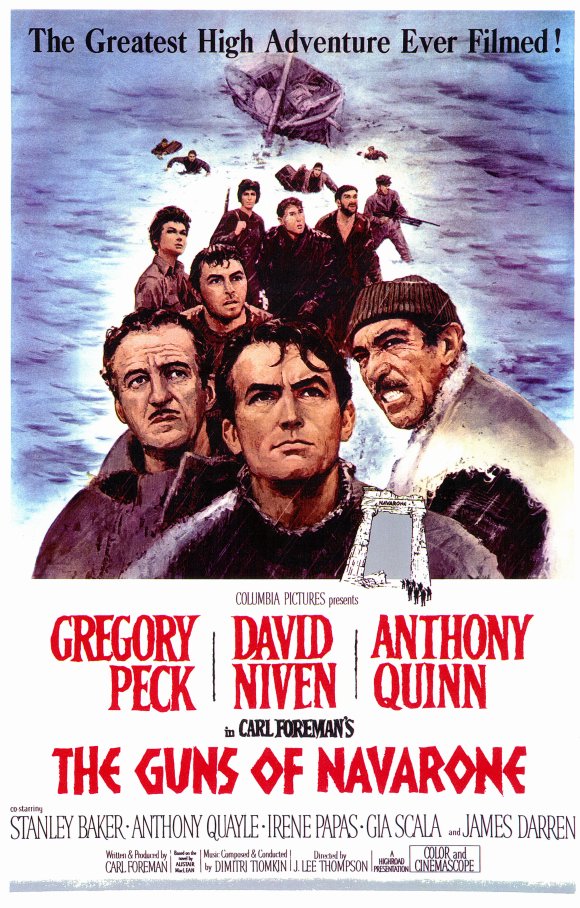
Other than the music, I haven’t got a lot of shit to write about this month. The only thing I wanted to mention was that the movie «Guns of Navarone» won the Golden Globe as the Best Film in the drama genre. I don’t think I’ve seen that one yet, but I’m pretty sure I got it on Blu-Ray somewhere. «Guns of Navarone» stars Gregory Peck, David Niven, and Anthony Quinn and is based on a novel by Alistair MacLean. It’s a war movie. And I’ve heard good things about it.
Jon Bon Jovi was born this month, and at some point in my life I will be a huge fan of his band, MC Hammer was brought to life on March 30, and The Proclaimer twins, Craig and Charlie Reed, were also born in March. I’m only mentioning them as I still find myself listening to one of their songs, so I figured they deserved a shoutout.
THE ALBUMS
There are some albums I’m really looking forward to this March, and there are some that didn’t impress at all. And as usual, I’ll start with the ones that I’ll probably never listen to again.
The first one that will keep collecting dust is Little Richard’s «The King Of Gospel Singers». I guess for a lot of people, this is not what we think about when we hear Little Richard’s name. The thought will probably go to his first hit single, Tutti Frutti, and songs alike. Cause this man was one of the wildest, greatest, and most influential rock’n’roll singers of the ‘50s, and has given us songs like Long Tall Sally, The Girl Can’t Help It, Lucille, Keep A Knockin’, and Good Golly Miss Molly. The latter one came out as a pre-recorded song just after LR decided to quit music at the height of his career and go into a theological college.
So now we’re in his religious period, and since 1958 he has only recorded gospel music. And it doesn’t matter that Quincy Jones is producing, cause this religious mumbo jumbo isn’t worth listening to at all. Fuck this album and good riddance.
We’ve also got Tony Bennett, with his album «Mr. Broadway», and it doesn’t even inspire a little toe-tapping. This is a compilation of Tony’s so-called greatest Broadway hits, but there’s not a lot of greatness here. The songs are from Broadway shows like The Sound of Music, Bye Bye Birdie, and Gypsy, but I’d rather waste my time watching these old shows on a flickering black and white movie projector in an abandoned, haunted house, alone in the middle of the woods, than listening to this album again.
And then there’s Andy Williams. He’s been singing since before 1944, and that would make him a relic already in 1962. But his time to shine is actually right now, cause this album, «Moon River And Other Great Movie Themes», will become his most successful album ever. It will sell to gold at some point during the ‘70s, and the song Moon River will forever be his most recognizable hit. So yeah, just another guy who is most famous for a cover song. No, to be fair I haven’t really read up on Andy here, to me, he’s just an old guy singing to music for old people. It’s just not that interesting.
RAVI SHANKAR – IMPROVISATIONS & THEME FROM PATHER PANCHALI

Ravi Shankar is largely responsible for bringing the sitar to western music. I only really know of him through his connection with The Beatles, and I’m not sure if I’ve ever really listened to him play any music. But I have heard the sitar. On numerous occasions, so I guess he deserves a big thanks for that.
Ravi was first recorded all the way back in 1936, he started studying classical music in 1938, and after eight years of studying, he started playing music in his own right. He contributed to a couple of Indian movies (like the one he plays music from on this album), and in 1957 he went on a tour in the US which sparked interest surrounding this artist from India.
Even though this isn’t the first Indian artist I’ve heard, it is the first one that I’ve listened to an entire record of. And to be honest, I kinda like it. It might be because it’s so different from everything else I’ve been listening to these last couple of months, but I do feel like he deserves credit for this piece of work. It’s relaxing and challenging at the same time, but the sounds of India give me a sense of serenity in this form.
It’s not a record for every occasion, but it sure belongs somewhere in my life. Between work and a five-month-old baby, there is no doubt that Ravi Shankar has a place with his «Improvisations & Theme From Pather Panchali».
JOHN LEE HOOKER – BURNIN’
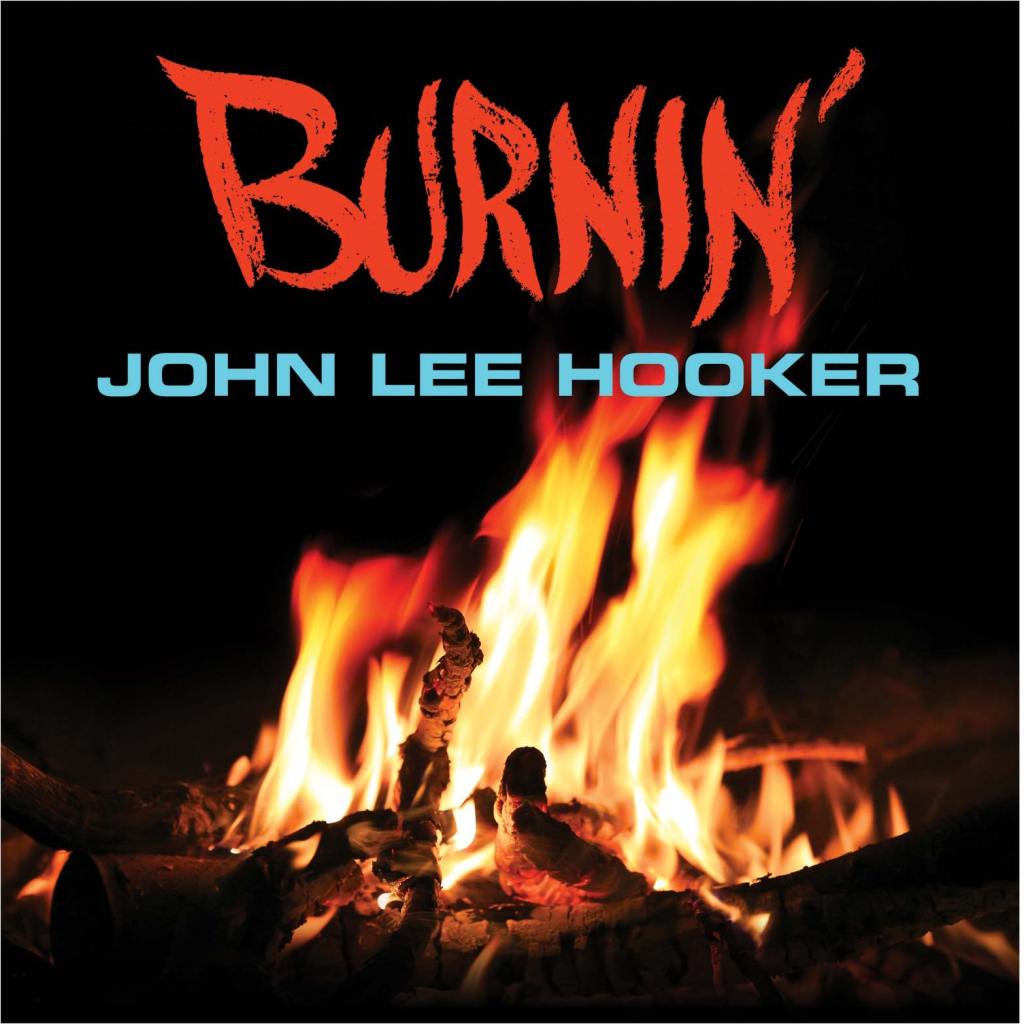
I wasn’t a big fan of John Lee Hooker’s last record. It didn’t suck or nothin’, it just wasn’t enough to convince me that it was worth my time. And he doesn’t really do it on «Burnin’» either. You know, the reason why I can’t get a grip on Hooker, is the simple fact that to me this just sounds like the blues. No more, no less. And the blues ain’t that awesome. You need to go the extra mile.
But I understand why this old man plays his music as he does. This is what he grew up with, this is what he knows. And I get it. It works. I mean, I’m not a big fan, but he sells music, he gets gigs, he probably makes a decent living. So if it works for him, why try to fix it.
However, I would not recommend John Lee Hooker as a go-to blues musician at this point. I think the only song that stood out for me on this album is Keep Your Hands To Yourself (She’s Mine), and that’s not enough.
ARETHA FRANKLIN – THE ELECTRIFYING ARETHA FRANKLIN

It’s time for Aretha’s second studio album, «The Electrifying Aretha Franklin», and she’s still looking for that soul music. She hasn’t found it though, and she’s still singing backed up by a jazz band that might swing by some blues tunes now and then.
The album doesn’t start very well. You Made Me Love You is quite boring, and it doesn’t suit her very well. She does put in some ‘’oomph’’ towards the end, but that’s too little too late in my opinion. I Told You So is a bit better, and the single Rock-A-Bye Your Baby With A Dixie Melody makes me hope that we’re getting on the right track. But this is what it is. It’s Aretha singing jazz, and even though her voice is magnificent, she doesn’t get to unfold as she should have with this kind of music.
I do like the tracks It’s So Heartbreakin’, Rough Lover (which is probably the song closest to soul/R&B), That Lucky Old Sun, and Ac-Cent-Tchu-Ate The Positive, but other than that it’s not much to remember here.
I guess it’s easy to not like this early version of Aretha as I know what this girl is capable of, but I’m actually liking some of the songs better than expected, and her voice is absolutely enough to never give her up. So ok, she didn’t have an amazing start to her career, but the potential is obvious for everyone to see, so we’ll just have to wait a couple more years. Or maybe less?
IKE & TINA TURNER – IKE & TINA TURNER’S KINGS OF RHYTHM DANCE

Hell, I thought this was a studio album by Ike & Tina, but it turns out it’s an instrumental record by Ike and his band, Kings of Rhythm. That’s a bummer.
You see, the album is clearly billed as Ike & Tina Turner, but Tina is nowhere to be found. So did they bill it like that to just trick people? Cause they sure fooled me. And it pissed me off a bit, maybe even to the point where I disliked this album more because of it. There’s even a picture of Tina on the cover. Like, ‘’Hey, we just made another album together. Buy it!’’.
All that whining aside though, the album isn’t that bad. There are some good tunes here, and the band sounds really great with their R&B and rock’n’roll music. But it’s not an essential album in any sense or form. It’s just an album for Ike to make some more money, or at least that’s what it feels like. Ike has written almost all of the tracks, except the instrumental version of Ike & Tina’s hit single It’s Gonna Work Out Fine.
My conclusion to this release is that it’s an ok album that no one needs, or wants. So, yeah…
BILL EVANS TRIO – WALTZ FOR DEBBIE

The fact that I managed to overlook the release of the album «Sunday At The Village Vanguard» baffles me, as I’d even mentioned the concert where these two albums derived from and was looking forward to listening to them. But I guess this just proves that it is impossible to write about, and listen to, all the albums I want to for this project. I will be able to listen to it though, I just won’t write about it.
The crazy thing is that I almost forgot about «Waltz For Debby « as well. I’m actually writing about December 1962 as we speak, I just haven’t published anything after February 1962 yet. Win some, lose some I guess.
«Waltz For Debby» is the second album released from the Bill Evans Trio concert at the Village Vanguard in June 1961, and the last album with Scott LaFaro, as he passed away in a car crash just ten days after the live date. And while «Sunday At The Village Vanguard» is routinely ranked as one of the best live jazz recordings of all time, this one (from the same set) is at least known to be one of Bill Evans’ best albums. So I guess I have some good stuff in store here as well.
This trio, with Scott LaFaro on bass (he was apparently a wunderkind by the way) and Paul Motian on drums, is widely said to be the best trio Bill Evans ever put together, and this album for example has even served as a model for trio piano play, which I would think means that this is how it should be done, and by the sound of this album I’m pretty sure that’s what it means. This is jazz that’s easy to listen to, easy to follow the music and the groove, and it makes me wish, badly, that I could have been in New York the night this was recorded. I’m no student of jazz music, so it’s difficult for me to explain why this is good in a jazz-critic-kinda-way, but I would say that the fact that I really love this one should be more than enough for anyone else to check it out.
Just check out the title track, originally released on Evans’ debut album in 1957 as a solo piano piece, to begin with. Waltz For Debby is a musical portrait of Evans’ niece, and it’s a beautiful piece of work in this trio setting, and sets the standard for this album. Other than that I’m not gonna give away any more tracks, as I feel this album should be listened to in its entirety, cause I’m pretty sure that is the only way to experience the greatness of this album.
BOB DYLAN – BOB DYLAN
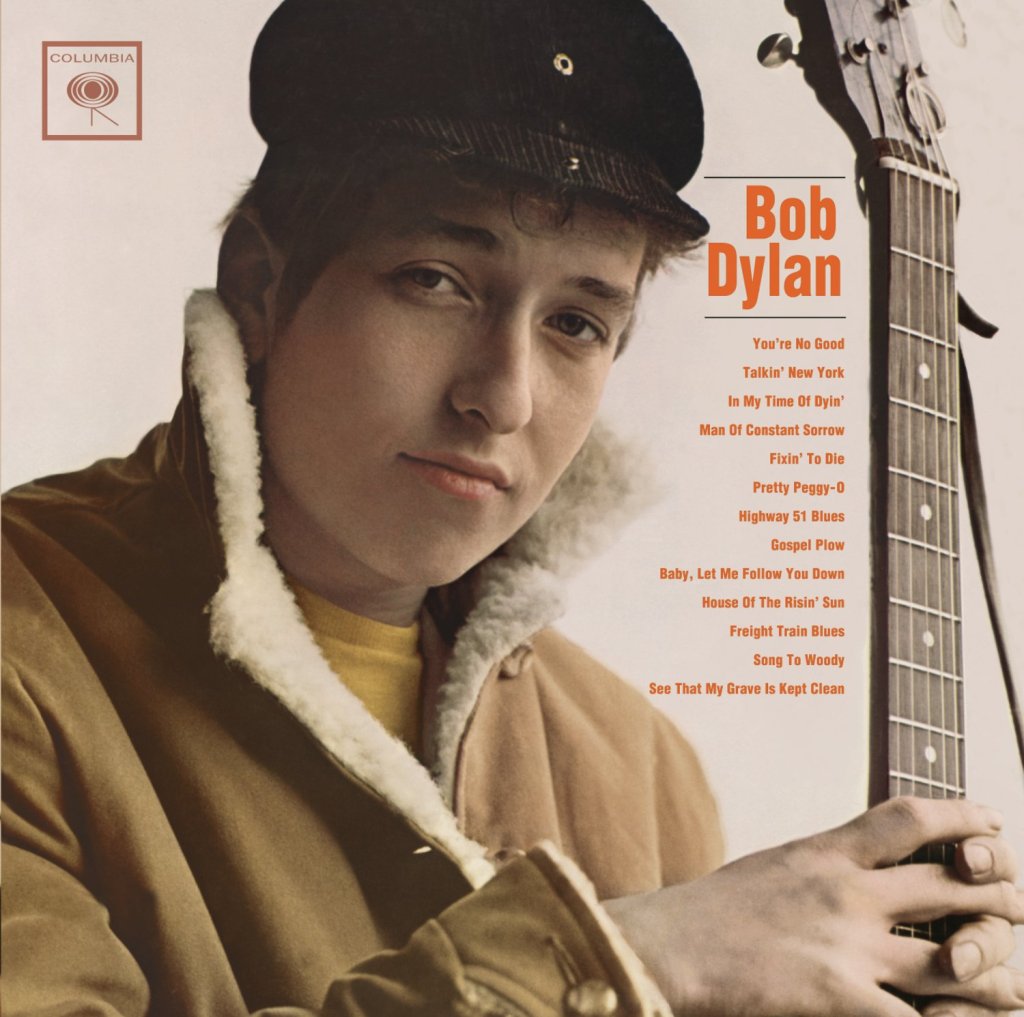
Bob Dylan, born Robert Allen Zimmerman, will go on to become one of the most influential artists of all time, and he will write a bunch of timeless classics. But here we are at the start of his recording career, and I gotta admit that I haven’t really listened that much to his debut album before this project.
Dylan grew up in Minnesota and was intrigued by the romanticism of the outsider. He was a big fan of the James Dean movies, he loved motorcycles, and he listened a lot to the R&B radio stations from the south. He listened to the folk singer Odetta, the country legend Hank Williams, and early rock’n’roll. So it seems like Bob was pretty versatile when it came to music, that he could listen to everything, but when he first started playing music himself it was in a rock’n’roll band called Golden Chords, and later Elston Gunn And The Rockboppers. At that time he played the piano, and from what I’ve read he was a pretty clumsy one.
In 1959 he enrolled at the University of Minnesota in Michigan, and his music began to take shape. He discovered blues music and began to incorporate some of this into his more traditional folk repertoire while playing at local clubs. At this time Bob Dylan wasn’t really anything special, according to some, and he’s more than once portrayed as a confident, but rather unremarkable artist. It wasn’t until the summer of ‘60 that something changed for Bob and his music. After spending the summer in Denver he started to adopt a persona that was based on a character portrayed by Woody Guthrie, who he admired a lot, in the book «Bound For Glory», and from what I’ve read he even took on a new voice, speaking and singing with more of a twang than what he usually did. Denver is also where he decided to teach himself to play the harmonica and guitar simultaneously after seeing Jesse “Lone Cat” Fuller doing exactly that.
So when Dylan returned to Minneapolis he had grown a lot as a musician, and he was now confident that he could make it as an artist, keep doing this as a professional, and play music for the rest of his life. This is also what brought him to New York.
Dylan made a big impact on the music scene in New York pretty quickly. He captivated the Greenwich Village folk scene with his charisma and energy, and he created a kind of mystique around himself by spinning stories about himself, his upbringing, his family story, creating a web of tall tales about where he was from, and who he was. He played the coffeehouses of the Village, like Cafe Wha?, The Commons, The Gaslight, and of course Gerde’s Folk City, where he played his first professional show. He also played some harmonica on records by Harry Belafonte and Carolyn Hester, which is how he came in contact with John Hammond Jr., record producer, who signed him to Columbia Records in 1961. So now he has a record contract, and I guess he feels like everything is going the way it should, and his debut album «Bob Dylan» is finally here.
Like I mentioned earlier, I haven’t really sat down and listened to this one before. But, damn, I quite dig it. It’s mostly Dylan’s versions of traditional folk songs and blues standards, but I get a rock, maybe even punk, vibe on some of these songs. Just listen to Fixin’ To Die. I don’t know if it’s the rawness of it or the somewhat restricted, or hushed, yelling that does it, but it’s definitively something more than folk music. And I god damn love it! That song is amazing. And I know punk’s not even thought of yet, but it has to have come from somewhere, right? And I believe Bob Dylan is onto something here…without knowing it maybe, but still.
«Bob Dylan» is packed with songs from his repertoire, songs he played in the clubs around New York, and you can feel the passion he brings from the stage and into the recording studio. Every song is performed with gusto, feeling, and pure honesty. The fact that this guy will become one of the biggest folk voices of our time is not well hidden on this record, and I can’t help but just smile throughout the record, even though most of the songs are about death and sorrow. In My Time Of Dyin’, You’re No Good, Pretty Peggy-O, and Gospel Plow has that roughness to them that just works so damn well, and Baby, Let Me Follow You Down is my favorite on the album together with Fixin’ To Die.
And we can’t forget the two tracks written by Bob himself. As we all know, he will become one of the best songwriters to ever walk among us, and his two first recorded ones are delivered to us right here. I’d say that Song To Woody is the best of the two, an ode to Woody Guthrie, that really suits them both. Talkin’ New York is also good, but it’s not really anything more than that.
All in all, I’d say Bob Dylan enters the stage with a bang on this one. But the public and critics of 1962 didn’t agree with me. The albums sold just enough to break even in its first year, and not many people took notice of him. However, of the folk albums I’ve listened to through this project, Bob Dylan is miles ahead. I mean, Joan Baez does everything magnificently with her classic folk renditions, but Bob has taken this genre one step ahead already on his first record. It’s not a shock of course, but since I’ve never really listened to his debut before, I gotta say that I’m pleasantly surprised and almost a bit blown away.
THE SINGLES
I really didn’t find a lot of good singles this month. The Shirelles deliver their weakest single of the ones I’ve written about here. Soldier Boy just doesn’t cut it, and compared to the others I’ve mentioned this sounds like a step back. It’s a mundane ballad that never reaches a peak, except for the top of the Billboard chart of course. So yeah, this boring track did sell very well.
Frankie Avalon, who was a ‘50s teen idol, delivers an even weaker song than The Shirelles. Frankie was never really considered a great singer, and he didn’t really have any big hits after 1959 when he topped the charts with Venus and Why. This one, You Are Mine, is a total waste of time on my part, and his good looks won’t help him here. He will start focusing on his acting career right about now anyway, so I guess we’re rid of him for the foreseeable future.
And the last non-awesome track is Funny Way Of Laughing by Burl Ives.
THE CHARTS
Billboard Top 10 Singles Chart
Week 1 (March 3, 1962)

- Duke Of Earl – Gene Chandler
- Hey! Baby! – Bruce Channel
- The Wanderer – Dion
Week 2 (March 10, 1962)

- Hey! Baby! – Bruce Channel
- Duke Of Earl – Gene Chandler
- Midnight In Moscow – Kenny Ball and his Jazzmen
Week 3 (March 17, 1962)
- Hey! Baby! – Bruce Channel
- Midnight In Moscow – Kenny Ball and his Jazzmen
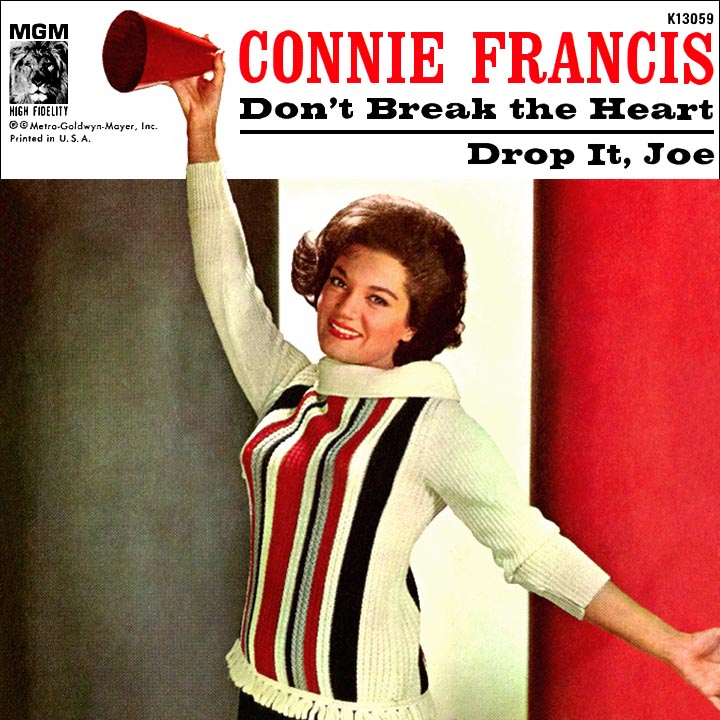
- Don’t Break The Heart That Loves You – Connie Francis
Week 4 (March 24, 1962)
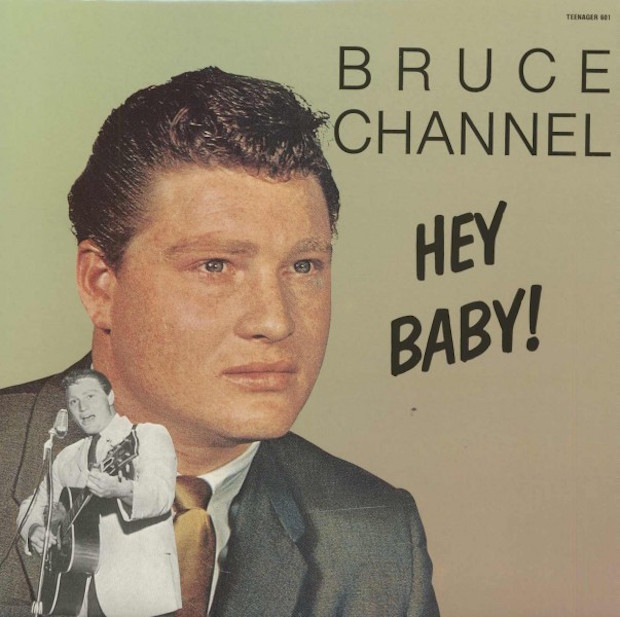
- Hey! Baby! – Bruce Channel
- Don’t Break The Heart That Loves You – Connie Francis
- Midnight In Moscow – Kenny Ball and his Jazzmen
Week 5 (March 31, 1962)

- Don’t Break The Heart That Loves You – Connie Francis
- Hey! Baby! – Bruce Channel
- Johnny Angel – Shelley Fabares
Will the twist craze ever stop? Jeebus! Percolator Twist is the last edition to this nuisance of a craze, and it’s delivered to us by Billy Joe & the Checkmates. But it’s more like a novelty song than anything else, and I’m not sure if you can dance the twist to it. So this might just be a trick to try to gain something from the craze. And a percolator is something you use to brew coffee. The main instrument is a marimba. Seriously, this song is a trainwreck.
Connie Francis keeps on delivering mundane, sleep-inducing ballads that everyone loves, and Don’t Break The Heart That Loves You is no different. I don’t love it of course, and I can’t wrap my head around why she’s so popular. But no matter how much I dislike this, she refuses to quit. Someone needs to put an end to this, cause I don’t know how much more I can take.
Those were by far the worst new additions to the chart this month, but the rest aren’t that good either. And I guess by telling you that Midnight In Moscow by Kenny Ball and his Jazzmen is the best one, it kinda tells the whole story. To finish it up we’ve got Gene McDaniels, who’s been up here before, who’s back with a song called Chip Chip, The Sensations hits #4 with their most successful single, Let Me In, and to end this month on a somewhat uninteresting note, there’s Don & Juan with What’s Your Name.
Petter Milde
This Band Could Be Your Life
 This Band Could Be Your Life