In December 1962, Norway got its first National Park, namely Rondane Nasjonalpark. Since then we’ve gotten a lot more, and thank god for that. I’m a big fan of National Parks, as they preserve areas that are both beautiful and important, so I say keep ‘em coming.

I haven’t been to Ronadane National Park myself, but I truly hope that I get the chance to visit them all. To do that though I guess I should pack my tent and get on with it, cause there are a lot of them. Anyway, I’m a big supporter of the preservation of the natural environment, so the fact that everyone started naming National Parks around the world is awesome. More of that please, and less human interference with nature.
The book «A Clockwork Orange» was published this month, and that’s a fascinating book. It’s about a 15-year-old gang leader who lives in a not-so-distant dystopian future. He and his gang are fond of ultra-violence, and Alex (the main character) is characterized as a sociopath and a juvenile delinquent, but also intelligent and quick-witted. He’s also a fan of classical music.
I’m not gonna dive further into this book, but I’d strongly recommend it. It’s also been made into a movie if you’re not a fan of books, but it won’t be released for years though….
THE ALBUMS
I’ve rustled up ten albums that I’m gonna write about this month, and the ones that excite me the most (mainly because of the artist releasing them) are the new Johnny Cash album, the debut album from The Supremes, and Marvin Gaye’s second album. There are more cool names here though, and history has proven that that’s not synonymous with great albums, so we’ll see what happens.
GEORGE JONES – MY FAVORITES OF HANK WILLIAMS
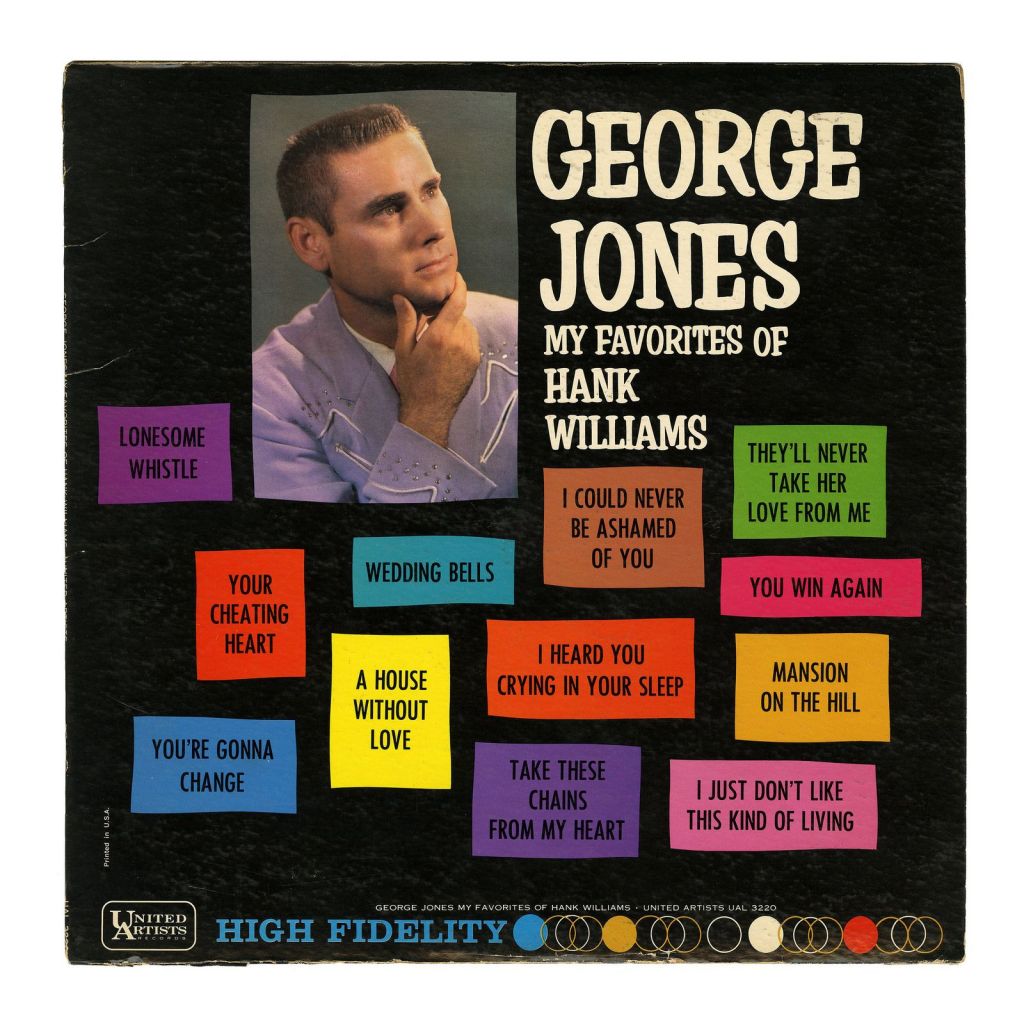
I started going through George Jones’ discography, and he actually released six albums in 1962. I’ve only managed to stumble over this one, but he’s gonna release around 160 albums throughout his career so I guess it’s only natural that I’m gonna miss a couple of them. Then again, George Jones is a country legend, so I’ll try to write about as many as I can.
George was a big fan of another country legend, and I guess there’s no surprise that it’s the guy he’s honoring with this record, Hank Williams. According to himself, he drowned in tears when he got the news of Hank’s death, and he’s also said that Hank Williams is his biggest musical inspiration. So the fact that this is his second Hank Willams tribute kinda makes sense. The first one, «George Jones Salutes Hank Williams», was released in 1960, and from what I’ve read, both of them got good reviews. The biggest difference is supposedly George’s voice, which has gotten a lot deeper.
I haven’t really listened to George that much, but his name is synonymous with country music, so of course, I know who he is. Other than listening to a song here and there, I can’t really brag about knowing what he’s been up to. But he did get his first country hit back in 1955 with the song Why Baby Why, and he released some rockabilly tunes back in the days that he is not very proud of. He actually hates them so much that if he ever came across a copy, he might destroy it. This doesn’t make me want it any less, to be honest, it actually makes me wanna find them even harder, cause this is pretty cool. One of the tracks is called Rock It, and it was released under the name Thumper Jones.
This Hank Williams tribute is a pretty good one. George’s voice fits perfectly with the tracks and he gives them new life with his genuine country voice (which might even be a bit too country). But his performance on all the tracks, with a passion that’s hard to rival in country music nowadays, is awesome, and tracks like Wedding Bells, You’re Gonna Change, I Just Don’t Like This Kinda Livin’, and Lonesome Whistle proves to be his best interpretations.
FRANKIE AVALON – CHRISTMAS ALBUM
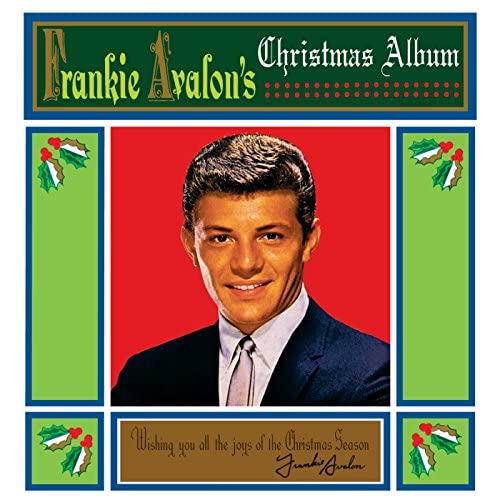
What’s December without a Christmas album? Well, it could be better, cause this doesn’t help my Christmas craving at all. This is the kind of Christmas music that you’d hear in an elevator at the mall, so it’s not at all what I’m looking for. Avalon has a great voice though, and there is probably an abundance of people who’d like this album, especially the older generation back in ‘62, and the older generation now…which I guess is the young generation back in ‘62 again…so, yeah.
There are some classics here, like Blue Christmas, White Christmas, and Have Yourself A Merry Little Christmas, but when sung like crooners, I can’t seem to get a hold of them. The latter one is probably the best cut on the album, but that’s as far as I’ll go.
Frankie’s got a big job ahead of him, trying to rebuild after his teen idol era, and I can’t see that this album is gonna help, but good luck anyway.
MARVIN GAYE – THAT STUBBORN KINDA FELLOW
Marvin Gaye’s second album is named after his first hit single, «That Stubborn Kinda Fellow», just like a lot of the albums from this period are named after hits. I guess that’s a sound idea. Most people have probably heard that song on the radio or something, so it might be easier to buy an album when you know you like at least one of the songs, and chances are that there is more like that on the album as well. This is all just me rambling of course, but I have been told that albums were quite expensive back then and that a lot of people had to save up to afford one.
Ok, let’s not get sidetracked here. I’m a lot more fond of Marvin’s second album than I was of his first. He’s still doing things I haven’t heard before, but this works a whole lot better. And he is on Motown after all, so it’s not surprising that he’s recording this kind of music as it kinda is Motown’s thing. And there is no doubt that Marvin Gaye nails the R&B/pop sound.
The hit single and title track, Stubborn Kinda Fellow, is a perfect start to the album, followed by three other great songs, Pride and Joy, Hitch Hike, and Get My Hands On Some Livin’, but to be honest, there aren’t really any bad songs on this album, so there’s no reason for me to sit here and list them all. What I can do though, is mention the one I like the least, namely Soldier’s Plea. What’s interesting about that though, is the fact that Soldier’s Plea is the only song on the album not written by Marvin Gaye or his wife, Anna Gordy Gaye (Marvin has written/co-written six of them, and Anna three).
The conclusion is that Marvin Gaye has upped his game since his debut. He’s gone a bit more pop, and it’s much more enjoyable.
THE SUPREMES – MEET THE SUPREMES
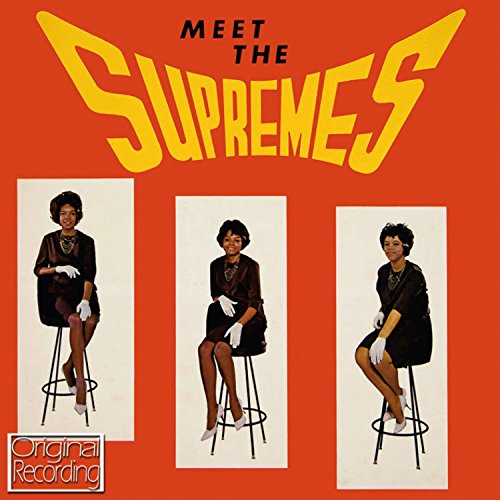
This soon-to-be world-dominating trio is still looking for its first hit when their debut album is released. The singles released so far haven’t done well on the charts, even though I liked I Want A Guy a lot, and I’m pretty sure Berry Gordy has a plan running in the background as we speak. Cause even with songwriters like Smokey Robinson, Lamont Dozier, Brian Holland, and Berry Gordy himself, the potential that is within this group is yet to be reached.
That doesn’t mean this album sucks though. «Meet The Supremes» has a lot of good stuff to offer, like the aforementioned single, I Want A Guy, You’re Heart Belongs To Me, Who’s Lovin’ You, and Let Me Go The Right Way. Unfortunately, there aren’t any obvious hits. It also took a while before my favorite stuck with me, so even though most of the songs are ok, I’m not sure I can call this an essential album if you’re looking to dive into The Supremes catalog. But hey, it is their debut album.
HERB ALPERT & THE TIJUANA BRASS – THE LONELY BULL

This is the first album released on A&M Records, and what’s better than releasing the debut album from one of the founders, Herb Alpert. This isn’t Herb’s first runaround in the music business though. He co-wrote some of Sam Cooke’s hits, for example, Only Sixteen, under the pseudonym Barbara Campbel (Alpert, Lou Adler, and Sam Cooke), he has released music under the name Dore Alpert at RCA, and he has produced a version of the hit novelty song Alley Oop with the band Dante & the Evergreens.
Dore Alpert was some ‘50s-pop-thing with what I can only assume is Herb Alpert on vocals, but there’s no sign of what will become his signature instrument; the trumpet.
A&M Records started out as something called a shoestring operation and they worked out of Herb’s garage at the beginning, but with the help of Herb’s new band, they rose to become one of America’s biggest independent record companies over time. During his musical career with Herb Alpert & the Tijuana Brass, he will sell more instrumental records than any other band throughout history, so I guess this band is a major reason that A&M will grow as big as it will.
The album is named after the debut single and opening track, The Lonely Bull, which became a hit and rose all the way up to #6 on the charts. There are a lot of good tracks on this record, and it is definitively a mood setter with its Latin inspiration, and even though it might sound a bit lame or stupid every now and then, it’s first and foremost a solid piece of work. If you’re as tired of The Ventures and The Shadows as I am, then Herb Alpert & the Tijuana Brass’ debut album is the way to go right now for your instrumental needs.
SINATRA-BASIE – AN HISTORIC MUSICAL FIRST

I’ve made it pretty clear that Frank Sinatra hasn’t been able to impress me so far during the ‘60s. I actually don’t think I’ve been a fan of even one song he has released so far. When that is said though, Frank has sold shitloads of singles and albums, and his voice is obviously magnificent, so my personal opinion is no indication that he sucks, and that’s not the point either. I’m just sayin’ that there should have been a big chance that I at least liked some of the tunes coming from this man, but so far Frank has come up short.
This doesn’t change much on «An Historical Musical First». I’m still struggling to decide if there are any tracks I like better than the other, and I probably won’t play this record again after I’m done writing this. But it is a step up from the other albums I’ve written about so far, and by that, I mean that it is possible to listen to this entire record without getting bored to death.
‘An Historical Musical First’ is a reference to the fact that this is the first time Frank Sinatra and Count Basie collaborate on an album. And there are a lot of people who have been waiting for this to happen. Personally, I can’t see what all the fuzz is about. At least after listening to the result. There’s nothing here that makes me think that this collaboration has managed to spark something amazing, and I can’t see how these guys complement each other better than anyone else. They are two big names within the same genre, I get that, but is it really so much better than any other constellation? One difference is the fact that I’m able to listen to the whole record without turning it off but other than that I can’t see or hear, anything special. If I were to give some high fives, it would be to Frank Sinatra because he sounds great (as always), and it feels like he’s a bit more into it than on the other records. But, I mean, that should be a given, it is, after all, released by his own record company.
And if I was forced to pick my favorite tracks it would be Nice Work If You Can Get It, and (Love Is) The Tender Trap.
THE BILL EVANS TRIO – MOON BEAMS

I don’t know if «Moon Beams» is a tribute to his deceased buddy, Scott LaFaro, but both the mood and some of the song titles sure make it feel like one. And the fact that this is Bill Evans’ first album after Scott died makes it probable as well. But I’m not gonna delve to much into that, cause this album would have been beautiful no matter what.
The new bassist is called Chuck Israels, and even though he might not be as good as LaFaro (beats me really), I think he does a damn good job. The new trio works well together, and even though there might not be as much improvisation on this album, it doesn’t take anything away from this beautiful piece of work. The album consists of a bunch of ballads, and Bill’s piano is enchanting in a way I haven’t experienced before.
Jazz has been a challenge for me since the very beginning of this project, but Bill Evans is one of the artists that has grown on me and helped me understand a little bit about how to listen to jazz. I also bought a book called «How To Listen To Jazz» by Ted Gioia, but so far the music has had a better effect on me…
I’m still struggling to choose any favorite tracks from jazz albums, and that’s not looking to change here. I do like RE: Person I Knew, If You Could See Me Now, and Very Early, but I would recommend listening to this album from beginning to end. That’s how I found the beauty in this recording.
DEXTER GORDON – GO

I believe Dexter Gordon is the first jazz musician from Los Angeles I’m writing about on this here project. I’m pretty sure that most of them have been from the east coast, but I’m not 100% on that one. Anyway, Dexter Gordon actually moved to New York in the ‘40s to play with artists like Dizzy Gillespie and Billy Eckstine, and before he moved over there he played with Louis Armstrong. But Dexter isn’t just an anecdote in jazz history. He was an influential artist within the bebop generation, the most awesome tenor saxophonist in the bop era, and he could battle nearly anyone at a jam session. So the fact that I haven’t even heard about this guy…doesn’t say much really.
Gordon started playing the clarinet at the age of thirteen back in the ‘30s, but he quickly changed to the saxophone. And when he was still just a kid in school, he played in Chico Hamilton’s band, which I guess proves that he had something going on already as a young man. In 1943 he played with Nat King Cole at a recording session, and after that, he played with a couple of other dudes, including Louis Armstrong’s big band. When he moved to New York, that’s when he established himself as the artist he is today.
But I got to admit that I got a bit hung up on this ‘battle’ thing. Considering I was born in the ‘80s, there’s only one type of battle I’m familiar with, and that’s hip-hop battles, so the fact that they did this in jazz as well fascinated me (even though it makes perfect sense that they did). So I had to do some research and I discovered that Dexter has recorded at least two so-called ‘battle albums’ with some other guys, and those are called «The Chase» and «The Duel». Just figured that it might be cool to check them out.
After 1952 there was an abrupt stop in Dexter Gordon’s recording career (except for two albums released in ‘55). The thing is that he was fucked up on drugs and spent most of his time hanging out in different prisons, and he apparently didn’t get his act together until the ‘60s. But even though those must have been rough times, he came back with a bang on Blue Note Records and released a string of great albums. And that’s where we are now, with his latest release, «Go».
I haven’t checked out Dexter’s back catalog, so it’s difficult for me to compare new vs. old, but I can say that this is a pretty good album. It has a great energy with lots of up-tempo cuts, and the ballads sound great as well. And even though there are several jazz artists I like better than Gordon right now, he definitively has found a spot in my very little jazz heart. I’m gonna try to keep track of him going forward, and I’ll end this with the mention of a couple of my favorite tracks from the album; Cheese Cake and Second Balcony Jump.
NAT KING COLE – DEAR LONELY HEARTS
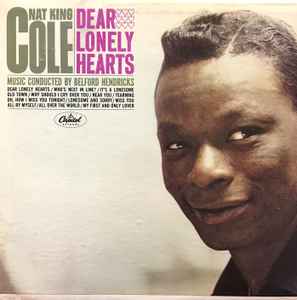
I kinda liked Nat King Cole’s last single, Ramblin’ Rose, but I can’t say the same about this album. Nat does sound great, but these heartbreaking ballads with the church-esque choir just sound dated to me. I can’t get a grip on any of the tracks, and it just ends up as a boring record.
It managed to produce a couple of hits though, or one really. Dear Lonely Hearts was released before this album was even thought of, and it was really more the reason this album was made, but All Over The World became a hit after this album was released. And the album itself was a major hit, spending more than eight months on the chats.
So even though Nat’s singing is great, and the album was a huge success, I just can’t agree with this being a good record. I haven’t really listened to a lot of Nat King Cole’s older stuff, but it has to be better than this.
JOHNNY CASH – ALL ABOARD THE BLUE TRAIN
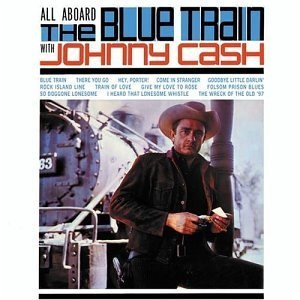
And now we’re ready for another Johnny Cash compilation from Sun Records. «All Aboard The Blue Train» consists only of songs about trains (or songs that at least mentions trains), and even though that sounds stupid, Johnny Cash makes it sound cool.
This is a classic country/folk album, and although most of these tracks have been released earlier, they deserve to be heard again. We are reunited with great songs like Folsom Prison Blues and Hey, Porter which was recorded in the ‘50s, we’ve got Come In Stranger, Give My Love To Rose, the Hank Williams tune I Heard That Lonesome Whistle, and Rock Island Line, a song that was first recorded by some inmates a prison farm back in 1934.
All in all, this is a great Johnny Cash compilation, and it even incorporates a couple of tracks I haven’t heard before. So yeah, I got nothing bad to say about this one.
THE SINGLES
Lots of great singles to write about this month, but my main focus will be on Bob Marley and his first two singles. I’m not sure when these were released exactly, but it was in ‘62, and I figured it was appropriate to write about them in December as it is kind of a Christmas gift that Bob Marley’s career has started.
Judge Not, his debut single, was released under the name Robert Marley & Beverley’s All-Stars, with the B-side being Do You Still Love Me?. Both songs are ska music, and they both sound dirty enough to have been recorded in a shed somewhere, but that only serves to go give the tracks some extra charm. Judge Not is the cooler one of the two sides with a catchy chorus and solid enough lyrics. This is also the first time I’ve written about ska music, which is also something to celebrate. But it’s not the first ska song released or made, as people like Don Drummond, Ernie Ranglin, Clement Dodd, Stranger Cole, Prince Buster, and Duke Reid should get credit for that (though I couldn’t find who actually did release the first one). Anyway, it was in 1962, around the same time Jamaica gained its independence from British rule, that the island entered party mode and this genre blew up.
Do You Still Love Me? is also pretty cool. And even though Bob Marley sounds like a pre-teen, it sounds like he knows what he’s doing.
Bob’s second single, One Cup Of Coffee, released under the name Bobby Martell, feels a bit more chaotic, but Bobby is in complete control of the vocals. All three songs are important pieces in music history and mark the start of a brilliant career that will have an impact on a shitload of people, so I’m very happy that I didn’t miss it in this project. Whilst none of these turned into hits or kickstarted Bob Marley’s career, I believe anyone who lives music should check them out. By the way, The B-side on this one is an instrumental track called Snow Boy, and the fact that Bob doesn’t sing on it makes it a little bit less interesting, but it’s alright.
Lesley Kong, who ran an ice cream parlor/record store in Kingston, started Beverly’s Records after Jimmy Cliff auditioned Dearest Beverley at the shop, and Jimmy Cliff’s Hurricane Hattie was the first release on the label. Beverley’s was instrumental in the development of ska music and rocksteady into reggae, and even though Lesley Kong didn’t have any producing experience he made shit happen.
Del Shannon is back with a good song called Little Town Flirt that made it to #12 on the Hot 100 chart. Personally, I would say that it deserved to go even higher, but that doesn’t change anything. Parts of this song make me think that Father John Misty is a reincarnation of Del Shannon, but that’s something I have to get back to in a few decades (if I’ll remember it). But yeah, I like this song.
Bobby Vee’s The Night Has A Thousand Eyes is not as good as Del’s, but it did well on the charts. It might be one of Bobby’s best tracks, but I’m not really a big fan so that might not mean much. The song isn’t bad though.
Cliff Richard almost fool’s me into thinking Bachelor Boy is a cool song because of the intro, but the second he starts singing I’m brought right back to life. The track isn’t awful, and it might be Cliff’s best song so far in the ‘60s, but considering what he has delivered so far, I wouldn’t necessarily call that a compliment.
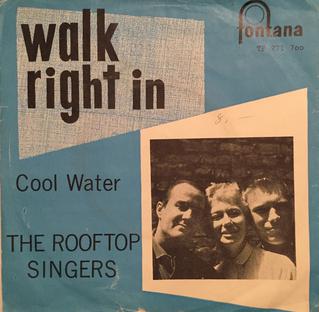
The Rooftop Singers though (which I’ve never heard of), they’re releasing a great song; Walk Right In. The distinctive sound is coming from two 12-string guitars, and just like that, a folk song for the ages is made. The track was originally recorded in 1929 by Cannon’s Jug Stompers, and The Rooftop Singers’ version helped him back on his feet again, as he wasn’t even able to pay his electricity bill at the time. Love this song!
And then there’s Skeeter Davis, releasing her biggest hit; the beautiful The End Of The World. This song makes me recant all the bad things I’ve been thinking about her. As I’ve made it clear already, this song is great, and to be honest, the only reason that I have been walking around thinking that Skeeter Davis was awful, is because of her name. I mean, she’s called Skeeter. And Skeeter feels like the female version of Scooter, and no one wants anything to do with anyone who’s called Scooter. So yeah, that’s how shallow I can be…. The End Of The World is a gem of a song, which I will love for the rest of my life. And Skeeter, I’m sorry for doubting you.
I’ll finish off the singles this month with a Christmas Classic. Rockin’ Around The Christmas Tree was originally released in 1958 when Brenda Lee was only thirteen(!) years old, and it has (as of 2022) sold more than 25 million copies. I’m quite sure that this song is well-known by everyone, but I had no idea that it was Brenda Lee who sang the original. And even though I’ve given Brenda a lot of shit earlier, I believe this is the kinda music that makes her shine. Not necessarily Christmas music, but rock’n’roll/rockabilly sound. This song is a no-brainer on my Christmas playlist, and probably will be for the rest of my life.
THE CHARTS
Billboard Top 10 Singles Chart
Week 1 (December 1, 1962)
- Big Girls Don’t Cry – The 4 Seasons
- Return To Sender – Elvis Presley
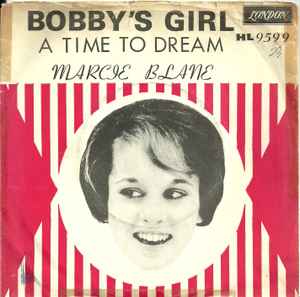
- Bobby’s Girl – Marcie Blane
Week 2 (December 8, 1962)

- Big Girls Don’t Cry – The 4 Seasons
- Return To Sender – Elvis Presley
- Bobby’s Girl – Marcie Blane
Week 3 (December 15, 1962)
- Big Girls Don’t Cry – The 4 Seasons
- Return To Sender – Elvis Presley
- Bobby’s Girl – Marcie Blane
Week 4 (December 22, 1962)
- Telstar – The Tornados
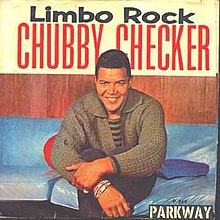
- Limbo Rock – Chubby Checker
- Return To Sender – Elvis Presley
Week 5 (December 29, 1962)
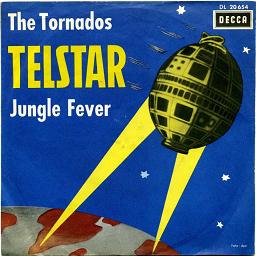
- Telstar – The Tornados
- Limbo Rock – Chubby Checker
- Bobby’s Girl – Marcie Blane
Two new additions to the charts this month, and I kinda like both of them in different ways.
Esther Phillips, who got her breakthrough in the ‘50s with hits like Double Crossing Blues and Mistrustin’, gets her first cross-over hit with Release Me this month (#1 on the R&B chart, #8 on Hot 100). The song was first released in 1953 and has been recorded by a bunch of artists since then, so Esther won’t get points for originality, but she gets credit for a job well done.
The last one is from a group called Bob B. Soxx & The Blue Jeans and the song is Zip A Dee Doo Dah. These guys were produced by Phil Spector and were originally a showcase band for Bobby Sheen, but on this track, their first hit, Darlene Love is the lead singer. The track is originally from a Disney movie from 1946, «Song of The South», and I like it a lot. It sounded a bit stupid, to begin with, but it grew on me more and more each time I listened to it.
Petter Milde
This Band Could Be Your Life
 This Band Could Be Your Life