1963 starts off with a lawsuit against Chubby Checker and his team, as Gary U.S. Bonds sued him for plagiarism.

So Bonds is taking Chubby to court saying Chubby’s «Dancin’ Party» is a copy of his song «Quarter To Three». And I gotta say that I agree with Bonds on this one. I’ve listened to both songs a couple of times now, and there are definitive similarities, so I get why Bonds took action against Chubby. It was all settled out of court though. This of course makes me think that Chubby & Co. realized that they were caught red-handed and paid up to avoid bad publicity. But it’s pretty easy to read between the lines here.
What’s said to be the first anime TV show airs in Japan for the first time. «Tetsuwan Atom» (鉄腕アトム), better known as «Astro Boy» in the Western world, is based on the manga series of the same name and was created by Osamu Tezuka (also known as the ‘’Godfather of Manga’’). I’m not an expert on manga or anime, but I felt that this deserved some attention. And now that I’ve written about it, I’m probably gonna watch a couple of episodes from the original series.
Hakeem Olajuwon, my favorite basketball player as a kid, was born in January. He’s gonna grow up to become a big star at Houston Rockets in the NBA, and my collection of sports cards of him is safely stored away in my attic. Jose Mourinho is born, Till Lindemann, the boss man of Rammstein, sees the light of day, the other guy from Wham!, Andrew Ridgeley, begins his life in the shadows, and Erling Kagge, the publisher of my father’s books and an explorer who was the first to reach the South Pole alone, is the last guy I’m gonna mention here.
I can also add that Robert Frost, the poet, died on January 29th.
THE ALBUMS
My research for this project is getting more comprehensive and I’m finding more albums, more singles, I’m gonna start adding the Country and R&B charts, and shit just adds up. I’m happy about it though, cause I want to write about as much as possible (or at least mention), but the workload is getting rough. Anyway, I’m gonna keep pushing, and maybe just change up my methods as I go along. So as always, I’m gonna get some uninteresting albums out of the way to begin with.
I can start off with Eddy Arnold’s «Our Man Down South». This album was a part of a series that RCA Records was releasing to promote different artists from different regions and/or cities, and even though it isn’t a bad album at all, I just felt that it didn’t bring anything to the table either. Eddy Arnold was at the height of his career from 1945 to 1955, when he scored twenty-one #1 hits and 68 charted singles on the Country chart. He also scored a lot of cross-over hits like Cattle Call, I’ll Hold You In My Heart (Till I Can Hold You In My Arms), Anytime, Boquet Of Roses, and Just A Little Lovin’ Will Go A Long Way. But he’s been pretty successful after that as well.
It’s been said that Patti Page sold more records than any other female artist in the ‘50s, and she’s supposedly sold more than 60 million records in the course of her career. Her new album, «Patti Page On Stage», won’t get any attention here though. And Steve Lawrence, another crooner, doesn’t make me wanna do anything with his new album, «Winners!». His breakthrough came with the song Mine And Mine Alone when he was 16 years old, and he eventually married Eydie Gorme.
The last one to only get a mention is André Previn & His Orchestra and their album «Sittin’ On A Rainbow», as it’s just not my kind of thing at all.
DUKE ELLINGTON & JOHN COLTRANE – DUKE ELLINGTON & JOHN COLTRANE
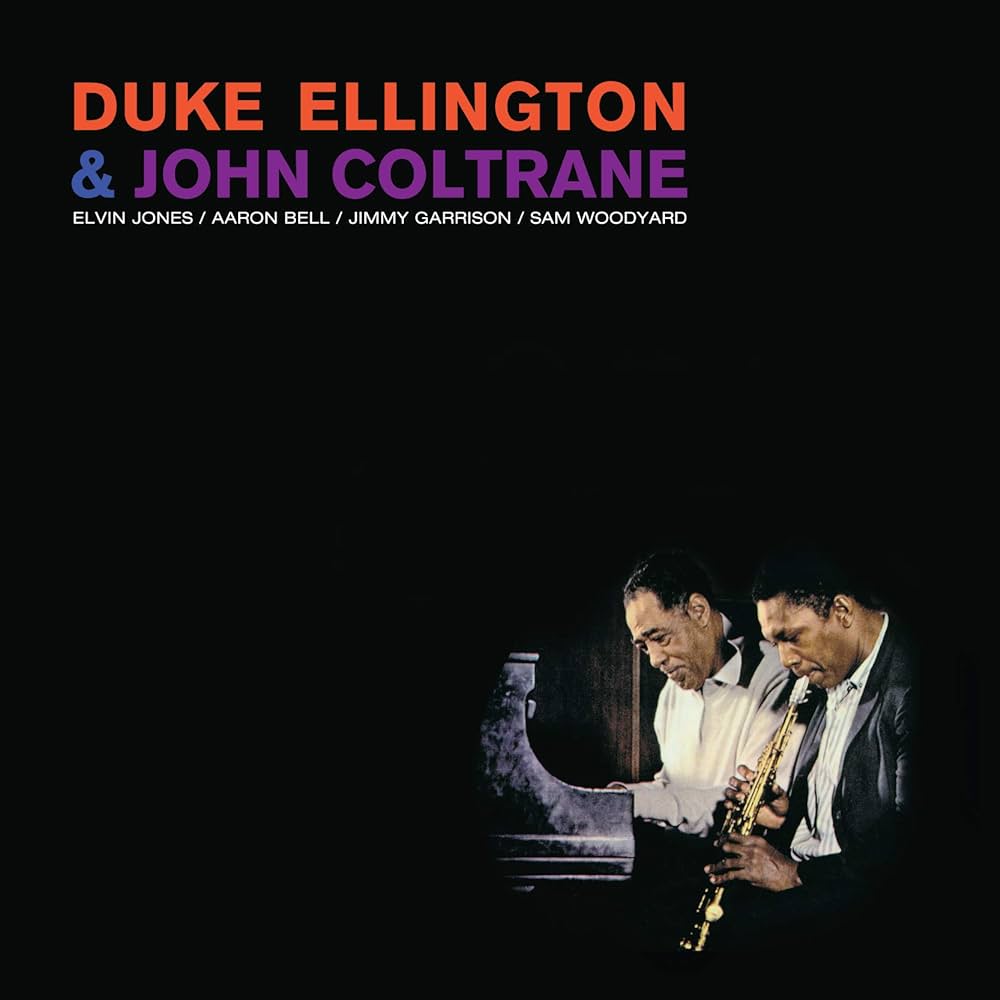
Duke Ellington and John Coltrane. That’s an appealing duo! Duke, an old-timer born in the 19th century, and John, a newer jazz hero. Both of them have helped form this genre, so to be served up with this album is quite a treat.
I’ve already covered a lot of Coltrane’s story up until now, so I’m not gonna go much deeper right now, but Duke hasn’t gotten much attention yet. And Duke is a legend, so it’s only natural that I have to research him a bit when I get the chance. First of all, he was born in 1899, more than a hundred years ago, and that fact alone is pretty cool. I mean, a musician from Washington, grown up and broke through in a racist America, and here I am, in the year 2024, listening to his music. That’s how you scratch your name into the fabric of this world.
Duke, or Edward, grew up, as mentioned, in Washington, D.C., and unlike a lot of other African Americans at the time, he had a good childhood. His father was a butler (even worked at The White House for a period) and Duke was spoiled by his parents. He started playing the piano as a kid but didn’t go all-in until his teens. By 1927 Duke’s band (cause that’s what he was, a band leader) was well established on the east coast and at clubs in New York, but it was after they gained a permanent resident at the Cotton Club in Harlem shit really started to happen. The band stayed at the Cotton Club until 1931, and during that period their fanbase grew substantially. Early in the ‘30s, the band cemented their position with tours in the US, tours in Europe, and even some appearances in films.
Duke also wrote some songs that are considered classics during this time. Black And Tan Fantasy, Creole Love Call, and Hot And Bothered are the ones I’ve seen mentioned the most, so if you want to check out some early Duke Ellington, I’m guessing that’s a good place to start. During the ‘30s he wrote even more songs that are worth checking out, like Rockin’ In Rhythm, Old Man Blues, The Mooche, Mood Indigo, and one of the first compositions that were longer than three minutes, Creole Rhapsody. There are shitloads to write about Duke, so I think I should save some for later, or else I’ll never be able to stop.
This album, «Duke Ellington & John Coltrane», consists mostly of tracks composed by Duke Ellington. I kind of expected that considering how long he’s been in the game, but Coltrane has composed one of them, Big Nick, and it happens to be one of the best tracks on the album. What’s more surprising though is the fact that it isn’t Ellington’s band backing them on this session, but actually Coltrane’s boys. I think that’s the reason this recording has that low-key, relaxing atmosphere, and it might even be the reason this album is as good as it is.
Cause this album is breathtaking. It’s a beautiful journey, laced with amazing tracks from beginning to end. It took a while for this album to sit right with me, but when it did it’s almost impossible to stop listening to it. It soothes me in a way I haven’t experienced since my son was born about a year ago. It gives me inner peace, to be honest, and I can’t say I ever felt like that listening to an album, ever.
The first part of this record, the first three tracks, are absolutely magical. A Sentimental Mood, Take The Coltrane, and Big Nick are without a doubt the best cuts on this album. They set the standard, they’re the highlights, but that doesn’t make the rest superfluous. No, this album is pure gold, and probably the best jazz album I’ve heard so far from the ‘60s. I mean, what a great duo! It sounds like they were born to play together.
LESTER FLATT & EARL SCRUGGS – HARD TRAVELIN’
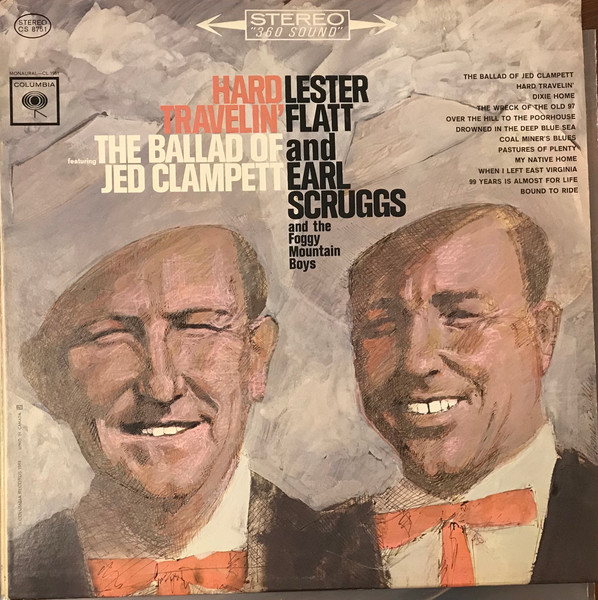
I’ve got a soft spot for these guys. The first record I wrote about swept me off my feet with some crazy bluegrass music, where Scruggs’ banjo was the definitive center point. A party of an album, and a great new acquaintance. They started their career as members of Bill Monroe’s Bluegrass Boys, and in 1948 they formed the Foggy Mountain Boys with a couple of other dudes.
In 1950 they signed a recording contract with Columbia/CBS Records, and by then they had already established themselves as a breath of fresh air within the bluegrass genre. At some point, they added a guy who played the dobro, which helped their sound become a little less frantic, and their popularity started rising as they appeared on something called Folk Sound USA and played at the Newport Folk Festival in 1960.
And here’s their new album, «Hard Travelin’», and the song The Ballad Of Jed Clampett, known as the theme song for the TV show «Beverly Hillbillies». The album is slower than the first one I wrote about back in 1960, but it’s not without its charm. I’m not head over heels, but there are some good songs like Hard Travelin’, Coal Miner’s Blues, Wreck Of The Old ‘97, and some others. However, I don’t think this album would win them any new Flatt & Scruggs fans.
MARY WELLS – TWO LOVERS AND OTHER GREAT HITS
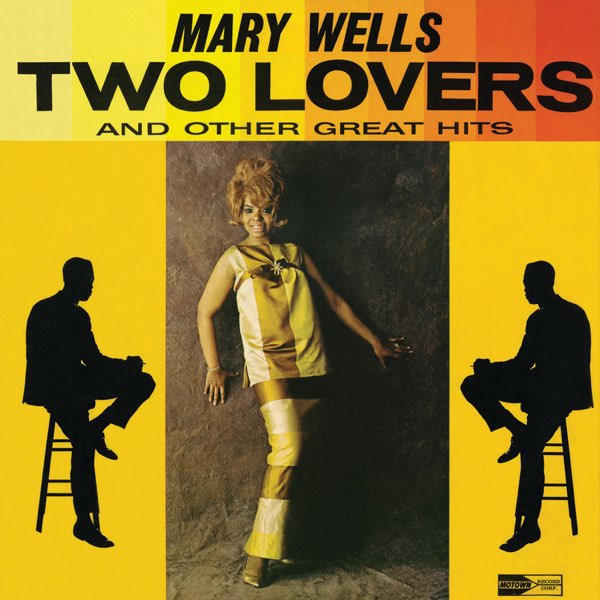
Mary Wells has released some good tracks since 1960 (with the help of Smokey Robinson). Hits like The One Who Really Loves You, and You Beat Me To The Punch have helped her on the way, and of course, the fact that she had one of Motown’s first Top 50 tracks, Bye Bye Baby. The delivery of good songs has made me interested in following her career, and the fact that I hadn’t heard of her before I started this project.
Two Lovers is Mary’s latest Top 10 hit (it stopped at #7 in 1962), which would make it three Top 10 hits in 1962 alone. That’s pretty impressive. I’m not a big fan of the song myself, but it’s alright. The lyrics are pretty interesting though. The lyrics, and the title of the song, make you think that she’s singing about her two lovers, but at the end of the song, it becomes clear that her lover has a split personality. So a little twist at the end there. Not the most exciting one, but still enough to mention.
Another hit would emerge from this record, Laughing Boy, which stopped at #15 and would be the song that ended her Top 10 streak. This one is also alright, but I can’t stand the ‘hahahahaaaa’ backup singing, and it ends up ruining the song for me. I can safely proclaim that Mary is delivering poorly with the album. At least compared to what she has done so far. Not one of the songs is any more than ok, although none of them are bad either. Sometimes that’s even worse than a straight-up terrible album, cause then it’s at least something to talk about. But here I just find myself going blank. She’s got songs written by Smokey Robinson, Berry Gordy, Marvin Gaye, and Brook Benton, and a song she has co-written, but it’s just not enough to wow me.
More alright songs are Operator, My Two Arms – You = Tears, Stop Right Here, and Was It Worth It.
I’m not a fan of comedy albums, and especially not comedy music. Ok, I can laugh a bit every now and then, but listening to this kind of stuff just feels like a waste of time. Allan Sherman is a comedian, an actor, and now a musician. He debuted in 1962 with the album «My Son, The Folk Singer», which became an instant success, and he didn’t waste another minute and released his second album, «My Son, The Celebrity», just three months later. And wouldn’t you know, this became a huge success as well. Yeah, both albums hit #1, and once again I can prove that whatever I don’t like, isn’t necessarily bad.
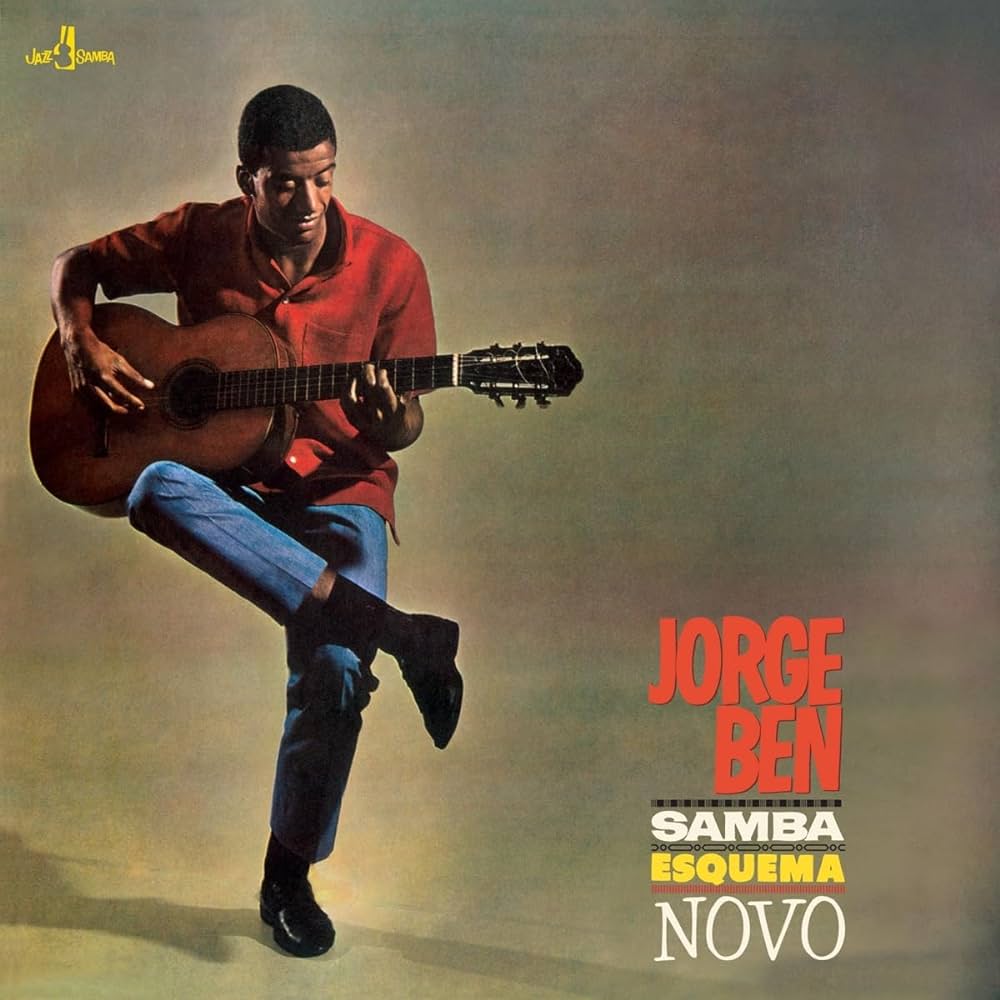
JORGE BEN – SAMBA ESQUEMA NOVO
I don’t know much about Brazilian music. I know about a band called Boogarins (from present time) as I’ve booked them a couple of times at The Crossroad Club in Oslo. I know that Brazil = samba. And I’ve learned through my research that Brazil is, or will be a small bossa nova nation. Other than that, I’m completely lost. I don’t know any of the artists that are big within any of the genres I’ve mentioned, and I’m pretty sure I haven’t even listened to any of them. That all changes right at this very moment, of course.
Cause Jorge Ben is Brazilian. And he makes samba music. I have to admit though (and show off my cultural ignorance) that I actually thought samba was just a carnival dance and not a genre of music. And when I’m writing this I realize how stupid it is to think that a dance doesn’t come accompanied by music (cause that’s kind of what I’m saying)! And yeah, I could have left all this out of this text, but where’s the fun in that? I figured it’s better to share my stupidity and try to laugh about it instead of pretending that I’m in complete control of whatever it is I’m doing.
«Samba Esquema Novo» (New Style Samba) is Jorge Ben’s debut album, and the genre is described as both samba and bossa nova. He was discovered by Philips Records when he was playing a show at a small bar, where one of the big men from Philips had managed to end up, and it was the opening track on the album, Mas Que Nada, that sealed the deal. And even I’ve heard that song before. I’m not sure if it is Jorge Ben’s original version I’ve stumbled upon before though, cause this song has been covered, interpreted, and probably stolen by loads of other artists. And man, what a great song it is! I didn’t know what to expect from this album, but merely one song in and I’m almost in love.
And it doesn’t stop there. This album is gonna be a hit at home when we’re BBQ’ing on the patio. It just oozes summer, and it never gets boring. This is an album where if I’m gonna pick my favorite tracks, I’m just gonna end up naming them all, so I’m just gonna name a couple of them; Balanca Pema, Rosa, Menina Rosa, A Tamba, and the rest of them.
Thank you to Jorge Ben for introducing me to samba, and a whole new genre to dive into. Fuckin’ hell, discovering new music is the reason I started this project!
JOHN COLTRANE – BALLADS
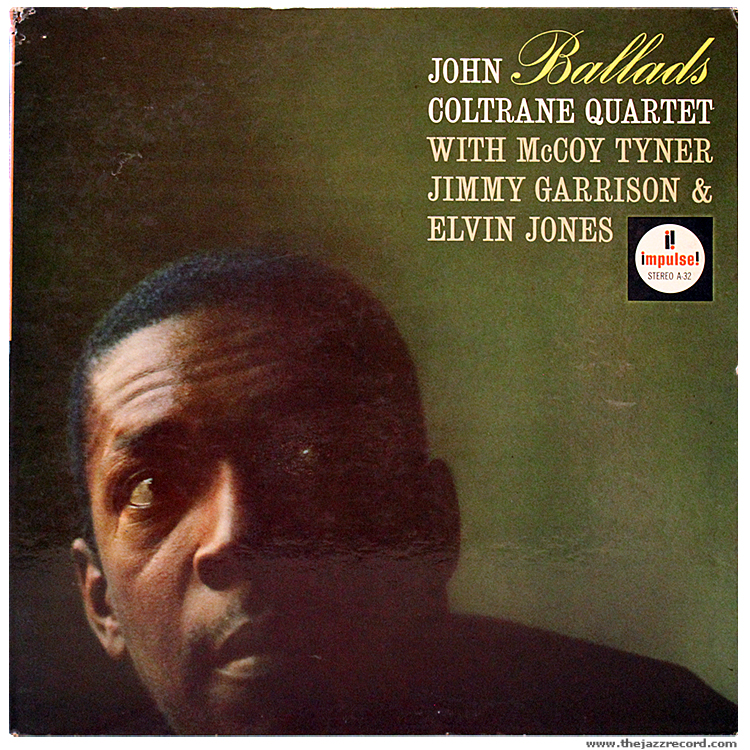
It has been said, by some, that «Ballads» is an album Coltrane didn’t want to record. And if I were to believe everything I read, then there are a lot more conspiracy theories about this album as well. I don’t know what to make of that, but in my opinion, this album doesn’t sound like the Coltrane I’ve gotten to know so far. Not that it’s totally out there, but to me, it feels a bit more scripted and more laid-back. But I’m no jazz expert, so I’m not gonna say too much about stuff I don’t know, however, compared to the other Coltrane albums I’ve listened to, this doesn’t make it all the way to the top.
And compared to the album he did with Duke Ellington (the one written about earlier, further up here), it doesn’t stand a chance.
However, not enjoying an album from a great artist as much as you did another, does that make it a bad one? Nah, I wouldn’t say that. «Ballads» is beautiful in many ways, it just wasn’t what I expected. It’s quality, no doubt about that, it just doesn’t hit me in the way I wanted it to. But no, «Ballads» isn’t bad, it’s just different. Or maybe I just didn’t listen to it enough…
THE SURFARIS – WIPE OUT
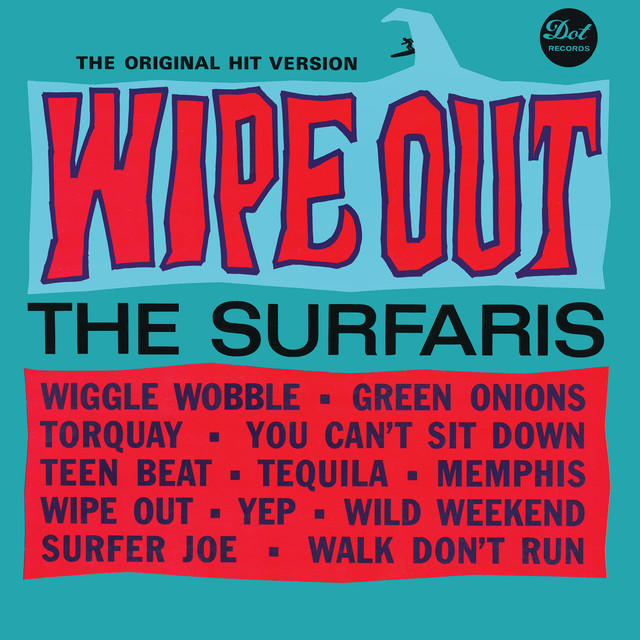
I guess it’s pretty obvious what kind of music The Surfaris are playing, but I’ll say it anyway, they play surf rock. Their debut album is called «Wipe Out», but I guess Wipe Out is better known as their debut single and biggest hit. I’m sure this song is known to most, and it is a pretty cool one, with a catchy tune and drum rolls that build up each break perfectly. A forever-hit, said a bit carefully.
Wipe Out was actually just the B-side to Surfer Joe, which is also included on the album, but it didn’t do as well, and it isn’t as good. It’s actually pretty weird that they chose that one as the A-side to be honest. Surfer Joe is the only non-instrumental track on the album, and the vocals are pretty bad. The song feels clumsy and unfinished, or maybe unmixed, and I don’t even think I would have included it on the album.
There’s a lot of good surf rock here though, so I would consider this to be a good debut from the California band. The two tracks mentioned are the only ones written by the band, but I would recommend checking out Green Onions (Booker T. & The M.G.’s), You Can’t Sit Down and Wild Weekend just to mention a few.
DEAN «TEX» MARTIN – COUNTRY STYLE
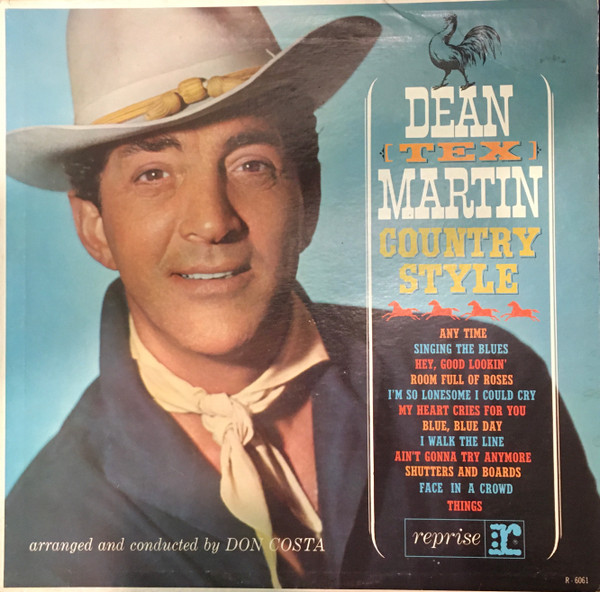
I’ve tossed most of Dean Martin’s albums to the curb so far, as I usually do with albums I don’t like. This time I won’t do that to Dean, though. Not necessarily because Dean has delivered such a great album, but I like the fact that he’s gonna give country songs a go. I’m hoping that it will be fucking awesome, dreading that it might be completely awful, and expecting it to be business as usual, i.e., boring.
Dino Paul Crocetti was born in Steubenville, Ohio, all the way back in 1917. He left school in the tenth grade, worked a bit as a shoe-shine boy, then became an amateur boxer under the name “Kid Crochet”. And from what I’ve read about him it actually looks like he didn’t start singing until he was 24 years old, or maybe that was when he did his first show or something. Anyway, he signed with Capitol Records, in 1948, where he released a few singles that did well during the next ten years, like I’d Cry Like A Baby, Standing On The Corner, I’ll Always Love You, That’s Amore, and Memories Are Made Of This, where the two latter ones made it to #2 and #1 on Billboard Hot 100 chart. It is a bit surprising to find out just how few hits Dean Martin has had up until now though, as I kinda thought he was the shit, but I guess the hits are coming?
Dean Martin doesn’t just sing either. From 1946 to 1956 he had a thing going on with Jerry Lewis, where they started out as a song and comedy act that was really popular on US television and radio. In 1949 they appeared in supporting roles in the film «My Friend Irma», and together they starred in 14 films up until 1956. After their successful bout in the film industry, they split up. It was expected that Dean Martin was gonna suffer the most from this split, but as it turned out, both did well. Dino had his breakthrough as a dramatic actor in the movie «The Young Lions» from 1958, and is still presumed an actor in 1963.
So, «Country Style» is Dean Martin performing country songs. And yeah, I probably knew that he wouldn’t go 100% country, but I’m still disappointed. I kinda pictured Dean with a small ensemble behind him, his cowboy hat on a slant, and some twang in his voice, but that’s obviously not what’s going on here. It’s just Dean and his usual crooner voice, a big band ensemble, and a bunch of country songs that work well enough in this kind of arrangement. He’s performing songs by Johnny Cash, Hank Williams, Percy Faith, Don Gibson, etc., and some of them work better than others.
The songs that work best in this kind of setting are Room Full Of Roses and My Heart Cries For You. And while the Hank Williams tracks, Hey, Good Lookin’ and I’m So Lonesome I Could Cry, aren’t necessarily butchered, I would say I Walk The Line, by Johnny Cash, is. Mostly because this song just IS Johnny Cash, so when Dean tries to croon his way through it, it just sounds awful. However, the album isn’t bad. It’s a good effort by Dean Martin to do something a little bit different, and it is Dean’s best album so far in the ‘60s.
PETER, PAUL & MARY – MOVING
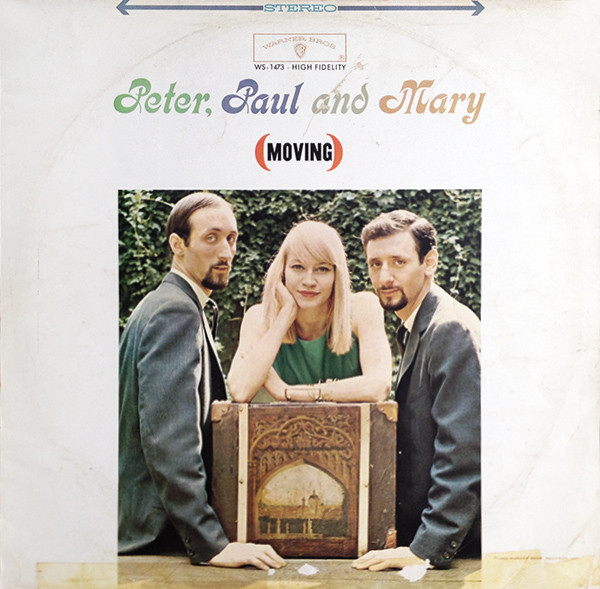
The folk trio, Peter, Paul & Mary, delivered a very convincing debut album back in 1961, and now it’s time for the difficult follow-up. They’ve made more room for self-composed songs on «Moving», and they’re gonna be very successful with a children’s song. So yeah, it does sound interesting at least…
Puff, The Magic Dragon might not be a children’s song, but it is about growing up and is sung/performed/written in a way that makes it feel like a children’s song (it will also come under scrutiny in 1964 when it will be accused of being about drugs, or cannabis to be exact. But Peter Yarrow and the rest of the band denies that). The song is based on a poem written by an old friend of Peter in 1959, and Yarrow did everything he could to track him down to give him credit for the lyrics.
The first single, Big Boat, didn’t amount to much, but personally, I like it and would even say it’s one of the best tracks on the album. The same goes for the second single, Settle Down (Going Down That Highway), which did ok on the charts, but is a stand-out track here.
Of course, the reason they’re so good might be because the rest isn’t all that. They’re ok, some good songs here and there, but weighed against the debut, it falls short. It’s actually a bit boring from time to time, more difficult to get a feel for the tracks, and makes it sound a bit choppy. Like, on one song I will be singing along with all my heart, and the next one just disappears into the ether. That’s just too bad you know, but I sure hope they’ll come back even stronger.
There’s not much reason to mention Cliff Richard’s new album, «Summer Holiday». Mainly because it’s a soundtrack, but even more so because it is a bad soundtrack. My point is that it really is a soundtrack, it doesn’t fit in in the real world, and it only works in the cinematic landscape it was created for. That’s at least how I see it. Without having seen the film… However, the reason I am bringing it up is the title track, Summer Holiday. The track isn’t all that, but it is packed with my childhood memories. I don’t remember exactly what year I first heard this song, but whenever I listen to it I get pulled back to summer evenings in Norway and fond feelings arise. That’s probably why I like this song. That’s also the only reason though.
The Ventures’ «Plays Telstar, The Lonely Bull & Others» won’t get much attention either. I’m pretty fed up with bands like The Ventures and their instrumental music, and this album doesn’t change that fact. They’ve got a cool enough version of Green Onions (Booker T. & The M.G.’s), but that’s about it.
And then there’s Sheila Jordan, whom I haven’t got any knowledge about. She’s releasing her debut album, «A Portrait Of Sheila», on Blue Note Records. Blue Note isn’t really in the business of releasing records by jazz vocalists, but Sheila made such an impression on them that they decided to make an exception. Me, I’m really struggling with jazz vocalists. I would say it’s probably the most difficult kind of music to listen to, so it’s only natural that I can’t seem to find the groove on this record. However, this album is lauded by almost everyone else who has had an opinion on it, so I figured I should at least mention it. I do like the song Dat Dere, but other than that I can’t really elaborate.
JOHNNY CASH – BLOOD, SWEAT AND TEARS

Cash is releasing an album with fables about the working man which contains everything from classics to new discoveries, and a couple of tunes written by the man himself. Now, I haven’t been completely blown away by what Johnny Cash has produced so far in the ‘60s, but he has shown what he is good for every now and then. And considering the fact there are quite a lot of drugs in the picture at this moment, it might not be such a big surprise that he hasn’t been at his best. But I’m still waiting, even after listening to this record, for his next fantastic release.
That being said, I don’t consider «Blood Sweat And Tears» to be a terrible record. There are a lot of good cuts here, and a lot of tracks that fit J.R. perfectly, so the only real complaint I’ve got is the fact that he has only written two of the tracks himself. The hammer-oriented tracks Tell Him I’m Gone and The Legend Of John Henry’s Hammer are both good songs even though the latter might be a bit too long, and weird.
Another Man Gone is not a very typical Cash song, but it is crazy enough to be worth checking out, and the rest of the album is a good selection of folk/country songs. I guess Casey Jones, Busted, and Roughneck would be my favorites, but the fact that there is another hammer-oriented track, Nine Pound Hammer, turns this subject into the most interesting fact about this record.
DISCLAIMER
I’ve started adding a parenthesis after the album titles I don’t know the exact release date of. I’m doing this so that I don’t have to mention this in the text every time I write about one of those (cause there are a lot of them). The only thing I know for sure is that these records were released in the year I’m writing about, so I’ll place these randomly through the year they’ve been released.
PAUL DESMOND – TAKE TEN
(unknown release date)
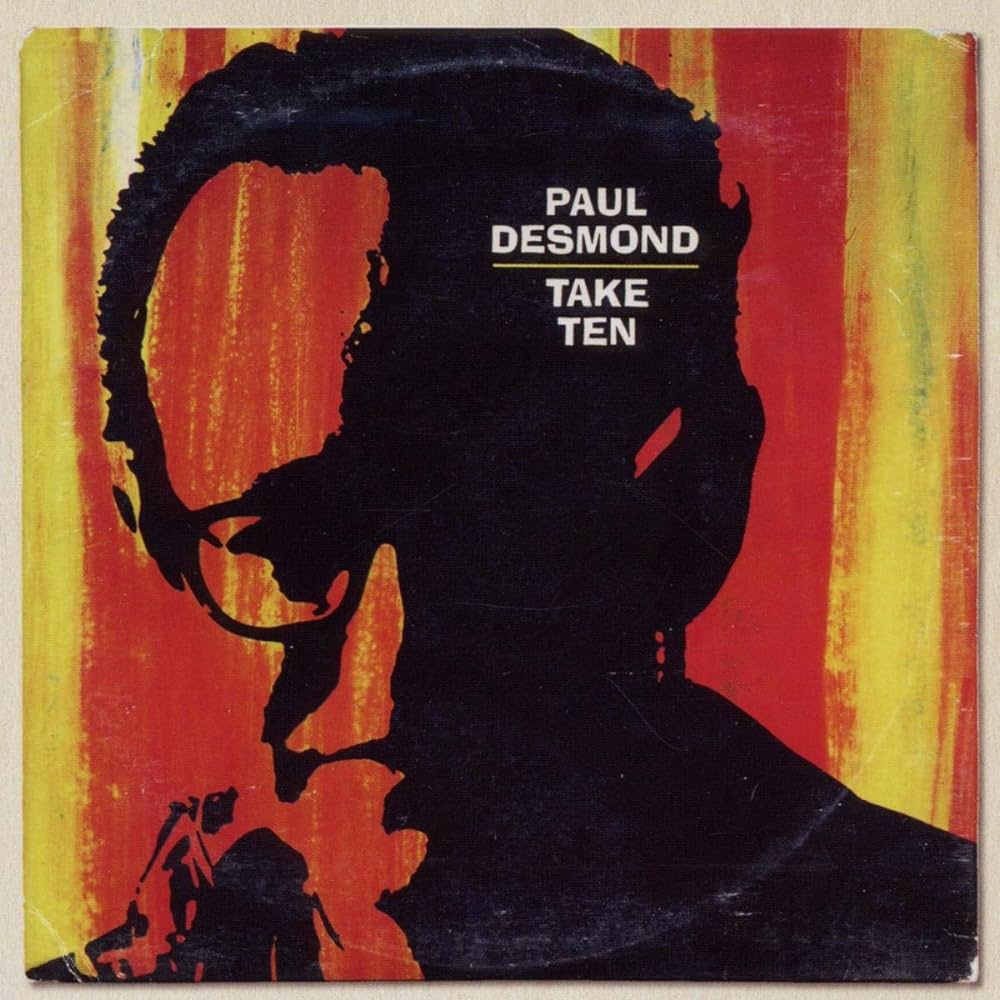
Paul Desmond is best known for a composition called Take Five, and this album, «Take Ten», is sort of a follow-up to that one. In addition to his solo career, Paul is a part of the Dave Brubeck Quartet, and according to what I’ve read he’s better known for his contribution there than he is for his solo albums. I’m not in any position to say if one is better than the other, as I haven’t listened to anything by the quartet, so I’ll just have to believe the info I found.
The first thing that hits me is that this is very melodic. Paul Desmond is said to be one of the very few alto players from his generation to not have been influenced by Charlie Parker. And I guess that has something to do with the fact that Paul Desmond plays calm and collected, soothing and relaxing, and without too much flare and bravado. That’s at least how I would describe Desmond after listening to this album. This kind of jazz is very different from the style that I’ve grown fond of, but not necessarily worse. He just sounds more controlled, has a bigger focus on melody, and he’s damn good at what he’s doing.
«Take Ten» is a good album, with a lot of great compositions. I can’t really say it’s a cool album though. Compared to Miles Davis, John Coltrane, etc., who I think of as the rock stars in jazz, I guess Paul Desmond would be the jazz star of jazz. Take Ten, El Prince, and Embarcadero are my favorite tracks, but it’s a pretty solid album altogether.
THE JAZZ CRUSADERS – HEAT WAVE
(unknown release date)
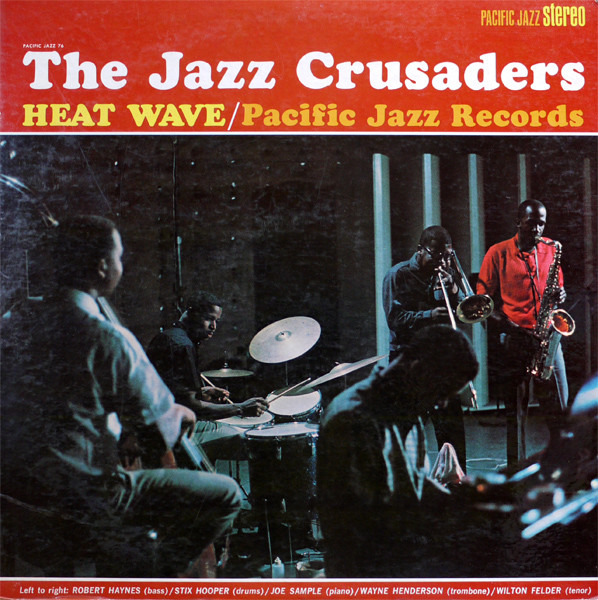
There is an abundance of jazz in this decade. Blue Note Records is the leading company that produces some top-notch jazz talent willie-nilly, but other than that as well, it feels like there is a new jazz musician around every corner, and all of them get the chance to release an album. I realize that this intro might make it seem that I’m about to punch the Jazz Crusaders in the balls, but that’s not the point. I just wanted to share that observation.
The Jazz Crusaders isn’t on Blue Note though, they’re signed to a label called Pacific Jazz. And even though I would’ve called this straight-up jazz music, the Crusaders are known to dabble in everything from urban R&B to blues (not necessarily on this album). The band kinda started back in 1954, though only with three of the guys in this line-up (who were in high school at the time), and called themselves both Swingsters and Modern Jazz Sextet. It wasn’t until they moved out to Los Angeles in 1960 that the Jazz Crusaders really started, and in 1961 they signed with Pacific Jazz.
Over the course of eight years, the band is gonna release 16 albums, which means there’s no shortage of material to choose from, but I just discovered this band and I’m having some trouble figuring out what album is released when. They will be releasing three of these in 1963, and I decided to at least write about two of them. And I’ve decided to start with «Heat Wave».
As mentioned, the Jazz Crusaders might be mixing up a lot of genres, but I’m gonna call this jazz. It is a different type of jazz though, with a higher party factor than a lot of the other stuff I’ve listened to. It’s melodic, yet frantic, so there’s a lot to like here really. Tracks like Purple Onion, Some Samba, and Close Shave (all written by the band) are good examples of how cool this can be. I also believe that this is a good album for new jazz listeners, as it’s not such a complicated listen as a lot of the other stuff could be.
The Jazz Crusaders did enough to impress me the first time around, and hopefully, they will continue to do so.
MISSISSIPPI JOHN HURT – FOLK SONGS AND BLUES
(unknown release date)

Born in 1883, recorded some tracks for Okeh Records in 1928, then disappeared from the music scene.
That could have been the entire story of Mississippi John Hurt, but when his songs, «Frankie» and «Spike Driver Blues», were added to the collection «The Anthology Of American Folk Music» in 1952, there were some that made it their mission to locate him. And when a musicologist got the news that a new track was discovered, Avalon Blues, where you can hear him sing “Avalon my hometown, always on my mind“, he sent a guy called Tom Hoskins out to Avalon, Mississippi to see if he could be found there. Hoskins was convinced it was the real John Hurt he had found after he played him some guitar, and not long after that Mississippi John Hurt’s revival was in full force as he was on stage at the Newport Folk Festival.
I haven’t found much information in this album other than it was released in 1963. So if this is a compilation of old tracks or some new recording, I wouldn’t know. Some of the tracks he recorded for Okeh Records back in 1928 are present though, like Avalon Blues, Candy Man Blues, Louis Collins, and Spike Driver Blues, but there’s also a bunch that might be new or just dusted off maybe.
The most important thing is of course that this is a very good record. John Hurt has a soothing voice which kinda floats on top of an even more soothing guitar sound, and together they create an album that would tame almost anyone. In addition to the songs mentioned earlier, it is packed with more good ones, so the fact that someone went looking for this guy is a gift to us all.
ASTOR PIAZZOLLA – TANGO PARA UNA CIUDAD
(unknown release date)
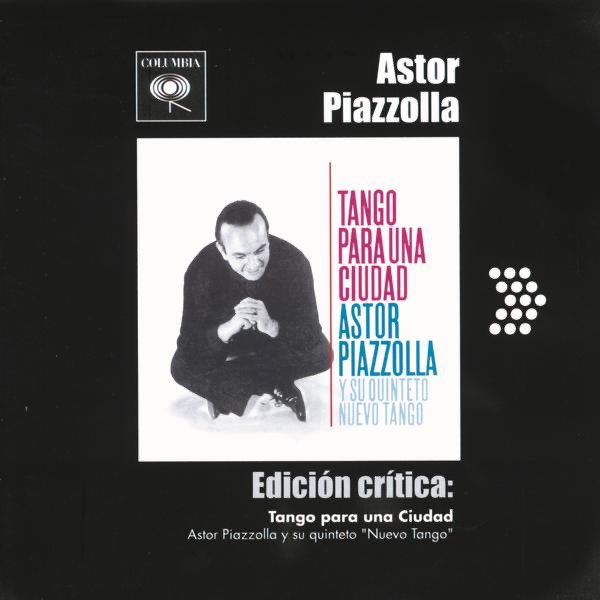
I’m not gonna write too much about this album, but I feel like I have to mention it. Astor Piazzolla is a composer and arranger of tango music. I have no idea whatsoever about what’s happening in the tango world, but I was fascinated by this album from the time I heard the first track. I more than expected this to be an album I wouldn’t want to spend much time on, but «Tango Para Una Ciudad» actually starts off pretty cool with the composition, Tango Para Una Ciudad (1ra. parte) so I quickly realized that I had to give this one a chance.
‘Tango Para Una Ciudad’ translates to ‘Tango For A City’, and the city in question is Buenos Aires. If it is some kind of love story would only be speculation on my part, but I do get that impression. The tracks are both happy and sad and work just as well both ways. I would never have guessed that I would enjoy a tango album, but here I am thoroughly enjoying myself all the way through. I’m probably more fan of the tracks without vocals, but there’s also something about a story being told in a language you don’t understand that truly sparks your imagination.
It’s difficult to say anything other than that I like this record, as I don’t really have any references to lean on, but I will go as far as recommending this album to everyone. I’m captured by the opening track which I mentioned earlier, Iracundo, and Buenos Aires Hora Cero, but the album really works as an entity as well. I don’t think tango will ever become my favorite type of music, but this sure was a pleasant surprise.
ROY AYERS – WEST COAST VIBES
(unknown release date)

This is jazz musician Roy Ayers’ debut album, and Roy plays a vibraphone. He started out as a pianist in his childhood but started playing the vibraphone when he met Lionel Hampton, who played the vibraphone with Louis Armstrong.
The album is definitively interesting, but it doesn’t hit in the same way a lot of other jazz albums have. I mean, the vibraphone is fun and all, but the sound it creates just makes me think of some kid’s show on TV, and that makes it difficult to sit and dig it. That being said though, this isn’t just the vibraphone all by itself.
As an instrument in a jazz band, the vibraphone fits well, I guess, but when the songs are based around it it kinda loses its effect. The fact that a guy named Curtis Amy plays the saxophone does a world of good for the album, and it compliments the vibraphone well. Anyway, the album is good even though it’s not quite up there, and from what I’ve read we’re gonna have to wait until the ‘70s for Roy Ayers to really grow into his own skin. So I guess we’re gonna play the waiting game for a while…
THE SINGLES
Jet Harris and Tony Meehan have both left The Shadows to embark on their solo career, but they ended up working together instead. Well, Tony actually started working as a producer for Decca, but when said record company signed Jet, he suggested that they work together again. These two musicians asked another guy to write a song for them, and they were handed the hit song Diamonds. It’s an instrumental track, almost exactly like the ones they recorded with The Shadows, and it isn’t any more exciting than that either. It’s catchy enough, but when you break out of your band, I would expect something new, something fresh. I guess the B-side is a bit more interesting. Footstomp isn’t all that, but it has vocals and that makes it different from what The Shadows is all about at least. Diamonds was at the top of the charts (at least the UK charts) for about three weeks, but the most interesting fact about this track is that John Paul Jones and Jimmy Page (co-founders of Led Zeppelin) play bass and acoustic guitar on this track.
The Four Seasons comes shrieking back with the single Walk Like A Man, but where I struggled badly with Frankie Valli’s falsetto on the last one, I find that I’m not as annoyed on this one. It’s still exhausting, but just not as bad. But no, I’m not here to take anything away from this group, cause they’ve delivered some good tunes up until now. I’m just never gonna say that I love them. And considering the fact that there is a play in the theatres around the world about them in 2022, there’s a hell of a lot more people that consider them to be one of the greatest. But nah, I’m not riding that wave. Anyway, so far in the ‘60s they’ve done well, and this is the third #1 hit. Walk Like A Man is a least a bit easier on the ear than the others.
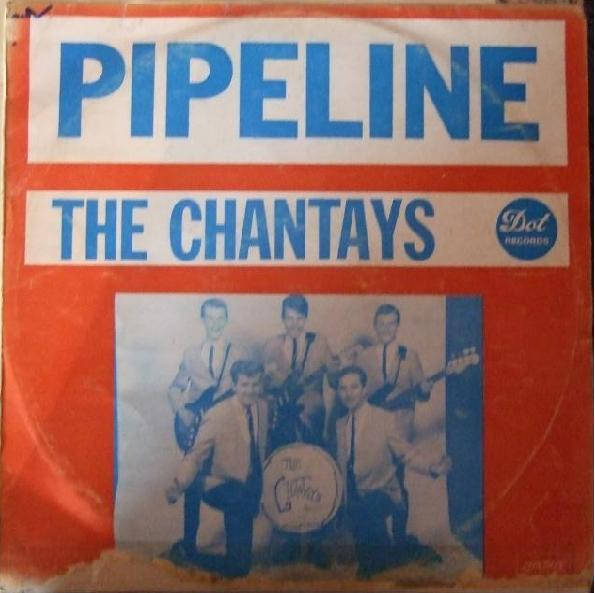
We’re also served an instrumental surf track this month. This time it’s The Chantays and their immortal single Pipeline. This tune is probably well-known to most, but I never really knew where it originated from. The Chantays is a group of high school kids from Santa Ana, California, and they have composed a fairly mature surf/rock track. More sophisticated than, let’s say Surfaris, and with that, they’ve got a song that will last for ages. I’ll also throw in the fact that The Chantays will never be able to live up to this hit, and will never release a song that is even close to Pipeline, so it won’t be long before this band calls it quits. I think they will release two albums or something, but I guess Pipeline, which topped the charts in both the UK and the US, is an ok song to both start and end a career on.
14-year-old Peggy March is gonna fly up the charts in the US with the song I Will Follow Him in April 1963. This will make her the youngest person (she turns fifteen in March) to make it to #1 on the Billboard chart, and I believe that record is still in play to this day. It also hit the top spot in Scandinavia(?), Japan, South Africa, Australia, and New Zealand, so it is pretty safe to call this one an international hit. That’s damn impressive for a fifteen-year-old girl. And the song is cool as well. I’m singing along every time I listen to it, so I guess that’s proof enough that I like it. She’s known as a one-hit-wonder in the US, but even though she didn’t get any more success in her home country, she did well in Europe (especially Italy and Germany) well into the ‘70s. If I’ll ever write about her again, I don’t know, but I’ll take I Will Follow Him and add it to my playlist of highlights from 1963.
Still, Bill Anderson’s second #1 hit, isn’t very exciting. It’s actually boring as hell, to be honest, and even a bit sickening at times. The song has a spoken verse and a chorus that I can tolerate, but that’s about the nicest thing I can say about this track. Definitely the worst single of the month.
The Chiffons pick things up right away with the refreshing He’s So Fine. George Harrison will make an acquaintance with this song at some point, but I’ll save that for later. Anyway, this will be the biggest hit from this group from the Bronx, and they will struggle to live up to the fame it brought them. The song is timeless though, so they can be proud of that. Johnny Mathis’ What Will Mary Say doesn’t really do anything for me, but it does well on various charts. The song was originally recorded by Mark Dinning in 1961, but no one really cared.
The Cascades isn’t very exciting, but the song Rhythm Of The Rain did earn them a gold record. They went to the top of the charts in countries like Canada and Ireland, stopped at #3 in the US, and never managed to follow up their success. Brenda Lee, whom I really don’t need to write about anymore, released her single Your Used To Be and it’s not interesting.
The Orlons’ South Street, however, is a lot more interesting. It’s a cool and catchy-enough R&B track with a guy that reminds me of Jimbo’s buddy from South Park who butts his head in and disturbs us every now and then. The Orlons started out as backup singers on a couple Dee Dee Sharp tunes and had their breakthrough with The Wah-Watusi, which I wrote about back in May 1962. «South Street» did well on the Hot 100 chart and the R&B chart, and it made a good impression on me as well. Eydie Gorme and her track Blame It On The Bossa Nova, did well in Norway and ended up at #2 on the Norwegian chart. It’s a mix of Latin sounds and the so-called Brill Building sound, and even though I can’t say I’m a big fan of the song, it has its moments.
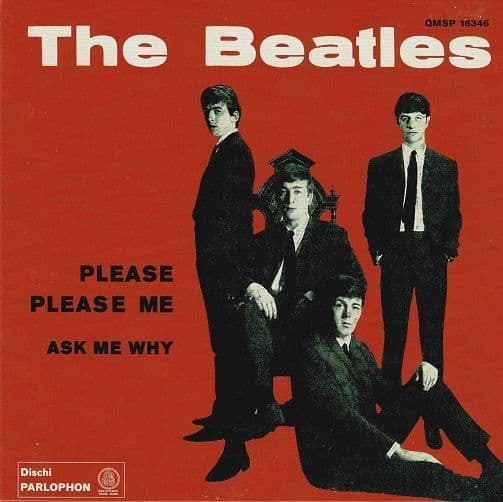
And finally, the most important single of the month, The Beatles’ Please Please Me. After a promising start with their debut single Love Me Do, this young group is back with the follow-up. The Beatles, of course, will become one of history’s biggest bands and a phenomenon that spread all around the world, but so far they’re relatively unknown. So the main reason that Please Please Me went all the way to #1 in the UK might be because they performed it live on a TV show called «Thank Your Lucky Stars». Which, according to multiple websites, had more than 6 million viewers because of a snowstorm in a big part of the country. I’m not here to discredit the song or The Beatles, but who knows what would have happened if not for the blizzard and a lucky booking.
Please Please Me is another self-composed song by The Beatles, which is still pretty refreshing in 1963, and it fits like a glove (it’s credited to Lennon/McCartney but it’s John Lennon who did most of the work, and George Martin deserves a lot of plaudits as he was a big part of how the song ended up as it was supposed to be a lot slower). I’ve always been a fan of The Beatles. Ever since my father forced them down my throat when I was a kid. But that doesn’t mean I’m brainwashed. I truly believe that it is damn near impossible to not like this music, so I’m not gonna write a whole lot about how good this is. The song will also be released as a single in the US next month, but I decided to write about the original release.
The B-side is also great, but not as good as Please Please Me. Ask Me Why is supposedly inspired by Smokey Robinson and The Miracles, and I like that kind of information as I never really read up on who inspired The Beatles. I’m already looking forward to what The Beatles does next, and the fact that I might learn more about this band that will excite so many for decades to come.
UNKNOWN RELEASE DATE
Lord Tanamo is one of the guys that started the ska wave in Jamaica, but he’s a lot more than a ska legend, cause he’s been making music since the end of World War II. He started out as a young kid when he heard a guy called Cecil Lawes playing a rumba box, an instrument that was widely used within the mento genre, and he started singing with Cecil at night, while he hustled tourists during the day. A lot of time has passed since then, and Lord Tanamo is releasing Come Down, an awesome ska tune that has completely lodged itself in my head. I wasn’t convinced at first, but now I can’t stop listening to it. Lord Tanamo is a big name within the ska genre, but this is the first time I’ve ever heard of him. I promise that I’ll try to keep up with what he’s about.
A guy I know a lot better is Desmond Dekker. And this is his fucking debut single. Honour Your Mother And Father is released on Lesley Kong’s label, Beverley’s, but Desmond tried to get both Clement Dodd and Duke Reid to release it first. So I guess we could say that some blunders were made in Jamaica when they turned down a young Desmond Dekker, considering what he will achieve a bit later in this decade. What’s done is done though, and Leslie gets the honor of releasing Desmond Dekker’s first single and becoming some kind of mentor for him.
Honour Your Mother And Father is cool even though the lyrics are a bit too goody-two-shoes for my taste. The message is good and all, it just sounds a bit weak. Luckily it doesn’t fuck up anything, cause I’m singing along without a care in the world. It’s simply a great start to Desmond’s career.
THE CHARTS
Billboard Top 10 Singles Chart
Week 1 (January 5, 1963)
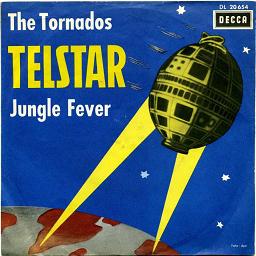
- Telstar – The Tornados
- Go Away Little Girl – Steve Lawrence
- Limbo Rock – Chubby Checker
Week 2 (January 12, 1963)
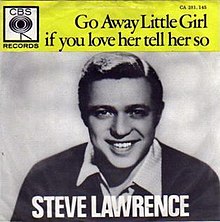
- Go Away Little Girl – Steve Lawrence
- Telstar – The Tornados
- Limbo Rock – Chubby Checker
Week 3 (January 19, 1963)
- Go Away Little Girl – Steve Lawrence
- Telstar – The Tornados
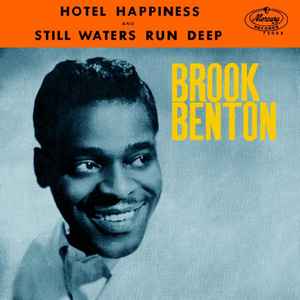
- Hotel Happiness – Brook Benton
Week 4 (January 26, 1963)
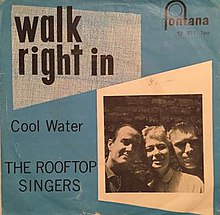
- Walk Right In – The Rooftop Singers
- Hey Paula – Paul and Paula
- Go Away Little Girl – Steve Lawrence
HOT 100
Not a lot of great ones coming into the Top 10 this month. Let’s start it off completely fucking awful, and seriously a bit confusing at times, with Pepino The Italian Mouse by Lou Monte. I’ve said time and time again that I’m not a fan of novelty music, but this shit right here is taking it to the next level. The fact that this record sold over 1 million copies is horrific, but I should know by now that shit sells. Arne Bendiksen has made a Norwegian version of this one, by the way.
Tell Him by The Exciters was originally called Tell Her and was recorded by Johnny Thunder and Ed Townsend in 1962 without any notable success. The Exciters, however, took this version to #4 in the US, #1 in France, and #5 in Australia. So I guess it’s fair to say that The Exciters won this one. The song is alright, but it won’t be added to any of my end-of-the-year lists. Hey Paula by Paul and Paula (yeah, Paul and Paula released a song called «Hey Paula») is a pretty ballad that has its moments. It’s lacking something special though, and it will never be anything other than a random tune in my book. Rick Nelson does not convince with his new track It’s Up To You.
COUNTRY CHART
On the Country chart (which I’ll write about for the first time now) Faron Young has entered the Top 10 with his single Down By The River. I’m not a big fan of the song, but I read a story about Faron that was pretty cool. As an up-and-coming artist, Faron was a big fan of Hank Williams (to the point where he became a Hank Williams impersonator), so when Hank wanted to go on a double date with Faron and his girl back in 1952, I guess Faron didn’t think twice. What Faron didn’t know, was that Hank was only after his girl, and during this date, Hank drew his gun and calmly said that the girl was now his. Young was smart enough to withdraw, and his date, Bille Jean Jones, became Hank Williams’ second wife. This just sounds too crazy to be true, but damn, what an awesome story to tell your kids.
Orville Couch released one album and two singles during his career. Hello Trouble was one of the singles and it stopped at #5 on the country chart. It’s a good country track, but not much more than that. Roy Drusky’s Second Hand Rose is an ok song from a guy who supposedly rejected a contract from the Cleveland Indians. He has written a couple of tracks that Faron Young (you remember the guy who got his girl stolen by Hank Williams, right?) scored some #1 hits with, but this one didn’t go higher than #10.
Porter Wagoner (this name is tailor-made for a country artist) was a farmer’s kid who ended up in sparkling Nudie suits. He got his breakthrough with A Satisfied Mind in 1955, and from then on and all the way up to the ‘80s he’ll be a regular on the country charts. I read somewhere that it won’t be a single year up until 1983 that Porter won’t be represented in the charts, so I guess 30 years with charting singles could be described as a successful career. I’ve Enjoyed As Much Of This As I Can Stand is a classic country tune both in melody and lyrics. I kinda like it, and if this is the sort of quality Porter will keep on delivering, then I get why he became a success. So far though, I’m more a fan of the fact that he sported Nudie suits.
Rose Maddox is a complete unknown to me, but she’s up here in the Top 10 this month with her song Sing A Little Song Of Heartache. One would think that this would be your standard heartbreak country song, but it’s actually surprisingly upbeat. Rose grew up during the American Depression in the ‘30s, and traveled with her family from Alabama on a freight train to California to search for happiness in ‘’the land of milk and honey’’. I guess that’s not unique for them, but they ended up in Oakland and a place called Pipe City, also known as Miseryville, and maybe that’s a bit more unique. Pipe City was an area with unused sewer pipes, where American Concrete and Steel Company let roughly 200 people stay. This ‘’city’’ had a mayor in a so-called underground government who saw to it that there was no fighting or drinking, and distributed food to the inhabitants. So this was where Rose and her family started their Californian adventure.
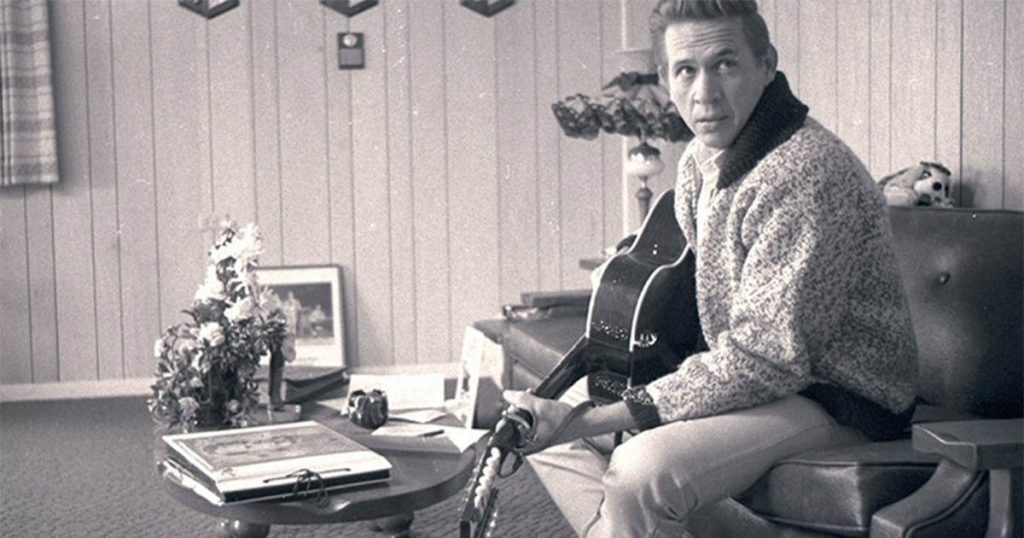
Buck Owens still sounds a 100% country, and cruises into the Top 10. the fact that his sound has gotten its own name makes total sense when you listen to his music on a playlist with lots of different country music, cause the Bakersfield sound is unique in its own way. Country, honky-tonk, and inspiration from rock’n’roll are the keywords for this sound, and it’s a love/hate relationship for me. But Buck has not disappointed yet, and You’re For Me is no exception. Eddy Arnold, however, and his Does He Mean That Much To You, is nothing more than a standard country tune. Ernest Ashworth’s I Take The Chance is not very exciting either.
Ned Miller tops the two latter with his song From A Jack To A King. I’m not blown away, but it did become a crossover hit with Top 10 placements on the country chart, Adult Contemporary, and Hot 100. It also topped the charts in Ireland as well as making it to #2 in the UK. He originally released the track in 1957, but I guess he was a bit ahead of his time as no one really noticed it back then. Ned knew what he had though, and he convinced the record company to release it again roughly five years later. It became his biggest and last hit. The last one to enter the Top 10 in the country charts this month is Marty Robbins’ Ruby Ann. I’ve written about Marty a couple of times and he won a Grammy for his song El Paso back in 1960, so he’s not a stranger to success. «Ruby Ann» is a cool country song with some Elvis vibes.
R&B CHART
The R&B chart is also a new addition here at «This Band Could Be Your Life». Probably because I’m scared of missing out on whatever. It’s a lot more work, but I figured I’ve got a lot of time, so why the hell not. It’s gonna be a lot this first time, as multiple songs enter the Top 10 that I haven’t written about earlier, but I’m pretty sure that it will be less work as I go on.
We’ll start this segment off with Lavern Baker’s version of See See Rider. I believe I’ve written about this song before, but it is one of those American standards, so it’s been recorded by a bunch of artists. It has also been called a bunch of different things, like See See Rider, C.C. Rider, See See Rider Blues, and Easy Rider. Lavern Baker’s version is simply awesome. She was one of the pioneers who started blending R&B and rock’n’roll in the ‘50s and you can definitively hear that on this track. She signed with Okeh Records as a teenager in 1947, left for Atlantic Records around 1955, and had her breakthrough with the song Tweedle Dee which sold over 1 million copies. She has scored some more hits since then, but she’ll struggle a bit as the ‘60s get going.
Dionne Warwick is out with her solo debut in the form of Don’t Make Me Over, written by, among others, Burt Bacharach. I’ve always just assumed that Dionne was boring as hell, but with her first song, she proves me wrong. She sounds amazing, and the song is awesome. Dionne started out, like many others, in gospel music when she was young, and moved on to singing back up for bands like The Drifters before she was discovered as an artist. So now that my view of her has changed and her career started off with a Top 10 hit, I guess I have to keep an eye out for this lady in the future.
The Marvelettes biggest problem was supposedly that they kept changing their line-up. That doesn’t matter much to me though. I find it more interesting that a lot of people have said that they never managed to follow up their hit, Mr. Postman, but I’m sitting here listening to Strange I Know and struggling to understand what the fuck they were talking about. It’s a great R&B ballad that makes me want to ask every random person around me to dance. So either I’m way too drunk at the moment, or someone has made a terrible mistake. Bettey Lavett, however, deserves all the praise she’s getting for her song My Man – He’s A Lovin’ Man. Even though she never managed to come back after this hit, she can keep her head high and accept all the praise coming her way. The song is said to be one of the best examples of Southern soul music, and as I’m not in any position to elaborate on that, I’ll just say that this is a great song.
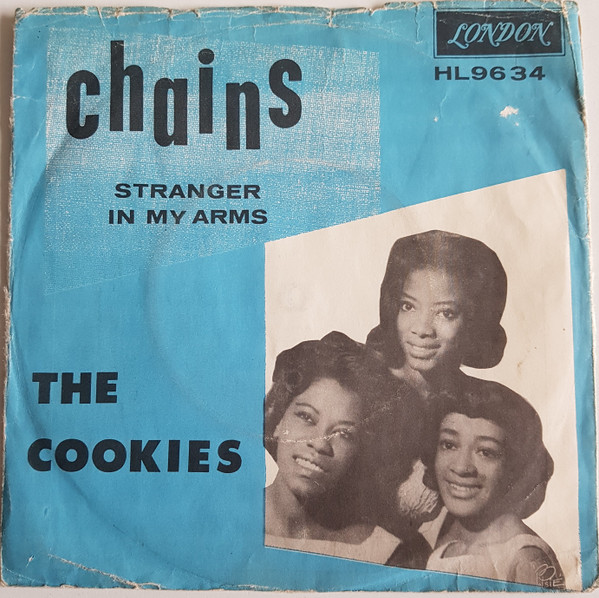
And then there’s The Cookies who deservedly makes a big success with the song Chains. A song most (at my age) should be familiar with. If it’s because The Beatles covers it at some point, or just the simple fact that The Cookies are killing it, I’m not gonna get into, but this song is forever locked in my head and heart. The Cookies had only recorded one single (Don’t Let Go / All Night Mambo) before they were signed by Atlantic Records. They got one Top 10 hit there, with the song In Paradise, but it wasn’t until their reputation as session musicians grew and meeting up with Carole King and Neil Sedaka that Chains became a reality.
My new favorite (through this project), Bobby Bland, has also entered the Top 10 this month with his song That’s The Way Love Is. And I truly believe that this song is proof of how awesome this guy is. He’s got a kick-ass voice, and the song alone is phenomenal.
The last song this month is the R&B chart is The Drifters’ Up On The Roof. It doesn’t suck or anything, but compared to the others I’ve written about this month this one just doesn’t cut it. I do enjoy the fact that The Drifters seems to chart a lot more than Ben E. King though.
Petter Milde
This Band Could Be Your Life
 This Band Could Be Your Life