‘’I have a dream that my four little children will one day live in a nation where they will not be judged by the color of their skin but by their character’’ – Martin Luther King, Jr.
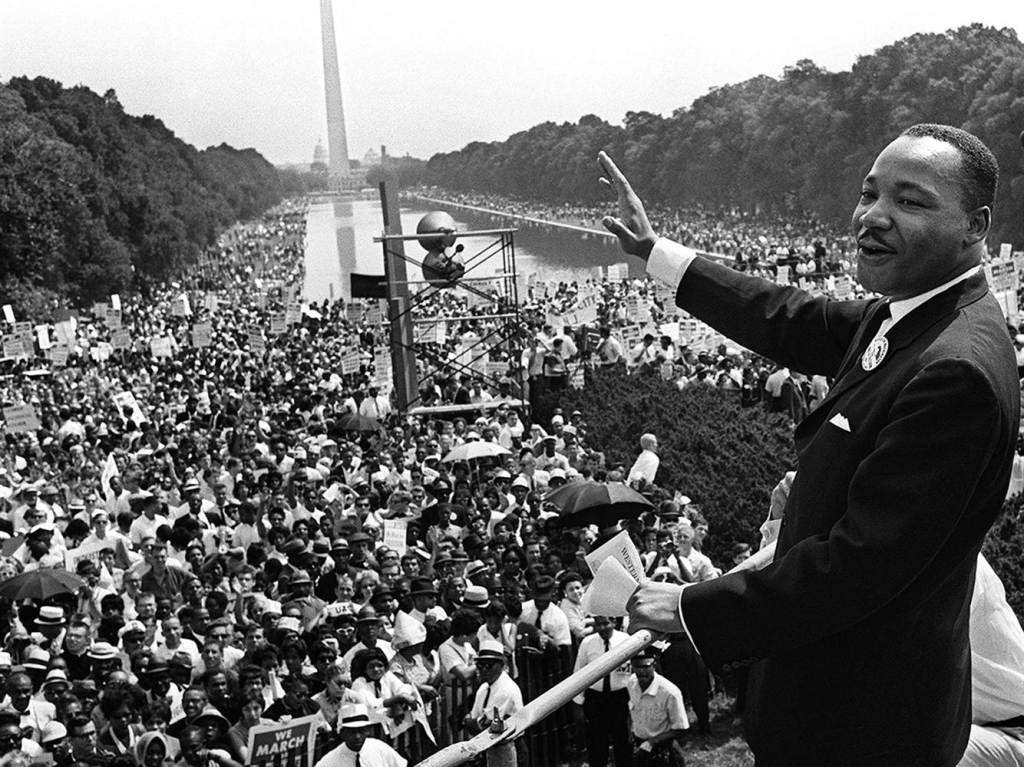
On August 28th, 1963, during the March On Wahington For Jobs and Freedom, Martin Luther King, Jr. delivered a speech to over 250,000 civil rights supporters at the steps of the Lincoln Memorial in Washington, D.C. A speech that has become one of the most iconic speeches in American history, where he called for civil and economic rights and an end to racism in the United States of America.
According to Wikipedia, his speech also made the FBI consider him a major enemy of the United States, which sounds crazy, to say the least. A guy wanting equal rights for a group of people…oh wait, this is kinda what this country does, isn’t it? Anyway, the speech is historic and has an essential message, and I believe it is needed as much today as it was then.
Artists were performing at the march as well; Bob Dylan with Joan Baez, Mahalia Jackson, Peter, Paul & Mary, and a guy called Len Chandler. Those are at least the ones I can place on the scene. Bob Dylan supposedly felt used by the march, and when he was awarded the Tom Paine Award by the Emergency Civil Liberties Committee later this year, he gave a speech saying exactly what was on his mind, according to Michael Tomasky at The Daily Beast.
The ‘’heist of the century’’, or The Great Train Robbery, was executed north of London, UK, this month when 15 men stopped the Glasgow-London Royal Mail Train and robbed it. They stole £2.6 million with the help of a guy with inside information, but eventually, 12 of the 15 men were captured due to fingerprints collected at the farm they were lying low at after the robbery. Most of the money is in the wind though, as only £400,000 was recovered by the police.
The Beatles will play their last show at the Cavern Club this month, making it nearly 300 performances at this venue alone. Liverpool’s Cavern Club was obviously too small a venue for The Beatles at this time, and the tickets for this night were sold out in 30 minutes. Also playing that night were The Mersey Beats, The Escorts, The Road Runners, The Sapphires, and Johnny Ringo & The Colts.
James Hetfield, leading man of Metallica, was born on August 3rd, the same day as the Beatles played their last show at the Cavern Club, Whitney Houston was born on the 9th, Joey Tempest, singer of the band Europe, was born as Rolf Magnus Joakim Larsson on the 19th, and Tori Amos on the 22nd.
THE ALBUMS
I’ll start this month by mentioning a couple jazz albums that didn’t thrill me enough to make me wanna go any deeper into the artist or the album. Coleman Hawkins released an album called «Today and Now» which received good reviews from Allmusic.com, Down Beat, and The Penguin Guide to Jazz Recordings. ‘’Hawk’’ is considered to be one of the first prominent jazz musicians playing the tenor sax, and was a big influence for a bunch of players through the years.
The other is Horace Silver Quartet’s «Silver’s Serenade». He’s probably best known for his work as co-leader for Horace Silver and the Jazz Messengers with whom he scored his first hit, The Preacher, in the ‘50s. His latest album didn’t become a hit, but it is definitively a good listen. Easy jazz, as I like to call it.
THE IMPRESSIONS – THE IMPRESSIONS
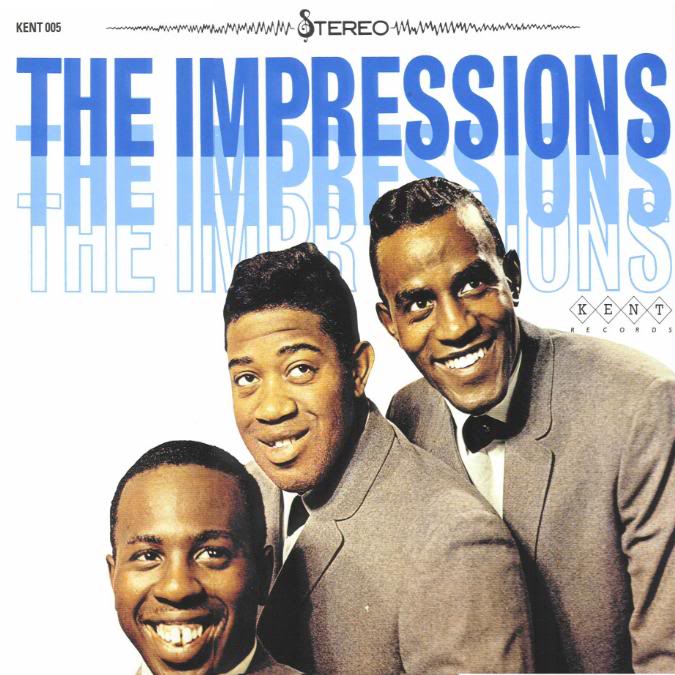
The Impressions was formed in Chicago back in 1957, calling themselves the Roosters. The original line-up was Jerry Butler, Curtis Mayfield, Sam Gooden, and brothers Richard Brooks and Arthur Brooks. Their first single, For Your Precious Love, reached #11 on the US pop chart in 1958 and was credited to Jerry Butler and The Impressions. Some part of the group didn’t like that Jerry’s name was fronted like that and the group broke up after their second single, Come Back My Love. Jerry Butler’s solo career was prospering while the others struggled, and it wasn’t until 1960 that Curtis Mayfield and Jerry Butler teamed up again on Jerry’s single He Will Break Your Heart, co-written by both of them.
In 1961 the group signed to ABC-Paramount Records and released Gypsy Woman which turned into a Top 20 hit, and It’s All Right in 1963 which soared all the way to #1 on the R&B chart (they released some other singles in between those two as well, but none that turned into any notable success). Both these songs are added to their debut album, «The Impressions», which is released this month. Before this album though, Jerry Butler left to focus on his solo career, and the brothers Richard and Arthur followed suit. Instead of replacing them, however, the group decided to continue as a trio.
Their debut album is pretty damn solid. They’ve got the two hit singles mentioned earlier, and other great tracks like Little Young Lover, I Need Your Love, and I’m The One Who Loves You. All but three songs are composed by Curtis Mayfield, and he plays the guitar and sings as well. So I guess it’s fair to say that this is now Curtis Mayfield’s group and he/they are off to a great start.
CHUBBY CHECKER – BEACH PARTY
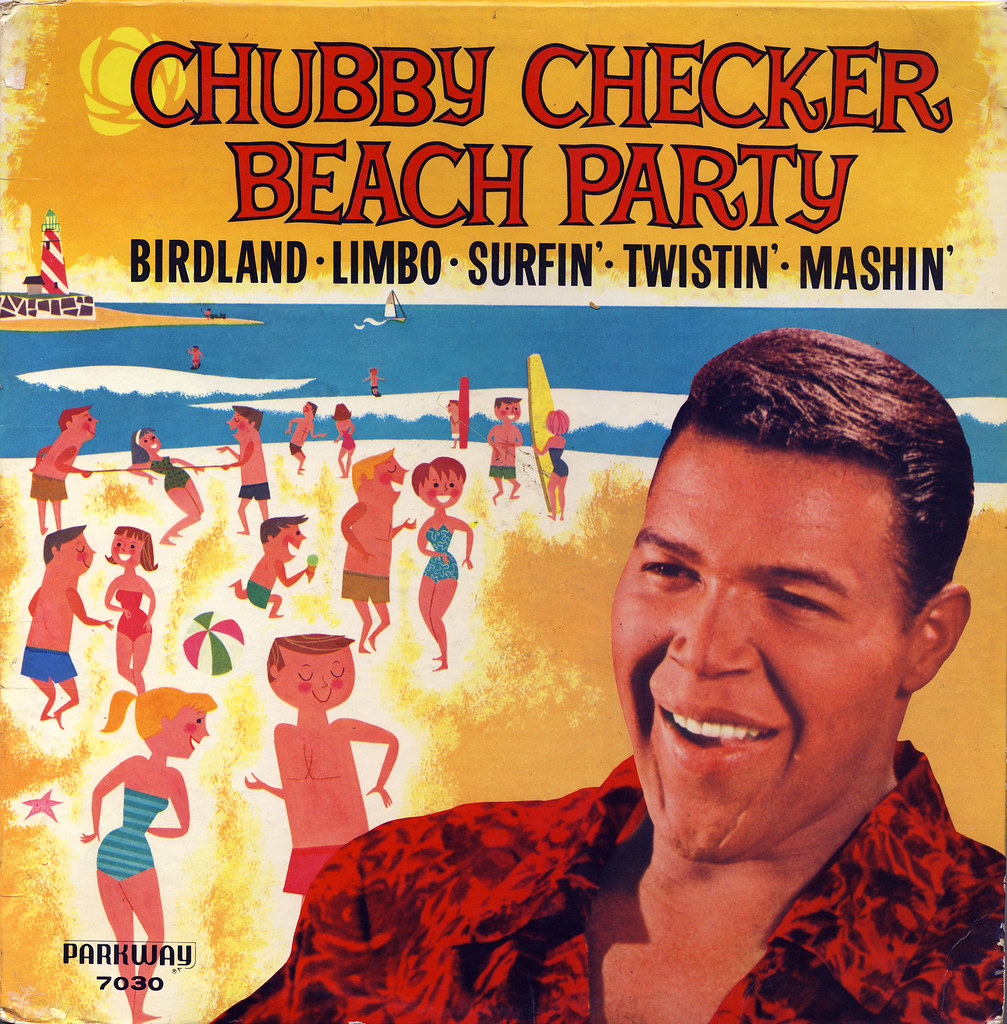
According to Chubby’s own website he was discovered after he sent a song to Dick Clark. It was a novelty track that Clark ended up sending out as his Christmas greeting, and Cameo-Parkway liked it enough to sign Chubby and release the song as The Class. As far as novelty songs go, this one isn’t all that bad actually. This was in 1959, and a year later Chubby would hit the big time.
In July 1960, Chubby released his version of The Twist (originally released and written by Hank Ballard & The Midnighters) which was the first single to top the Billboard Hot 100 chart twice in separate chart runs. This started Chubby’s road to fame as a dance demonstrator (this description is stolen from somewhere, by the way) with tracks like Let’s Twist Again, The Fly, and Limbo Rock to mention a few. I’m not a fan of this kind of thing Chubby is doing, but I can’t really argue with success. And people gotta dance, right?
His latest album, «Beach Party», continues in the same vein. There are a bunch of songs about dances, which is a bit sad cause I believe some of these tracks could maybe have been cool if it wasn’t for the fact that he’s singing about twisting, mash potato-ing, and whatnot. Tracks like Nothin’ But The Twist‘, and Birdland are a couple of those, but there’s also a novelty song, The Killer, that kinda works as well (it’s a version of Tequila by The Champs).
Chubby probably didn’t make a big mark on music history with this release, but all in all, it’s an album that I can listen to. Probably won’t let it spin again in the near future, but I didn’t hate listening to it while writing this.
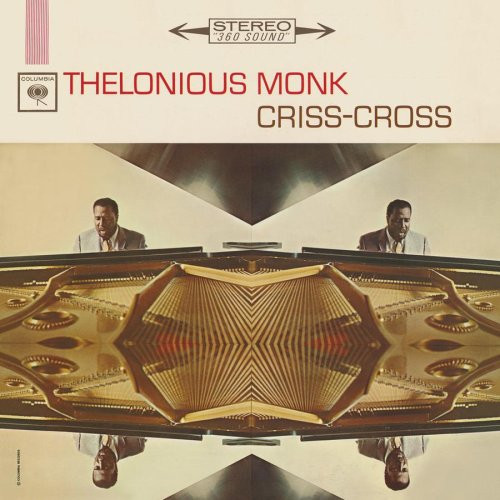
THELONIOUS MONK – CRISS-CROSS
Thelonious Monk’s career hit a setback in 1951 when a charge for possession of drugs lost him his performer’s license in New York and landed him a six-year ban from playing live in the city. The charge might have been bullshit as well, as far as I’ve read, so that in addition to the fact that he wasn’t very popular when he started out gave his career quite the rough start.
Prestige Records signed him anyway in 1952, and he did cut some albums that would become significant later on, but were mostly overlooked at the time of release, like «Thelonious Monk And Sonny Rollins», and «Thelonious Monk Quintet with Sonny Rollins and Julius Watkins». After a trip to Paris, France, for some shows, a recording he did for a French radio show was released as «Solo 1954» by the French label Vogue in 1955, and when he came back home he signed for Riverside Records.
«Criss-Cross» is his second release at Columbia Records. The album consists of previously recorded Monk compositions that were re-recorded for this release. Compared to «Monk’s Dream» (the last Monk album I wrote about) it’s almost as good, but it’s lacking that fire material that I believe «Monk’s Dream» had. Still though, tracks like Rhytm-A-Ning and Tea For Two are really great.
I’ve mentioned before that I’m not a big fan of live albums, but I’ve had to eat my words as some of the live albums I’ve written about, like Bill Evans’ «Waltz For Debbie» and Motown’s «Motortown Revue, Vol. 1», has been really good. Chuck Berry’s «On Stage», however, is not that. It’s actually not a live album at all. It’s a studio album promoted as a live album with overdubbed audience sounds. It’s an album with a collection of great songs, I’ll give him that much, but the fake audience really fucks this up for me.
BARBRA STREISAND – THE SECOND BARBRA STREISAND ALBUM
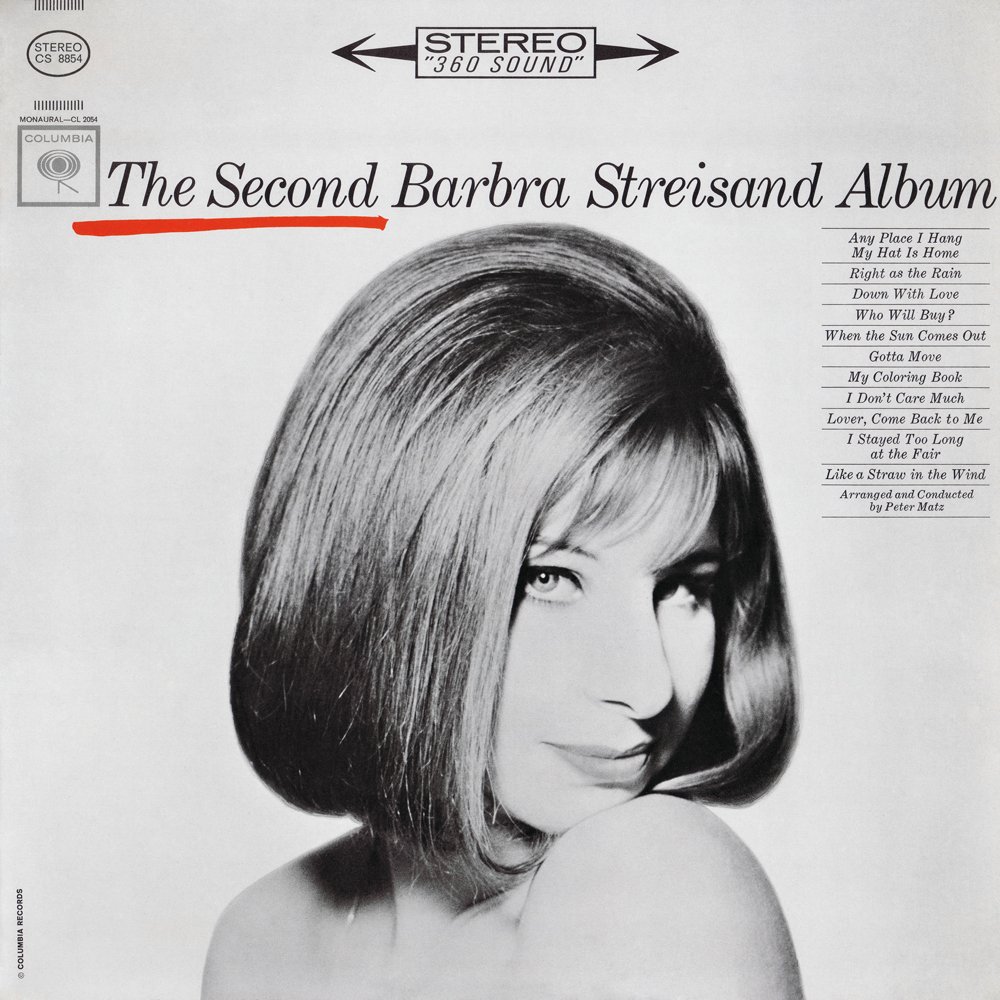
Barbra was already living alone at the age of 16 and lived a kinda gypsy-style life while trying to become a star. She slept on friends’ couches or anywhere she could set up the army cot that she carried around with her. Her mom was supposedly appalled by her daughter’s way of living, but Barbra did not plan to give up her dream just because Mommy wanted her to.
Well, at the age of 21, she released her debut album, «The Barbra Streisand Album», and became the best-selling female vocalist in the US. So all her hard work up until then was definitively worth it. She also managed to sign a contract with Columbia Records that gave her full creative control, which was the only thing she really cared about.
Just six months after the release of her debut, «The Second Barbra Streisand Album», is released. She never wanted to give her album a fancy title, cause she apparently claimed that no one would remember it anyway. Cause, yeah, no one remembers album titles… Anyway, this release was a hit as well, climbing all the way to #2 on the Billboard Album chart and selling over 1 million copies by 1966.
The album consists mostly of musical numbers from different shows, but also a song that was written especially for her by Peter Matz, Gotta Move. Barbra is still not my cup of tea, and listening to this album is rough. But there’s no denying that this girl can sing, and she obviously does some stuff that a lot of people love.
I had no idea that Cassius Clay ever released an album, and I was kinda hoping that he would actually sing. But no, «I Am The Greatest» is a comedy album released this month by the up-and-coming boxer. It’s split up in rounds instead of tracks, and it’s Cassius bragging about how great he is in his regular manner. It’s quite funny actually, and I’ve always enjoyed his trash talk, so the fact that almost this entire album is just Cassius Clay talking trash about Sonny Liston hits the spot in that sense. Of course, I’ll probably never listen to this one ever again, but it was fun while it lasted. By the way, this album has been identified as an early example of rap music, according to Rolling Stone Magazine.
ROY ORBISON – IN DREAMS
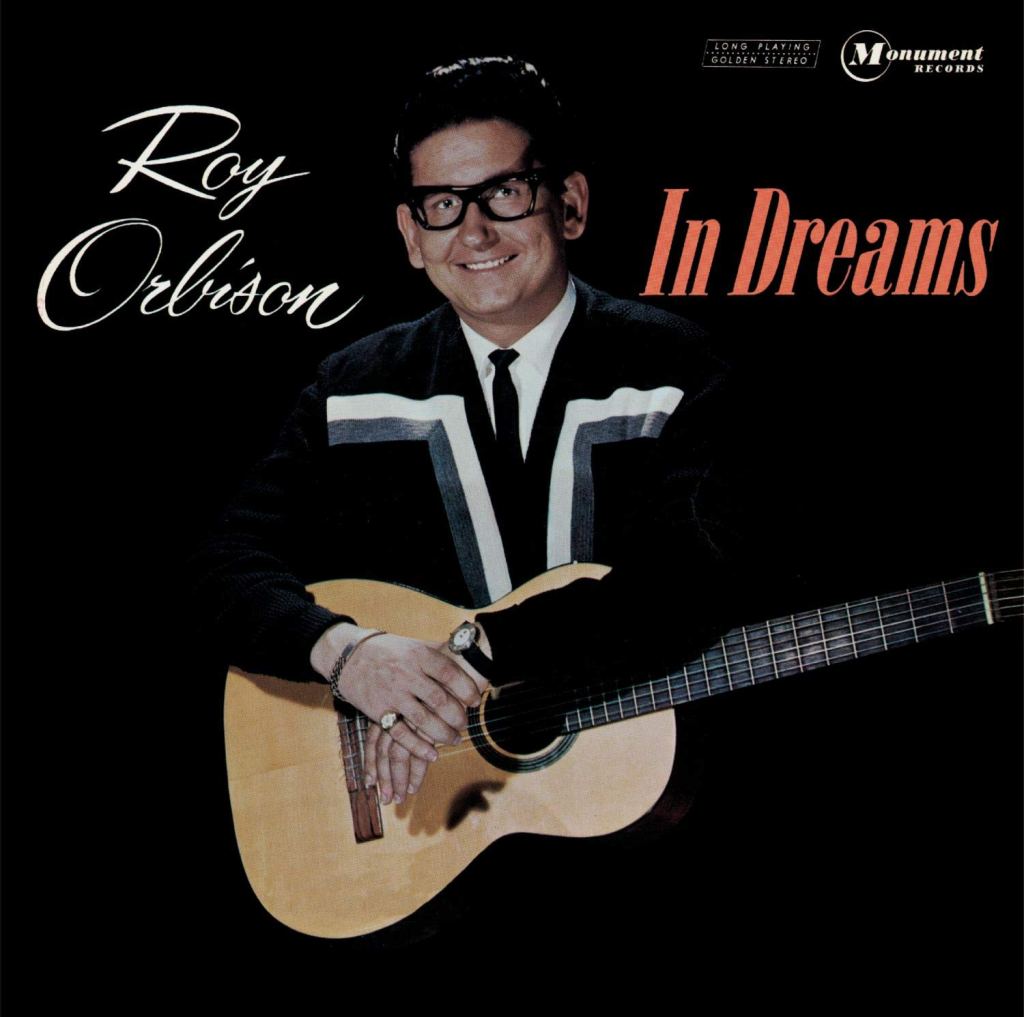
Roy started his first band at the age of 13, Wink Westerners, and played with them until he was about 15 years old. They had some minor success, not in the way of sales, but rather by regularly playing shows on television. In 1955 he dropped out of college, the Wink Westerners were disbanded, the Teen Kings were formed, and he met his future wife, Claudette.
In the next couple of years, the Teen Kings signed with Sun Records, released Ooby Dooby, toured with Johnny Cash and Johnny Horton playing the roofs of the projection houses at drive-ins, argued about money, and eventually broke up. A band member said that Roy was starting to become a bit of an egomaniac at some point, and furthermore, the money didn’t cut it for anyone in the band to survive as their contract wasn’t particularly good.
After the band split, Roy and Claudette stayed at Sam Phillips’ house. They were broke, and Roy realized that he couldn’t survive as a recording artist and had to return to the road. While touring Roy became addicted to sleeping pills and speed, as was the style at the time, and his career went back and forth from touring, recording, and songwriting. He eventually married Claudette, became a father, and when the success kept away from him he eventually left Sun Records.
Signing with Monument Records in 1960, his career started looking up and singles like Only The Lonely (Know The Way I Feel), Blue Angel, and Dream Baby (How Long Must I Dream) made him a star.
Now, in 1963, Roy is releasing his fourth album following another hit single released in February this year, «In Dreams». The album bears the title of the single, In Dreams, and the track is the opener on side A. I wrote about that single when it was released, and I’m more than fond of it, but my favorite from this album has to be Sunset. The song was penned by Roy Orbison and Joe Melson and was not released as a single. All in all it’s a pretty solid album with other good tracks like Blue Bayou (which is released as a single this month as well), (They Call You) Gigolette, and a cover of All I Have To Do Is Dream, originally recorded by The Everly Brothers.
The Monkey Time was released in June and became Okeh Records’ first hit single in 10 years, and Major Lance’s first hit single ever. I was kind of ecstatic about this single (the B-side Mama Didn’t Know as well) and was kinda hoping that this would be the start of something awesome. But unfortunately the album, «The Monkey Time», doesn’t live up to the single. There are some good tunes other than the two on his single, like the Marvin Gaye covers Pride and Joy and Hitch Hike, but other than that it’s just a bunch of ok songs. Too bad, as I had high hopes for this one. Anyway, Major Lance was signed by Okeh Records on Curtis Mayfield’s recommendation as they are childhood friends. Curtis wrote more than some songs for him, and the boys from The Impressions did backup vocals for him on multiple songs.
Fats Domino releases «Here He Comes Again» just a month after his latest release. And this one falls under the same category as «Here Comes…Fats Domino». It’s a pleasant album without any big hits or stand-out tracks. It kinda feels like Fats is content with where he’s at and what he’s doing, and to be honest, I am as well. I don’t mind listening to Fats doing his thing right now, but I’m not gonna pretend that it is exciting either. Take from that what you will.
SAM COOKE – NIGHT BEAT
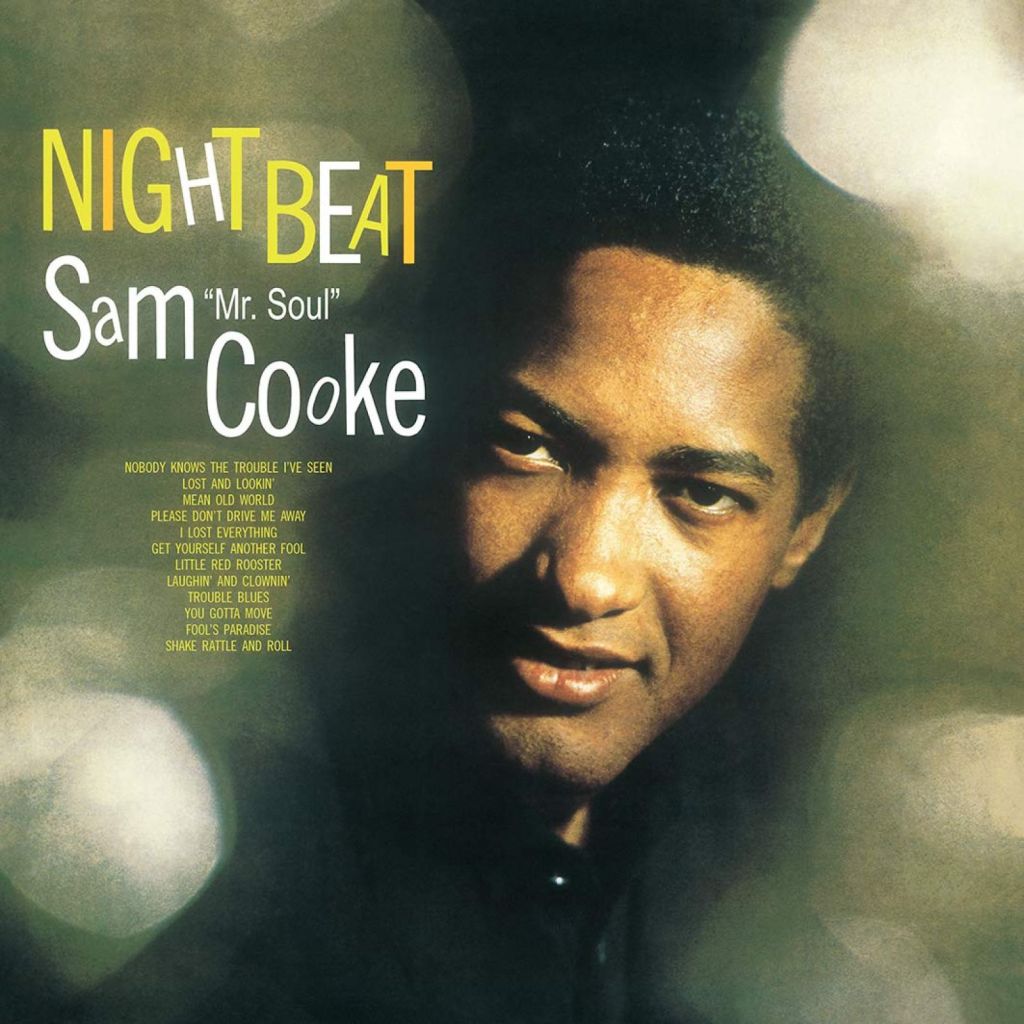
Cooke took part in the Civil Rights Movement and used his influence and popularity to fight for the cause. Together with his friends Malcolm X, Muhammad Ali, and Jim Brown, they campaigned together for racial equality. Sam Cooke once refused to play a segregated show in Memphis, Tennessee, and he settled on a rope splitting the audience in Little Rock, Arkansas. Eventually, Sam Cooke’s popularity was supposedly seen as a threat as he drew big audiences from both sides of the color line, and Sam probably saw that a shared taste in music did not mean a shared set of values.
«Night Beat» is not a call for any of this to change, but it sure is a great album. It is considered by many to be his best album, and so far I have to agree. The album was cut in three days, three late-night recording sessions which gave the album its title. It’s been described as an album where Sam and his band went into the studio and simply enjoyed themselves, and it sure sounds like they’re having a good time. I would have loved to sit on the couch in the studio during these three nights and just observe and enjoy.
The album is a lot more intimate than what we’ve been served up by Sam before, and it creates an atmosphere that is a bit hypnotic. It’s so soulful and beautiful that you just can’t stop listening to it. The opening track Nobody Knows The Trouble I’ve Seen is absolutely the best track on the album, and it sets the tone for the roughly 40 minutes of greatness. From what I can see there weren’t any singles released from this album, but that doesn’t mean there aren’t any worthy ones. Obviously, the one I’ve already mentioned, but also tracks like Mean Old World, and Lost and Lookin’, among others. We’re also treated with the excellent organ of the 16-year-old Billy Preston.
ELVIS PRESLEY – ELVIS’ GOLDEN RECORDS VOLUME 3
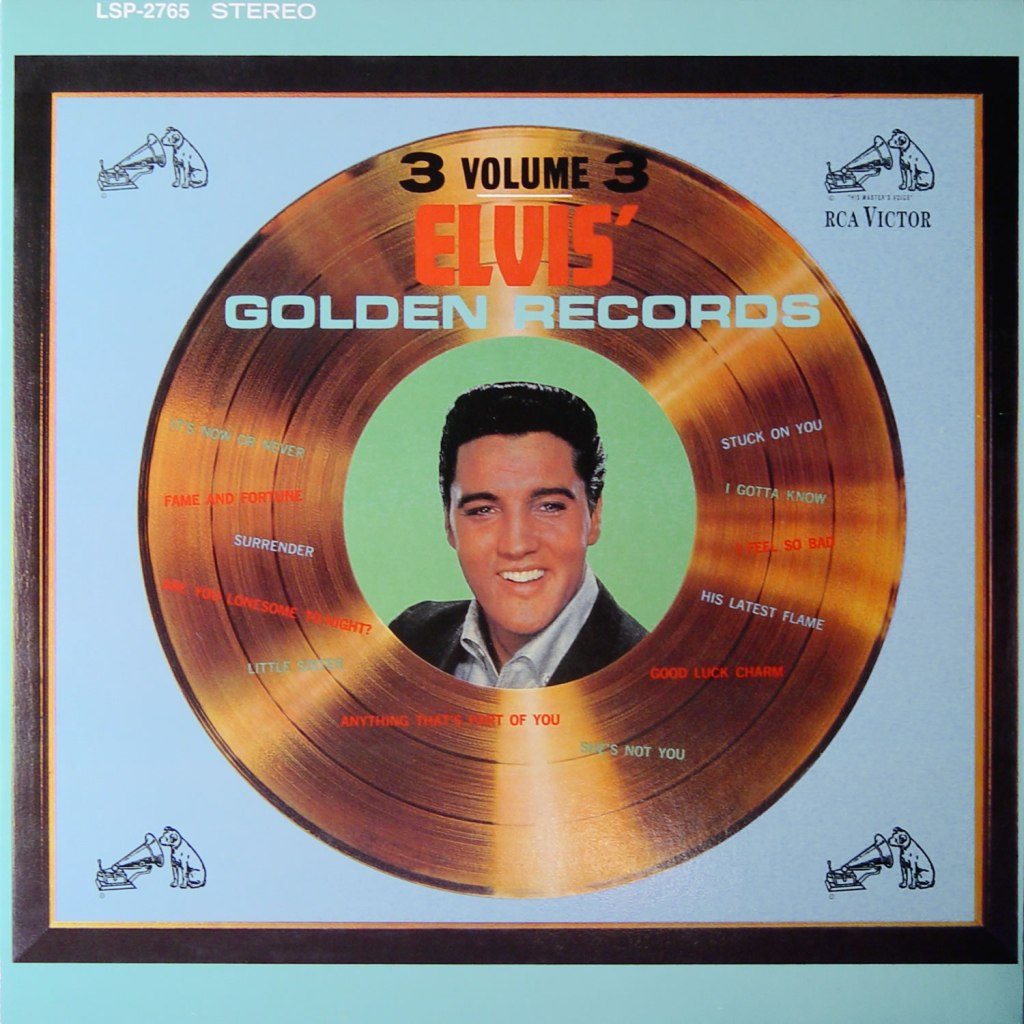
Elvis signed for RCA Victor in 1955, leaving Sun Records, and ending up with Colonel Parker as his manager. His first recording for RCA was Heartbreak Hotel, and in March 1956 Elvis released his debut album «Elvis Presley» without said recording, but with tracks like Blue Suede Shoes (Carl Perkins), I Got A Woman (Ray Charles), and Tryin’ To Get To You (The Eagles). The album soared to #1 on the album chart and became the first rock’n’roll album to top that chart, and the first album in that genre to sell over one million copies.
As Elvis embarked on a tour of 15 cities in 15 days, the complaints about his distinctive stage movements began to trouble the conservative Americans. Some Catholic newspaper, or whatever, even wrote a letter to J. Edgar Hoover, the FBI director, claiming that Elvis was a ‘’definite danger to the security of the United States…’’. But Elvis went on to break records by appearing on The Steve Allen Show watched by around 60 million viewers. The show did what they could to hide his hips though, and apparently only filmed him from the waist and up. Anyway, Elvis was a star for sure after just one album release.
In October 1956 he released his second album, «Elvis», which also went all the way to #1 on the album chart, solidifying his place as the king of rock’n’roll. This continued with him releasing Love Me Tender as a single which also topped the charts, and his first movie, «Love Me Tender», which was changed drastically to capitalize on his success and fame. The movie was originally called «The Reno Brothers», and it was originally a regular movie, but they added four musical numbers just for Elvis. The movie was hated by the critics but did really well at the box office. 1956 ended up being a great year for Elvis, making around $22 million on merchandise on top of his album sales, and Billboard stated that he had placed more songs in the top 100 than any other artist since they started charting records.
Elvis’ latest release is a compilation called «Elvis’ Golden Records Volume 3». The album is a compilation of hit singles released in 1960, 1961, and 1962, and contains eight Top 5 A-sides as well as four B-sides which also made the Top 40. All the singles on this record are also certified gold singles, selling at least 500,000 copies. Tracks like It’s Now Or Never, Stuck On You, (Marie’s The Name) His Latest Flame, and Little Sister are my favorites, but this is a very solid compilation with a lot of great songs. The album itself was certified gold in 1966.
ARETHA FRANKLIN – LAUGHING ON THE OUTSIDE
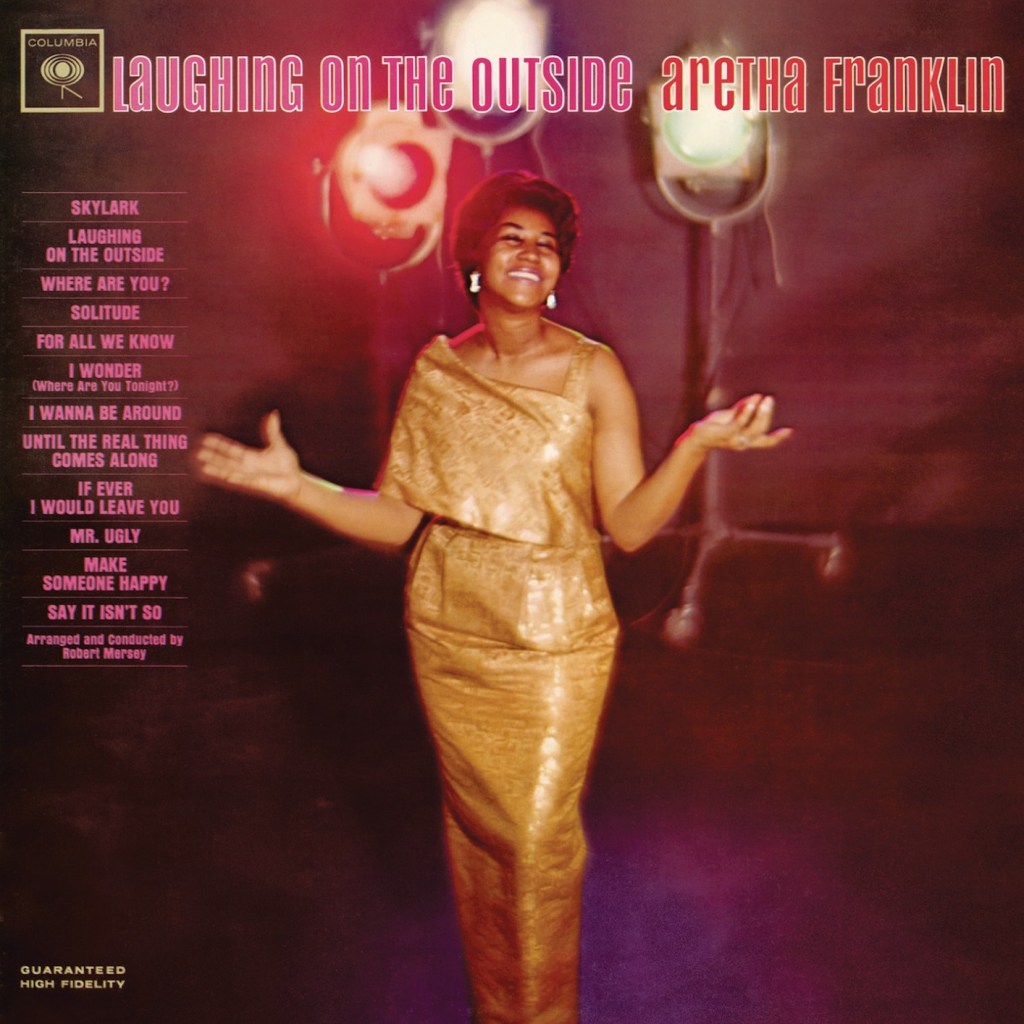
Sam Cooke tried to convince Aretha to sign for RCA Victor, but at that point, Aretha had already signed for Columbia Records. This was in 1960 when she was just 18 years old. Before this though, Aretha was signed to a Detroit label called J.V.B. Records, where she released two singles; Never Grow Old / You Grow Closer and Precious Lord (Part One) / Precious Lord (Part Two). She started her career singing at the New Bethel Baptist Church where her father, C.L. Franklin, was the minister, and when she wanted to move to New York to record pop music he decided to let her go for it, as long as he could serve as her manager.
Her first single at Columbia was Today I Sing The Blues, and in 1961 she released her debut album, «Aretha». So far it seems like no one really knows what to do with Aretha’s talent, and her music so far hasn’t been…I don’t know…right for her I guess. She hasn’t been very successful either, though the albums haven’t been all that bad. There have been some good songs here and there, and of course, her singing has been magnificent. But after three albums, she’s still kinda right where she started. I guess she has gotten some more fans, and probably making a bit more money, but as long as the hits don’t emerge, she’s kinda at a standstill.
Her fourth album, «Laughing On The Outside», is mostly packed with jazz and pop standards, but also a composition written by herself and Ted White, I Wonder (Where Are You Tonight). The album, however, tells the same old story as the three previous ones. It is devoid of hits, Aretha sounds amazing, and the people around her have no idea what to do with this amazing voice. I guess Skylark is the closest thing she comes to a track that might sound like a hit, but other than that there isn’t a lot to celebrate here.
Eddy Arnold launched his solo career in 1943 as ‘The Tennessee Plowboy’, and made his debut when signed by RCA Victor in 1945 with the track Each Minute Seems A Million Years. Between 1945 and 1955 he had 68 US country hits, and 21 of those hit the #1 spot, turning him into the most prolific and popular country singer. In the late ‘40s, he changed his image, turned into a country crooner of sorts, and hired Colonel Tom Parker as his manager which in turn made him a nationally known star. Eddy also became the first country singer to host his own network television show, Eddy Arnold Time, in the ‘50s, and also one of the first to play at Carnegie Hall. His latest album, «Cattle Call», features mostly Western standards, but also a re-recording of his 1955 hit, Cattle Call. The album showcases Eddy’s great voice but doesn’t really do much more than that.
According to Wikipedia either Frank Sinatra or Don Costa ‘’discovered’’ Trini Lopez at PJ’s, a night club in Hollywood, this year. Of course, Trini (or Trinidad as his given name was) had been playing music since the early ‘50s, released his first single Clark’s Expedition / Big Boy in 1958, and signed with Columbia Records that same year, but yeah, I guess those other guys discovered him… However, in 1963 either Frank or Don saw Trini perform at PJ’s and he was signed to Reprise Records. Before this, he also released a dozen singles at King Records, but none of them were successful. Neither was his own composition A Right To Rock, released by Volk Records. But when Reprise decided to record him live at PJ’s, things finally worked out. «Trini Lopez At PJ’s» contains everything from If I Had A Hammer (which was released as a single and stopped at #3 in the US, but reached the top spot in 36 other countries) to La Bamba. It’s a cool album with a great feel to it, and I sure do understand why they decided to record him live, cause this sounds like a gay ol’ time. The album itself went all the way to #2 on the album chart in the US and stayed there for six weeks.
Antonio Carlos Jobim was probably best known as a composer, but this month he released the album «The Composer of Desafinado, Plays». It’s a nice piece of music from beginning to end, and a great showcase of what Brazilian music can sound like. Jobim is credited with starting the bossa nova movement, at least by The Encyclopedia of Popular Music, and he recorded and performed at Carnegie Hall with Stan Getz, Charlie Byrd, and Dizzy Gillespie. The opening track The Girl From Ipanema is supposedly one of the most recorded songs in history, and tracks like Samba De Uma Nota Só and Desafinado have become jazz standards with time.
THE SEARCHERS – MEET THE SEARCHERS
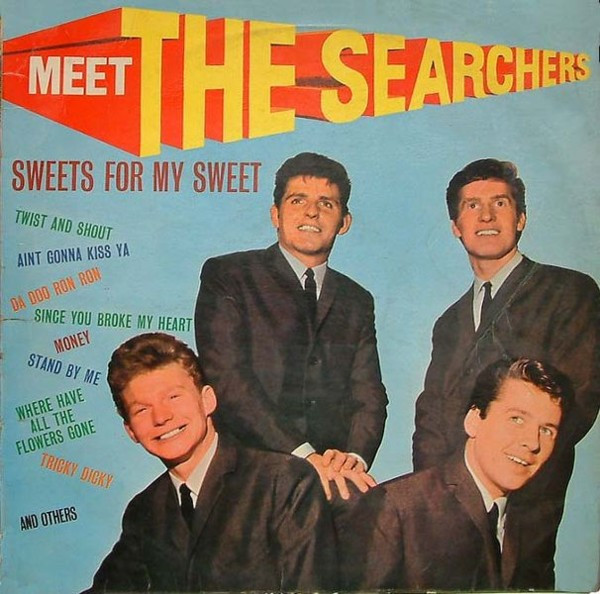
Having just released their debut single, Sweets For My Sweet, scoring a hit right off the bat, The Searchers wasted no time releasing their debut album. «Meet The Searchers» consists of 12 cover songs that were part of their stage repertoire, including the single, originally released by The Drifters, Love Potion No. 9 (The Clovers), Stand By Me (Ben E. King), Da Doo Ron Ron (The Crystals), and Where Have All The Flowers Gone (Pete Seeger). All the tracks were recorded in one day, except for the single.
The Searchers has definitively put their own mark on all the tracks, and their sound is as fresh as The Beatles in my opinion. However, they’ve got no self-composed songs which is a bit of a disappointment, but I can easily look past that and conclude that this is a good album.
The band started out by backing a singer called Johnny Sandon but is now looking to create a story for themselves. And I gotta say that they have gotten off to a good start.
UNKNOWN RELEASE DATE
BUCK OWENS – SINGS TOMMY COLLINS
Alvis Edgar Owens Jr. gave himself the nickname Buck after his favorite horse, and it seems like it stuck. By the age of 13, Buck started playing the mandolin and eventually learned how to play the guitar, drums, and horns. At 16 he was performing professionally, at 17 he got married to a singer in a band he worked with, and at 18 he and Bonnie Campbell got a son, Alan Edgar ‘’Buddy’’. That’s Buck Owens’ teenage years summed up in the shortest way I could manage.
In 1951 he moved his family from Arizona to Bakersfield, California, and started getting jobs as a session musician at Capitol Records playing backup for singers like Tennessee Ernie Ford, Wanda Jackson, and many more. In 1956 he released his first singles on Pep Records under his own name. Down On The Corner of Love and Right After The Dance as Buck Owens for country music, and Hot Dog under the pseudonym Corky Jones for rockabilly. In 1957 he signed for Capitol Records, and in 1959 he scored his first hit with Second Fiddle.
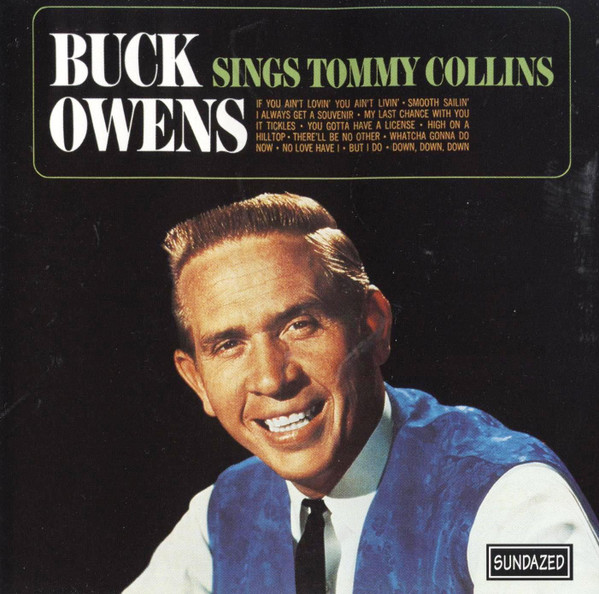
«Sings Tommy Collins» was released in 1963 and is a collection of songs written by Tommy Collins. There were no hit singles released from this album, but the album itself went all the way to #1. I ended up enjoying this album quite a lot, but it did take me a few rounds. I still hold Buck’s debut album as his best, but this might be the runner-up so far. It’s got some humor, heartache, and great music by his backing band The Buckaroos. Tracks like If You Ain’t Lovin’ You Ain’t Livin’, Smooth Sailin’, and Down, Down, Down are some of my favorites, but I’m also partial to the stupid It Tickles and What You Gonna Do Now?.
Dione LaRue, also known as Dee Dee Sharp, was signed to Cameo-Parkway in 1962 after working as a backup singer for Chubby Checker, Frankie Avalon, and others. Her first hit was Mashed Potato Time, and her path as a dance demonstrator/novelty act was paved. And she’s been sticking to that manuscript ever since, really. I believe this is the first album of hers I’m covering here, and «Do The Bird» is named after her last single, Do The Bird, which obviously is a dance craze addition. However, this album is completely devoid of those kinda songs except for the single. I find that invigorating. First of all, the album opens with a cool version of Rockin’ Robin (originally released by Bobby Day in 1958), and follows with good covers of tracks like South Street (The Orlons), I Will Follow Him (Little Peggey March), and Let The Sunshine In. Right now I have to say that if you’d wanna check out Dee Dee, this is the go-to album.
JODY MILLER – WEDNESDAY’S CHILD IS FULL OF WOE
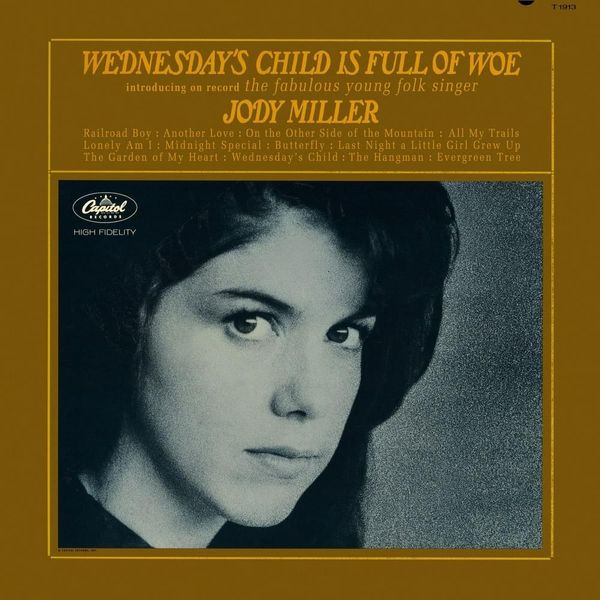
«Wednesday’s Child Is Full of Woe» is Jody Miller’s debut album, and her career is one of the first I’ve written about where no singles had been released before her debut album. Myrna Joy ‘’Jody’’ Miller was born in Arizona, and as a young girl, she used to sing harmonies with her sisters at home until her parents realized that she had a unique ability. This led to her parents entering her in talent contests, and her father even smuggled her into bars where she would stand on tables and sing for the patrons.
When her parents divorced she moved to live with her grandma in Oklahoma, which is where she realized she wanted to be a singer after hearing Mario Lanza singing. She was stuck performing in a local coffeehouse in Oklahoma, so after marrying her childhood sweetheart, they left for Los Angeles, California, to fulfill her dream of becoming an artist. Through some family connections of her husband’s, she ended up scoring an audition with Capitol Records and signing a contract with the label in 1963.
She was apparently rushed into the studio to record this album, and that’s probably the reason there weren’t any singles released in advance. None after either, for that matter. According to Wikipedia/The New York Times, Cher did some work on the album, but I haven’t been able to confirm that anywhere as I don’t have the album in physical form. The album didn’t become a commercial success though, as the popularity of folk music was declining, but Jody would get her chance to shine a bit later.
The album contains some good versions of traditional folk tunes like All My Trials, Midnight Special, and Railroad Boy, and according to Wikipedia, all the tracks on this album are songs that Jody learned when she was a kid. «Wednesday’s Child Is Full of Woe» doesn’t turn me into a Jody Miller fanatic, but I do enjoy it. However, I’d rather listen to some Joan Baez or Judy Collins at the moment.
MILES DAVIS – BIRTH OF THE COOL (REISSUE)
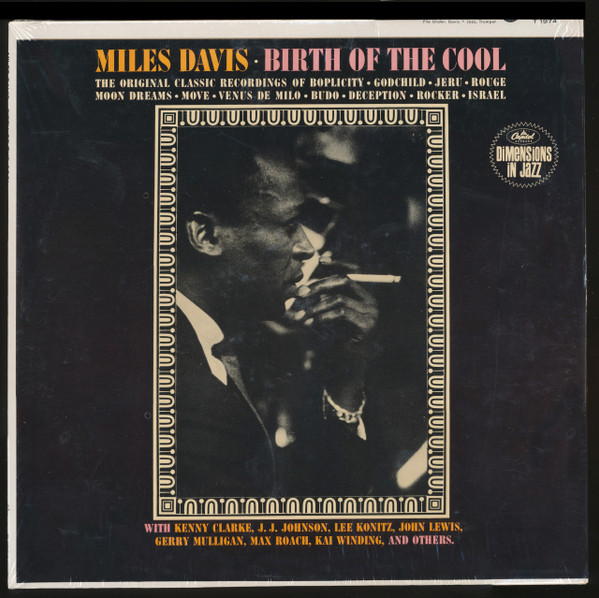
Originally released in 1957, this compilation has gone on to be considered seminal in the history of cool jazz. Cool jazz seems to me to be a reaction from the younger generation in jazz wanting to take jazz forward and into something new, away from bebop and into a version of jazz with more harmonies, slower tempo, and as Miles Davis said, making the instruments sound like human voices.
These ideas, and the Miles Davis nonet, came to life during gatherings at Gil Evan’s apartment in the late-40s where like-minded and forward-thinking musicians met up to discuss the future of jazz. So, in Evan’s tiny apartment in New York, this group started planning the way they wanted their music to sound, and roughly 9 years later «The Birth of Cool» was released as a compilation.
All the twelve tracks on this compilation stem from three recording sessions for Capitol Records over the course of about a year and a half in 1949 and 1950. The tracks from the first session were released soon after as two singles, Israel and Boplicity from the second session were paired together on a 78, eight tracks were released on a 10’’ LP called «Classics In Jazz – Miles Davis» in 1954, and in 1957 they finally released «Birth of The Cool» which consisted of eleven of the twelve tracks (Darn That Dream will not be included on the album until 1972).
So from what I understand, this album is exactly like the original release. I haven’t found much information about the 1963 reissue, apart from the fact that it does exist and that it was released in 1963. All thanks to Discogs. But that doesn’t matter. I’m very happy to be able to listen to this album and write about it here as it is a classic. And of course, it is a great piece of music. Apart from the two tracks mentioned earlier, there’s also room to mention Jeru and Venus de Milo amongst a tracklist that doesn’t disappoint.
Stan Kenton, an artist I know nothing about, released an album called «Adventures In Blues» sometime this year. It’s an orchestral jazz album that got good reviews from Allmusic.com and All About Jazz, but I’ve decided to not dive any deeper than that. I’ve listened to it, and it’s not bad, but it’s not the kind of music that makes me wanna geek out either. So I’ll just leave it at that.
Ed ‘’Big Daddy’’ Roth created a drawn/cartoon character called ‘Rat Fink’ which is supposedly infamous, I guess in the US at least. I mean, I’ve seen it, but I don’t believe it is that famous here in Europe. Anyway, the character has been on tons of merchandising items like t-shirts, keychains, and collecting cards, and now its creator has started a band called Mr. Gasser & The Weirdos. Their debut album is called «Hot Rod Hootenanny» and is a novelty surf record of some sort. It’s not a very good album, and I don’t find it very funny, but people like Hal Blaine and Glen Campbell do play their respective instruments on it, which is something.
I can’t find a lot of information about The Rhythm Rockers other than on a website supposedly selling their music for advertising and video games, or something like that. In the short bio on that site, it says that they formed in the late-50s, and comprised of teenagers from the Boston area. They did release an album called «Soul Surfin’» in 1963 though, and it is instrumental surf rock. It’s a pretty decent album, but nothing more than that.
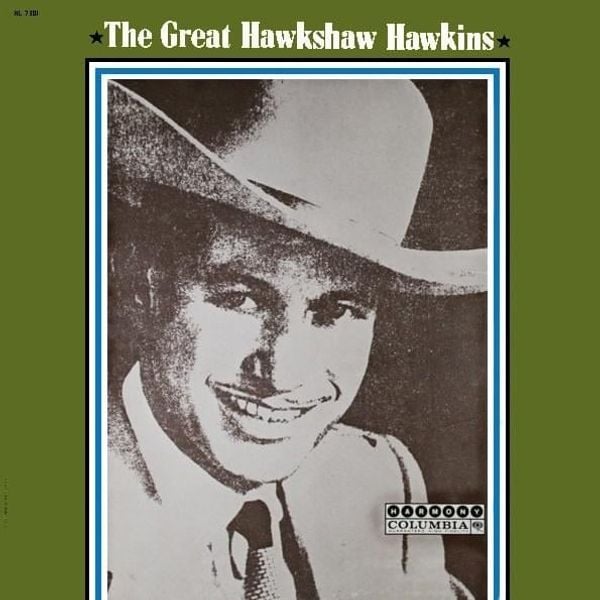
HAWKSHAW HAWKINS – THE GREAT HAWKSHAW HAWKINS
In World War II, Hawkshaw served both in Paris, Texas, and France, Europe. He saw most action in France, where he fought in the Battle of the Bulge, and won four battle stars. I’m not a war expert, but I guess battle stars are good, cause it sounds pretty cool. After the war, he signed with King Records and scored two Top 10 Country hits with his first two releases (as mentioned in March 1963). Between 1946 and 1953 he scored three more Country Top 10 hits at King Records, including Slow Poke. But his Sunny Side of the Mountain, a minor hit in the ‘40s, would become his signature song.
From 1953 to 1962 he would record for Columbia Records and RCA Records (not at the same time I guess), but without much success, he ended up signing with King Records again in 1962 and released his biggest hit, Lonesome 7-7203, just three days before he died in a plane crash together with Patsy Cline and Cowboy Copas. The song rose to #1 on the Country chart, but not until after he passed away, so Hawkshaw himself never got to experience one of his songs make it to the top.
«The Great Hawkshaw Hawkins» is obviously a posthumous album and a compilation. The album is released by Harmony Records (I don’t know why) and contains 10 songs where all but two are written by Hawkshaw himself. I have no idea where these songs are taken from, if they have been released before, or if they are from some vault that Harmony got a hold of, cause there isn’t much information about this album out there. But it’s a nice album with some good storytelling. I like the songs Alaska Lil And Texas Bill, Patanio (The Pride Of The Plains), and My Story, mostly for the stories he tells, and less because of the music, but it’s still a comfortable listen all the way through.
Ivory Lucky, as Ted Taylor was known, has been recording music for a bunch of labels since he left the Soul Seekers (which also recorded music under The Cadets and The Jacks) in 1957. That info makes me draw the conclusion that he wasn’t very successful at either of them. In 1959 he recorded the title song to this album, Be Ever Wonderful, but Ted is still waiting for success. The album «Be Ever Wonderful» is quite nice, and he kinda plays the same music as Sam Cooke, but the album didn’t become a hit. Ivory Lucky will have to wait a couple more years before he makes it into the higher end of the charts, even though this is a good album.
Roosevelt Sykes, a piano man, has been releasing music since before World War II and is probably one of the best examples of how blues music can sound cheery. According to Bill Dahl at Allmusic.com, he was known for some hilariously risqué lyrics on songs like Dirty Mother For You and Peeping Tom, and was responsible for seminal pieces like 44 Blues and Night Time Is The Right Time. But of course, I’d never heard about him until his 1963 album «Sings The Blues». And while the lyrics on this album might not be as risqué, it sure makes blues sound a lot more merry. I can hear some Fats Domino here, which makes me think that Fats might have drawn some inspiration from Roosevelt, and considering I’ve enjoyed most of what Fats has released in the ‘60s, it’s not far-fetched that I’d like this album as well. It’s a good listen for an easy day if you ask me, and I would recommend checking out tunes like Wild Side, Honey Child, and Hupe Dupe Do to get a feel for this one.
THE SINGLES
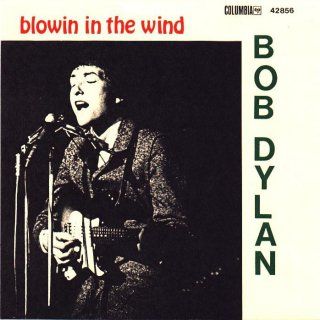
Finally, Bob Dylan released Blowin’ In The Wind as a single as well. The song was first released as part of his album «Freewheelin’ Bob Dylan» in May this year, and then Peter, Paul and Mary released their version in June (which became a big hit). Why Bob ended up releasing this single after Peter, Paul and Mary, is beyond me, but I guess since it became a hit for the trio, he wanted to remind the world that it was his song. Funnily enough, Dylan’s single did not chart, while Peter, Paul and Mary’s version went all the way to #2 on the Hot 100 chart.
«Blowin’ In The Wind» became an anthem for the civil rights movement, and in Martin Scorsese’s documentary «No Way Home (not released until 2005) Mavis Staples was astonished when she first heard the song, and could not fathom that it was written by a young white man. She felt it captured the frustrations and aspirations of Black people so powerfully, that it had to be written by a Black person. It also supposedly inspired Sam Cooke to write A Change Is Gonna Come, which will be released next year.
And of course, this song has inspired a lot more than that. This is probably the song Bob Dylan is best known for writing and releasing, and it is in all likelihood gonna live forever.
The B-side, Don’t Think Twice, It’s All Right, was also part of his latest album, which means this single doesn’t really give us anything we haven’t heard before. But it allows me to write a bit more about two great songs. And this one sure is as well. Again though, Peter, Paul and Mary will be the ones to popularize this track. They released their version of Don’t Think Twice, It’s All Right sometime this year as well, I’m not sure when (and I actually think I overlooked it completely in my research), but it will go on to breach the Top 10 on the Hot 100 chart at some point.
(Writing about what I thought was Bob Dylan’s first single, made me realize that I missed a single released in December 1962. Mixed-Up Confusion paired with Corrina, Corrina is Dylan’s first single. Corrina, Corrina was also a part of his album, «A Freewheelin’ Bob Dylan», but Mixed-Up Confusion, recorded with an electric band, giving it that punk-rock-folk sound, has not been part of any albums so far.)
Roy Orbison released Blue Bayou as an A-side single in the UK this month, but it was also released as a part of his album «In Dreams» last month. Blue Bayou is one of those great Orbison tracks that sound like it could only ever be sung by him (Linda Ronstadt will cover it in 1977, so I guess I’ll see then), and it went to #3 in the UK, #10 in Norway, and #29 in the US (it was released as a B-side in the US).
The B-side on the UK version (which was the A-side on the US version), Mean Woman Blues, was originally released by Elvis Presley back in 1957 as a part of Elvis’ first soundtrack, «Loving You». Orbison’s version did well both in the UK and in the US, where it went to #3 and #5 respectively. Compared to Elvis’ version, I would say Roy holds his own pretty well. I mean, it’s not awesome to be compared to Fifties-Elvis, cause that’s when he really shone, but yeah, Roy’s version is pretty cool. Maybe except for the Chewbacca roar that he does toward the end…

Blue Velvet was originally written by Bernie Wayne and Lee Morris, and released by Tony Bennett in in 1951. Bobby Vinton supposedly wanted to record the song since he first heard the original version, though his friend Al Gallico has said that it was he who suggested the song to Bobby. Vinton didn’t even think Blue Velvet would be a hit and had more faith in Blue On Blue (released, and written about, in April 1963) which peaked at #3 on the Hot 100 chart. Blue Velvet, however, went all the way to #1, so even though Bobby wasn’t wrong about Blue On Blue, he did smart in recording Blue Velvet also.
The B-side, Is There A Place (Where I Can Go), which I can’t find much information about, is kinda shit compared to the A-side. It sounds like they just added a song they had lying around that Bobby recorded a while ago.
Cry Baby was Garnet Mimms and the Enchanthers’ first chart hit, and from what I can find out, their first-ever single. Garnet, however, was not new to this business. He has recorded as a member of a group called the Norfolk Four, he was a member of a doo-wop group, the Deltones, for a brief period, formed The Gainors in 1958, and started Garnet Mimms and the Enchanters together with Sam Bell, Charles Boyer, and Zola Pearnell in 1961.
Sam Bell and Garnet Mimms left the Deltones because they never achieved any success, so when they moved their new group from Philadelphia to New York in 1963, signed for United Artists, and teamed up with songwriters Bert Berns and Jerry Ragovoy, I believe they ended up feeling like this was a good decision. Cause Cry Baby peaked at #4 on the Hot 100 chart, and right off the bat, they scored their first hit. And it is a great song. A mix of gospel and soul, that supposedly paved the way for artists like Aretha Franklin and Otis Redding. On this track they are backed by an uncredited group singing backup vocals called the Gospelaires, featuring Dionne Warwick, Dee Dee Warwick, and Estelle Brown.
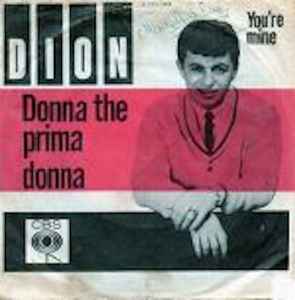
Dion is back with yet another hit, and I’m still not sick of this guy. There’s just something to this guy’s sound that I really like. Donna The Prima Donna might not be his best effort so far, but it’s still catchy and infectious. I can sing along to this song at work, and at some point later I can hear other people humming the same tune without having heard the song themselves. I think that’s a good tell for it being catchy. The song is written by Dion and Ernie Maresca (who has written/co-written plenty of Dion’s biggest hits) and reached #6 on the Hot 100 chart. The song also charted in Canada and went all the way to #2 in Hong Kong.
The B-side is a song called You’re Mine, a song that I couldn’t find much information about. But it is a more bluesy tune than what I’m used to from Dion. I like it though.
I’m not sure exactly where I have this next song from, but I do remember hearing it in a «The King of Queens» episode, I might also have heard it through my father at some point before that. Hello Mudduh, Hello Fadduh (A Letter From Camp) is a novelty song by Allan Sherman, which became quite a big success. It went all the way to #2 on the Hot 100 chart, won a Grammy in 1964 (I’ll probably get back to that), and in 2020 it was selected by the Library of Congress for preservation in the United States National Recording Registry for being ‘’culturally, historically, or aesthetically significant’’. For a novelty song, that’s pretty badass, but then again, it’s actually one of the very few novelty songs that I like as well. The melody for the song is taken from the ballet «Dance of the Hours» from an opera called «La Gioconda» by Amilcare Ponchielli. Even if you don’t know shit about opera or ballet, like me, you’ll recognize the melody.
The B-side is interesting as well. Further up here I wrote about a guy called Ed Roth and his band Mr. Gasser & The Weirdos, and the fact that he created a character called ’Rat Fink’ that was supposedly known around the world. Well, Allan Sherman’s B-side is called (Rag Mop) Rat Fink. And even though I can’t find any information about this song, it’s gotta be about that character, right? I mean, the song is just Allan spelling out ‘Rat Fink’ in peculiar ways, but still. Anyway, the song is mostly weird, but for some dumb reason I can’t explain, it’s not bad.
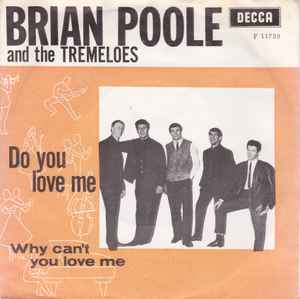
The Contours scored a hit with Do You Love Me last year, and since Brian Poole and the Tremeloes had success with a cover of a hit song back in June, I guess they figured it would be smart to continue with that recipe. And will you look at that, their version of Do You Love Me did become a hit. It’s like magic! They recorded this song to sound like their live version by miking up their PA system, and while I haven’t heard them live they do have a pretty cool sound on this one. It’s pretty similar to The Contours in structure, but I gotta say that Brian and the Tremeloes rock it even harder, and they can probably give the credit to the sound guy for that.
On the flip side, they’ve got a song called Why Can’t You Love Me, which is written by guitarist Alan Blakely. The single was rushed to release, both to capitalize on the success of «Twist and Shout», but also to beat the Dave Clark Five who had planned to release the same track the next month.
Skeeter Davis gets her second Top 10 hit on the Billboard Hot 100 chart with her latest single, I Can’t Stay Mad At You. The song was written by Gerry Goffin and Carole King and is one of the first songs written by Goffin-King performed by a country artist. It’s country, for sure, but there’s definitely a pop element here that elevates it quite a lot. It actually reminds me a bit of First Aid Kit, the kind of music they do, and even their harmonies. Compared to her last hit, The End Of The World, it’s something very different, but I believe both these songs suit Skeeter perfectly.
It is paired with a track called It Was Only A Heart which sounds like a song written by the Everly Brothers. I have no idea if it actually is, but I would certainly believe it if someone told me it was. I like this track as well from Skeeter.
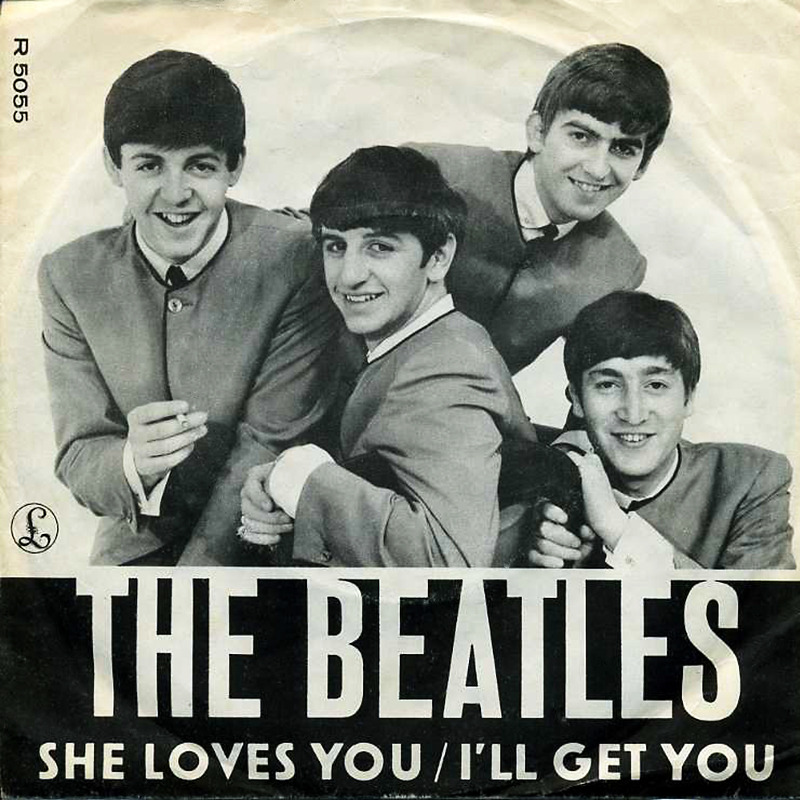
In 2009, BBC Radio 2 proclaimed that She Loves You was the all-time-best-selling Beatles single, according to Wikipedia. Even before anyone knew the title of the Beatles’ new single, in June 1963, thousands of fans had pre-ordered it, and the day before it was released, around 500,000 copies had been ordered. By late November, the single had surpassed one million sales. It set several British sales records, was awarded a gold record, and spent 31 consecutive weeks in the UK charts where 18 of those were in the Top 3, and six of them were spent at #1. The single was also the best-selling single of 1963, and in 2022 it had reached sales of 1.93 million records. In my opinion, that should be called a success.
She Loves You is written by Lennon/McCartney, of course, and was recorded less than a week after it was written on the 1st of July 1963. The duo started writing the song after a show in Newcastle, UK, where Roy Orbison and Gerry and the Pacemakers also played. The initial idea for the song supposedly came from Bobby Rydell’s song «Forget Him», but the call-and-response pattern they pictured for the song was scrapped. They finished the song in a hotel room, sitting on twin beds with two guitars, wrapping it up. Lennon said in 1980 that the idea for the lyrics being about someone else was McCartney’s: ‘’It was Paul’s idea: instead of singing ‘I Love You’ again, we’d have a third party. That kind of little detail is still in his work. He’ll write a story about someone. I’m more inclined to write about myself.’’ (The Beatles (2000) The Beatles Anthology)
The single didn’t break them in the US though, which didn’t make sense to George Martin. It doesn’t make sense to me either, but I’ve heard that a lot of people in the American music business at the time were intent on letting the American bands shine, and would hinder the foreigners in any way they could. «She Loves You» actually just sold 1.000 copies in the US at its release, which is kinda insane, considering it is a great song. On another continent, called Europe, She Loves You was the first Beatles single to sell well. Anyway, this single was the one that really gave the Beatles the spotlight in the UK, and even though Paul’s father wondered why they couldn’t sing ‘yes, yes, yes’ instead of ‘yeah, yeah, yeah’, which he said sounded more British, the younger generation obviously loved this shit. And so do I, 60 years after its release.
This fabulous single is paired with I’ll Get You, another Lennon/McCartney composition. Paired with «She Loves You», it definitely takes the back seat on this one, but that doesn’t take anything away from the song itself. It’s just that «She Loves You» is that much better in every way. Paul McCartney has singled out a chord change in this song, which he credited to Joan Baez’s rendition of All My Trials, and he has said: ‘’I like that slightly faggy way we sang: ‘Oh Yeah, Oh Yeah’, which was very distinctive, very Beatley.’’ Miles, Barry (1997) Paul McCartney: Many Years From Now
Definitely the first time I’ve written about a Dixieland jazz group, considering I’ve never even heard of that genre, but that’s what The Village Stompers are described as. Listening to Washington Square makes everything that much clearer, cause of course this is Dixieland jazz. How else can you describe it? And it’s pretty neat as well. It’s the kinda music I would expect to hear in New Orleans, maybe? The kind of of music I would drink margaritas to while watching crocodiles doing their death rolls, eating some of that famous New Orleans food, sitting around in a white fedora hat and and a white linen shirt halfway open…you get the picture. The Village Stompers are not from New Orleans though, their stomping ground is the Greenwich Village in New York, and Washington Square was their first hit. This track was absolutely a breath of fresh air right now, and I’m not sure if that’s why I like it so much, but I would recommend everyone to check this one out for a change of scenery.
The B-side Turkish Delight doesn’t reach the same heights as the main track, but it’s also something different and worth a listen.

The Ronettes’ first hit single is Be My Baby, written by Phil Spector, Jeff Barry, and Ellie Greenwich. This song is regarded as the quintessential example of Phil Spector’s Wall of Sound recording technique and is recorded with his house band (The Wrecking Crew) including every instrument from piano to guitar to strings to shakers, and to handclaps. According to Mick Brown (author of «Tearing Down the Wall of Sound: The Rise and Fall of Phil Spector»), Spector was ‘’determined to make his most towering production yet.’’ And he sure made that happen, didn’t he?
Be My Baby is a fantastic song in every regard, and it charted in the Top 10 in countries like the US, the UK, Norway, New Zealand, and Belgium. Making a big impression on many artists, but none more than Brian Wilson. The Beach Boy was supposedly so blown away by the song that it has stayed with him for all of his life. He has mentioned it in numerous interviews and biographies, according to his daughter, she woke up to the song playing ‘’every day’’ of her childhood, he kept analyzing it to the point of obsession, and he had copies of the record everywhere from his car to all over his home. That’s a pretty great testament to how good this song is when one of the best songwriters around loses his mind about your record.
In good old Spector fashion (remember that he recorded The Crystals’ He’s A Rebel with none of the members present?), the only Ronette present for the recording was Veronica Bennet. Some people have said that they thought this song was a sort of declaration of love to Veronica, as he was infatuated with this 18-year-old girl, and history will show that they actually ended up marrying each other. So if it was intended as such by Phil, and even if it wasn’t caught up on right away, at least he ended up with the girl in the end. Another fun fact is that Cher sang backup on this recording cause she was hanging around the studio with Sonny Bono and Phil needed someone to step in for Darlene Love who hadn’t shown up.
Tedesco and Pitman is the B-side. An instrumental track (I believe Spector added an instrumental track to one of The Crystal’s singles as well) that is completely out of place in this scenario.
The one-hit wonders, The Jaynetts, released their hit song Sally Go ‘Round The Roses this month and their fifteen minutes of fame will be spent. But then again, they were probably never meant to be anything other than a prop band anyway. Abner Spector, an A&R man for Chess Records asked Zelma Sanders, owner of J&S Records, to assemble a girl group for the recording of this song (which apparently wasn’t even written at the time, since Zelma is one of the songwriters), and Zelma did just that. According to Wikipedia, there are five credited vocalists on this single, but supposedly there are over twenty voices recorded on this one track. So who’s to say what’s really going on here, and who’s really in the group. But that don’t matter. The song became a hit, a somewhat classic later because of some chatter about the lyrics (some people apparently believe the song is about a lesbian losing her lover, which was not an easy thing to talk about at that time), and it’s a pretty hypnotizing song, to be honest.
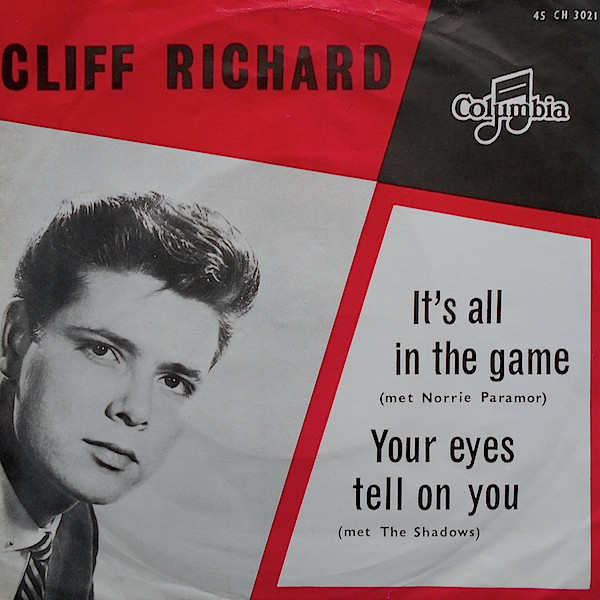
It’s All In The Game is the only #1 single in the US written by a US Vice President, Charles G. Dawes (he was the vice president under Calvin Coolidge). He did not write lyrics, which were written by Carl Sigman after Dawes had died, but he did compose the melody either on his flute or the piano. Tommy Edwards was the one to take this song to #1 back in 1958, supposedly making him the first African-American to claim that spot on the Hot 100 chart, and it also saved his career as that was supposed to be his final recording session for MGM Records. But this month it is Cliff Richard releasing this tune. And he is still struggling to win me over. His version did help him enter the US Top 40 for the first and only time in the ‘60s, but it’s just too boring and weak for my liking. It went to #2 in the UK though, but they like him a lot better on the British Isles than anywhere else, where he scored 43 Top 40 hits in the ‘60s.
In the US the B-side was I’m Looking Out The Window, which he scored a #2 hit with in the UK last year. In the UK it was paired with Your Eyes Tell On You.
Buck Owens scores his second #1 country hit with Love’s Gonna Live Here. It spent 16 weeks at #1, a feat not rivaled for 49 years in the country chart, and it has been covered by artists like Emmylou Harris, Waylon Jennings, and Dwight Yoakam. So I would say this is a bonafide hit song (which I funnily enough had never heard before). Buck is definitely in his prime right now, racking up hit after hit, and I would say he has to be the #1 country artist in the US at the moment. I still like his happy-go-lucky style, and this song hits home as well.
It was paired with Getting Used To Loving You, a country ballad that works well.
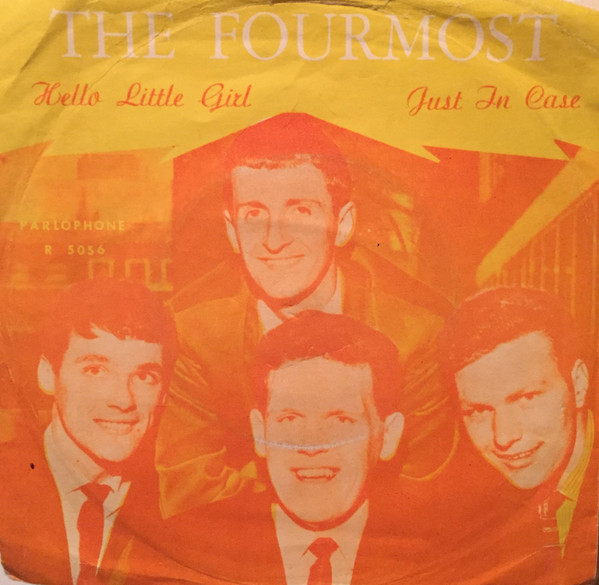
The debut single by the Liverpudlian band The Fourmost, Hello Little Girl, is, like so many other new British acts at the moment, a Lennon/McCartney composition. This particular track wasn’t released by the Beatles until 1995, but they did play it at the Decca audition which resulted in Decca’s biggest blunder ever. The song was mainly written by John Lennon back in 1957, which makes it one of the first songs he wrote, according to Barry Miles and his book, «Beatles In Their Own Words». When The Fourmost recorded the song, the Beatles were present in the studio, and Brian O’Hara, the lead guitarist, said that Lennon and George Harrison gave him an acoustic demo of the song a couple of days before they recorded it. I’d say that the newcomers do a good job with the song, even though the intro fucks with my head a bit. They took it all the way to #9 on the UK chart making it a pretty successful debut single.
They paired this one with another cover, Just In Case, originally released by the Everly Brothers. Another good track that The Fourmost doesn’t mess up at all.
THE CHARTS
Billboard Top 10 Singles Chart
Week 1 (August 3, 1963)
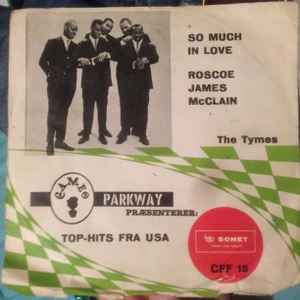
- So Much In Love – The Tymes
- Fingertips Pt. 2 – Little Stevie Wonder
- (You’re The) Devil In Disguise – Elvis Presley
Week 2 (August 10, 1963)
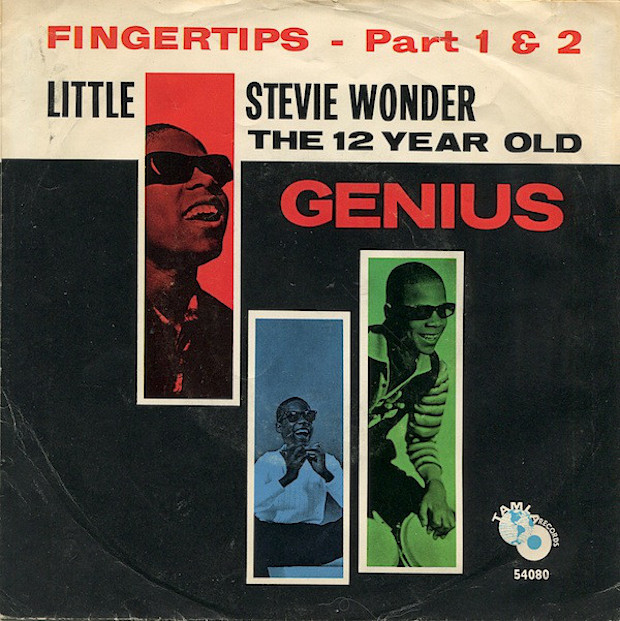
- Fingertips Pt. 2 – Little Stevie Wonder
- Wipe Out – The Surfaris
- (You’re The) Devil In Disguise – Elvis Presley
Week 3 (August 17, 1963)
- Fingertips Pt. 2 – Little Stevie Wonder
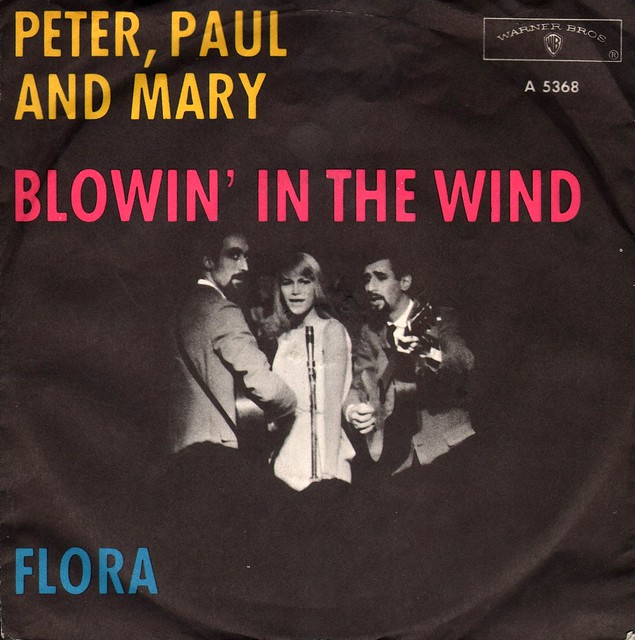
- Blowin’ In The Wind – Peter, Paul and Mary
- (You’re The) Devil In Disguise – Elvis Presley
Week 4 (August 24, 1963)
- Fingertips Pt. 2 – Little Stevie Wonder
- Hello Mudduh, Hello Fadduh! (A Letter From Camp) – Allan Sherman
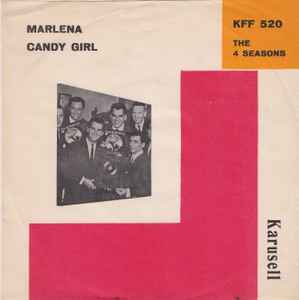
- Candy Girl – Four Seasons
Week 5 (August 31, 1963)
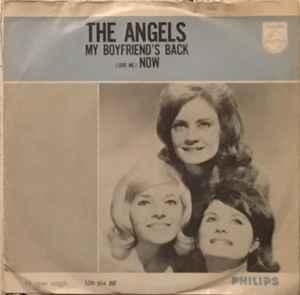
- My Boyfriend’s Back – The Angels
- Hello Mudduh, Hello Fadduh! (A Letter From Camp) – Allan Sherman
- Fingertips Pt. 2 – Little Stevie Wonder
Randy & The Rainbows’s Denise enters the Top 10 this month, and will spend 17 weeks at the chart with #10 being their highest position. They will never chart again, so this is probably the last time I’ll write about them. Not sure I’m gonna listen to «Denise» again either. But who knows.
COUNTRY CHART
Bill Anderson enters the country chart this month with his song 8×10, and it will end up at #2. This song is probably one of the creepiest songs I’ve ever listened to. I guess it’s supposed to come off as a love song, but I get much more of a stalker vibe. Bill sounds incredibly creepy trying to sound…I have no idea what he’s trying to sound like here, to be honest, but whatever it is, he’s failing miserably. How this song ended up at #2 is way beyond me, but then again, there are a lot of freaks out there.
The other newcomer in the Top 10 is Ray Price with his song, Make The World Go Away. It will also peak at #2, but compared to Bill’s nasty little thing, this one is a dream. But that’s only compared to «8×10». Cause it’s a bit on the boring side if you ask me, a country song created for the older generation I guess.
R&B CHART
Freddie Scott gave up his medicine studies to sing with a group called the Swanee Quintet Juniors, which in hindsight might not have been such a good idea. But of course, maybe he just sucked at medicine and realized that he had to find something else to do. This intro obviously makes it seem like Freddy’s singing career is a trainwreck, but that’s not what I’m saying. I’m just merely pointing out that he might have had more success in another field. Hey, Girl was his first, and biggest, hit which entered the charts this month. The song is written by the married songwriting duo Goffin-King, and it peaked at #10 on the Hot 100 chart, and at #10 on the R&B chart. Prior to this, he released some songs here and there, worked as a producer, and wrote a couple of minor hit songs recorded by other artists. So it’s not all bad, but this is as high as he is gonna go. «Hey, Girl» is a pretty great song though. A slow, soulful ballad, where especially the chorus gets me hooked.
Part Time Love is Little Johnny Taylor’s biggest hit, reaching all the way up to #1 on the R&B chart, and #19 on the Hot 100. His first hit was a tune called You’ll Need Another Favor, but after this new one, he will have to wait until the ‘70s for his next hit. Part Time Love is really cool though. He kinda sounds like a more melodic and bluesy James Brown, which is as cool as it sounds.
I overlooked this Sam Cooke single released last month, but luckily it entered the chart. Frankie And Johnny has been recorded by multiple artists over the years, and it will be recorded even more in the future if my information is correct. Sam Cooke takes this one to #4 on the R&B chart, and he obviously makes it sound great. Sam Cooke always delivers, even though his songs aren’t always that awesome. Frankie And Johnny, however, fits him very well.
Wilson Pickett’s second single makes it to the Top 10 on the R&B chart. It’s Too Late peaks at #7, and proves that Wilson has something that everyone should wanna check out; soul. He sounds awesome, and once again proves that the R&B chart is where it’s at. It has been the coolest chart since I started writing, and continues to be so.
THE FILMS
I’ve decided to add some movies every now and then. This will just be movies where bands or artists are featured and appear in the movie, not just as a soundtrack, but it might also be movies I just find interesting without any connection to music.
The first one is «Hootenanny Hoot». It’s a folk music musical about a TV director wanting to televise a hootenanny after he quit his job and left his producer-wife. He leaves New York for some rural town in Missouri and comes across a local hootenanny who travels the country and performs with musical acts and other shenanigans. He realizes that he can make a lot of money televising this show and starts working it out. There are some love stories, not much drama, and a pretty skimpy plot to be honest, but I found the movie quite alright.
The musical acts appearing in this movie are Johnny Cash, The Brothers Four, Chris Crosby, Judy Henske, George Hamilton IV, Joe and Eddie, Cathie Taylor, Sheb Wooley, and The Gateway Trio. I guess Johnny Cash was the one that drew me towards this movie, but he actually just sings one song, Frankie’s Man Johnny, and that’s all. The Brothers Four are the group that gets the most attention, both performing and acting, but to me, it is Judy Henske who really stole the limelight. I’d never heard of her before watching this movie, and with her deep voice and commanding presence, she kinda swept me off my feet. She performs two songs, one is a murder ballad performed in a bikini called The Ballad of Little Romy (according to Shazam), and a track called Wade In The Water. I’ve added whatever discography of hers I could find to my lists for further listening. I was also impressed by Joe and Eddie’s There’s A Meeting Here Tonight.
All in all, it was an ok movie to waste my Saturday morning on, and while the music wasn’t breathtaking, at least it left me with two new acts that I liked and didn’t know existed when I woke up today.
Petter Milde
This Band Could Be Your Life
 This Band Could Be Your Life