The Rolling Stones has been playing gigs continuously in and around London since early 1963, mostly at clubs and pubs. But this month they are set for their first tour, a so-called package tour, which was a thing in the ‘60s.
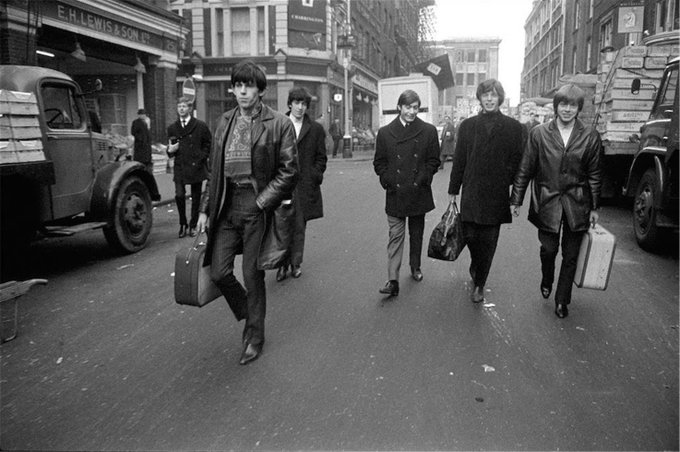
It was a tour of English cities, including 30 dates to be played over 36 days, starting in London. The package tour was set to be with the Everly Brothers and Bo Diddley. ‘’This is a wonderful break for us and we’re looking forward to meeting the American duo. For the present we’re coping with plenty of dates in and around the London area. We don’t hear enough about the London scene in these days of Liverpool domination, but we’re hoping we’ll fly the flag of the Capital when we get on tour’’, Brian Jones said according to Udiscovermusic.com. But they were equally excited to play with Bo Diddley as he’s been a big influence on them.
The tour struggled with ticket sales though, and it was the Everly Brothers who carried the burden. The duo’s decline in the last year apparently affected the sales to the point where they added Little Richard to the line-up after just six dates. In addition to the bands mentioned, there were also The Flintstones, Mickie Most, who scored a minor hit in the UK called «Mr Porter» in July, a comedian called Bob Bain, and Julie Grant. Those were all obviously opening acts, but so was The Rolling Stones who played a set that lasted around ten minutes. How this affected their standing as a band, I’m not sure, but the little press that I’ve seen wasn’t very positive.
September saw the birth of at least three people worth mentioning. Eazy-E (Eric Lynn Wright), a key member of the rap group NWA, was born in Compton, Los Angeles, on September 7. Jarvis Cocker, the lead singer of Pulp, entered this world in Sheffield, UK on September 19. And Les Claypool, singer and bassist of Primus saw his first light in Richmond, California, on September 29.
THE ALBUMS
Of the albums I’ve managed to dig up this month, there aren’t many of them that spark joy in me while looking over the list, but there are some that might surprise me. Hopefully. But as always, there are some I can rush through here at the beginning.
Al Martino’s «Painted Tainted Rose». This is simply music that doesn’t speak to me at all, so I’m not gonna waste my time on it. Herbie Hancock’s second album, «My Point of View», isn’t bad at all, but I decided to not go any deeper into this release, just to cut me some slack really. The album got good reviews from Allmusic.com, The Penguin Guide To Jazz, Down Beat Magazine, and The Rolling Stone Jazz Guide. I’m also gonna skip Brenda Lee’s «…’’Let Me Sing’’» as I’m not her biggest fan. And she has a single release this month as well, so that will have to do it.
THE ANGELS – MY BOYFRIEND’S BACK
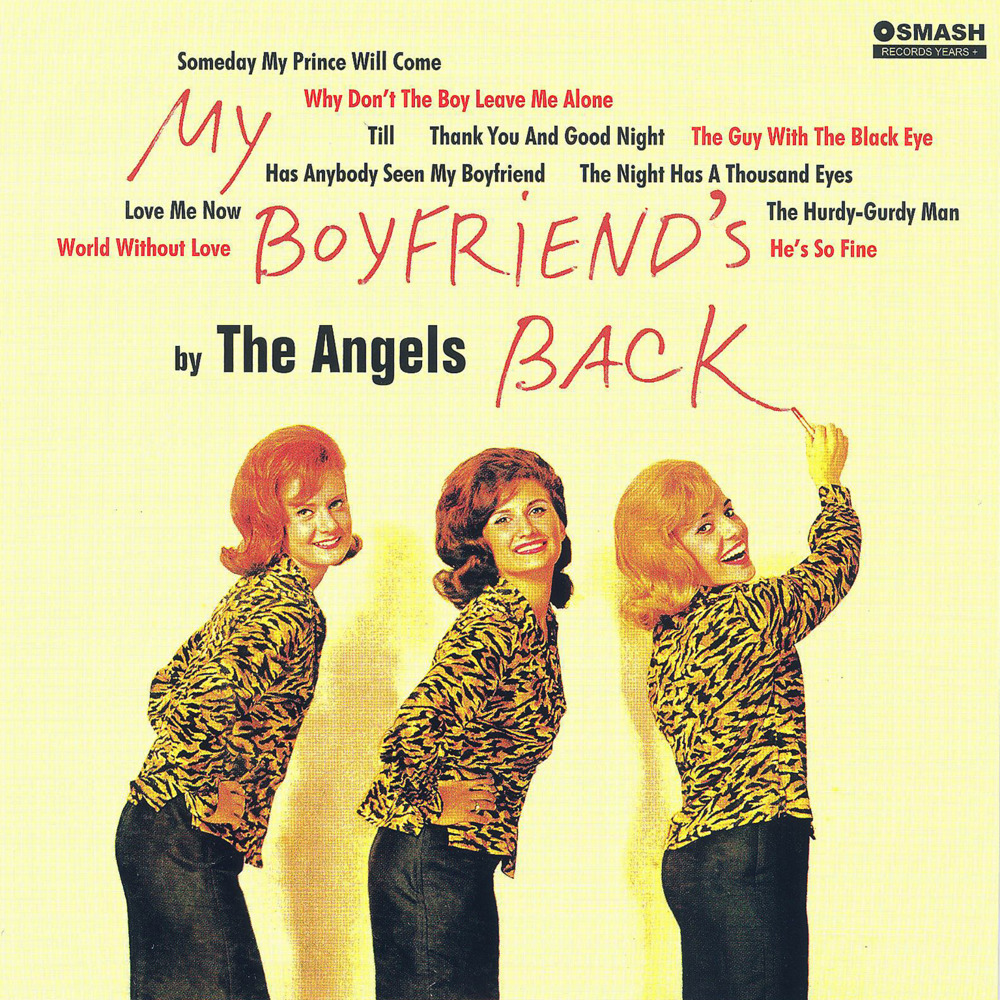
Before The Angels released their biggest hit, My Boyfriend’s Back, they had a couple of other hits, Till (which is added to this album) and Cry Baby Cry, both released last year. But none of those came close to the title track on this album. My Boyfriend’s Back went all the way to #1 on the Hot 100 chart, and sold over one million copies. This success, which they obtained when the single was released two months ago, obviously created a market for this group, and an album had to be produced. So here we are, two months after hitting the big-time, and the album «My Boyfriend’s Back» is released.
When the group signed to Mercury Records, before releasing their smash hit, they started working with producers/songwriters Feldman-Goldstein-Gottehrer, and those are the boys in control on this album as well. They have produced and written most of the songs on the album, except for a rendition of the Disney tune Someday My Prince Will Come, covers of The Night Has A Thousand Eyes, and He’s So Fine, the aforementioned Till, and a track called Why Don’t The Boy Leave Me Alone. But considering they wrote My Boyfriend’s Back, I would have expected a higher standard on this album.
My initial thoughts about this album were that it must have been embarrassing to record. The feeling going into the studio, having just released a million-seller, number one in the US, and the tracks you are supposed to follow up that with is this crap? Damn. I would have been ashamed. Thinking about the fact that probably a lot of people are gonna buy this record because of the single, and then give them this half-ass record with nothing but filler. And people did buy it. The album stopped at #33 on the album chart. I don’t know how many people must have bought this album for it to get there, but I’m pretty sure a lot of people wasted their money here.
Tracks like Der Hully Gully Mann, a German song that has to be a novelty song even though it doesn’t sound like it, The Guy With The Black Eye which basically is My Boyfriend’s Back in a different wrapping, and Has Anybody Seen My Boyfriend are instrumental in making this album one of the worst I’ve heard in 1963…so far.
JAMES BROWN – PRISONER OF LOVE
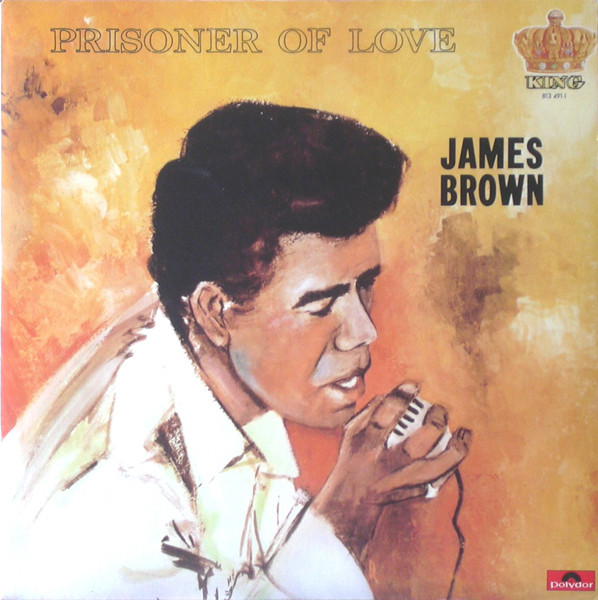
Back in April, I wrote that I didn’t know how well James Brown’s single Prisoner of Love did, but in fact, it was his first US Top 20 pop single. This would eventually make James bolder, and he’d make some changes to his own vision of his career. But first, he created his own label, Try Me Records, which included recordings by artists like Tammi Terrell (Tammi Montgomery at the time). James also entered a relationship with 17-year-old Tammi, but Terrell ended both their personal and professional relationship because of Brown’s abusive behavior.
His latest album, «Prisoner of Love», named after his hit single (originally recorded by Russ Columbo in 1931), is mostly a collection of ballads. I don’t really know if you can call a song sung by James Brown a ballad, with his amped-up energy and voice that yearns to scream, but I believe it is the correct term for these songs. And there are some pretty damn good ones on here as well.
This is James Brown’s sixth album, and I’ve written about a few of them, but I don’t believe I’ve been this smitten before. The first couple of times I listened to it, I couldn’t quite catch it. I don’t know why. Could have been me being distracted, or it could be that the songs need to settle a bit. But now, after listening to it almost all day, it’s definitely my favorite James Brown album so far. Tracks like I Lost Someone, Signed, Sealed And Delivered, Prisoner Of Love, and Bewildered are probably my go-to songs, but there’s a lot to choose from here. There’s also The Thing In ‘’G’’, an interesting take on a jazz tune that I really like.
BEACH BOYS – SURFER GIRL
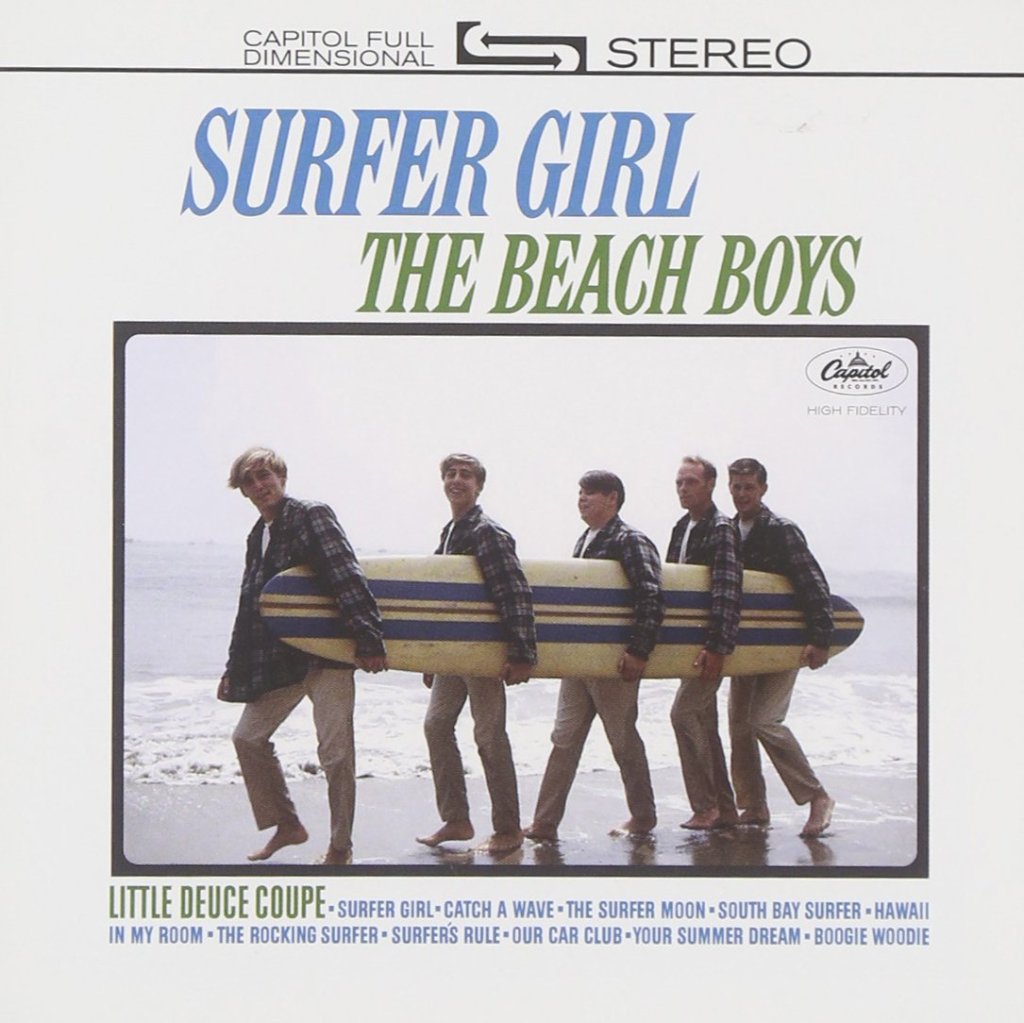
«Surfer Girl» is the Beach Boys’ third album, and after the success of their last album, «Surfin’ U.S.A.», Brian Wilson has gained full control over the production for the Beach Boys. This is kinda unheard of in 1963 and proves that Capitol Records really had faith in what this band was doing. They even signed a group that Brian was working with, The Honeys, which Brian was hoping would become the female counterpart of the Beach Boys.
So in addition to the Beach Boys, Brian was starting to produce and write music for other bands like The Honeys, Jan & Dean, and Bob Norberg. Brian was really getting into the production side of music at this point, supposedly sparked by the Ronettes single Be My Baby, and he even went to some of Phil Spector’s sessions at Gold Star Studios, probably to try and figure out what the hell he was doing that made music sound so good. Considering «Surfer Girl» is Brian’s first try at producing a full album, I don’t think we should have too big expectations though.
The album obviously contains their latest hit single, Surfer Girl, and they found a place for their highest charting B-side, Little Deuce Coupe, but other than that there aren’t any real highlights here. More interesting than the music is the fact that Al Jardine, who left the group after the release of their first single, is contributing to this album. I’m not sure exactly what he did, but I could guess that he played some bass, maybe guitar, and probably sang a bit. Brian Wilson also brought in some session musicians from the Wrecking Crew who contributed to Hawaii and Our Car Club, all I know about that is that Hal Blaine played the timbales (leaving the drumset to Dennis Wilson) on Hawaii.
Brian Wilson has written 9 of the songs on the album, four of them together with Mike Love, two by himself, and 3 with other co-writers. The three that weren’t written by any of the Beach Boys are South Bay Surfer (a rewrite of Swanee River), Boogie Woodie (based on Flight Of The Bumblebee), and The Rocking Surfer (a rework of the Tri-Fives’ Come and Get It with an arrangement best known in the US from a Good Humor ice cream truck, which I just heard about while listening to The Sopranos podcast).
«Surfer Girl» was credited a gold record (500,000 copies sold) in November 1965, and it peaked at #7 on the album chart, both in the US.
I covered a lot of Marty Robbins’ past when I wrote about his album «Devil Woman» back in May 1962, and this guy has had quite an exciting life. Lots of bad times as well, but those can also be exciting. At least reading about them. So if you haven’t the slightest idea about who country singer Marty Robbins is, I would urge you to check out what I wrote back then just to get a feel for him. Cause if you just listen to his music, it’s easy to think he’s just another boring country guy. Marty released his Grammy award-winning album «Gunfighter Ballads and Trail Songs» in 1959, and I guess his latest album, «The Return Of The Gunfighter», is a kind of follow-up. All I know is that I like this one better than the last album of his I wrote about. There are some good stories on this one, and I guess it’s at least a precursor to outlaw country. Doesn’t sound very tough, but still. Check out tracks like Tall Handsome Stranger and The Masters Call (even though the latter one is about God). Marty Robbins will go on to register 31 tracks in the country charts, where 13 of them will cross over to the pop chart, in the ‘60s.
The second album from Martha and the Vandellas is a record released to capitalize on their latest hit single, Heat Wave, so I guess it’s only natural that its title is «Heat Wave». The album is really just a bunch of cover tracks with the addition of their hit single. They cover songs like Then He Kissed Me, My Boyfriend’s Back, and Just One Look which I don’t really have the need to hear anyone else sing. They do a version of If I Had A Hammer though, which is pretty cool to hear in this kind of set-up. Other than that I gotta say that this album is pretty wasted on me. There’s nothing new, nothing groundbreaking, just covers. This is the last album Anota Bryant appears on, as she got engaged and was expecting her first child. She wanted to stay with the group but decided to leave and focus on family.
ODETTA – ODETTA SINGING FOLK SONGS

Odetta had a fan in Rosa Parks, Martin Luther King Jr. called her the queen of American folk music, and she was called ‘’The Voice of the Civil Rights Movement’’. That’s a pretty good introduction right there.
But then it kinda stops. Not her career, but the information. Which to me seems a bit conspicuous. I’ve read tiny biographies about her at Allmusic.com, Wikipedia, and The Encyclopedia of Popular Music, and they all kinda skim through whatever training she had, her albums, etc., so I had to dig a bit deeper to find out what Odetta was all about.
First of all, I didn’t know too much about Odetta before starting this project. Don’t believe I’ve ever heard her music to be honest. However, I have read that she has been an inspiration to numerous artists, including Bob Dylan. But she’s a lot more than just some folk musician. She was an important vessel for bringing work songs to a broader audience, songs that were sung by Black prisoners on chain gangs in the South, she seems to have been a pioneer in bringing forth women in her songs, singing about working women and mothers, and she generally used her talents to push forward the struggle for social justice. A voice is used correctly, to put it in other words.
But yeah, she might not have had a bunch of hit songs, and she might not have sold millions of albums. But the impact she made on matters that are actually important, instead of just sales and sold-out concerts, I would say she warrants a bit more than just some random summary of what albums she released. Then again, I haven’t been very vigilant when it comes to her releases myself, as I’ve overlooked a total of five albums since I started writing. «Ballad for Americans and Other American Ballads», «Christmas Spirituals», «Odetta and the Blues», «Sometimes I Feel Like Cryin’», and «One Grain of Sand» are the ones I’ve missed, and I’ll be sure to set off a weekend to catch up on all the Odetta I missed.
«Odetta Sings Folk Songs» is mostly a collection standards with tracks like 900 Miles, All My Trials, and Shenandoah being the highlights, but she’s also managed to get a Bob Dylan original in here, Blowin’ In The Wind, which she does beautifully. It’s also pretty cool that she was an inspiration to Bob Dylan, and here she is covering one of his songs. It has been a pleasure trying to get to know Odetta, and knowing that I have a lot of music to catch up on, I guess there’s no time to waste.
MARVIN GAYE – RECORDED LIVE ON STAGE
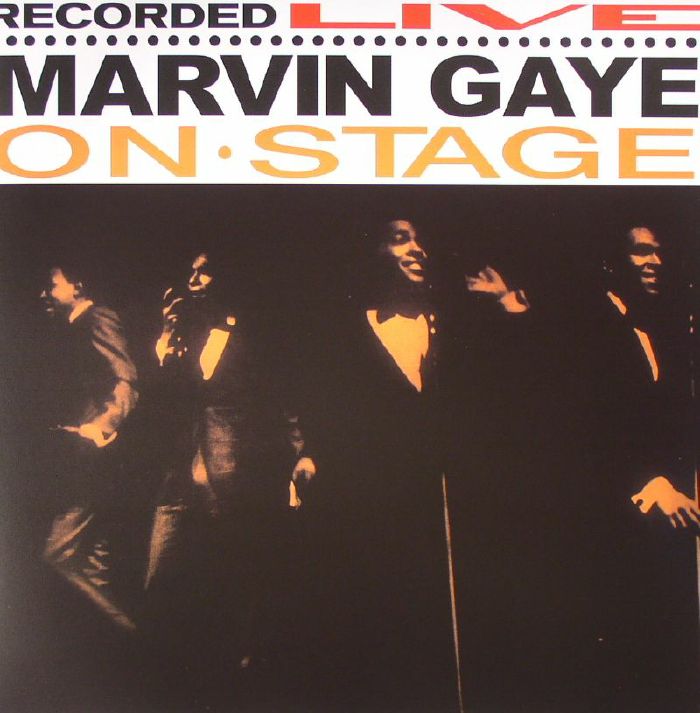
This is Marvin Gaye’s first live album, and considering the fact that I’ve read he has stage fright, I would say that this album is quite the feat. Cause Marvin is really bringing it on this one, and the crowd seems to love it. So, stage fright or not, at least there’s no telling on «Recorded Live On Stage».
When Marvin opted for a new start in Detroit back in 1960, he supposedly had no intentions of playing R&B music. He wanted to do jazz music, and as his debut album showed us, that’s kinda where he started as well. But it didn’t take long for that to change. Already on his second album, «That Stubborn Kinda Fellow», he had made the change, and the hits started coming as well. The time between his debut album and his second one was spent as a session musician, mostly as a drummer, for acts such as The Miracles and The Marvelettes, as his debut album failed commercially. The first hint of success Marvin enjoyed was as a co-writer of the Marvelettes track Beechwood 4-5789, but as soon as he changed up his game a bit, singles like That Stubborn Kinda Fellow, Hitch Hike, and Pride and Joy entered the charts.
This live album includes all of those three songs, some more obscure tracks like One Of These Days and Get My Hands On Some Lovin’, and covers including Ray Charles’ You Are My Sunshine and a blues song called Mo Jo Hanna. The album was recorded during a Motortown Revue at Regal Theatre in Chicago, and I guess that’s why there are only eight tracks. Other than some very bad cutting between tracks, this is a very good album, and it has more of a feel of a rock’n’roll show than anything else. If this is what stage fright sounds like, then I don’t think that’s anything to worry about anymore.
I really want to love Ella Fitzgerald’s music, but I have to confess that I’m struggling. She’s obviously an amazing singer and a legendary artist, but I just can’t seem to enjoy the kinda music she excels in. The jazz vocal thing just isn’t made for me. That doesn’t mean I’m completely lost, and I can hear that it’s good, but it’s difficult for me to jump on the bandwagon and agree that she is the best ever. Anyway, Ella Fitzgerald and Count Basie’s newest album, «Ella And Basie!», received praise from both Allmusic.com and The Penguin Guide to Jazz Recordings, and I’m just gonna say that I believe them. This is probably amazing.
Cliff Richard and the Shadows released an album of Spanish standards called «When In Spain». Cliff sings in Spanish, and the Shadows plays Spanish music. It’s all very uninspiring. The album did chart in the UK though, cause the British love Cliff!
BUDDIE EMMONS – STEEL GUITAR JAZZ
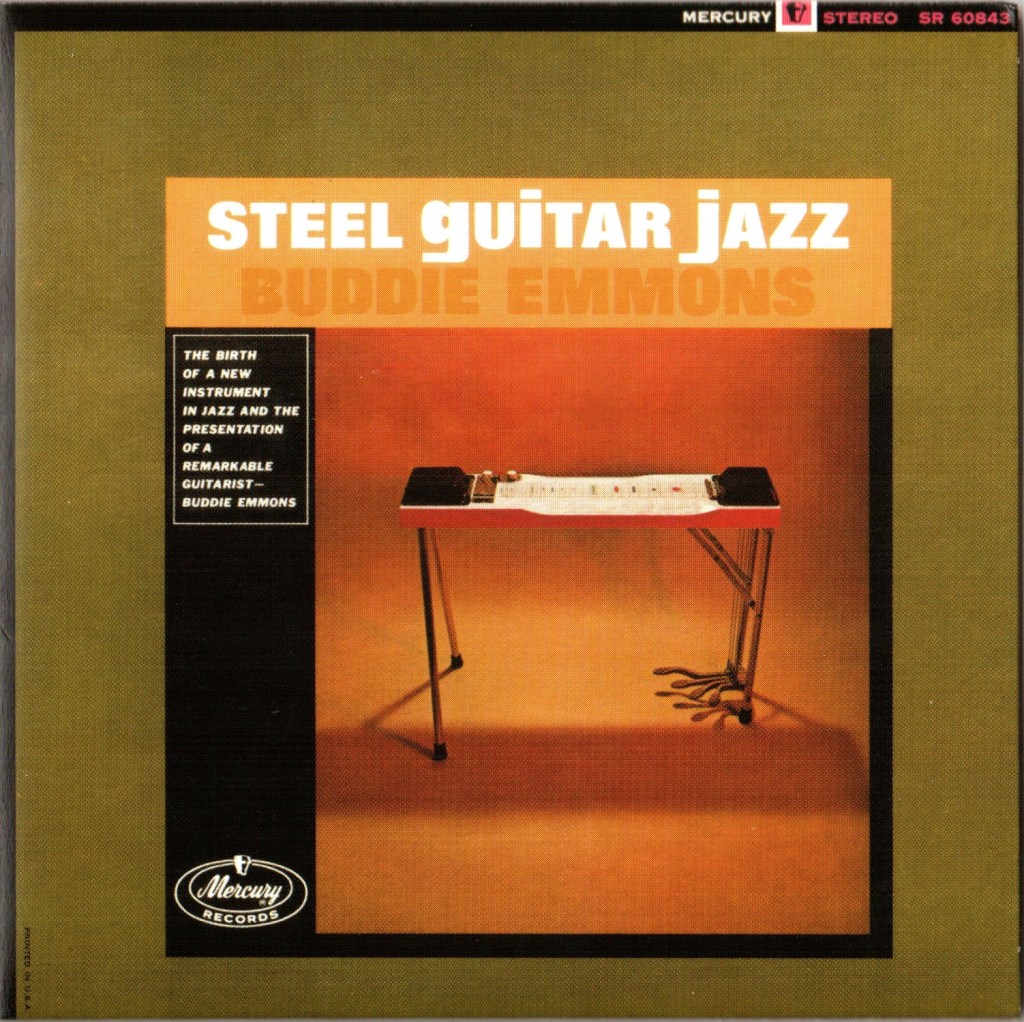
This next album is country jazz! Now that’s something I haven’t heard before. And I think I like it. Buddie Emmons is a steel guitar player who was bought a lap steel guitar by his dad when he was eleven years old. He started taking lessons at the Hawaiian Conservatory of Music and eventually figured out how to play country music on it. At the age of sixteen, Buddie got bored of High School and moved to Calumet City, Illinois, and from there to Detroit, all the while playing music with different artists, and it was at that point he bought his first pedal steel guitar. In 1955 he moved to Nashville to play with Little Jimmy Dickens, and when he arranged for his band to record some instrumentals on Columbia Records under the name The Country Boys, two of Buddie’s compositions were recorded, Raining The Dickens and Buddie’s Boogie, both of which are now considered steel guitar standards.
I’m not gonna get into all the specifics about how a pedal steel guitar works, but Emmons has contributed to the evolution of the pedal steel guitar. He created some kind of ‘’split-pedal’’ which he patented, and together with Shot Jackson, he formed a company called Sho-Bud in 1956, designing and building pedal steel guitars.
In 1957 Buddie joined Ernest Tubb’s band, the Texas Troubadours, and in 1962 he went on to play with Ray Price and the Cherokee Cowboys. When they recorded the Willie Nelson song, Night Life, Emmons’ intro and solo bridges ended up being considered one of the most iconic and innovative sounds in country music. This came after Emmoms added two strings to his pedal steel guitar, and since Shot Jackson didn’t wanna build guitars like that, Buddie Left Sho-Bud and formed his own company, Emmons Guitar Company.
And then he released his debut solo album, «Steel Guitar Jazz». From what I understand, this country jazz album was a one-off. Buddie went back to country music straight after this album. But he did make an impression with this album, for sure. Weirdly, it works, and even weirder that it’s probably one of my favorite jazz albums. But for some reason, his pedal steel guitar suits the jazz environment, and it makes for a great listen. Kudos to Buddie Emmons and his companions for that. Any Time, Cherokee, and Gravy Waltz are good songs to start with.
The famous band that beat the Beatles at the Decca audition, Brian Poole and the Tremeloes, is out with their second album. And where the first one, «Big Hits Of ‘62», (released in April 1963, but I wrote about it as a May 1963 release) disappointed…well, «Twist And Shout» kinda follows suit. It’s another album packed with cover songs, and it’s not very satisfying in any way. At this point Decca has been banging their heads against the wall, woefully remembering that they rejected a band that is on its way to take over the world. And even worse, they are stuck with whatever Brian Poole and the Tremeloes are serving up right now. Two albums in I would have easily dropped this band and concluded that they are done, but I know what the future brings, so it’s not time to give up just yet.
UNKNOWN RELEASE DATE
SONNY JAMES – COUNTRY STYLE
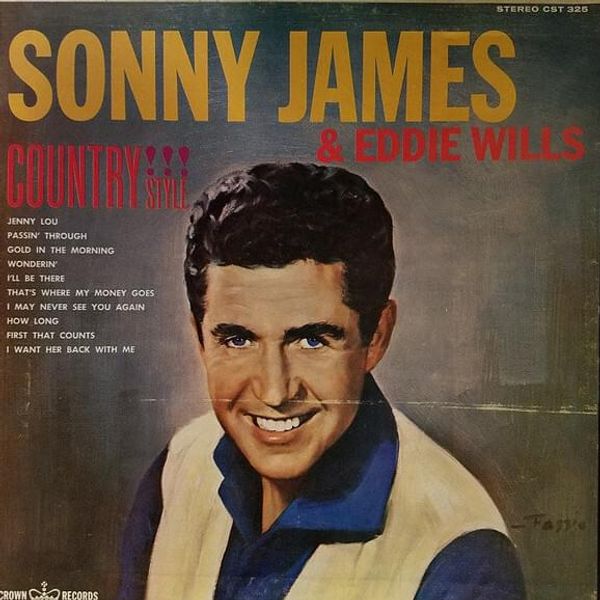
Sonny James started his career as a kid playing in a band with his parents and sisters, playing in theatres, auditoriums, and schools. The family band also had spots on different radio stations, including a daily spot doing an early-morning show at KLCN (in Alabama I believe). They disbanded in the late ’40s after the sisters got married and Sonny tried to finish school, but Sonny kept playing and singing. In 1950 he was sent off to the Korean War, which postponed his musical career, but as soon as he was back he ended up staying with Chet Atkins and his wife, and things were about to get back on track.
Chet hooked Sonny up with an executive at Capitol Records who wanted to record him, and that’s when Jimmie Hugh Loden changed his stage name to Sonny James. As far as I know, Sonny James’ career got off to a good start with several songs that did fairly well on the charts like That’s Me Without You, She Done Give Her Heart To Me, and For Rent (One Empty Heart). His first #1 (and only so far) came in 1956 and is called Young Love. It became a crossover hit reaching the top of the pop chart and country chart, and even charting at #11 in the UK. The album could have sold a lot more, but Capitol didn’t expect it to so they hadn’t ordered enough copies of the record to meet the demand. It did sell over one million copies though.
He scored two more Top 10 Country hits in ‘57, but after that, it stalled a bit. Sonny went from label to label looking for something he couldn’t find and in 1963 he came back to Capitol Records. He also became a member of the Grand Ole Opry in ‘62. I’m not sure when this album was released though, and I’m not sure why I believed it was released in 1963, but there’s no turning back now. «Country Style» is actually a pretty good album. I say actually because the style of country music he plays isn’t necessarily the kind that I like, but there is something about Sonny that speaks to me. He is called the Southern Gentleman because of his congenial manner, and I kinda get the feel that he’s a nice man listening to his music as well. My favorite tracks on this album are Jenny Lou, Passin’ Through, and That’s Where My Money Goes.
BILLY PRESTON – 16 YEAR OLD SOUL
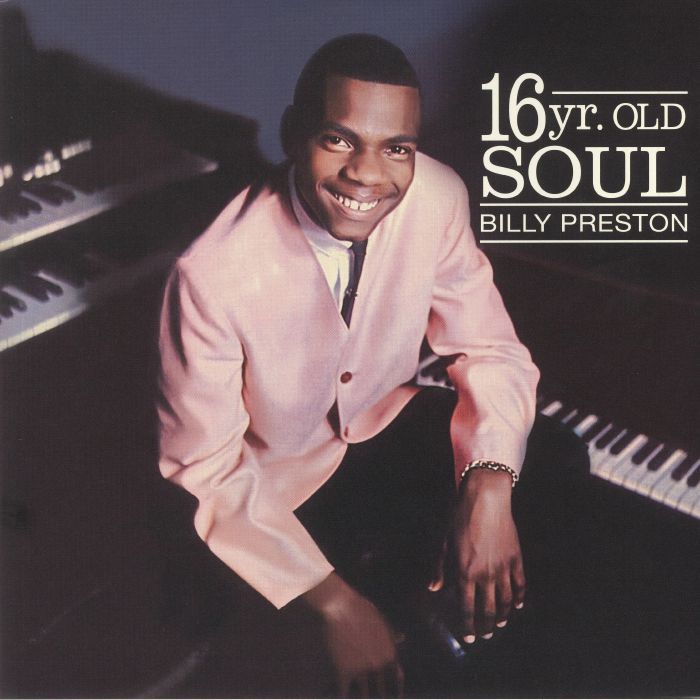
This dude right here is something special. He is a self-taught musician, played organ for Mahalia Jackson when he was ten years old, and released his debut instrumental album, «16 Year Old Soul», at the age of, yeah, sixteen. The album was recorded for Sam Cooke’s SAR Records and released on its sister imprint, Derby Records. Billy played with Sam Cooke on his last album «Night Beat» which I wrote about last month.
This is obviously just the start of Billy’s career, but to shed some light on how sought after he was as a session musician I can list some of the bands/artists he played with during his career; Little Richard, Sam Cooke, Ray Charles, Everly Brothers, The Rolling Stones, and The Beatles. He is actually one of very few artists to be given a credit on a Beatles song; Get Back. He will also play with George Harrison after the Beatles breaks up, and Eric Clapton. He was also briefly considered as a permanent member of the Beatles, but Paul McCartney supposedly thought it was difficult enough to agree on things with four guys.
His debut album didn’t become a hit record, but it sure shows that this kid can play. I don’t know how many of these tracks are his own compositions (I’ve tried to figure it out, cause that’s the kinda information I would love to have), but I’m sure some of them are. And while I can’t say that this is an amazing album, I do find a lot here that I like. Tracks like Greazee, Bring It On Home To Me (originally written and released by Sam Cooke), and Good News (which reminds me of Ray Charles’ I Got A Woman) are some of the best, while all of the tracks showcases Billy’s talent.
The Dillards released their debut album, «Back Porch Blues», in 1963. They are a bluegrass band and are considered to be one of the groups that introduced that genre to the mainstream audience. Their biggest claim to fame is probably as the fictional Darling family on The Andy Griffith Show, where they for example debuted the classic Duelin’ Banjos to a wider scale than any before them. The song was written by Arthur ‘’Guitar Boogie’’ Smith, with help from Don Reno, and was made famous by the film «Deliverance» which will be released in 1972. Arthur Smith was not credited for the song in the movie, so he sued and won. The song is a part of this album, so it is possible to enjoy it in a different setting than while watching people getting raped by hillbillies. I’m a fan of bluegrass when it’s done properly, and there is no doubt that The Dillards are doing it right, so if you want some real bluegrass check out this album.
THE BIG 3 – THE BIG 3

There’s an English band called The Big Three, but The Big 3 is an American folk trio that includes the great ‘’Mama’’ Cass Elliott who will eventually join The Mamas & The Papas as the years progress. So this album kinda marks the start of her career, at least recording-wise. The Big 3 started out as The Triumverate with Cass, Tim Rose, and John Brown making up the trio, but after a show in Nebraska, they lost John Brown and added Jim Hendricks instead. That’s when they changed their name to The Big 3.
The trio went to try their luck in New York where they managed to make a name for themselves playing coffee houses and folk clubs, including the legendary club called The Bitter End. They garnered enough reputation playing here that they scored a booking at The Tonight Show Starring Jimmy Carson in 1962, reaching a national audience for the first time. This was before they even released one single, so getting booked on national television just by playing clubs in New York is pretty impressive.
This album was probably released shortly after the TV appearance, trying to cash in on the momentum they were having. But from what I understand this album went totally under the radar of everyone outside of the folk world in New York City. But their reputation still didn’t suffer though, the trio would keep playing in New York, and go on to make twenty-six TV appearances altogether. So the national fame might have slipped out of their hands, but at least they had their people to seek comfort from.
Personally, I think this album is kind of a gem. There are three great songs here; Rider, Noah’s Dove, and The Banjo Song, and a couple of very good ones; Sing Hallelujah and Yong Girls Lament. Other than that the rest are pretty good fillers. I’m really glad I came across this obscure trio, and even happier that I loved some of the songs. They will release one more album and one single before breaking up, and I’ll make sure to write about those as well.
There’s an album called «Raunchy Sounds» released this year, but I can’t really find any information on the album or the band. The Hi-Tones seem to have released this one album, and a single in 1967. Other than I’m kinda lost. According to Discogs Carl McVoy (piano/organ) has written five of the tracks, Jerry Arnold (drums) has written three tracks (one of them together with McVoy), and there are some covers like Green Onions by Booker T. & the M.G.’s, and Smokie – Part 2 written by Bill Black. The album is quite alright. They are an instrumental band, reminiscent of Booker T. & the M.G.’s, though not quite as cool or funky.
HOYT AXTON – GREENBACK DOLLAR
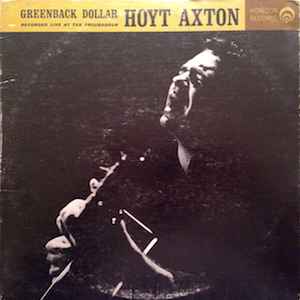
Hoyt Axton debuted last year with an album called «The Balladeer», and in 1963 it looks like he released three albums. I’m gonna focus on the one called «Greenback Dollar», but the others are «Thunder ‘N Lightnin’» and «Saturday’s Child». I would give all of them a listen if you’re into folk music, but I liked my pick the best, which is why I’m gonna go with that one.
Hoyt is supposedly the cousin of Arlo Guthrie, which in my opinion would make Woody Guthrie his uncle, and much more noteworthy, but that doesn’t come up anywhere I’ve read. Then again, the cousin system in the US can be a bit tricky, as I hear people over there are both fucking and marrying their cousins. So I’m not gonna go down that road.
«Greenback Dollar» was recorded live at The Troubadour in Los Angeles, just like his debut album was, but I wouldn’t call this a live album. There are no sounds from the audience added to the album, so for all I know this was recorded at The Troubadour but without an audience. And a pretty powerful folk album if you ask me. Mostly because of Hoyt’s voice as it is deep and commanding, while still reaching the high notes and evening out when needed. He’s a great singer, that’s for sure, and his voice is made for folk music. A song that stands out is the title song, Greenback Dollar, which is written by the man himself. The song was part of his debut album as well, and it looks like it was The Kingston Trio who took that song up the charts. There is no doubt that Hoyt Axton’s original is the better of the two though.
Walt Dickerson created the album «To My Queen» as a tribute to his wife, which in itself is very sweet. And even though this is not the kinda jazz that I dig, the reviews I’ve read are all top-notch. Allmusic.com gave it 5 out 5 stars, and Down Beat said it was ‘’necessary listening not only to those who is interested in the forward march of Walt Dickerson, but to those interested in the forward march of jazz’’. And, you see, I can’t argue with that. Cause these guys know and love jazz a lot more than me, so the fact that these guys put this album on a pedestal made me mention it here. The title track is almost twenty minutes long, so if you wanna check out what Walt is all about (he’s a vibraphone player, by the way), you can listen to To My Queen here. The link is in the song title, as always.
I was hoping for another great album from Sylvie Vartan, but «Twiste en chante» was pretty disappointing. The title song, Twiste en chante is a French version of Twist and Shout, and it is mediocre at best. What’s frustrating about this album is the fact that it seems like Sylvie is struggling with a lot of the material she has chosen, or been given. Her voice doesn’t really handle the rock songs (supposedly rock at least), and that kinda ruins the entire experience. There are some good songs here though, all of them slow of course. En écountant la pluie, a french version of The Cascades hit from 1962, Rhytm of the Rain. A track that works so much better for Sylvie Vartan. Deux enfants is nice. And Il faut choisir, a French version of Ricky Nelson’s It’s Up To You. That’s about it.
THE SINGLES
I believe this is the third single from Tommy Roe that I’ve written about. Everybody reached #3 in the US and #9 in the UK. It’s a fairly cool song, which is easy to like. He’s a bit back to his rock’n’roll roots after his folk flirt with the last single I wrote about, The Folk Singer. After the release of this single Tommy would relocate to England and continue his career there. The B-side is called Sorry I’m Late Lisa which is a duet with Sandy Posey.
Brenda Lee released her latest single The Grass Is Greener this month, and as always she charts all over the place. She is, according to Wikipedia, one of the most successful American artists of the 20th century, having sold more than 100 million records all over the world. This single is not one of her most popular ones, but it did reach #17 on the Hot 100 chart. The B-side, Sweet Impossible You, also charted, reaching #28 in the UK and #70 in the US on the Hot 100 chart.

Walking The Dog is Rufus Thomas’ biggest hit peaking at #10 on the Hot 100 chart. The song will be recorded by a bunch of artists through the years, like Rolling Stones, Everly Brothers, Aerosmith, John Cale, Green Day(!), The Kingsmen, and so on. It’s gonna be interesting to see what all these other ones are gonna do with the song, cause I can’t really see it fit with all of them. Rufus’ track is alright though. Not a favorite new track or anything, but definitively listenable. This one is paired with a tune called Fine And Mellow which is a pretty good soul/blues tune. While Walking The Dog might seem a bit like a novelty song, at least considering the lyrics, Fine And Mellow is more real.
The last time I wrote about a Jack Jones release was when he won a Grammy for the song Lollipops And Roses in 1962 if my memory serves me right. I remember being baffled at the decision of granting that tune a Grammy, cause it didn’t do very well on the charts, and quite frankly, it was a terrible song. But I reckon everyone deserves a second chance, right? His latest single, Wives And Lovers, was written by Burt Bacharach and Hal David on request to promote a movie with the same title, and was supposed to be about marital infidelity, or cheating as I would call it. I wouldn’t say they nailed that theme, to be honest, cause it sounds more like a threat to women. It’s more about women keeping up their appearance to please their husbands. And it’s a lot more male-chauvinistic than I would have dared to believe. It’s not shocking in any sense, cause a lot of music still is very male-glorifying, and even women are turning that shit around now in 2024. But it’s not as subtle now cause you’re very likely to hear someone say something like ‘’bitch better suck my dick’’, or whatever. But this Jack Jones tune is wrapped up in something sweet, trying to masquerade itself as a love song, and just 100% failing at it. At least now. I guess this was pretty common in the ‘60s, the man being in charge and all. But at least I can say that this song didn’t age very well.
It did peak at #14 on the Hot 100 chart, went to #9 on the Easy Listening chart, and won a fucking Grammy as well. The B-side Toys In The Attic is normal…
Now it’s The Dave Clark Five’s turn to release Do You Love Me, and it will become their first charting single. It stops at #30 in the UK, but peaks at #5 in Canada. I guess Brian Poole and the Tremeloes won that battle. I believe I’ve missed four singles by the DC5 since 1962, cause they have already released I Knew It All The Time, Chiquita, First Love, and The Mulberry Bush. Do You Love Me is their first hit though, so maybe it isn’t a catastrophe that I missed them. The DC5 does this track justice as well, and I can’t really say which one is better; Brian and the Tremeloes or the DC5.
They paired this one with Doo Dah, a song that hovers on the borderline between novelty and pop/rock. It’s an interesting listen though, but I probably won’t make a habit of it.
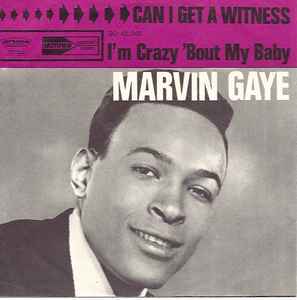
Can I Get A Witness is a single by Marvin Gaye released this month. The song is composed by Holland-Dozier-Holland and is a so-called non-album single which means that it hasn’t been issued on any of the albums Marvin Gaye has released so far. Marvin Gaye supposedly recorded this song in one take after Eddie Holland performed the song for him, something that really impressed the songwriters, claiming that Marvin Gaye was ‘’the most versatile vocalist I have ever worked with’’, according to Wikipedia. The song peaked at #22 on the Hot 100 chart in December, and in the October 5th edition of Billboard Magazine, a review of the single stated that they believed it would bring Gaye straight back into the charts. It’s a great song, and Marvin sounds awesome as has become the norm for this guy, and it’s pretty cool that The Supremes does the background vocals.
The flip side is I’m Crazy ‘bout My Baby, another great song that according to Motownjunkies.co.uk went to #77 on the Hot 100 and got a lot of radio play in some American cities.
Quincy Jones is still producing Lesley Gore’s music, and her latest single is a sweet little pop tune. She’s A Fool is not in the crying theme that she has embraced in her last hit singles and on her debut album, but can be defined as a love song, an unrequited love that has become her specialty of sorts. The song went to #5 on the Hot 100 chart, and even crossed over into the R&B chart, peaking at #26. This is not the kind of song I would expect to find on the R&B charts, and I gotta admit that I’m a bit confused as to how some of the charts work. But, I’m not gonna figure that out now anyway. The B-side is called The Old Crew, and it’s another sweet pop tune, but with another theme again.

Dale & Grace had two hit singles in their short career, and both of them are part of their release this month. The A-side, I’m Leaving It All Up To You, went to #1 on the Hot 100 chart and the Easy Listening chart, and is their biggest hit earning them a gold record. It’s another one of those sweet love songs like Lesley Gore is doing, and it’s catchy enough to sing along to. The B-side, Stop and Think It Over falls under the exact same category and will be released as a single by itself in 1964, making it up to #8 on the Hot 100 chart.
The duo will release some more singles and one album, but their peak was reached now in September 1963.
The brother/sister duo Nino Tempo & April Stevens have released music since 1960 but have so far not had a lot of success. They have charted with two singles though, but Sweet and Lonely (#77) and Paradise (#126) can’t be described as their breakthrough. Deep Purple, however. Their latest single didn’t just go to #1 on the Hot 100 chart, but it also won them a Grammy Award for ‘’Best Rock and Roll Record of the Year’’. Despite being described as rock’n’roll, the single went all the way to #1 on the Adult Contemporary chart as well, but as I’ve said before, I’m not sure how some of these charts work, so I’ll let this one slide as well. Cause this song is great! It’s something very different from whatever else is out there right now, while still not sounding too different. It’s pop/rock, plain and simple, but Nino Tempo’s voice and singing style make it feel like something else, and April’s spoken part where Nino sings in the background is something I haven’t heard before. That part was supposedly not planned to be added to the recording, but since Nino had trouble remembering the lyrics April had to recite to him while singing, so they decided to keep it like that. The biggest hit of their career is absolutely something to be proud of, and it’s a new song for me to add to my playlist.
Deep Purple was not supposed to be the A-side though, as the producer, Ahmet Ertegün, didn’t believe it to be a hit song. He only agreed to change it when the radio stations started to prefer it over the planned A-side. So I’ve Been Carrying a Torch For You So Long That It Burned a Great Big Hole in My Heart became the B-side, and got the record for having the longest title to ever be on the flip-side of a Billboard number-one record (which it kept until 1984). This one is also great though, and in the same style as the A-side. So I would have to say that this is one of my favorite singles of 1963 so far.
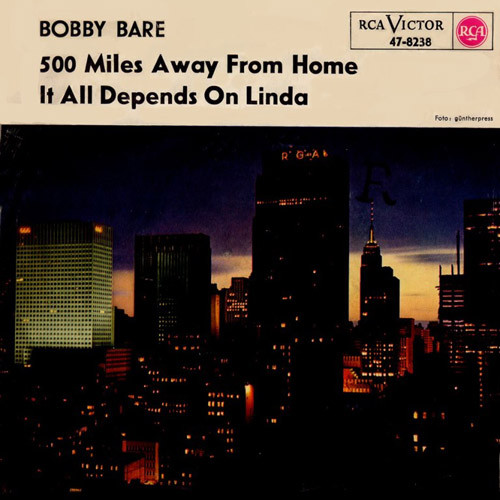
500 Miles Away From Home is Bobby Bare’s second Top 10 hit since since 1956, the other being «The All American Boy» which he released in 1958. «Detroit City», which was released earlier this year, came close but ended at #16. His latest release is his version of 500 Miles originally written by, or at least most commonly credited to Hedy West. Bobby’s version is the most commercially successful version of that song ever to be released, according to Wikipedia, and considering that this song has been recorded by a lot of artists, I would say that’s pretty neat. I like this one, as it’s quite different from the others I’ve heard, but it did take me a long time, and many playthroughs, to come to that conclusion.
This one is paired with a song called It All Depends on Linda which a more of a classic country song.
Freddy and the Dreamers released their second single this month, I’m Telling You Now, and it’s also their second Top 10 hit in the UK. The band hails from Manchester but is still referred to as a band that is part of the Merseybeat sound from Liverpool (which, at least in football terms, is a down-right scandal). While their first single, If You Gotta Make a Fool of Somebody, peaked at #3, their latest release will climb one spot further peaking at #2. The song will be released as a single in the US in 1965, which will make Freddie and the Dreamers international pop stars when the song hits #1 on the Hot 100 chart. It’s not my favorite song, but I guess it has its charm. And I would say the Merseybeat sound is a bit rougher than these guys, so I probably wouldn’t have put them in that bracket.
They paired this one with a song that might have been written by the band when they were twelve years old, by the sound of it, cause this was pretty weak, and even a bit silly. Anyway, it’s called What Have I Done to You.
UNKNOWN RELEASE DATE
Manfred Mann started out as the Mann-Hugg Blues Brothers but was convinced to change it by John Burgess, the producer at His Masters Voice and their label. Their first single, which they released in July this year, didn’t amount to much sales or attention, so on their second release they changed it up a bit and released two sides with vocals. None of these charted either though, but both Cock-a-Hoop and Now You’re Needing Me are cool songs. Could be that music is changing a lot at the moment and many people need some time adjusting, trying to figure out if they actually like it or not. Cause I really like these tracks, and considering the first single they released was two instrumental tracks, I like that they mixed it up on this one.
James Chambers, better known as Jimmy Cliff, is still at the start of his career and his music probably isn’t very well known outside of Jamaica at this moment, but he has had some local hits and is at least getting some exposure on his native island. Tracks like Hurricane Hattie, King of Kings, and Miss Jamaica are some of those local hits, and his newest single is called My Lucky Day. It’s not listed anywhere that I’ve checked as a local hit or anything bigger, but it is a cool ska/reggae tune with a great horn section that is absolutely worth checking out.

Ei snerten snelle by Wenche Myhre spent ten weeks on the Norwegian chart and peaked at #5. The song was written by Vidar Sandbeck, and I believe Wenche was just sixteen years old at the time. She will go on to become one of Norway’s most beloved artists, but considering what’s going on in music around the world at the moment, it’s inevitable that this single sounds a bit outdated already at the time of its release.
The B-side is called Bli med ut å fisk, and is a Norwegian version of the Hank Locklin release, We’re Gonna Go Fishing. The B-side is based on the Danish version though, and written/translated by Egil Hagen. She charted with this one as well, stopping at #8 on the Norwegian chart, also known as VG-lista.
Ronnie Hawkins released Who Do You Love? sometime in 1963, but he’s been playing it live since the late ‘50s. His backing band on this single is of course The Hawks, including Levon Helm, Robbie Robertson, Rick Danko, and Richard Manuel, and especially Robbie’s guitar playing on this single has been highlighted as outstanding. It’s more manic than we’re used to hearing in 1963, and it really sounds like he’s just messing around, enjoying himself, while never missing a beat. It’s a true guitar player in the making here on this record.
The single became a hit in Canada, where Hawkins and the Hawks started their career, but it was almost completely overlooked in the US. The singles B-side is Bo Diddley, and it sounds great as well. Of course, I’m a big fan of The Band, so listening to these early recordings with the likes of Levon Helm and the gang gives me much joy, and might render me a bit disqualified in making any statement about the quality of the music. But fuck that. Both tracks are written by Bo Diddley and released originally by him, and it will never stop being funny that he wrote a song called Bo Diddley.
Frederick ‘’Toots’’ Hibbert started The Maytals as a vocal trio together with Henry ‘’Raleigh’’ Gordon and Nathaniel ‘’Jerry’’ Mathias in 1962, but added instruments and players not long after. The Maytals released a lot of songs in the early ‘60s, and there’s no real information about when they were released, but I do believe I have the year correct on all the single releases coming up. This one is called Fever, and is paired with another track called Cheer Up. Both of them are cool ska songs in this early beginning of the genre and show signs already that Toots and the Maytals might be a bit ahead of the rest.
The Norwegian band The Vanguards lets go of another single, making me lose count of how many they released so far this year. But that’s all good, though. This time they’ve covered Roll Over Beethoven (Chuck Berry), and paired it with Why Did I Leave You which is written by the guitarist Terje Rypdal. The Vanguards and Wenche Myhre are two completely different types of Norwegian musicians, and I gotta say that I’m happy that Norway could offer up something like this in the ‘60s as well, and not just music for children and ‘’schlagers’’.
THE CHARTS
Billboard Top 10 Singles Chart
Week 1 (September 7, 1963)
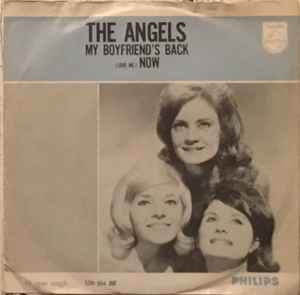
- My Boyfriend’s Back – The Angels
- Hello Mudduh, Hello Fadduh! (A Letter From Camp) – Allan Sherman
- If I Had A Hammer – Trini Lopez
Week 2 (September 14, 1963)

- My Boyfriend’s Back – The Angels
- Blue Velvet – Bobby Vinton
- If I Had A Hammer – Trini Lopez
Week 3 (September 21, 1963)

- Blue Velvet – Bobby Vinton
- My Boyfriend’s Back – The Angels
- If I Had A Hammer – Trini Lopez
Week 4 (September 28, 1963)

- Blue Velvet – Bobby Vinton
- Sally Go ‘Round The Roses – The Jaynetts
- Be My Baby – The Ronettes
COUNTRY CHART
Since there are no new additions to the Top 10 Hot 100 this month, we’ll go straight to the Country chart which has four new additions.
The first one is Ernest Tubb’s Thanks A Lot, which made it to #3. it’s a nice country tune without much sparkle. It’s an ok listen and all, but I’m not sure how much impact it had as I can’t find much written about it. I do like the bitter lyrics about a failed love though.
Patsy Cline enters the Top 10 again with her song Faded Love. So even though she has passed away she keeps having an impact on both people and the record industry. Hopefully, her family gets some of the money she’s making from her grave, but since she’s not Black, I guess no one needs to worry about that. Faded Love was originally recorded by Bob Wills and His Texas Playboys in 1950, and Patsy took it to #7 on the Country chart and #96 on the Hot 100 chart. The song fits Patsy perfectly and she performs it beautifully.
A honky tonk singer called Skeets McDonald breaks into the Top 10 for the second, and last, time in his career with a song called Call Me Mr. Brown. It peaked at #9, not beating his personal best as he hit #1 in 1952 with the song Don’t Let The Stars Get In Your Eye. Skeets was also an actor, or at least he appeared in some films, the last one being «Hud», a western released this year. Call Me Mr. Brown is a song about infidelity, which also seems like a perfect country theme to me.
The Wilburn Brothers have had a lot of Country hits since they started back in 1954, but they have never reached that top spot. Tell Her So isn’t the one that’s gonna get them there either, as it stops at #10. Doyle and Teddy Wilburn started out as The Wilburn Children and were discovered by Roy Acuff who brought them to the Grand Ole Opry in 1940, however, Roy had forgotten about some federal child labor laws, so the boys only stayed there for about six months. They signed with Decca in 1954 and immediately scored a hit backing Webb Pierce on Sparkling Brown Eyes. They’re also pretty famous for rejecting the song «Heartbreak Hotel», and for launching the career of Loretta Lynn.
R&B CHART
On the R&B chart, there are three new additions. Betty Harris takes Solomon Burke’s Cry To Me to #3 by slowing it down a notch. It also peaked at #23 on the Hot 100. Her version has in later years become a deep soul classic, and her reputation among the soul music experts is considered to be very high. The song is great, and Betty Harris does sound awesome, so I figure if she keeps this up I might fall in love as well.
Jimmy Gilmer and the Fireballs entered the R&B chart this month, even though they can’t be called an R&B artist. They do go all the way to #1 with their hit Sugar Shack. They will also peak at #1 on the Hot 100 chart, but won’t get there until next month. It’s what I would call a novelty song, but I’m not sure if that’s what it is. It’s more fun and weird than anything else, to be honest. People loved it though, and it sold more than one million copies by November 1963. Sugar Shack will be their biggest hit, and it looks like they won’t come close to a similar hit until 1967. The closest they’ve come earlier was with Quite A Party in 1961, which peaked at #27 on the Hot 100 chart.
The song that gets to finish this month is Talk To Me by Sunny & the Sunliners. It stopped at #6 on the R&B chart, but also did pretty well on other charts. So I guess it’s only fair to call it a crossover hit. Couldn’t find much more on this song and band, but the song is pretty nice. So they got that going for them.
Petter Milde
This Band Could Be Your Life
 This Band Could Be Your Life