Booker T. & the M.G.’s deliver their highly anticipated debut single this month. I’m not sure if it was highly anticipated back then, but at least I’ve been looking forward to it.

There’s also the debut album from a little blind kid called Stevie Wonder, which will be interesting to check out as I’ve never listened to his early stuff, and the debut album of Willie Nelson. Other than that, September doesn’t look amazing, on paper, but there’s a live album by Joan Baez, a new single from Elvis, a new album from Etta James, and the Gene Pitney single I mentioned last month. So I’m sure this month will have some highlights as well.
On the non-musical side, there’s a very important book being released; «Silent Spring» by Rachel Carson. The book is documenting the harmful environmental effects caused by the indiscriminate use of pesticides, and Carson is accusing the chemical industry of spreading misinformation. She also accuses public officials of blindly accepting the industry’s marketing claims.
She started researching this in the late-‘50s, focusing on environmental conservation, and problems that she believed were caused by synthetic pesticides like DDT. The book was obviously not welcomed by the industry, but public opinion helped bring forth numerous changes. It helped to create a nationwide band on DDT for agricultural uses and helped to inspire an environmental movement that ended in the creation of The U.S. Environmental Protection Agency.
I haven’t read this book, but it’s cool to see that a book could help make such important changes. David Attenborough has even stated that this book is probably the book that has changed the scientific world the most, after the «Origin Of Species» by Charles Darwin.
THE ALBUMS
The Dinah Washington album, «Drinking Again», is the perfect example of the kind of music that I struggle with the most. I could enjoy it at a dimly lit bar with chandeliers hanging from the ceiling, ladies in nice dresses drinking their champagne, I’m in a suit drinking whiskey, and the music is just a soothing backdrop to the night, but then again, that kind of scenario does not happen a lot. And listening to this at home is just not doing it for me.
Dinah Washington has had a great career. With hits like Evil Gal Blues, which was her first, Blow Top Blues, and What A Diff’rence A Day Makes, a voice that could sing almost any genre, she became idolized by her fans and started to make money like no other black artist of her generation had ever seen. And she loved it. Dinah spent money without thinking twice; on drugs, alcohol, jewelry, cars, and men. She has been married seven times already, and she’s not even forty years old. I mean, even though her music might not be exciting, her life does sound interesting.
Another artist that falls under the same category, not in the sense that he had an interesting life, is Johnny Mathis. His «Rapture» album is impossible for me to listen to as it’s even more boring than Frank Sinatra’s dullest records. He had his breakthrough in 1956 with a song called Wonderful! Wonderful!, and scored a lot of hits aimed at the adult market up until the ‘60s. His album «Johnny’s Greatest Hits» spent an incredible 490 weeks on the US chart, so even though this might not be for me, it sure as hell was for someone.
ETTA JAMES – SINGS FOR LOVERS

The fourth album from Etta proves what I feared. She’s not following up on her debut album at all and is concentrating on a type of music that doesn’t make me very excited. This album is made up of cover versions of old jazz and pop standards, and it scored only one hit, Fools Rush In, which ended in the lower parts of the chart. The B-side to that single though was a major R&B hit, but Next Door To The Blues was not included on the album.
While Etta started her career great, in such a manner that I felt she could become the queen of soul, she has chosen a different path. Her voice is magnificent, with such power and grace, but I feel it’s being wasted here. «Sings For Lovers» has few, if any, highlights, and I think that’s a real pity.
That’s life though, and I have to wonder if this is her choice or if it’s her record label that steered her in this direction. Anyway, the conclusion is that it doesn’t really work. This is not just my opinion either, as the charts tell the same story.
LITTLE STEVIE WONDER – THE JAZZ SOUL OF LITTLE STEVIE

Little Stevie Wonder, as he was named by Berry Gordy, is eleven years old and releases his debut album on Tamla Records. So the Motown family has added an eleven-year-old kid to their roster, and that fact alone seems pretty bizarre. We all know who this guy is now, but try to put yourself in 1962 and consider this fact. What are you supposed to expect from this little kid who for some reason managed to land a record deal with Berry Gordy and Motown? Well, not this.
Stevie Wonder, or Steveland as his real name is, manages to impress at least everyone with the fact that he plays almost all the instruments on his debut album. He can be heard playing the piano, harmonica, bongos, organ, keyboards, and drums, he has co-written a couple of songs, and he is eleven years old and blind. Seriously, that’s fucking impressive!
The music is very different from how I know him now, and this album is one of two (at least I think so) instrumental albums on his CV. It’s also a lot different from the kind of music Motown is releasing at this point in time, but I can understand why Berry Gordy would wanna sign this child prodigy and try to groom him into something amazing. «The Jazz Soul Of Little Stevie» is not a clean jazz album, but rather a mix of a lot of different styles. There is some jazz here though, it’s just difficult for me to label this a classic jazz album given that I’ve listened to a lot of that lately. Stevie Wonder has a lot more swing, soul, and dance mixed in here to just call it a jazz album.
This is yet another album where it’s difficult to point out what songs are my favorites, but I’m especially fond of the opening track Fingertips as it sets the tone for the album perfectly. And while I’m not gonna mention any other tracks, this album is definitely worth a listen. Not only because it’s made by a blind kid at eleven years old, but also because it swings.
JOAN BAEZ – IN CONCERT

After two brilliant studio albums, Joan is back with a live album. I guess the most important historical fact here is that she has recorded her very first protest song. The song in question is What Have They Done To The Rain, and it’s written as part of a campaign to stop nuclear testing in the atmosphere. The song is written by Malvina Reynolds who didn’t release it herself until a couple of years later. Before she starts playing it, she says: “I’ll sing you the gentlest protest song I know. It doesn’t protest gently, but it sounds gentle.”, and that’s pretty spot on.
But this live album isn’t as good as what she does in the studio. The tracks are recorded at different venues from her tour in 1962, and while they are all good in their own way, none of the tracks are as good as the best on her studio albums. And that’s always a disappointment. I mean, we all want great artists to deliver better and better records, but then again, we all know how difficult that is and how often they slip up. So this is not me telling you that this one is shit, cause that’s far from the truth. It’s a good live album, but it doesn’t really offer up anything that you haven’t heard before. She gets to show that she knows how to sing on a stage, but there’s nothing new, nothing really special about her live performance, it’s just good ol’ Joan Baez doing what she does best as we’ve already figured out.
The stand-out tracks are Geordie, Copper Kettle, and House Carpenter, however, there are no bad songs here. I’m in love with Joan Baez’s music, and what she’s done so far has been magnificent, but this isn’t her best release so far.
WILLIE NELSON – …AND THEN I WROTE
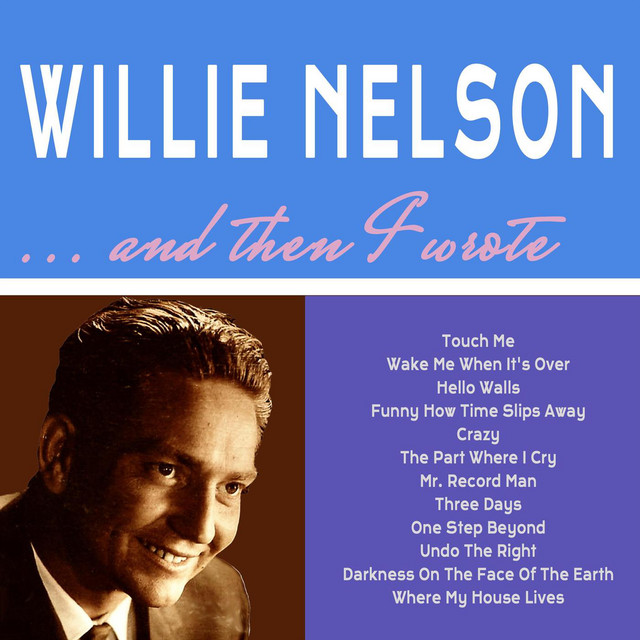
It’s funny looking at a young Willie Nelson on this album cover, as I’m used to him looking like the chief hippie with long grey hair and beard, but here he looks like a choir boy from Texas or something. And it’s just difficult to accept that this evangelist-looking guy is actually him. But it is, and this is his debut album.
Willie started playing the guitar as a kid when his grandparents, who raised him, encouraged him to do so. By the age of seven, he was writing his own songs, and when his sister Bobbie married a fiddle player called Bud Fletcher, they both started playing in his band (she played the piano). When Willie moved to Fort Worth, Texas, he was criticized for playing beer joints and inappropriately evangelizing (thinking of that picture again here), but at some point, he stopped evangelizing and just kept on playing beer joints. I guess we can all be happy about his choices there.
But his performing career didn’t really take off, so his success, in the beginning, was based on songwriting. His first recording, Lumberjack, sold something like 3000 copies through a radio show, and his first four ‘’real’’ releases, No Place For Me, Man With The Blues, What A Way To Live, and Night Life went by in silence (though the latter was made into a hit by Ray Price, which he bought from Willie for $150). His breakthrough, as a songwriter, came in 1961 when three of his songs crossed over to the US pop charts: Patsy Cline’s Crazy, Faron Young’s Hello Walls, and Jimmy Elledge’s Funny How Time Slips Away. And earlier this year he had his first country hit as a performer with the song Willingly (a duet with Shirley Collie).
And now he’s releasing his very first LP. «…And Then I Wrote» is a good debut album from the legend Willie Nelson. Even though he doesn’t look like the man I’ve become accustomed to seeing, he sounds almost exactly like I would have expected. His nasal phrasing and relaxed attitude are a trademark from day one, and he does it just as well at the start of his career. And even though the hits might be missing from this one, apart from Crazy, Hello Walls, and Funny How Time Slips Away, which became hits for other before-mentioned artists, and the opening track Touch Me (#7 on the Country charts), I think this is a mighty good debut.
Willie Nelson is a great addition to the country scene now in 1962, and even though he doesn’t start with a bang, it won’t be long until he’s aiming for the throne.
THE SINGLES
Bobby Vee is not giving up yet, even though his career is gonna slow down abruptly soon. A Forever Kind Of Love does not make me want to give him a high five, but it did well in the UK. It was also recorded at Abbey Road Studios, which is probably the most interesting thing about this song. Brenda Lee delivers another ballad that would hit the Top 10 in both the US and the UK, but All Alone Am I is not anything new from Brenda’s camp. It’s the same type of ballad and offers little to be excited about. It’s a rewrite of a greek song called Min ton rotas ton ourano.
Bobby’s Girl was a #3 hit in the US and the UK, Marcie Blane recorded it first and released it in the US, while a girl called Susan Maughan released a version of it in the UK right after. I’m really focusing on the US version, but the UK version apparently hit #6 in Norway as well. Marcie Blane, who changed her name from Blank to Blane, was eighteen years old when she released her debut single, and it will go on to be her only hit. The song was a hit with the teenage audience, and I kinda like it as well. It has its charm, and it’s an easy song to sing along to.
Andy Williams shows up with a single called Don’t You Believe It which I like better than any of the songs I heard on the last album of his I kinda wrote about. It’s a ballad, and I can understand that some people find solace in his smooth voice. Johnny Mathis delivers the track Gina, a song that first appeared on a TV show, then released by a guy called Johnny Janis in an unsuccessful effort. It’s a lot better than what Mathis delivered in album form this month (the album was released late in September), and it became a big success for him. A slow crooner-ish ballad, which is my nemesis when it comes to genres, that actually sits quite alright with me.
I felt that (Dance With The) Guitar Man was a waste of time the first time I heard it, but it has grown on me. At least enough to not be thrown to the wolves. It has a kinda vibe to it that feels a bit fresh, with its rock’n’roll guitar and soul/R&B vocals. It’s Duane Eddy’s track co-written by Lee Hazelwood, and it did well in the UK and reached #3 here in Norway.
Elvis Presley is back, and this time it’s a classic. Return To Sender is released as a single from his upcoming movie «Girls! Girls! Girls!» and became a hit around the world. The song takes Elvis back to what he does best with its rock’n’roll beat and pop charm. Hearing Elvis perform these types of songs almost makes me forget all the terrible stuff he has recorded in the last couple of years, and Return To Sender might as well be one of this year’s best singles. He’s adamant about making movies and soundtracks, so I’m not sure we’re at a turning point here, but I’m at least glad that he released a great single again.
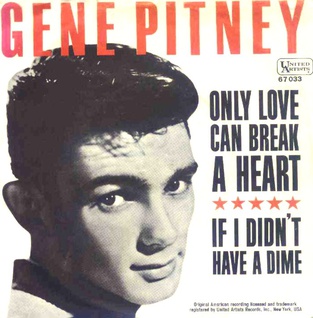
And here’s the Gene Pitney song I mentioned last month, Only Love Can Break A Heart. This single was kept from the #1 spot by He’s A Rebel, performed by The Crystals and written by Gene Pitney, meaning that Pitney kinda held the two top spots on the Billboard Hot 100 for a little while. The song is a good one, landing in the middle of country and pop, with some neat whistling as well. I’m not really a fan of whistling in songs, but when it’s done properly I can dig it. Anyway, this is a ballad where you can feel the hurt, both in the instruments and Gene’s voice, and there’s no doubt in my mind that this might be one of the best slow songs I’ve heard in the ‘60s.
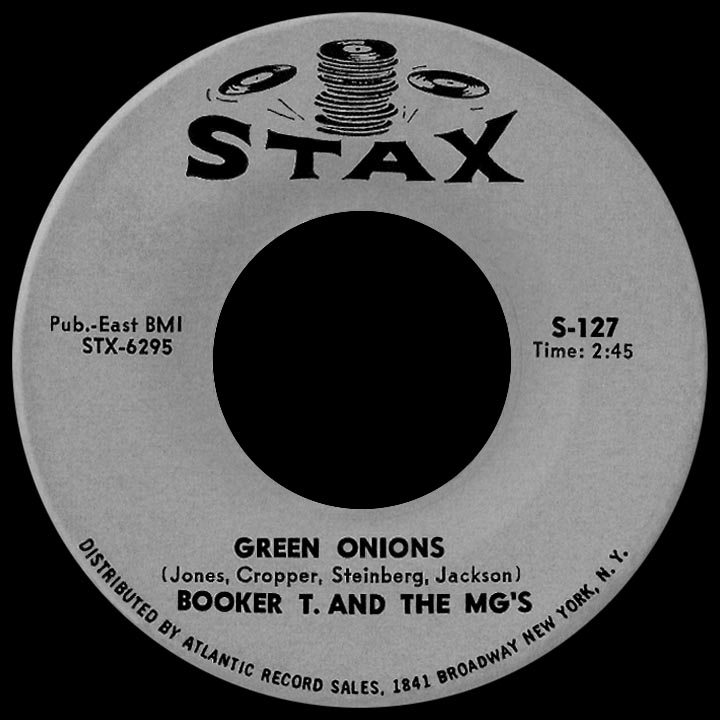
Now for this month’s highlight: Booker T. & the M.G.’s debut single Green Onions. This band evolved out of The Mar-Keys, and they had been a part of/is a part of Stax’s house band, which means that they already proved their worth. But Booker T. & the M.G.’s is something special, and so much more than just a backing band, which is clear as day on their first single. Green Onions is as funky as it gets, and the multi-instrumental prodigy, Booker T. Jones, proves to be one of the absolute masters of the Hammond organ. Paired with the guitar licks of Steve Cropper, the foundation is made, with Al Jackson Jr. (drums) and Lewis Steinberg (bass) making up the rhythm section, the coolest new band around is here. Their debut single is a track that moves your bones and gets your blood boiling, as well as sets the standard on how awesome instrumental music can be. I’m sure it will be years before any other band can match what these guys got going on, but I’m sure as hell looking forward to hearing whatever band that is as well.
THE CHARTS
Billboard Top 10 Singles Chart
Week 1 (September 1, 1962)

- Sheila – Tommy Roe
- The Loco-Motion – Little Eva
- Breaking Up Is Hard To Do – Neil Sedaka
Week 2 (September 8, 1962)
- Sheila – Tommy Roe
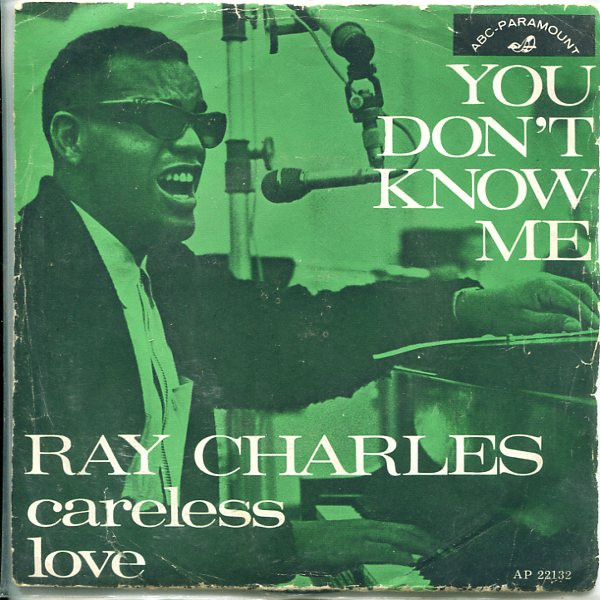
- You Don’t Know Me – Ray Charles
- The Loco-Motion – Little Eva
Week 3 (September 15, 1962)
- Sherry – The 4 Seasons
- Sheila – Tommy Roe
- Ramblin’ Rose – Nat King Cole
Week 4 (September 22, 1962)

- Sherry – The 4 Seasons
- Ramblin’ Rose – Nat King Cole
- Sheila – Tommy Roe
Week 5 (September 29, 1962)
- Sherry – The 4 Seasons
- Ramblin’ Rose – Nat King Cole
- Green Onions – Booker T. & The MG’s
Well, this is a pleasant surprise. Connie Francis is back on the chart with a song that’s not her standard ballad recipe. Vacation is something completely different than what we’ve come to expect from this girl, and it’s actually quite catchy in a sense. It’s a happy-go-lucky pop tune about everybody’s favorite time of the year, and while it’s more fun than good, it’s a breath of fresh air from Connie. And I’m also glad to say that this is her last Top 10 entry, as her career will start to vane from here on. She will still reach the Top 40 every now and then, but her career will change in the sense that she’ll start to record in Spanish, Italian, and Japanese(!). She’ll entertain the troops in Vietnam, do a lot of charity work for UNICEF and similar organizations, and in the late ‘60s she’ll be performing at nightclubs. She’s even gonna record an album called «Connie Francis Sings Great Jewish Favorites», so to say that her focus has changed is an understatement. In the late ‘70s she’ll do some country music if my sources are correct, and who knows, maybe I’ll check it out. But she’ll also experience her worst nightmare in 1974 as she becomes the victim of rape in her motel room after a performance outside of New York. She sued the motel for negligence and was reputedly awarded damages of over three million dollars. For years after this, she won’t perform in public, and she’ll be undergoing psychiatric treatment for long periods. In 1981 she will be back on stage again, to an enthusiastic reception, and she resumed performing in the eighties, including shows at the London Palladium, and in Las Vegas. That’s about as much as I’m gonna write about Connie for now.
Chris Montez’s debut single, Let’s Dance, released on the small Monogram Records, became an international hit and reached the Top 10 in both the US and the UK, and ended at #2 in Norway. It’s a song about a non-specific dance, which is pretty crazy considering all the dance crazes going on right now. Compared to a lot of those other ones though, I gotta pat this one on the shoulder. It’s not amazing, but it does get my feet tapping.
There’s also a little piano number from Bent Fabric and His Piano, Alley Cat, that managed to sneak itself into the Top 10 this month. I don’t care for it. It’s a nice little ditty, but you won’t catch me listening to it again. The Duprees score their highest charting single at #6 with a cover of You Belong To Me. This doo-wop group feels outdated, and I can’t say that this song does a lot for me. It’s ok I guess, but it would have worked a lot better some years ago. They ended up recording under the name The Italian Asphalt & Pavement Company in 1970, and that’s a lot more interesting than this song.
Mary Wells has got the coolest new addition to the chart this month with her soul single You Beat Me To The Punch. It was co-written by Smokey Robinson and Ronnie White of The Miracles and is another example of Smokey’s songwriting skills. It’s also another example of Smokey giving away a lot of great songs to other artists instead of recording them himself with his band. The song will also receive a Grammy nomination for Best Rhytm & Blues Recording. Great song.
Petter Milde
This Band Could Be Your Life
 This Band Could Be Your Life