I guess it’s impossible to overlook one big happening this month. On November 22, John F. Kennedy was shot and killed in Dallas, Texas, while riding in a presidential motorcade through the city, making it one of the most famous assassinations of this century.
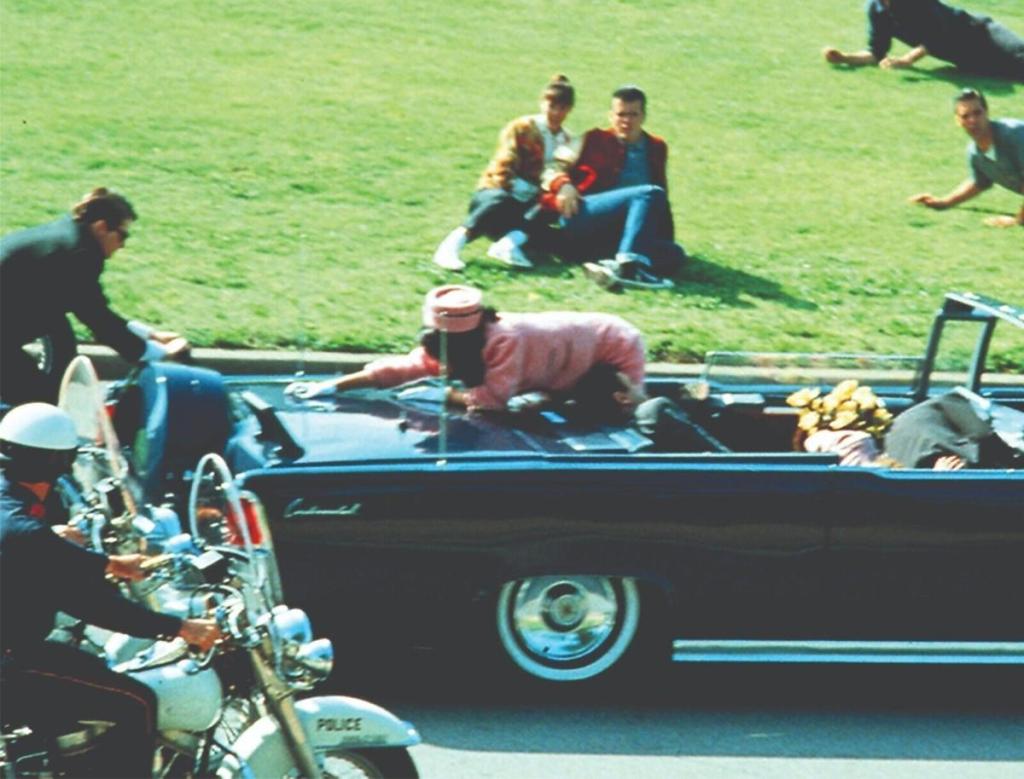
In addition to JFK, a policeman named J.D. Tippit was also shot and killed, and 70 minutes later the police apprehended Harvey Lee Oswald, suspecting him to be the murderer of both JFK and J.D. Two days later, before the trial had even started, Harvey Lee Oswald was shot and killed on live television(!) by a guy called Jack Ruby, and one would think that the situation had come full circle. But no, not just yet. After Jack Ruby was slapped with a death sentence, he passed away after being diagnosed with cancer, and I guess that’s where this ordeal kinda ended.
After a ten-month investigation, a commission concluded that Harvey Lee Oswald had killed JFK. I’m not gonna go into much more detail than this, as you can read about this shit somewhere else. Lyndon B. Johnson, vice president to JFK, was sworn in as President of the United States of America roughly two hours after the assassination.
On November 4, the Beatles played at the Royal Variety Show in London, which is some sort of annual Royal charity event. It seems like it’s a pretty big thing, though, and considering no one knew who the Beatles were one year ago, it’s kind of huge that they were booked there this year. In attendance were some of the Royal family, high society people, and probably some regular Joes (but considering the ticket prices were on the high end, there might not have been too many of them).
The Beatles performed four songs: From Me To You, She Loves You, ‘Till There Was You, and Twist and Shout. It was before they played Twist and Shout that John Lennon delivered the iconic line “For our last number, I’d like to ask your help. The people in the cheaper seats, clap your hands. And the rest of you, if you’d just rattle your jewelry“.
And the Beatles rocked this event. One news commentator said, “Never in all my years of observing Royal Variety audiences, have I known this usually starch, ‘on their best behaviour’ audience, unbend so quickly and completely“, according to RoyalVarietyCharity.org, and when the show aired on TV a week later, 21.2 million people watched it. So it’s fair to say that the Beatles are well on their way to becoming the phenomenon that they are bound to be.
The Royal Variety show also played a part in getting the Beatles the three-show contract with the Ed Sullivan Show. When Brian Epstein left for the US with Billy J. Kramer, mainly to promote Kramer, he also wanted to figure out why the Beatles weren’t breaking in the land of opportunity. He managed to get a meeting with Ed Sullivan, and at some point, they agreed on a deal for three shows. The Beatles weren’t paid nearly as much as the bands on the Ed Sullivan Show usually were, but Epstein figured that it was better to accept the deal and get the band on the TV show. According to multiple outlets, Ed Sullivan and other colleagues were a bit apprehensive about booking the Beatles, but they would soon see that it was one of the best deals they ever made.
Check out the Royal Variety performance here:
The TV series «Doctor Who» premiered on the BBC this month in the UK. The science fiction series will go on to become the longest-running science fiction series in history, running from 1963 to 1989, and from 2005 to 2024 (still going, by the way). So far, I haven’t watched a single episode of this show, but I’ve always known it existed. Maybe I’ll give it a go at some point.
A children’s book I’ve always loved, and currently reading to my son, was published this month and deserves to be mentioned here. «Where the Wild Things Are» is written and illustrated by Maurice Sendak, and has been an immensely popular children’s book since it came out.
THE MAGAZINES
I’ve managed to get my hands on a bunch of old magazines lately, and I’m gonna try to incorporate some of the things they wrote about. From November 1963, I’ve come across some stuff I wanted to mention in issues of Billboard Magazine and Cashbox Magazine.
BILLBOARD MAGAZINE
(weekly magazine from the US)
In the magazines that were issued in November, they wrote that a film called «Country Music on Broadway» was gonna premiere this month. I’ve never heard of the film, but when I saw all the artists who participated, I had to check it out. Unfortunately, I couldn’t find the movie online, so I haven’t seen it, but according to Billboard Magazine, there are 17 country artists performing in this film, including some old footage of the late Hank Williams. Other artists include Buck Owens, Skeeter Davis, Lester Flatt and Earl Scruggs, Porter Wagoner, and George Jones. That line-up alone is more than enough to pique my interest. The storyline revolves around Hank Snow’s recollection of Hank Williams, but is mostly about the artists performing on stage.
They can also tell us that Bing Crosby switched labels and signed with Capitol Records. His first single is supposed to be a Christmas tune called Do You Hear What I Hear, set for release on November 18 (I’ve not added that one to my list for this month). Ike Turner has started his own label called Sonja Records, and already cut records with his wife Tina and with the Ikettes. And we can read about a guy called Bill Door, owner of Fax Records, who was found killed along with his girlfriend in his home in Los Angeles. According to Billboard, he was controversial in everything he did, and a LA police spokesman said, “Door had so many enemies, it was almost impossible to guess who committed the murders“. Now I have no idea who this Bill Door guy is, but after reading this small notice about his death, I gotta say that I’m intrigued.
The last piece of information I’ll steal from Billboard is that a guy called Mitch Miller received his 11th gold record, which is a record-breaking number in 1963. It’s also the 100th gold record issued by the RIAA (Record Industry Association of America). The album in question is «Folk Song Sing Along with Mitch».
CASHBOX MAGAZINE
(weekly magazine from the US)
Cashbox lets us know that Gene Pitney will be starting a European tour on November 13, beginning with a week in England where he will be recording, doing some radio and TV, and promoting his music. After that, he’s heading to the mainland to do three weeks of concerts in Germany, France, and Italy.
They can also announce a pretty awesome show at the Apollo Theatre in New York. Ben E. King, The Coasters & The Atlantic Caravan of Stars, as the show is called, will take over the theatre for one week starting on November 15, and includes artists like Otis Redding, King Curtis, Rufus Thomas, and the two headliners. That sounds like an amazing way to spend at least one day in the cold November nights of New York.
And to wrap up the magazine section, we can read that Conway Twitty has signed a recording contract with ABC-Paramount Records, after releasing a string of hits on MGM Records. His first releases will be the self-penned Go On And Cry and She Loves Me (She Don’t Love You).
THE ALBUMS
I’ll start with some Christmas albums this month, and I guess I gotta revise myself a little bit. Cause I once exclaimed that I love Christmas music, and while I sure do love some of it, I don’t think I can say that I love the entire genre. The more general, common Christmas music can actually be quite boring, but now and then, some artists do something very original, and that’s what usually gets me. I can also appreciate a very good version of a standard Christmas tune, but to say that I love Christmas music in general was an exaggeration.
Robert Goulet is probably best known for his acting, but he has released a bunch of music as well. He got his break playing the part of Sir Lancelot in the 1960 Broadway musical «Camelot», and the song If Ever I Would Leave You from the play became his signature song. This month, he offers up a Christmas album called «This Christmas I Spend With You», and I guess it is exactly what I was expecting. It’s mostly traditional Christmas songs like Silver Bells, Let It Snow! Let It Snow! Let It Snow!, and Winter Wonderland, performed in a very suave way with his deep signature voice, made for soothing melodies and unenthusiastic performances. He does a great version of Have Yourself a Merry Little Christmas, but other than that, I guess this album is recorded for older women and boring families.
Tennessee Ernie Ford started his career as a radio host, but eventually turned into a country singer and released a bunch of music in the ‘50s. He’s released hit songs like The Shotgun Boogie, Blackberry Boogie, I’ll Never Be Free (duet with Kay Starr), False Hearted Girl (duet with Ella Mae Morse), and Sixteen Tons. In 1956 he started hosting his own TV show called The Ford Show, which stayed on air until 1961. His latest release, «The Story of Christmas», is not something I’m gonna elaborate too much about. I’d call this a waste of time, to be honest, and I have no idea how it was received back in 1963.
JOHNNY CASH – THE CHRISTMAS SPIRIT
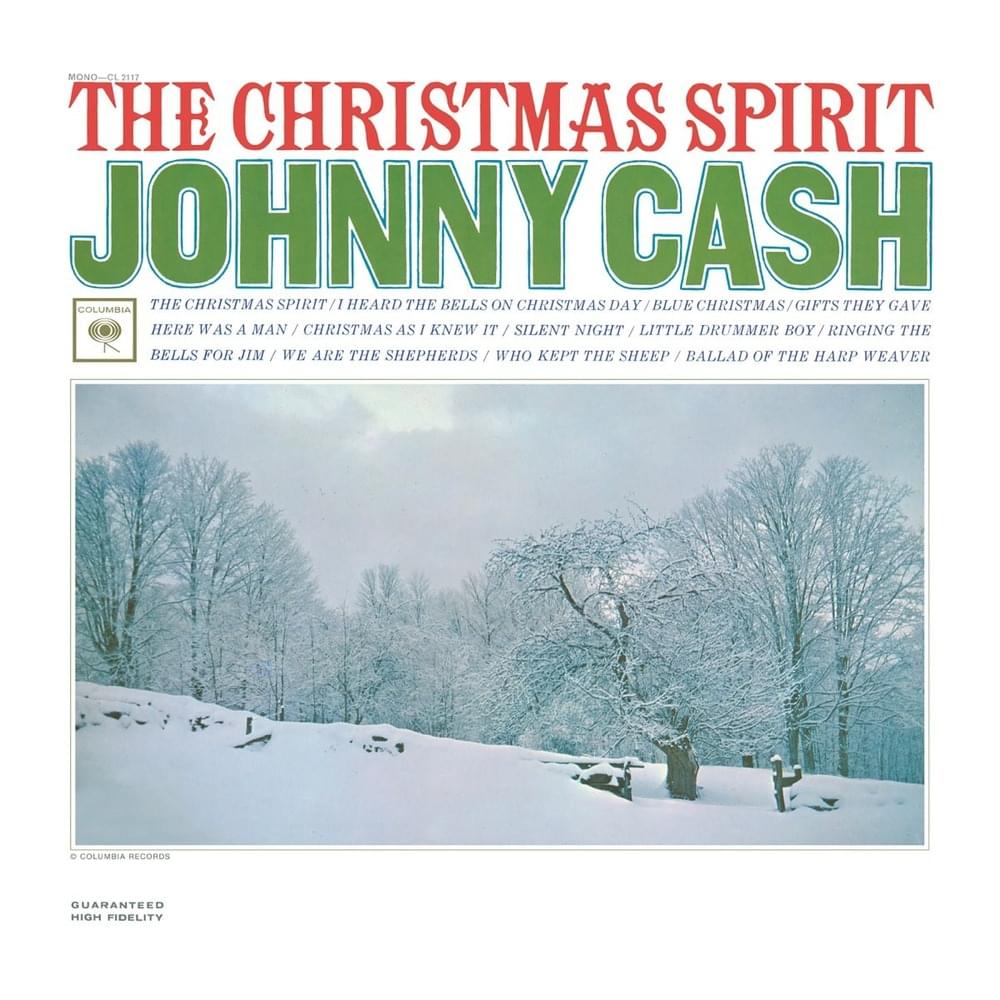
«The Christmas Spirit» is Johnny Cash’s first Christmas album, and his seventeenth album altogether. I will gladly admit that I’ve been hoping that this would be a lot better than the two above, and I can already let you know that out of the three, this one is at least the one I like best. But I’ve got some issues with Johnny Cash’s supposed Christianity. I don’t buy that the ‘Man in Black’ is so in love with Jesus Christ, I don’t buy that he’s a god-fearing man, and I don’t believe in a word he says when he talks/sings about this stuff. So the religious tracks on this album kind of fall on deaf ears in my case. Now, don’t get me wrong, it is a Christmas theme this Christianity thing, so I tolerate a lot more on these records, but tracks like «Here Was a Man» are just way too much for me.
The album is a mix of songs and stories. The songs are very nice, creating a nice Christmas feel, and the stories aren’t too bad either. Except for that awful Here Was a Man, which is just glorifying Jesus. But stories like The Ballad of the Harp Weaver and Christmas as I Knew It actually manage to keep me listening and feeling something. But it’s not necessarily what I want to hear.
There are also some original Cash tunes here, which are much appreciated on a Christmas album. The downside is, of course, that they aren’t really amazing. I mean, they’re ok, but I’m not gonna add them to my Christmas playlist, to put it that way. The songs in question are The Christmas Spirit (a story), The Gifts They Gave, Christmas as I Knew It (mentioned earlier), We Are the Shepherds, and Who Kept the Sheep.
I guess the best songs on the album are I Heard the Bells on Christmas Day and Blue Christmas, and all in all, I’d say it’s a decent first effort at making a Christmas record by Johnny Cash. It also peaked at #7 on the Billboard Holiday Albums chart.
VARIOUS ARTISTS – A CHRISTMAS GIFT FOR YOU FROM PHILLIES RECORDS
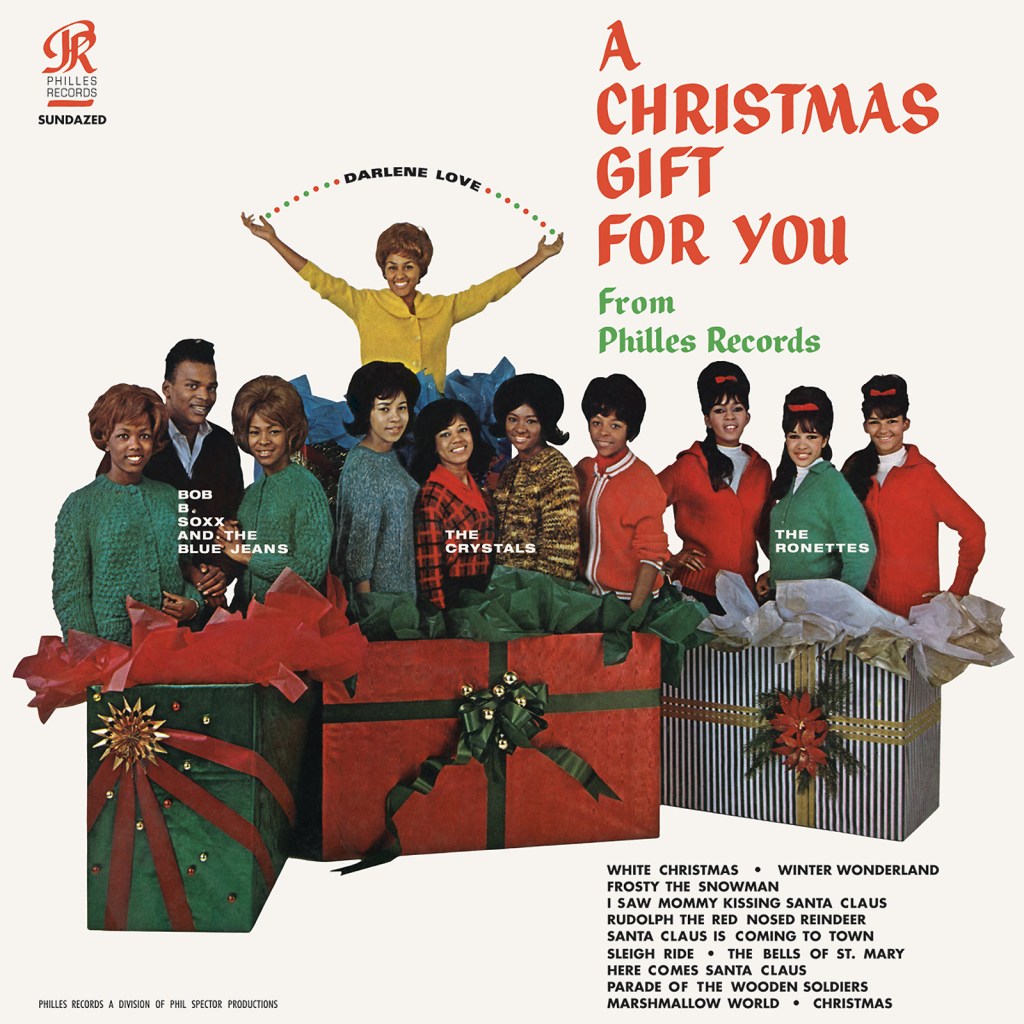
This album was eventually renamed «A Christmas Gift From Phil Spector», which I guess it is better known as by now, but in 1963, it was a gift from Phillies Records. The album is a collection of secular Christmas songs (which is music to my ears), and they are performed by The Ronettes, The Crystals, Darlene Love, and Bob B. Soxx and the Blue Jeans. Granted, there’s only one original song on this collection, but all the traditional tunes are wrapped in a new sound that hasn’t been heard before, so in a sense this feels like a completely new set of songs—a completely new feel of Christmas.
However, the album wasn’t a success when it was released, and that might have something to do with the fact that it was released on the same day as JFK was killed. Cause if everyone got to listen to this music when it was released, I do not doubt that everyone would have loved it. Traditional songs like White Christmas (Darlene Love), Santa Claus is Coming to Town (The Crystals), I Saw Mommy Kissing Santa Claus (The Ronettes), and Here Comes Santa Claus (Bob B. Soxx and the Blue Jeans) is brought to life with Phil Spector’s ‘wall of sound’, and is pure joy to listen to. When it comes to Christmas albums, I don’t believe there has ever been a better album than this.
The best song on the album, however, is the only original song on here. Christmas (Baby Please Come Home) is written by Phil Spector, Ellie Greenwich, and Jeff Barry, and is performed by Darlene Love. And while it was an original new song in 1963, it has become a classic in its own right over the years since its release (it will also be released as a single in December). The album itself has also become a classic, and it has been re-released a number of times since 1963. It has been ranked as #142 on Rolling Stone Magazine’s ‘500 greatest albums of All Time’ list, and as the greatest Christmas album of all time, also by Rolling Stone Magazine.
I guess it’s fair to say that this is an amazing Christmas album, both by my account and Rolling Stone Magazine, and the only thing left to say is that if you haven’t heard this album before, well, Christmas is coming up soon, so there’s no better time for it than now.
JAN & DEAN – DRAG CITY
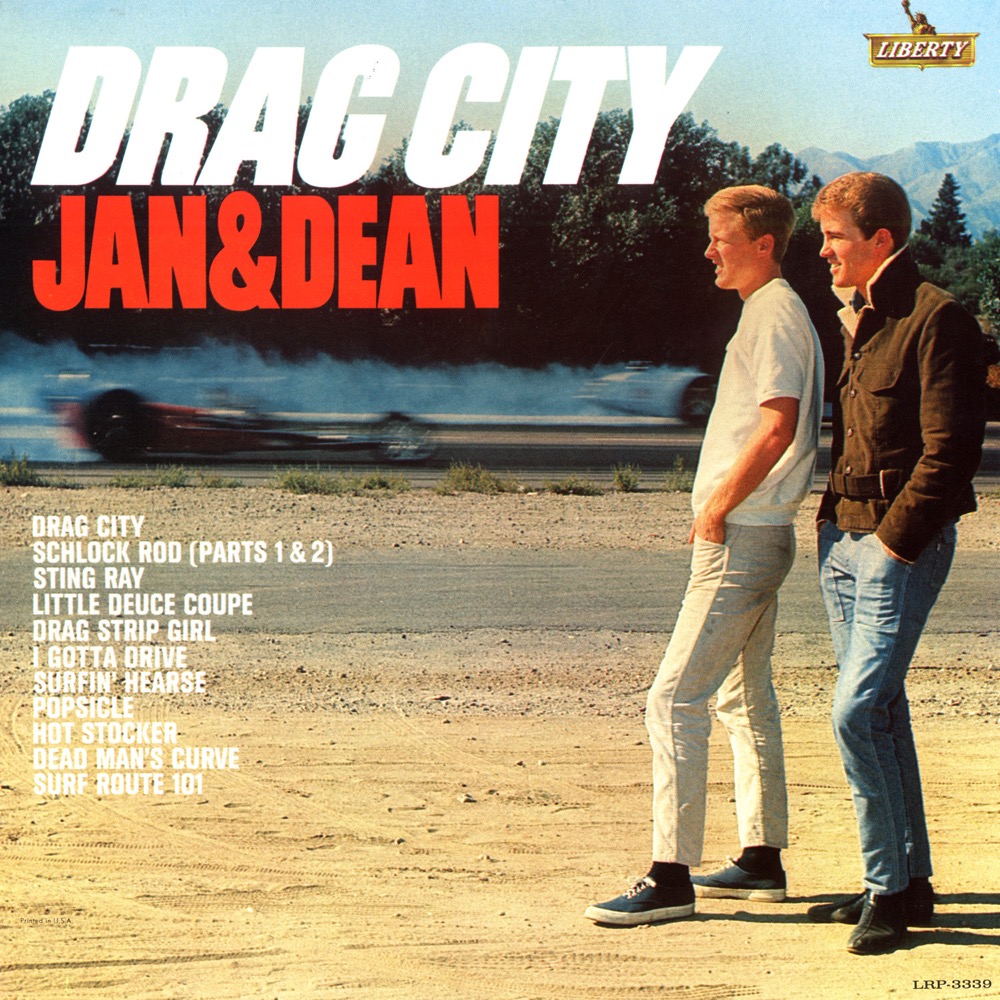
Jan & Dean are heading into their peak years right now, which will be sparked by meeting Brian Wilson. On their latest record, «Drag City», Brian has co-written four tracks, where one of them is the Beach Boys’ original «Little Deuce Coupe». It doesn’t look like he was in charge of producing the album, though, as most of the producer credits I’ve found have been given to Jan Berry. I’m also happy to see that Jan Berry has co-written seven of the tracks as well. Even more fun is the fact that Jan’s mother was born in Bergen, Norway, which makes Jan Berry 50% Norwegian (but I guess that’s just fun for Norwegians).
There’s not a lot of information about this album out there, but it does contain one of their hit songs, the title track Drag City. And I would say, like the last album they released, that it’s kind of a concept album, as most of the songs are about cars and drag racing. Other than that, I can note that it peaked at #22 on the Billboard Albums chart, which is pretty good.
I guess the easiest way to describe Jan & Dean is to compare them to the Beach Boys. The music is similar, the songs are similar, the harmonies are similar, but they lack something to be as good as the Beach Boys. There are some cool songs here, though. I’m fond of Dead Man’s Curve, I Gotta Drive, and Schlock Rod, which has to be the inspiration for Blur’s Parklife. Schlock Rod is a novelty song, and very different from every other song on this album, but the Parklife connection has made me like it.
I’ve listened to this album a lot, as I never really got myself to start writing about it, so I have to say that it really grew on me during all these playthroughs. I like the album, but it’s not gonna be one of the best this year.
A jazz singer called Joe Williams released three albums in 1963: «Jump For Joy», «At Newport ‘63», and «One Is A Lonesome Number». Through the late ’50s to the start of the ‘60s, he was the singer for the Count Basie Orchestra, and I believe that is the most interesting thing about Joe Williams. I’ve said it before, and I’ll say it again, jazz vocals isn’t my thing. At all.
ELVIS PRESLEY – FUN IN ACAPULCO
In December 1956, Elvis dropped by his old label Sun Records and ended up jamming with Jerry Lee Lewis, Carl Perkins, and Johnny Cash. The jam session was recorded, but since Sam Phillips had no right to release the music, the recording won’t be released until 1981. From what I understand, they mostly played old gospel songs that all four of them grew up with, so I don’t really know how awesome that could have been. But the idea of the four of them jamming together piques my interest considerably.
In the first half of 1957, Elvis released three singles that all went to #1: «Too Much», «All Shook Up», and «(Let Me Be Your) Teddy Bear». In March, he also bought his mansion, Graceland, which in time will become a destination of pilgrimage for millions of Elvis fans. This was also the year that Elvis started his acting career for real. After his supporting role in the movie «Love Me Tender» in 1956, he would star in «Loving You» and «Jailhouse Rock» in 1957. In October, he released «Elvis’ Christmas Album», which would eventually go on to become the best-selling Christmas album ever in the US (not sure if it still is, but I believe it still was back in 2016).
Elvis had also received his draft notice in 1957 and was expected to join the military in December, but he was given time to finish the upcoming movie «King Creole». In January 1958, he released his tenth number-one hit, «Don’t», and the recording session for the «King Creole» soundtrack would be the last time Bill Black played with Elvis, as he and Scotty Moore had officially quit after the Christmas album sessions. They supposedly quit because they still just received modest pay for their work with Elvis, and didn’t get a share in the extraordinary amounts Elvis was making. In March 1958, Elvis was drafted into the military, and his musical career was put on hold until 1960.
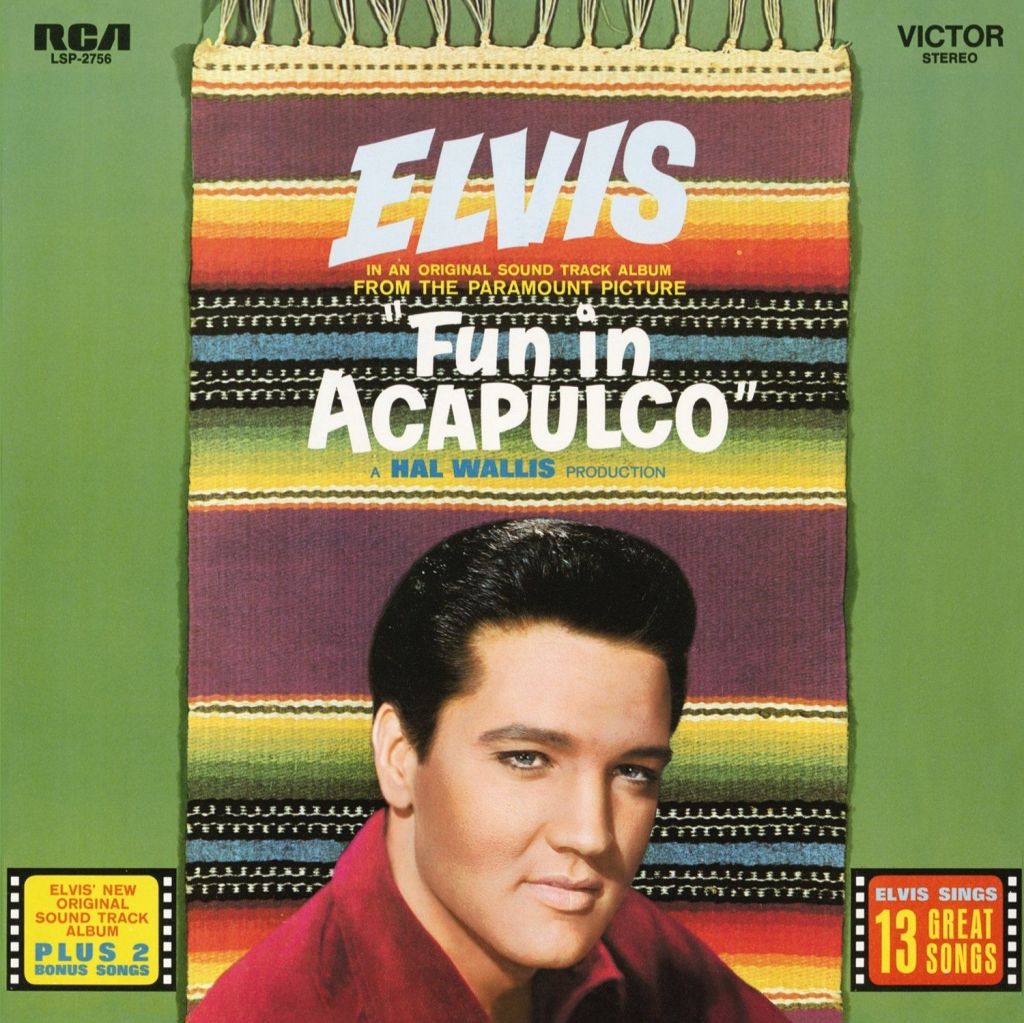
This month, Elvis released his seventh soundtrack, «Fun In Acapulco», which was recorded early this year. The album accompanied the film by the same name, and is said to have been inspired by the music of Herb Alpert and the Tijuana Brass (at least the addition of brass instruments). As the title suggests, the movie is set in Mexico, and the soundtrack shares the same backdrop with several tracks matching the theme. This also gives us a new side of Elvis, with music that kinda takes him even further away from what he started out as, but this is actually one of the soundtracks I’ve liked best so far. It has been said that Elvis approached this recording session with more enthusiasm than his earlier soundtracks, and that might as well be the reason that this sounds better than most of them.
It’s not an amazing Elvis album, though. It has its highlights like the single Bossa Nova Baby, and Slowly but Surely but songs like Vino, Dinero Y Amor, El Toro, (There’s) No Room to Rhumba in a Sports Car, Guadalajara, and You Can’t Say No in Acapulco is the norm of this album. I wouldn’t call any of the latter ones essential Elvis tracks, and so this is yet another Elvis album that doesn’t live up to his name. I can take some solace in the fact that it is one of his better soundtracks, but that’s about it. Of course, the album peaked at #3 on the Billboard Albums chart, but that’s not surprising considering that Elvis fans are loyal as fuck, and will eat up everything he offers them.
A fun fact about the shooting of the film is that Elvis wasn’t part of the shooting in Mexico as he was banned from entering the country. This was because of violent riots that happened during the openings of his last two films in Mexico in 1959 and 1961. But the ban supposedly started back in 1957, when a gossip column falsely stated that Elvis had allegedly said during an interview in Tijuana (where he had never been) that “he would not care to sing in Mexico, as he found it a distasteful country and that he would in fact prefer to kiss three African Americans than a single Mexican woman.” A crazy fucking statement in so many ways, but it is not a real statement by Elvis. It’s completely made up, and decades later, it was revealed that the quotes were the work of a powerful politician who had tried to book Elvis for the birthday party of a fifteen-year-old girl who was the daughter of a media mogul he was acting on behalf of. Crazy stuff!
JOAN BAEZ – IN CONCERT, PART 2
Growing up, Joan Chando Baez was often harassed with racial slurs and discrimination due to her Mexican heritage. Because of this, she got involved in social causes early, and it became an important part of her career as a musician. As a kid, she lived in towns all over the US and also in countries like France, England, Spain, and Iraq, but she spent most of her formative years in San Francisco, where she graduated from high school in 1958. She started playing music when she was gifted a ukulele as a young girl, and started playing rhythm and blues, as that was the kind of music she was listening to back then. Her parents feared that the music would lead her into a life of drugs and addiction, so they decided to bring her to a Pete Seeger concert to take care of that problem. Funnily enough, it worked. Joan became very moved by the music Seeger was playing, and she started learning his songs and performing them in public.
After she graduated from high school, her father accepted a position at MIT and moved the family to Boston. This was good for Joan, as the up-and-coming folk scene in Boston would help her career get started. She played her first concert at a place called Club 47 in 1958, though with only eight people in the audience, which included her parents, her sister Mimi, her boyfriend at the time, and a few of her friends. A few months later, she would record an album, her debut appearance, with Bill Wood and Ted Alevizos in the cellar of a friend’s house. «Folksingers ‘Round Harvard Square» consisted of eighteen songs, of which six were solos by Joan. It actually had an unauthorized release by Squire Records in 1963, but I didn’t know that until just now.
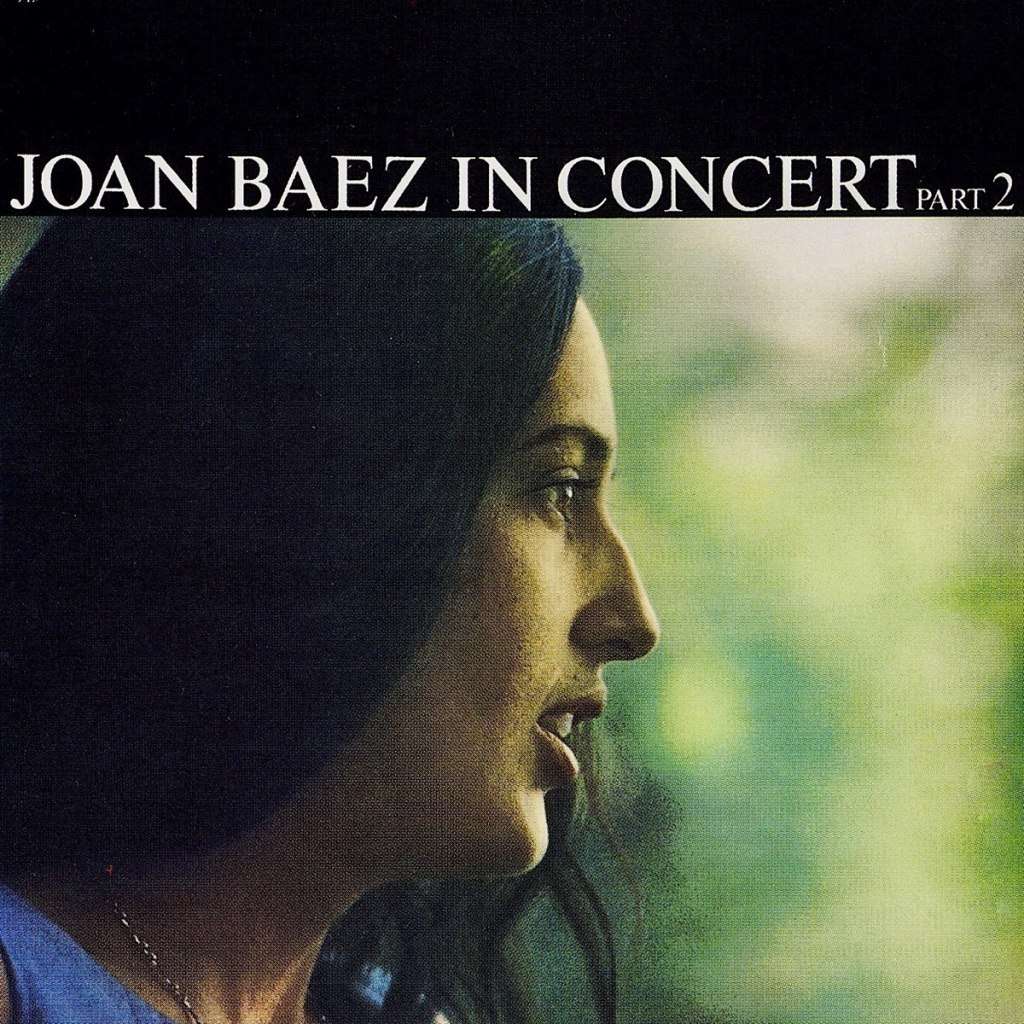
Her real breakthrough came in 1959 at the Newport Folk Festival, which I’ve written about on one of her earlier releases. Now she’s out with her fourth album, «In Concert, Part 2», which is her second live album. Just like her first live album, this one is also a collection of new material not released on earlier records. This was unusual, and still is, I guess, as most live albums usually include the hit songs performed live. The album is just Joan Baez and her guitar, and it sounds absolutely beautiful as usual. So far, I’ve loved all her records, and I hope that this will last forever.
«In Concert, Part 2» is the first of her albums to feature some Bob Dylan covers. As the mono version and stereo version of this album have different track lists, she’s got two Dylan songs on the stereo version and only one on the mono version. Don’t Think Twice, It’s Alright is added to both of them, but With God On Our Side can only be found on the stereo version. This is also the first album where she’s recorded more songs by contemporary artists, as she’s usually just recorded traditional music. There’s We Shall Overcome, co-written by Pete Seeger, Long Black Veil, originally recorded by Lefty Frizzell in 1959, and of course, the Bob Dylan tracks. The rest of the album is mostly traditional songs, and also two Spanish songs: Manhã de Carnaval/Te Ador and Nu Bello Cardillo.
The album was recorded at different venues during her tour in 1963, and on the back of the cover jacket is a poem written by Bob Dylan. This is a great album, and I’m glad to be able to say that so far, all of Joan’s albums are something every music lover should have in their collection. Long may it last!
The latest release from The Miracles is the first album of theirs that has genuinely disappointed me. The reason for that is that «Doin’ Mickey’s Monkey» is mostly made up of “dance craze” songs, and not even originals. The album is released on the wave of their latest hit Mickey’s Monkey, and I guess to capitalize on this, they decided it was a good idea to get in on the dance craze before it was too late. A weak move if you ask me, and it seems that a lot of people thought the same thing as the album stopped at #113 on the album chart in the US. They try to make some of the songs their own, but to be honest, they didn’t do a very good job. Songs like The Twist and The Monkey Time get a pretty bad make-over by the band, and other than the single Mickey’s Monkey, there isn’t much to write home about here.
THE BEATLES – WITH THE BEATLES
According to George Martin, the plan was always to release two albums and four singles during a year for the Beatles. And with their second album, «With The Beatles» and the single release this month, they’ve done just that (not counting the releases outside of the UK, that is) in 1963. Around this time, the Beatles also moved to London, according to The Beatles Anthology, which apparently created some discontent in people from Liverpool, as they felt that the Beatles were their band, and to move away from your roots and hometown, for some reason, fucked that relationship up. But for the band, this was the natural move to make at this point in their career.
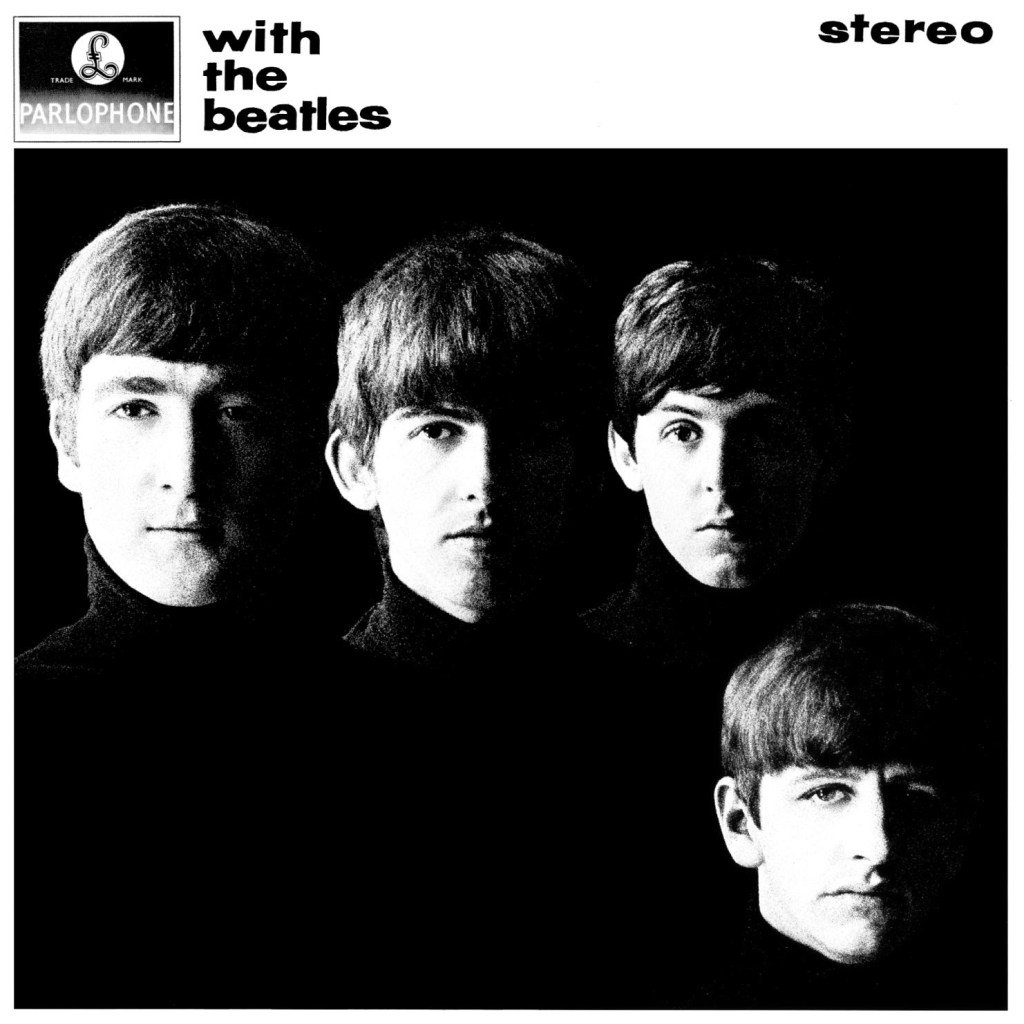
«With The Beatles» was recorded over seven sessions at the EMI studio in London with George Martin producing and mixing the album. Eight of the fourteen tracks are written by the Beatles, seven of them credited to Lennon-McCartney, and one, Don’t Bother Me, to George Harrison. That leaves six tracks that are covers of songs the band either played live or liked. The self-penned-to-covers ratio is exactly the same as their debut album, which was released eight months before «With The Beatles».
The album starts with a bang as It Won’t Be Long kicks it off, probably my favorite track on this album. According to Wikipedia, they never performed this song live, but sometime next year they will lip-sync it at a TV show. I’m always gonna enjoy the Beatles’ own songs more that the covers they do, and on «With The Beatles» we are treated to other great ones like All My Loving, Little Child, I Wanna Be Your Man, Not A Second Time, Hold Me Tight, and All I’ve Gotta Do in addition to the two I’ve already mentioned. The cover tracks on this album are pretty varied, with some up-tempo ones and some ballads. Please Mr. Postman, originally released by the Marvelettes, You Really Got a Hold on Me, written by Smokey Robinson and originally released by The Miracles, Money (That’s What I Want), released by Barrett Strong in 1959, Paul McCartney proves that he is a master when it comes to singing ballads on Till There Was You, a show tune from 1957, and George Harrison takes the lead on Roll Over Beethoven (Chuck Berry) and Devil In Her Heart (Richard Drapkin).
«With The Beatles» will go on to be the second album to sell a million copies in the UK, spend 21 weeks at the top of the UK album charts, and even peak at #11 on the UK singles chart because the British tally their sales weirdly. But yeah, the Beatles are off to an amazing start, and the fact that this is just the start is pretty awesome.
BOBBY DARIN – GOLDEN FOLK HITS
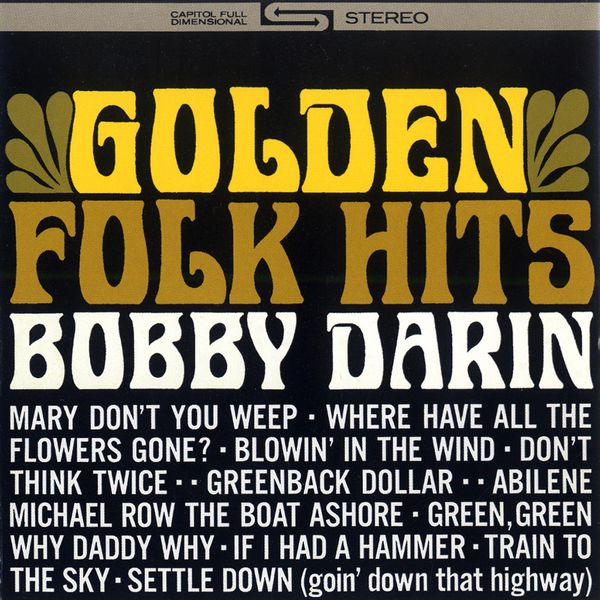
If my count is correct, this is Bobby Darin’s sixth album this year. One could say that this is an extravagant number of records to release in a year, but at least it’s not all crap. His latest release, and last album this year, is «Golden Folk Hits» and is his second try at folk music. Bobby has proven to be quite a versatile artist, starting out as a teen idol recording pop/rock music, moving on to crooning, dabbling with some country music, and now he’s looking to become a folk artist. His first attempt earlier this year, «Earthy», wasn’t very convincing, but he has definitely stepped up his game since then.
«Golden Folk Hits» is a collection of well-known folk hits recorded by Bobby Darin without much razzle and dazzle. He has put his own mark, however little, on some of them, though. Like so many others nowadays, he has recorded the Dylan songs Blowin’ in the Wind and Don’t Think Twice, It’s All Right, but the problem is that what he’s done to them doesn’t do them justice. They actually end up as two of the worst tracks on the album, which in its own right is pretty incredible. But there are plenty of other great songs on here that Bobby manages to do well, and my favorites are Where Have All the Flowers Gone (Pete Seeger), Greenback Dollar (Hoyt Axton), and If I Had a Hammer (Pete Seeger and Lee Hays).
Darin never really manages to become a favorite in any way, but he has the uncanny ability to produce some good music when I’m on the verge of giving up on him. And this one is probably one of the best I’ve heard so far. Not very original, but a good listen nonetheless.
Lesley Gore’s fledgling career continues with her second album this month, released just five months after her debut album. Her latest single, She’s a Fool (released in September), opens the ball and sets the sweet tone she’s already known for. According to Wikipedia, Lesley was discovered after her uncle sent a tape of her singing to someone, and it eventually ended up at the desk of the president of MGM Records. He passed it on to Quincy Jones, who ended up as her producer, so, naturally, Quincy has produced «Lesley Gore Sings Of Mixed-Up Hearts» as well. The album itself wasn’t a very big hit, but the aforementioned single and the track You Don’t Own Me (released as a single next month) both breached the Top 10 as singles.
You Don’t Own Me is very different from anything Lesley has touched so far, and was quickly hailed as a feminist anthem. As the title suggests, it’s about the empowerment of women, and the fact that they are not owned by any man. I’m very fond of this track, and it suits Lesley to take this role as a leading star for women’s rights to stand up for themselves. It will become her second biggest hit and a track she considers her signature tune.
I’m reluctantly mentioning a comedy album this month as well. Bill Cosby released an album called «Bill Cosby Is A Very Funny Fellow…Right», which is his first comedy album. Now, Bill doesn’t have a very good reputation here in the year 2025, but considering he hadn’t done any of those things yet in 1963, I’m gonna try to look past it. It won’t help him much though, cause I don’t know when or where I would ever listen to this album again. A stand-up comedy album doesn’t appeal much to me, and while he’s kinda funny, it doesn’t really matter. It was released, though, and now I’ve mentioned it.
I believe this is the first time I’m writing about Freddie Hubbard. A jazz trumpeter who moved to New York in 1958 to make a go at it, and played with major players such as Sonny Rollins, Eric Dolphy, and Quincy Jones. Only two years later, he released his first album as a leader on Blue Note, «Open Sesame». Since then, he has released four more albums as a leader and recorded with others as a sideman. From 1961, he has also played as a part of Art Blakey’s Jazz Messengers, appearing on albums I’ve written about like «Buhaina’s Delight», «Caravan», and «Ugetsu». He was also a part of John Coltrane’s «Africa/Brass». His latest album is called «Hub-Tones», which has gotten great reviews from a lot of Jazz critics. He definitely plays the kind of jazz that I can listen to, and I enjoyed listening to this one with my eyes closed, trying to pretend that I saw what they were thinking when recording this one. The opening track, You’re My Everything, is probably my favorite.
JOHN COLTRANE – DAKAR (REISSUE)
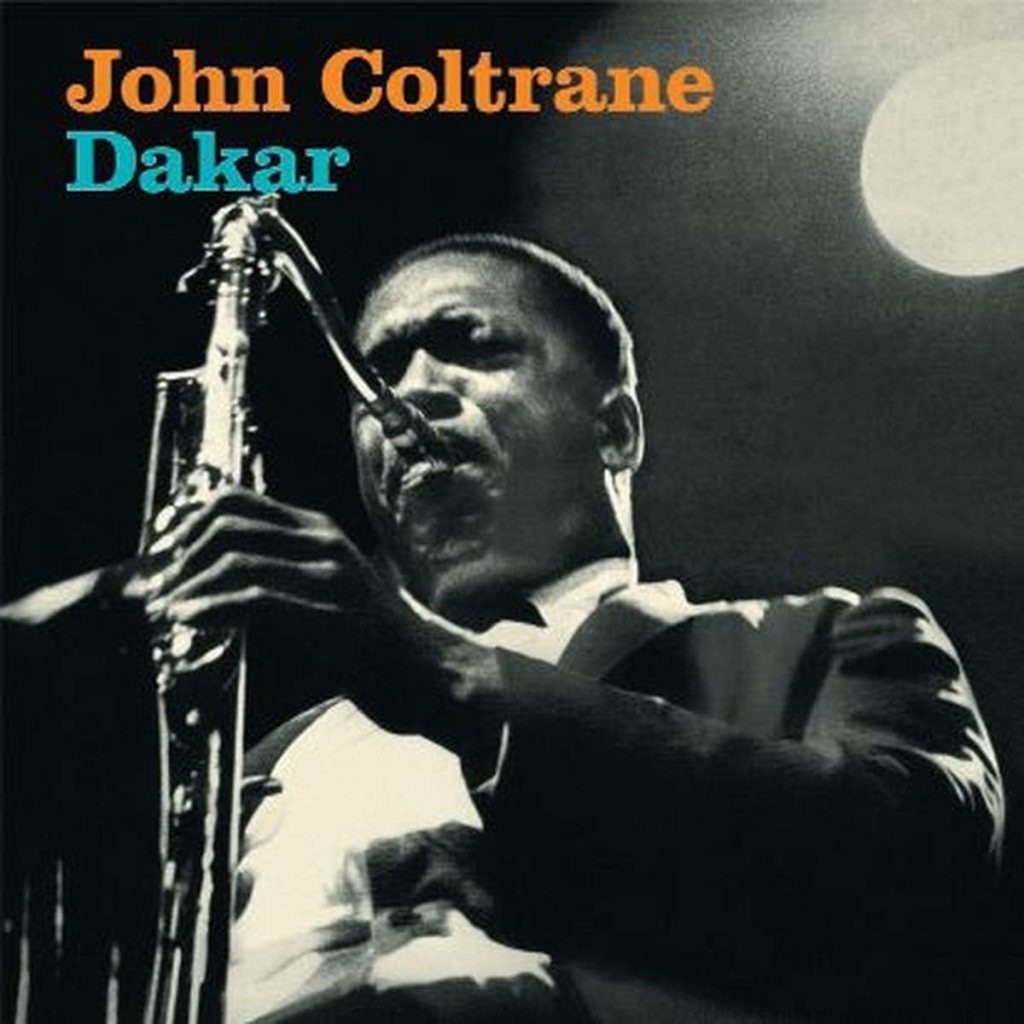
«Dakar» is a reissue of either a side of an LP or an entire LP released in 1958 called «Baritones and French Horns». «Dakar» was released by Prestige Records in 1963 to take advantage of Coltrane’s popularity, but is interestingly enough not actually a John Coltrane album. In the sessions that produced this album, Coltrane was hired as a sideman in a group called the Prestige All Stars, and the supposed leaders were Pepper Adams and Cecil Payne. However, Chris May, who wrote a review for Allaboutjazz.com, states that the real leader might as well have been Teddy Charles, the vibraphonist, as he produced the sessions and composed three of the tracks.
It doesn’t really matter that it isn’t a bona fide John Coltrane album, though, cause it’s good. And in my case, it’s just a bonus, as I haven’t been able to listen to a lot of the stuff Coltrane did before 1960. And this, just like the Freddie Hubbard album, is jazz that doesn’t require too much of the listener, which, in my opinion, is what makes a good jazz album for us uninitiated ones.
The album is said to be a meeting between old and new, with some of the players hailing from bop baritone and the younger players from hard bop. This isn’t something I can verify, though, but Chris May from AllAboutJazz described it a bit like that in his review. Anyway, even though this wouldn’t be described as an essential John Coltrane album, I would highly recommend it myself. The opening track Dakar is great, so is the next one Mary’s Blues, and I could also highlight Witches Pit.
UNKNOWN RELEASE DATE
The Raindrops did not last long. Their debut, and only, album «The Raindrops» was released this year, and their last single will be released in 1965. They did manage to make an impression, though, however small, when their second single, The Kind of Boy You Can’t Forget, peaked at #17 on the Hot 100 chart sometime this year, and their debut single, What a Guy, reached #25 on the R&B chart. Both singles are added to this album. Looking at the album cover, it makes sense that there are three members of The Raindrops, but there’s only talk about two of them (at least where I’ve looked), Jeff Barry and Ellie Greenwich. They started dating at some point, then started making music together, and finally got married (which of course ended in divorce). Both of them will be best remembered for their songwriting, and on this album, they’ve written eleven out of twelve songs themselves. A couple of them are co-written by Phil Spector as well. The music is described as Brill Building pop, and I’m sorry to say that I don’t find it very inspiring at all.
I’m pretty sure The Platters released their album «Christmas With The Platters» at the end of this year, as Christmas is right around the corner. The vocal group from Los Angeles scored their first hit with Only You in the summer of 1955, and followed up with their first #1, The Great Pretender, in November of the same year. Both songs were written by their manager, Buck Ram. Their Christmas album this year is better than what Tennessee Ernie Ford and Robert Goulet offered up this month, maybe even better than Johnny Cash’s Christmas album. Their mix of whimsical songs and soulful ballads works really well, and some of the arrangements are original and really cool, like Jingle Bells Jingle.
Pre-Country Conway Twitty is a pretty interesting listen. Mostly because I’ve just seen him as such a dull artist, with his big forehead and stupid hairdo, but this is something completely different. Just like the last Conway album I wrote about, this one proves that this genre suits him, and «R&B ‘63» is ten tracks of pretty good music. There are some slow ones like a version of Fever, and the opening track It’s Too Late that shows that he’s well set up for when his Country career will start, but it’s the faster ones that are the highlights on this album. The cover of Ray Charles’ I Got a Woman, and Don’t Cry No More are standouts in my opinion. I’m also fond of Let the Good Times Roll.
Roy Hamilton was given the name Rodothas at birth, and I can understand why he shortened it to Roy for his stage name. I mean, Rodothas? I don’t even know how to pronounce that. Anyway, Roy Hamilton started out by singing gospel music, but he also painted at a young age and was supposedly good enough to have some of his paintings placed in some New York art galleries. At the age of seventeen, he tried his luck as a musician after winning a talent show at the Apollo Theater, but that didn’t really get him anywhere. It wasn’t until 1953, when he was signed to Epic Records, that his career really got started, and his debut single You’ll Never Walk Alone ended up topping the R&B chart for eight weeks. He followed that with three more hits: If I Loved You, Ebb Tide, and Unchained Melody, with the latter becoming his biggest hit. In 1956, he actually retired from music because of a lung condition, but he was back at it a year later. His last hit so far was You Can Have Her, released in 1961, and this year he released a record called «Warm Soul» which I’m not a huge fan of.
«Moment of Truth» is an album that is highly recommended by Allmusic.com, but I should add that this statement probably only refers to die-hard jazz fans. Gerald Wilson Big Band is not something I bothered to read a lot about, and I didn’t fall in love with the album either. He’s a big name in music, though, and has arranged music for artists like Duke Ellington, Ray Charles, Billie Holiday, and Dinah Washington.
Modern Folk Quartet was formed in Honolulu, Hawaii, in 1962, but quickly moved to Los Angeles and became regulars at The Troubadour. Their debut album, «Modern Folk Quartet», was released sometime this year, and my initial thoughts are that they offer nothing new or exciting to the folk revival of the early ‘60s. They are obviously great musicians and singers, but they come off as musicians who have nothing to do with folk music and kinda just jumped on the bandwagon as they figured it was an easy way to make a quick buck. Chip Douglas, one of the founders of the group, will go on to produce some big hits for The Monkees, and at some point, he’ll be the bass player for the band The Turtles.
Jim Reeves released a no-nonsense Christmas album called «Twelve Songs of Christmas» this year. He looks and sounds like an old-timer, and I kinda figured he was at least 60 years old, but it turns out that he is the same age as me, just 40 years young. This album is a pretty good holiday album, though. Relaxed with lots of feelings, even though it is monotonous at the same time. It’s weird, I know, but I really believe that’s the best way to describe it. There’s not a lot of amazing tracks here, but I would easily listen to his versions of Jingle Bells, White Christmas, and Mary’s Little Boy Child on Christmas Eve.
NINO TEMPO & APRIL STEVENS – DEEP PURPLE
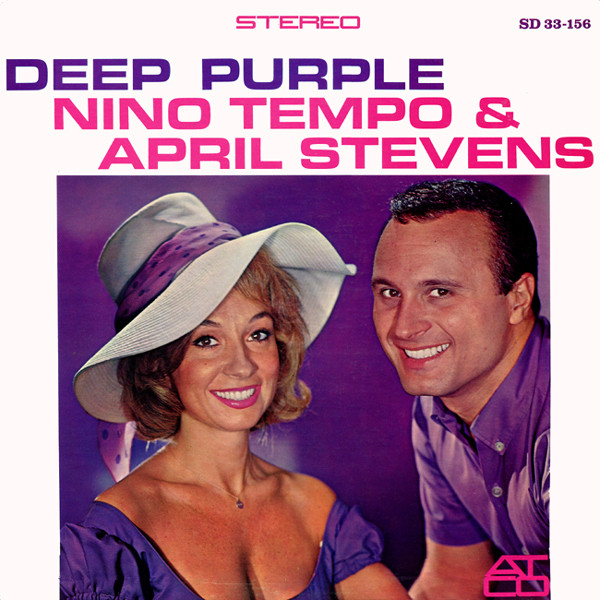
This brother/sister duo released one of 1963’s best singles, Deep Purple, back in September. I don’t have an exact date for the release of this album, which is aptly named «Deep Purple» as well, but it must have been released after the single, in my opinion. So I guess the big question is if this duo has more than one great song in them, or if they’re just another one of those one-hit wonders.
Nino Tempo started his musical career at the tender age of four when he won an amateur show, which is kinda crazy considering my son turns four in a couple of months and wouldn’t have a chance at winning anything really. At seven, Nino played the clarinet, guitar, and tenor saxophone, and when the family moved to California, he became a child actor. It was his sister, whose birthname is Carol Lo Tempio, who debuted musically first, though. She released some singles for a couple of obscure labels without success in 1950, and was eventually signed by RCA Victor Records, where she scored her first Top Ten hit with the song I’m In Love Again, credited to Henri Rene & His Orchestra feat. April Stevens. She scored two other Top Ten hits in 1951: Gimme A Little Kiss, Will Ya Huh? and And So to Sleep Again.
Meanwhile, Nino kept appearing in movies, writing music, and establishing himself as a session musician. It wasn’t until 1958 that he released his own music, starting with the album «Nino Tempo’s Rock ‘N’ Roll Beach Party» and a single called 15 Girl Friends, neither of which charted. A year later, his sister released a composition of his, Teach Me Tiger, and when that one charted, it could be that Nino started considering teaming up with her. His own releases kept flopping, though, and by 1960, he was back doing session work, ending up as a member of Phil Spector’s studio band, the Wrecking Crew.
During a session for Bobby Darin, Nino convinced Ahmet Ertegun to sign him and his sister to Atco Records, and even though the first three singles flopped, Deep Purple became their breakthrough (a recording Ertegun thought was so bad it was embarrassing, which shows that these money men running the labels don’t really know what they’re talking about).
The album «Deep Purple» did chart within the Top 100, but it doesn’t look like it was specifically successful. Personally, I enjoy the album quite a bit. I’m very fond of the sound this duo creates, a sound that doesn’t really feel like it should work. The pair sings on top of each other but not necessarily together, and it creates a sort of messy harmony that works really well in my opinion. Check out Paradise to understand what I’m talking about. While there weren’t any more big hits on this album, I would say it’s good enough to remove any idea that these guys only had one good song in them. It’s not groundbreaking, but songs like It’s Pretty Funny, One Dozen Roses, Indian Love Call, I’ve Been Carrying a Torch for You so Long That I Burned a Great Big Hole in My Heart, and Paradise show that they are worth checking out and keeping an eye on.
The last album I’ll write about this month is a compilation of various artists called «Broadside Ballads, Vol. 1». It’s a compilation of folk music released by the folk publication Broadside Magazine, and recorded in the magazine’s tiny New York apartment. The whole album feels like a collection of protest songs about topics like the Vietnam War, the Civil Rights Movement, the treatment of the Native Americans, and a lot of the tracks are kinda powerful to listen to, and even still relevant in 2025. There’s obviously a version of Blowin’ In The Wind here, by The New World Singers this time. Bob Dylan is also featured himself, under the pseudonym Blind Boy Grunt, with at least two great ones: John Brown and Only a Hobo. Pete Seeger’s The Ballad of Old Monroe, Phil Ochs’ The Ballad of William Worthy, Peter La Farge’s As Long as the Grass Shall Grow, and Mark Spoelstra’s The Civil Defense Sign are all great and powerful tracks worth checking out, and all in all I’d say this is one of the best compilation’s I’ve written about on here so far.
THE SINGLES
In addition to their album release this month, The Beatles treat the world with a new single. I Want to Hold Your Hand was released on November 29th in the UK (December 26th in the US), and it will end up as their first #1 in the US. That would mean that I Want to Hold Your Hand is the song that started the British Invasion of the American music industry, something that a lot of American industry types will become very unhappy about. In the UK, the single had racked up more than one million advance orders and should have gone straight to the #1 spot if it hadn’t been for their own single She Loves You. I Want to Hold Your Hand did end up at #1; it just took a couple of weeks for it to reach there.
The song was written by Lennon/McCartney in Jane Asher’s basement, and it was, according to Paul McCartney, absolutely co-written by the pair. Jane Asher was Paul’s girlfriend at the time, and he resided with her at her parents’ house, probably because she was just seventeen years old.
The song was obviously greeted well by fanatic fans all over the world, reaching the #1 spot in at least nine countries, including Norway, Australia, Sweden, the UK, and the US. I believe the single sold 3,400,000 copies in the US within at least the first year of its release, and by the year 2000, the single had sold 12 million copies worldwide. Both those numbers are pretty crazy, but the American numbers are what’s truly amazing, considering the reluctance by American record chiefs to release it. Even some American critics were downright negative, saying the song would never stand the test of time. David Newman, music critic for Esquire, wrote, “Terrible awful…it’s the bunk. The Beatles are indistinguishable from a hundred other similar loud and twanging rock-and-roll groups”.
That’s probably a quote he didn’t want to survive for over 60 years, but when you say something that outlandish, you’re bound to be reminded. So ok, the critics who are tasked with giving their professional opinion weren’t unanimous in their verdict, but the rest of the world seemed to be. Bob Dylan has been quoted saying, “Their chords were outrageous, just outrageous, and their harmonies made it valid.”, Brian Wilson said, “I flipped. It was like a shock went through my system…I immediately knew that everything had changed“. And history has shown us that this song really did change everything. It started the British Invasion, it was nominated for a Grammy Award in 1964, it won the Grammy Hall of Fame in 1998, it was named as one of the Songs of the Century by the Recording Industry Association of America, it was ranked as #16 on Rolling Stone Magazine’s list of “The Greatest Songs of All Time”, it has been ranked as #2 on Mojo Magazine’s list of “100 Records That Changed the World”, and by 2018 it was the 18th best-selling single of all time in the UK.
So I guess there’s no point in trying to say anything else about this single. The importance and quality of «I Want to Hold Your Hand» is all cemented in the paragraph above. There isn’t really anything I can add. Except that the B-side, This Boy, is not as awesome and did not receive the same attention. It’s credited to Lennon/McCartney, but is mostly Lennon’s attempt at writing a song in the style of Smokey Robinson. The B-side did, however, go all the way to #1 in Canada, and peaked at #53 on the Hot 100 chart.
Brenda Lee’s latest single is called As Usual and was written by a guy called Alex Zanetis. It peaked at #12 on the Hot 100 chart and at #5 on the Adult Contemporary chart. As usual, I’m not a big fan of a lot of what Brenda Lee does, and «As Usual» is not an exception. The B-side, Lonely Lonely Lonely Me, is actually the better side in my opinion, but I can’t pretend that it is anything more than an ok song.
The Beatles aren’t the only ones releasing Lennon/McCartney tunes this month, as Billy J. Kramer with The Dakotas continues their impression of a Beatles cover band with yet another single written by the songwriting duo, I’ll Keep You Satisfied. This is the band’s third single overall, and the third single written by Lennon/McCartney. Most of the B-sides have also been written by them; however, the B-side on this one, I Know, is written by George Martin and Bob Wooler (both of whom are associated with The Beatles in different ways). But of course, this Beatles connection shouldn’t matter. If anything, it should probably be viewed as something positive.
More importantly, though, Billy J. and The Dakotas does a great job here. Especially on I’ll Keep You Satisfied, which is a cool song, and proves that these guys could rival a lot of the bands coming out of the UK at the moment. I Know has a bit slower tempo, but it’s a good choice for the B-side to show off that they can perform other songs than just the ones written by John and Paul.
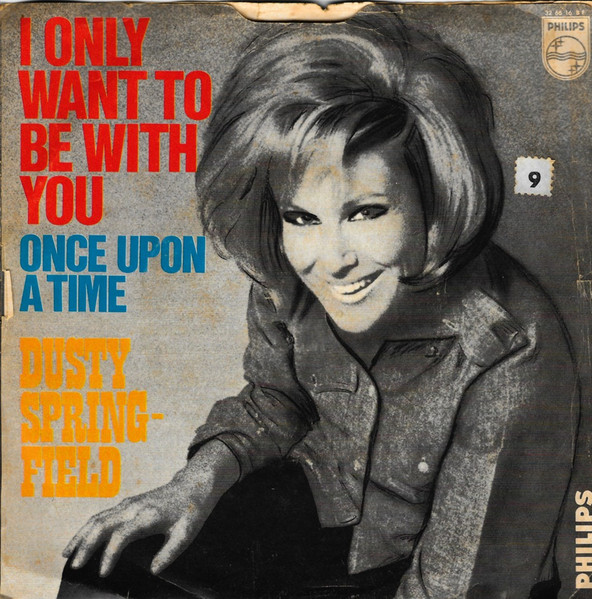
Mary Isobel Catherine Bernadette O’Brien isn’t the best name for an artist, and to be honest, I don’t know why anyone would need four first names, but that’s what Dusty Springfield was given by her parents. Dusty started her singing career as Shann Lana as a part of The Lana Sisters, then left in 1960 to form The Springfields with her brother and a friend. This is when she took the stage name Dusty Springfield. The Springfields did experience some success in the short time they existed, being voted the Top British Vocal Group by the magazine New Musical Express in 1961 and 1962, and scoring two big hits with Islands of Dreams and Say I Won’t Be There.
Dusty’s solo debut arrived this month in the form of I Only Want to Be with You, a well-known song produced after Phil Spector’s “Wall of Sound” ideas. The song is something of an obvious hit if you ask me, super catchy, impossible not to sing along to, and Dusty has a great voice for this kind of pop music. Not only was it a hit in the UK, where it peaked at #4, but it also followed I Want to Hold Your Hand into the US charts, peaking at #12, making it one of the tracks leading the British Invasion together with The Beatles.
The song was written by Mike Hawker, supposedly just after he married Jean Ryder, and they intended for it to be released by her. Those plans never realized, though, and when John Franz, the A&R director of Phillips Records, called asking for a song that was a sure-fire hit for a girl everyone believed would fail, Mike knew exactly what to give him.
The B-side, Once Upon a Time, is written by Dusty Springfield herself, according to Tidal, and is another great tune. In fact, I think it is just as good as I Only Want to Be with You, and it shows that more and more artists are realizing that they can write songs themselves that are just as good as what the “professionals” are doing.
The Rolling Stones released their second single this month, and to my surprise, it’s a Lennon/McCartney composition. Well, it’s not a big surprise, cause I kinda knew they had recorded this one. But it’s still a bit funny that the Rolling Stones were one of the bands that had to use the boys from Liverpool to gain some extra recognition. The song in question is I Wanna Be Your Man, and even though it was released by the Beatles on their album «With the Beatles», which was also released this month, it’s important to note that the Rolling Stones released the song before they did.
This collaboration supposedly came to fruition when Andrew Loog Oldham, or the band themselves, ran into John and Paul on the street, and when the Liverpudlians heard that they were looking for a song, they decided to join them at their session and finished I Wanna Be Your Man right there. The Rolling Stones’ version is a dirty and bluesy version, with a slide guitar as the center of attention. Comparing it with the Beatles’ version, it’s a bit slower, but I do believe I like the Rolling Stones version better.
In the book «All We Are Saying», which is an interview of John Lennon and Yoko Ono by David Sheff from 1980, John Lennon said that the song was a throwaway. A track they didn’t care about, which was why they gave it to The Rolling Stones. But in all fairness, I would say that The Rolling Stones actually made this into a cool song, and maybe The Beatles didn’t manage to make it as cool as it could have been.
The B-side, Stoned, is the first song the band released that was composed by the band itself, credited to Nanker/Phelge, which was a pseudonym they used early on for the group. It’s an instrumental tune with Mick Jagger spouting some words now and then. I guess the only really interesting thing about this one is the reference to drug use. Other than that, it’s kinda forgettable.
The song Surfin’ Bird is probably best known by contemporaries of mine from the TV show «Family Guy», where it has become a recurring gag/joke, or maybe from the movie «Full Metal Jacket». But its origin hails from 1963 and the band The Trashmen. This surf band hails from Minneapolis, a city that’s not known for surfing, or water for that matter, but I guess they could take the two-hour drive up to Lake Superior for some winter surfing if they wanted to.
Personally, I would call Surfin’ Bird one of the most annoying songs ever to be released, but it was greeted pretty well when it was released and peaked at #4 on the Hot 100 chart. It has also been covered multiple times throughout history. According to Wikipedia, the song is a combination of two R&B songs by the Rivingtons, namely Papa-Oom-Mow-Mow and The Bird’s the Word. The song was supposedly first released while credited to The Trashmen, but after the threat of a lawsuit, that was changed to The Rivingtons.
On the flipside, they got a song called King of the Surf, which is more of a regular surf rock tune and is absolutely my favorite on this single.
The last time I wrote about Dick and Dee Dee was either when they released The Mountain’s High in 1961 or when the song charted in 1962. This month, they’re out with a new tune called Turn Around. It’s a nice tune, described as folk by some and pop by others, but I would say it’s a ballad within the pop genre. It’s a slow burner, meaning that it took me quite a few times before it started to sound even a little bit good, but it did grow quite a bit on me over time. It’s not at all my favorite song this year, but maybe in the top 20 when it comes to ballads.
The song charted at #27 on the Hot 100 chart, peaked at #23 in Canada, and reached its highest chart position on the adult contemporary chart, stopping at #15. I guess that’s what they would call a minor hit. The B-side is called Don’t Leave Me, and it’s nothing special.
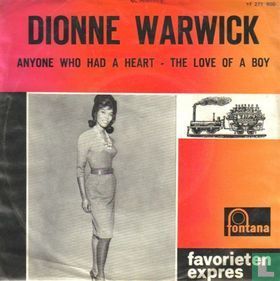
Dionne Warwick blew me away with her debut album, «Presenting Dionne Warwick», back in February, and since then she has released two singles, This Empty Place and Make the Music Play, both of which appeared on the debut album. This month, she’s releasing new material in the form of her latest single, Anyone Who Had a Heart. The song is written by Burt Bacharach and Hal David, who wrote most of the songs on her debut album, which has to be seen as a good sign.
Even though I loved everything about her debut album and would consider it one of the best albums released in 1963, it didn’t receive the kind of recognition it warranted. It did, however, chart at #14 in the UK, so it wasn’t completely overlooked. And the first single, Don’t Make Me Over, peaked at #5 on the R&B chart in the US. But that’s the high points of her career so far, and in my opinion, she has deserved far better.
Her new single changes that, though. «Anyone Who Had a Heart» will become her biggest hit so far, becoming a crossover hit, reaching the Top 10 on the Hot 100, R&B, and adult contemporary charts. It would also chart in the UK, Australia, Canada, Germany, and peak at #5 in the Netherlands. It’s well deserved, of course, cause Anyone Who Had a Heart follows in the same vein as her debut album, and could just as easily have been a part of it. Which is my way of saying that it is yet another great tune from Dionne Warwick
The B-side is the song The Love of a Boy from her debut album. It’s a great tune, obviously, from one of the best R&B/soul artists out there at the moment.
The Dave Clark Five started as a band in 1962, and since then they have released five singles. I’m not sure how many of them I’ve managed to write about, but so far, the only one that’s seen some recognition is Do You Love Me, which peaked at #30 in the UK and #5 in Canada. This month, they’ve got quite a banger up their sleeve with the song Glad All Over, written by Dave Clark and Mike Smith, and produced by the band themselves. The song is a cool rocker driven by Dave Clark’s thumping drumming and Mike Smith’s great vocals.
The song became their first #1 single in the UK, and it also hit the top spot in Ireland and New Zealand. In addition, it made the Top 10 in Australia, Canada, the Netherlands, and the US. So to say that this was the band’s breakthrough single is an understatement.
Glad All Over is absolutely in contention for being one of the best songs of 1963, and with the B-side I Know You, another banger, The Dave Clark Five has released a great two-sided single to wrap up their second year as a band.
You Were Made for Me is Freddie and the Dreamers’ third single, and their third single to hit the Top 10 in the UK. That’s, of course, quite an impressive start for this band, and proves that they offer something that a lot of people are into. I’m not necessarily one of those, as I find the sound they’ve got quite weak and unimpressive, but that doesn’t mean I don’t understand why this song became a hit. It’s kind of rock and roll for people who don’t like rock and roll, if that makes sense, like Cliff Richard. It’s an easy song to sing along to, which I guess proves that it’s catchy, but other than that, I’m not really impressed.
On the flip side, they’ve got a tune called Send a Letter to Me, which is a ballad. It’s ok, but I can’t find a lot of information about it.
The Murmaids became a one-hit wonder this month with their song Popcicles and Icicles, written by David Gates, who would become the frontman of the band Bread in the future. It peaked at #3 on the Billboard Hot 100, and was paired with a tune called Comedy and Tradgedy.
The Ronettes follow up their first hit Be My Baby with Baby, I Love You, and I guess we can see the start of a pattern in those song titles. The Ronettes released four singles without any success before moving to Phil Spector’s label Philles Records in 1963 and hitting the charts immediately. Baby I Love You was not as big a hit as Be My Baby, but I would call it a decent follow-up, peaking at #24 on the Hot 100 chart and at #6 on the R&B chart.
On the B-side, Phil has once again added an instrumental track by the Wrecking Crew, which I would say is completely out of place. This time it’s a jazzy rock tune with no connection to The Ronettes at all, and it actually makes this single less interesting. The track is called Miss Joan and Mr. Sam.
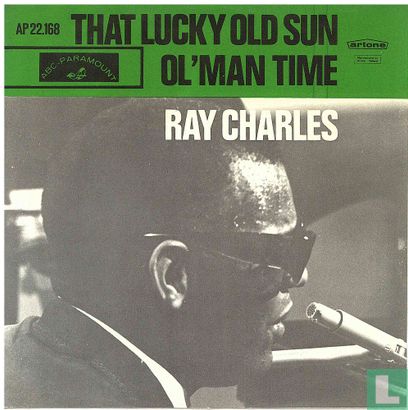
That Lucky Old Sun was originally released by Frankie Lane in 1949, but this time it’s Ray Charles’s turn to give That Lucky Old Sun a go. It was actually first released by Ray back in September as a part of his album «Ingredients in a Recipe for Soul», but I unfortunately overlooked that one. Ray’s version is beautiful and soulful, even though I think it’s a very tough song to sing along to. It’s probably tough because Ray is an amazing singer and musician, and I’m just some random dude who probably shouldn’t sing too much in public. The point is that this is a great song, and even though it’s difficult to sing along to for someone with no talent, it’s still a beautiful piece of music. I’m not sure how well this song was received as I haven’t found much information bout it, but I reckon it at least hit the R&B charts.
The B-side, Ol’ Man Time, was released as a part of the same album and is a much more uptempo song than the A-side. I really like Ray in this kind of setting as well, so all in all, this is a great release.
Johnny Kidd and the Pirates score their seventh hit in the UK with their latest single Hungry for Love. The band went all in and dressed as pirates on stage, including eye patches, and scored their biggest hit, Shakin’ All Over, back in 1960. Their latest single is also good, and it’s pretty damn hard to get it out of your head after listening to it a couple of times. The group plays rock’n’roll music, and this single is influenced by the Merseybeat music.
The B-side, Ecstasy, is a different kind of rock’n’roll than the A-side, a bit rougher, more bluesy, and less focused on harmonies. Both sides are worth listening to, and both of them let me look past the fact that they dress up as pirates.
The fact that The Roulettes is best known as the backing band for Adam Faith, and that their own recordings never amounted to anything, is a bit weird. Cause their single, Soon You’ll Be Leaving Me, is really good and without a doubt at the same level as a lot of the other British rock bands emerging at the moment. It’s fast, catchy, melodic, everything you really want from rock bands in 1963. But I guess it just wasn’t meant to be for The Roulettes.
The song is paired with a track called Tell Tale Tit, which is a title I’m struggling with as I’ve never heard that expression before, and it seems kinda childish. If you can manage to look past that, though, it’s actually a pretty good song as well. So, the Roulettes might not have received much attention back in the ‘60s, but at least I can try to give them a little kick in the ass more than 60 years later. They probably won’t do a reunion tour, though.
UNKNOWN RELEASE DATE
The Norwegian artist Roger Engvik had a very short musical career in the ‘60s, releasing four singles, of which one of those was Kem har tatt min fena. The song peaked at #8 on the Norwegian chart and is a kind of novelty song, I guess. I mean, he’s singing about someone stealing his Norwegian-style salted meat. It’s not awful, but I’m not gonna recommend it to anyone either.
The B-side is a track called Ein glad god cowboy, and I guess both of them are in the genre country/folk, but in Norway we call it “viser”.
Salhuskvintetten Olkabilamo (better known as just Salhuskvintetten) is another Norwegian act, and they’ve been singing together since 1950. They did, however, not sign a record contract until 1962 after their song Singel og sand was played on the radio (which I wrote about in April 1963) and the Norwegian record company Norsk A/S Philips took notice. Their latest single is called Fiskarlåt and is on par with what most of the Norwegian artists are doing at the moment. I’m struggling to call it folk music, but I guess it is Norwegian folk music, and thus I shall call it what it is. The single was paired with a tune called Den gong eg var ungkar.
The Beatniks are yet another Norwegian band, but this one is not like the traditional ones. The Beatniks are part of the younger generation making music in Norway in the ‘60s, mostly influenced by The Shadows and mainly creating instrumental music. The Shadows were apparently so big in Norway (and Sweden) that many bands competed in a competition called ‘Nordisk mesterskap for Shadowsband’ (Nordic Championship for Shadows bands), a competition that The Beatniks won this year. This is very Nordic in my opinion, and very laughable.
The main man of The Beatniks, Svein Finjarn, is actually the father of a girl I work with, and a drummer (not joining the band until the ‘80s) lived where I grew up, and we used to skate on an abandoned parking lot where the Beatniks’ tour bus used to park. So I’m gonna try to get in touch with some of those guys at a later release.
For now, I’ll mention that they released a song called Under Paris’ himmel in 1963, an instrumental track in the style of The Shadows, which isn’t incredibly interesting. On the flip side, they’ve added a track with vocals called Don’t Go Away From Me, which I guess was written after they saw The Beatles in Sweden. Out of the two tracks, it’s the B-side that comes out as the more exciting one, and shows an important switch on the Norwegian music scene.
This next single is a tune that got me hooked on France Gall about fifteen years ago. Ne sois pas si bête came into my life and turned it a bit upside down, as up until then, I’ve been so focused on new music that I never really looked back anymore. And what feels like out of nowhere came this French girl from the ‘60s and altered my focus on music completely. I started buying up all the France Gall LPs I came across, and even paid €100 for one that I found in some hidden record shop in Marseille, France. So yeah, to say that I like France Gall’s single, Ne sois pas si bête, feels superfluous at this point.
The song is a French version of Stand a Little Closer released by The Laurie Sisters sometime during 1963, and it also sounds a lot better than the original. France Gall released it as a single in 1963 and in 1964, with two different B-sides, and it was released as the main song on a 7″ EP in 1963 with two tracks on each side. The EP included the tracks Ca va, je t’aime, J’entends cette musique, and Pense à moi, where the latter ones served as B-sides on the two singles.
These four tracks make for a great EP and showcase France Gall with both uptempo tunes and a ballad. I’m very fond of Pense à moi, particularly the characteristic bridge/solo towards the end where France Gall sounds out the entire thing with her voice.
Back in June, Major Lance released a great single called The Monkey Time. It was written by Curtis Mayfield, and I was genuinely happy when I discovered it. But I gotta say that I’m very surprised that his latest single, Hey Little Girl, is basically the exact same song with different lyrics. There are some minor differences in the composition, especially in the chorus, and it’s sung differently, but the basic tune is exactly the same, and it’s very hard to look past. Obviously, Hey Little Girl is also a great song, but it suffers a bit from being a replica of his last single. I’m kinda baffled as to why they would do this cause there was no need to repackage «The Monkey Time» as it became a hit, entering the Top 10 on both the Hot 100 chart and the R&B chart. Hey Little Girl, however, peaked at #12 on the R&B chart.
Crying In the Rain, which can be found on the other side of this single, is not a repurposed song and was written by Major Lance himself, together with Christoper Jones and a guy listed as O. Cobb on Tidal. Crying In the Rain is yet another good song from Lance, and in my opinion, should have been the A-side for reasons mentioned above.
Dora Bryan was a British actor, and I’m not gonna waste much time on her. The only reason I’m bringing her up is that she released a Christmas song in 1963 called All I Want for Christmas Is a Beatle, which I believe is one of the first songs written about The Beatles. It’s just a novelty Christmas song, so nothing to get too excited about, but it’s still an interesting anecdote in music history.
A Swedish band called The Shanes, another band that has modeled itself after The Shadows, released their debut single, Gunfight Saloon, at some point in 1963. The tune is written by the two guitar players, Staffan Berggren and Tommy Wåhlberg, and is a pretty standard pop instrumental. Catchy enough, but nothing special. It peaked at #10 on the Swedish chart ‘Tio I Topp’. The B-side is called The Ripper and is a bit cooler, clocking in at 1 minute and 35 seconds.
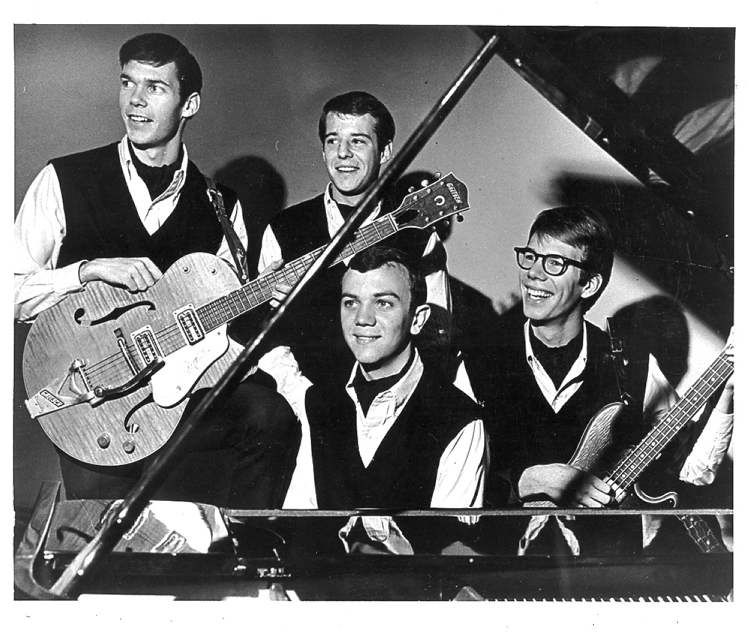
Neil Young enters music history with The Squires’ first and only single release, The Sultan, in 1963, starting a prolific career in a modest way back home in Canada. I gotta say that there isn’t much here that would have convinced me that someone in this band would go on to be a superstar, but it’s still very interesting to hear where Neil Young started. The Sultan is an instrumental pop/rock tune in the vein of The Ventures/The Shadows and is supposedly written by Neil Young (it’s credited to The Squires). I’m not sure what anyone would have to do to stand out in this genre, but so far I’d say that if you played a bunch of songs from any of these bands in random order to someone who never heard them, they wouldn’t be able to tell them apart. Maybe that’s why I’m not such a big fan. The Sultan is a nice tune, though, and while it’s probably not gonna be a recurring song on my playlists, it is worth checking out.
The band hailed from Winnipeg and did most of their live sets there, but ventured out of town to the surrounding areas when the opportunity arose. Even though this was the band’s only release, they played together until 1965, according to Wikipedia. Whether Neil Young stuck with it til the end is unknown to me.
On the flipside, we’ll find a tune called Aurora, and I can’t really say anything about this tune that I didn’t say about the first one. Only 300 copies were printed of this release, so in 2024, it is a sought-after collector’s item and has been bought for as much as $1500 on Discogs. There are also two copies for sale on Discogs, but to get any of those, you need to pay at least $3000.
Dionne Warwick’s sister, Dee Dee Warwick, started her own recording career in 1963 with the earliest recorded version of the song You’re No Good (it will later, in a decade or so, become a major hit for Linda Ronstadt). I actually had no idea that anyone had recorded this before Linda Ronstadt, but it turns out that at least three acts have done just that. Dee Dee’s original version is a somewhat percussion-driven R&B tune that might come off a bit staccato at first, but as soon as the song settled on me, it sounded perfectly fine. I found this one pretty easy to like, as I’ve listened to Ronstadt’s version countless times, and I was very happy to find that Dee Dee had recorded it first, all the way back in 1963. The song was produced by Jerry Lieber and Mike Stoller, and written by a dude called Clint Ballard Jr. It was not a big hit for Dee Dee, peaking at #117 on the US chart, and she’s not gonna release any new music until 1965.
This one was paired with another Ballard Jr. written track called Don’t Call Me Anymore, which is also pretty great. I’d say Dee Dee delivered quite well on her first try, and it’s a shame it didn’t kickstart her career back in 1963.
The Chiffons are back with a tune called I Got a Boyfriend, written by the songwriting duo from The Raindrops (debut album mentioned above), Ellie Greenwich and Jeff Barry, and the group The Tokens. It’s a mix between doo-wop, soul, and R&B, and it’s quite nice. According to Wikipedia, it seems like this will be The Chiffons’ last big hit, peaking at #6 on the R&B chart and at #36 on the Hot 100 chart. I’m pretty sure I’ve heard this song a bunch of times before, but I struggle to place it, and I can’t find too much information about it either.
It was paired with another ok tune called I’m Gonna Dry My Eyes.
‘The Queen of Rockabilly’ has changed pastures and is now looking to become the queen of Country music. But if Wanda Jackson wants to claim that title, she has to do better than Slippin’. It’s not really a bad song at all, but nine out of ten times when it plays on my playlist, I think a Brenda Lee track has found its way into the mix. Not only does the song sound like a typical Brenda Lee track, but Wanda even sounds like Brenda Lee singing. So yeah, even though Slippin’ is an ok Country tune, it’s not enough to claim any titles. It did peak at #36 on the Country chart.
The B-side is a tune called Just For You.
Since the start of the ‘60s, Bobby Bland has hit the Top 10 on the R&B chart with nine out of eleven singles, and even with one B-side, so I guess it’s safe to say that this decade has been a good one for him so far. His latest single, The Feeling Is Gone, did not fare quite as well, but it did peak at #91 on the Hot 100 chart. The B-side, I Can’t Stop Singing, peaked at #106 on the same chart.
I remember writing about Bobby’s debut album back in 1960, where I lamented the fact that he didn’t get the recognition he deserved, but it seems like I didn’t research him very well before making that statement. I guess I thought he hadn’t been getting what he deserved only because I hadn’t heard any of his music myself, and that’s not a good thing to base any statements on. Anyway, even though this single wasn’t very successful, the two songs released are a great showcase of Bobby’s mix of gospel, blues, and R&B, and while it’s not some of his greatest tracks, I can still listen to them over and over without getting sick of them.
Ned & Nelda’s single, Hey Nelda, is an early project by Frank Zappa, which I believe was obscure already when it was released. I guess I should call it a novelty single, but knowing Frank Zappa, it’s kind of hard to just label it as that as well, so I guess that’s for everyone to decide for themselves. The song is mighty silly, though, with Zappa appearing as Ned and a guy called Ray Collins as Nelda. I guess Ned and Nelda are struggling with their love and spend the track trying to figure some stuff out. It’s pretty hard to catch every word being sung/spoken/yelled on this track, but it’s pretty obvious that it is created to produce laughter from the listener.
I’ll be honest, though. It’s not a good song. I enjoy it because it shows some of what Zappa was doing before he became known in his own right, but I believe the only reason I’ll ever listen to this one again is to show it to others who might have some interest in Frank Zappa. The B-side is called Surf Along, and at the end of the track, you can actually hear Zappa crack and start laughing cause this one as well is just fucking silly. However, this feels more like mockery than novelty, and I can dig that more than any polished novelty track.
The single is a collector’s item and has been sold for $1000 on Discogs, and there are only eleven self-proclaimed owners of this release on that site.
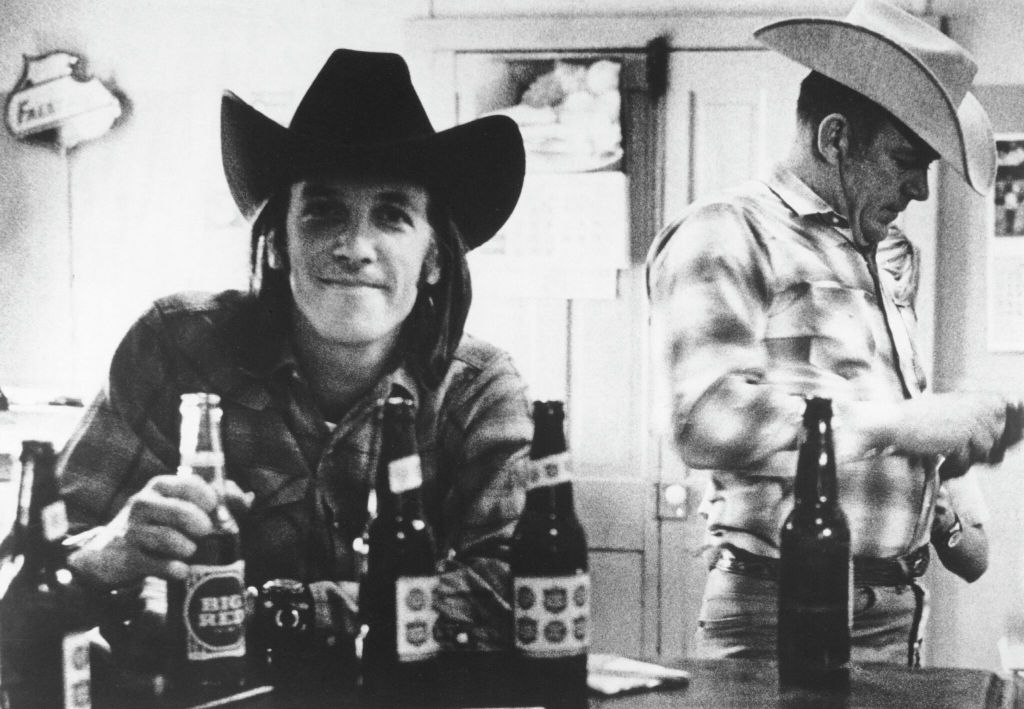
I was introduced to Doug Sahm by my father as he was a huge fan of him and his music. Together with a bunch of his friends, he created a sort of fan club called Sahmorg (not sure if I’m spelling that right), where they supposedly met up, listened to Doug Sahm’s music, got drunk, and talked about whatever crazy thoughts popped into their heads about anything Doug Sahm. They still meet every now and then, so I might have to call some of them and bask in their knowledge about this great artist.
But considering that his career hasn’t really gotten its wings just yet, I’ll rely on whatever information I’ll manage to dig up elsewhere for now. So Doug is said to have been a child prodigy when it comes to the steel guitar, and at the age of six, he performed a song on a San Antonio radio station. When his mom signed him up for music school, the teacher supposedly turned him down as he couldn’t teach him to read music, and the fact that Doug could already play by ear. At the age of eight, he began appearing on the Louisiana Hayride as “Little Doug”, and at the age of thirteen, he was offered a spot on the Grand Ole Opry (which his mother turned down). So by the age of thirteen, Doug seemed destined to end up as a musician, already taking strides that most musicians won’t experience until they are much older.
In 1955, at the age of fourteen, he released his first single, A Real American Joe / Rollin’ Rollin, under the name Little Doug, without much coming of it from what I can figure out. In the following years, Doug focused on playing music live in San Antonio and seemed to have enjoyed some success doing just that. It looks like he played with at least three different groups at the start of the ‘60s, releasing the songs Why, Why, Why, and Baby Tell Me / Sapphire as Doug Sahm & The Markays, If You Need Me as Doug Sahm & The Pharaohs, and More and More / Slow Down as Doug Sahm & The Dell-Kings between 1959 and 1961. Then followed three solo singles in 1961 and 1962, Makes No Difference, Can’t Believe You Wanna Leave, and Two Hearts In Love, which leaves us here, in 1963.
According to Discogs, he released three singles in 1963, so I’ll try to at least mention them all before I wrap up this year. Early this year, he released the single Just a Moment, which is a great ballad that shows off his great voice. The music is taken care of by Spot Barnett, and I guess there’s not much here that hints at what kind of music Doug Sahm will be excelling in later, but it’s still a great track. This one is paired with Sapphire, which he previously released with The Markays. He’s also released the song Little Angel paired with Cry at some point. Two good singles from Doug Sahm, and it seems like I’m up to speed with his career.
THE CHARTS
Billboard Top 10 Singles Chart
Week 1 (November 2, 1963)
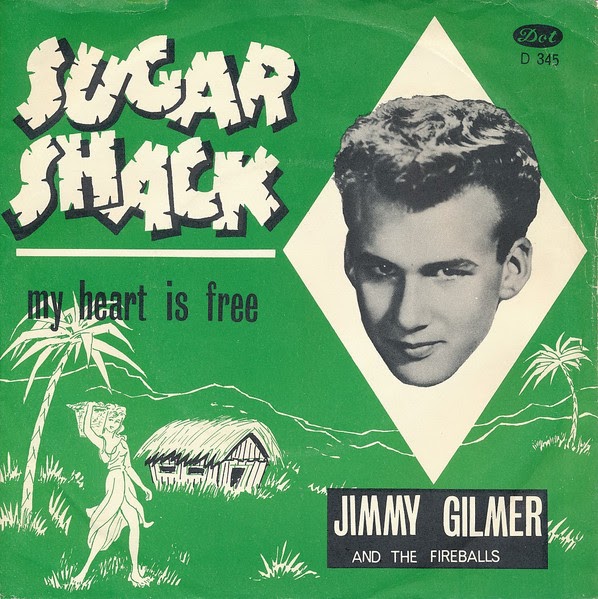
- Sugar Shack – Jimmy Gilmer and The Fireballs
- Deep Purple – Nino Tempo & April Stevens
- Washington Square – The Village Stompers
Week 2 (November 9, 1963)
- Sugar Shack – Jimmy Gilmer and The Fireballs
- Deep Purple – Nino Tempo & April Stevens
- Washington Square – The Village Stompers
Week 3 (November 16, 1963)
- Deep Purple – Nino Tempo & April Stevens
- Sugar Shack – Jimmy Gilmer and The Fireballs
- Washington Square – The Village Stompers
Week 4 (November 23, 1963)
- I’m Leaving It Up To You – Dale & Grace
- Washington Square – The Village Stompers
- Deep Purple – Nino Tempo & April Stevens
Week 5 (November 30. 1963)
- I’m Leaving It Up To You – Dale & Grace
- Dominique – The Singing Nun
- Washington Square – The Village Stompers
The only new addition to the Hot 100 Top 10 this month is a song called (Down At) Papa Joe’s by The Dixiebelles. It’s an old-timey song that sounds like something you could hear at a show back in the old west with some ladies kicking their legs in big dresses and showing off some skin. The group will go on to release two more singles and one full album. After that, they will be done.
COUNTRY CHART
The Matador was released by Johnny Cash in September this year, but it looks like I missed it. It’s a song written by him and June Carter Cash, with some of those Mexican/Latin trumpet sounds he’s used before. It’s a pretty great Cash tune that I don’t think I’ve heard before, which makes it even more interesting. It peaked at #2 on the Country chart and will appear on a Johnny Cash album in 1968.
Webb Pierce’s Those Wonderful Years is a beautiful country song written by Don Schroeder and Webb Pierce. It was released as the B-side to «If The Back Door Could Talk» sometime in 1963. It’s one of those cøassic country ballads, but it has something special that makes it a really great listen. It stopped at #9 on the Country chart, just breaking into the Top 10.
R&B CHART
Billboard Magazine stopped publishing the R&B chart in 1963, and it was down at least through 1964. I might add the Top 10 additions from another R&B chart in 1964.
Petter Milde
This Band Could Be Your Life

