The most interesting thing that happened in December 1963 was the kidnapping of Frank Sinatra, Jr. Some guys decided that they wanted a quick payday from Frank Sinatra, Sr., and executed a pretty simple plan to kidnap his son.
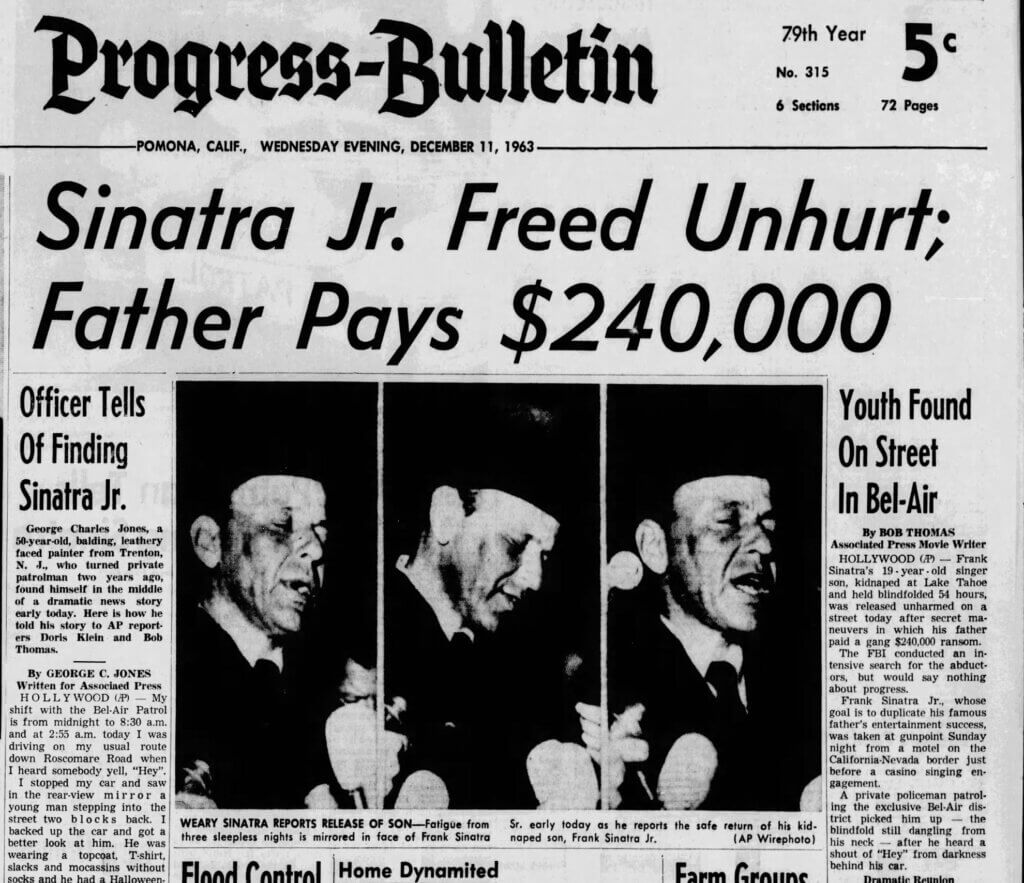
Frank Sinatra, Jr. had just started his music career and was playing a show on the border of California and Nevada when the kidnappers set their plan in motion. Barry Keenan and Joe Amsler knocked on Sinatra, Jr.’s dressing room, pretending to deliver a package, and left through a side door with a blindfolded kidnapping victim. They also tied up a friend of Sinatra, Jr. who they left in the dressing room. The friend managed to free himself pretty quickly, though, and he notified the authorities, who set up roadblocks to stop the kidnappers. Funnily enough, the police stopped them, but they managed to bluff their way through the roadblock with the singer in the trunk.
After the kidnappers reached their hideout, they got a third guy, John Irwin, to call in the ransom. They demanded $240,000 from Frank Sinatra, Sr., which the FBI suggested he pay so they could track the money. After the money was delivered to a drop location and Keenan and Amsler went to pick it up, Irwin got nervous and released Sinatra, Jr., who was driven home by a security guard he notified after walking a few miles.
Junior couldn’t say much about the kidnappers as he had been blindfolded the entire time, but he had heard three voices. It didn’t take long for the FBI to track the clues back to the safe house, though, and there they found more evidence that could point towards the kidnappers, including some fingerprints. It was Irwin who felled them all, though, as he ended up telling his brother what they did, who in turn called the FBI. Some hours later, all three men were captured, and almost all the money was recovered.
The kidnapping is called one of the most infamous kidnappings in American history, though recounting it here actually makes it seem pretty dull. That being said, I’m glad the Sinatras were reunited and that everyone came out of it with their limbs intact.
In Jamaica, Coxsone Dodd opened his Studio One, a simple one-track studio and pressing plant which will go on to produce hits by artists such as Toots and the Maytals, and the Skatalites. The studio also employed a young Bob Marley as a writer and performer. If my sources are correct, this was also the first black-owned studio in Jamaica, making it even more important on a sociopolitical level as well.
December also welcomed the likes of Brian McClair, who will go on to have a fantastic football career at clubs like Celtic and Manchester United, Brad Pitt, who will star in movies like «Seven» and «Fight Club» among countless other movies, and Lars Ulrich, the Danish drummer who will be best known for his drumming for Metallica and his crusade against Napster.
THE MAGAZINES
POP WEEKLY
(weekly magazine from the UK)
The weekly fan magazine from the UK wrote a small mention about a girl group called The Orchids in its first publication this month. It touted the group, consisting of two 14-year-old girls and one 15-year-old girl from Coventry, as this year’s big thing. The group had just released their debut single, Love Hit Me, performed on “Ready, Steady, Go!”, and received quite a lot of airtime on the radio. The song never became a hit, though, and while they still continued to try, being signed to Decca and all, the group called it quits in 1965.
In their second publication this month, the magazine could announce that he Rolling Stones had been signed up to join the Robert Stigwood spring tour in 1965. A four-week tour of the major theatres in the larger towns throughout Britain. Other artists/bands on this tour would be John Leyton, Mike Sarne, Mike Berry, and a girl who was now fully recovered from a car crash, Billie Davis. I gotta admit that I haven’t heard of any of the latter artists, but the magazine can assure everyone that more artists will be added to the tour.
In the December 21st edition, they’ve chosen Bing Crosby’s Do You Hear What I Hear? as their “Boquet” of the week, which I would guess is their favorite new single this week. It was released last month, and as I missed it, I thought it was a good idea to bring it up through Pop Weekly, cause it is a pretty nice Christmas tune.
In the same issue, we can read about a new band called The Paramounts, which has released their debut single Poison Ivy recently and signed a recording contract with Parlophone. The tune is a cover of The Coasters, and I gotta say that I’m loving it. The band sounds great, and the tune is pretty awesome. It’s a piano- and guitar-driven rock song that sat with me without even trying, and I can understand why Pop Weekly would write a piece about this band, as it sounds like a great band in the making. According to Wikipedia, the band is best known as a precursor to Procol Harum, but The Paramounts will release music under their current name for a few more years. «Poison Ivy» peaked at #35 on the UK chart.
BEAT
(monthly magazine from the UK)
Beat Magazine’s December issue could tell me that I missed Brian Poole and the Tremeloes’ latest single I Can Dance, the first release from this band that isn’t a cover. The tune isn’t written by the band, though, but rather by a guy called John Jeeves, who wrote the song for the group. It’s just a rip-off of Do You Love Me by The Contours, which Brian and the Tremeloes have already covered, so it’s a bit weird, to be honest. Brian Poole is quoted in the magazine saying, “…we’ve really done a lot of research into what the fans want…and they all seem to go for the ‘Do You Love Me’ kind of belter”, so it doesn’t really seem like a coincidence either. They seem to have gotten away with it, though, but the single didn’t become their third in the Top 10, as it peaked at #31 in the UK.
BILLBOARD
(weekly magazine from the US)
In its first edition this month, Billboard writes about how the female artists are making their move to take over the Hot 100 chart. They point out that in the ‘50s (in what they call the era of the hard rock), the girl artists virtually disappeared from the charts, then later reappeared as backup singers for other artists hitting the charts. In the ‘60s, though, the backup singers started emerging as groups in their own right, with names like The Cookies and The Crystals hitting the charts with their own recordings. And now they’re starting to prove that they belong in the charts. Billboard explains that out of the twenty records that have hit the #1 spot in the Hot 100 this year, more than half of them involve girls either as part of a mixed vocal group or by themselves.
In the Christmas Albums best-seller list this edition, we’ll find Elvis Presley’s 1957 album «Elvis’ Christmas Album» still going strong. So far this year, it is the 9th best-selling Christmas album, and it has made it into the charts every year since its release, selling approximately 3 million copies so far.
In the Christmas singles chart, we can also find Bobby Helms’ Jingle Bell Rock at #3, which was also originally released in 1957. This one is still being played in 2025, so this is a real classic that seems to be immortal.
In the review section, there are a lot of albums and singles that I haven’t written about, so I’ll just mention the ones that might seem a bit interesting. The only one that caught my eye was an album released by a band called The Avalanches. The album is in the surf rock instrumental genre, but they added a twist to their album «Ski Surfin’», which should be apparent by now. I checked out a couple of tunes from the album, but wasn’t necessarily impressed.
In the third edition of Billboard Magazine this month, we can read that Elvis Presley has received a silver disk for selling more than 25,000 copies of (You’re the) Devil in Disguise in Norway. This is the fourth time Elvis has received the silver disk in Norway since the newspaper Arbeiderbladet started giving them out in 1960. Billboard also mentions the Norwegian band The Vanguards in the same section, citing that the band is out with their new single En liten gylden ring / Twist Little Sister, and that they are very popular in Norway. That’s a big thing for a band from Norway at the time, just to get a mention from Billboard Magazine.
In Billboard’s last issue of the month, they mention that “Beatlemania” is coming to the US, and even though the Beatles haven’t been to the US yet, the publicity ruckus stirred up so far has been of major proportions. The Beatles will arrive in the US in February next year when they’ll appear on The Ed Sullivan Show, something Sullivan supposedly considers a coup.
THE ALBUMS
HERB ALPERT & THE TIJUANA BRASS – VOLUME 2
According to an interview in Off Beat Magazine from 2017, Herb said that he found his sound after hearing Les Paul multitrack his guitar, and trying the same with his trumpet. And after a debut album that eventually sold incredibly well (staying in the album chart from 1965 to 1968), he found something that was missing in American music, mainly Mexico. And what Herb is offering the listeners is very specific. It’s brass music with Latin influences, a very Western/white take on mariachi music, if you like, and while it shouldn’t really be something I like, considering my preferences, I find myself weirdly content while listening to his music.
«Volume 2» doesn’t deviate much from the debut album released last year, but there are more pop covers on this one. I guess the album might be more relatable in a sense, especially for the American audience, with tracks like America, Spanish Harlem, and Swinger from Seville, which apparently is a strip-tease tune. But yeah, it’s still in the same vein, and even though the debut is the better one of these two, «Volume 2» has a great ambiance to it.
So even though Herb Alpert doesn’t play music for the masses in the common way, his journey through Mexico has found an audience and even manages to keep me entertained. The music is easy to listen to, and some of the tracks might even be worth a spot on some of my regular playlists. Considering this is just his second album, and that some of his later ones will garner even more success, Halpert’s career is definitely something to keep tabs on.
«Our Man In Paris» is named as such only because Dexter Gordon recorded the album in Paris, France. Dexter had moved to Copenhagen, Denmark, a year earlier and left for Paris to record with a group of jazz musicians who had also left for Europe to continue their career. The album was hailed as outstanding by multiple reviewers such as All About Jazz and The Penguin Guide to Jazz, and has been called a classic. It’s an album consisting of jazz standards, even though Dexter Gordon planned for it to be an album of originals. However, Bud Powell, the pianist, supposedly refused to play anything but standards, so I guess Bud was important enough for this record that his demands were met.
The album is a pretty good jazz album, I’ll agree to that, but I find myself liking the piano a lot better than Dexter’s saxophone. At times I can actually become a bit stressed out by Dexter’s playing, and Bud’s piano kinda jumps in and relaxes me a bit. It’s a back and forth that doesn’t suit me very well, and kinda makes the album a bit difficult to listen to. But I guess we should take the jazz professionals’ word that this is a great album, and leave my whining a bit in the background. I would recommend checking out the Charlie Parker original Scrapple From the Apple and Dizzy Gillespie’s A Night in Tunisia to get a feel for this album.
STONEWALL JACKSON – I LOVE A SONG
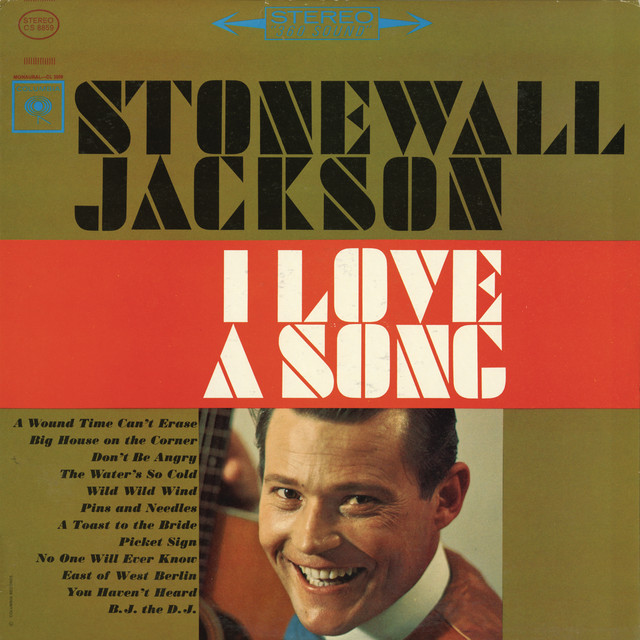
Stonewall Jackson is named after the Confederate General Thomas “Stonewall” Jackson, and that’s a pretty bad way to be introduced if you ask me. But he didn’t choose this name, and I haven’t read anywhere that Stonewall Jackson, the musician, would risk his life to keep slavery legal, so I’m not gonna keep that against him. And I guess a lot of these country artists might be sympathetic towards the Confederacy anyway, so I’m not gonna let that dictate who I write about. I am gonna talk shit about those who are, though- don’t get me wrong, but I’m not gonna make it my mission to figure out which ones that were.
According to Opry.com, Stonewall went to Nashville in 1956, planning to try his luck in the music business. He checked into a small motel across the street from Acuff-Rose Publishing, one of the biggest publishing firms in Nashville at the time, and walked in to see if anyone would talk to him. He played three songs for a guy called Wesley Rose, supposedly one of the best connected men in Nashville’s music industry, and he brought him down to the Grand Ole Opry where he signed a member’s contract. The Opry founder, George D. Hay, and manager W.D. Kilpatrick, whom Stonewall auditioned for, then helped him secure a recording contract with Columbia Records.
Two years later, he scored his first hit with the song Life to Go, written by George Jones, and his next single, Waterloo, became his first #1 on the country chart. The single sold over one million copies and even peaked at #4 on the Hot 100 chart. Since then, including 1963, all the singles Stonewall has released (15 songs, if my information is correct) has ended up in the Top 40 on the country chart, including Why I’m Walking (#6) and A Wound Time Can’t Erase (#3). I’d say that’s a damn good track record for a Country artist.
His next #1s won’t be a reality until next year, but as luck would have it, both are part of his latest album, «I Love a Song». BJ the DJ and Don’t Be Angry will both reach the #1 spot at different times in 1964, and they are both good tracks. I can’t say that there’s anything special about this album, though; it’s good and all, and a pleasant listen all the way through, but that’s about it.
STEVIE WONDER – WITH A SONG IN MY HEART
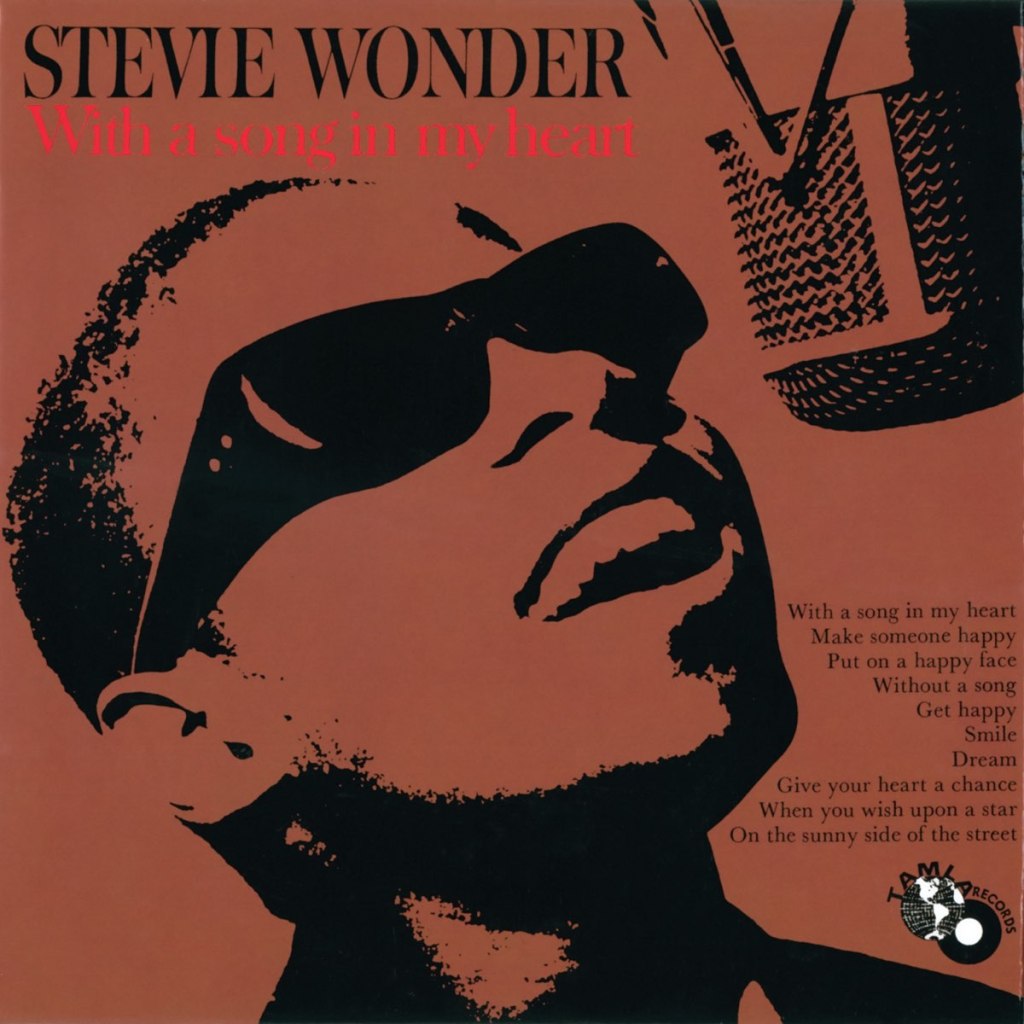
From now on, Steveland Hardaway Morris is no longer known as Little Stevie Wonder, but just plainly Stevie Wonder. I do believe “Stevie” is something you call a little kid named Steve (or in this case Steveland), so in a sense I guess he’ll be known as Little Steve his entire career anyway, so I’m not sure how much it matters. What does matter is that he’s releasing a new album this month, his fourth, including the live album he released earlier this year.
«With a Song in My Heart» is an album made up of standards and musical numbers sung by this 13-year-old kid who Berry Gordy has high hopes for. Whether pairing young Stevie with these adult contemporary songs was a stroke of genius or not is something I’ll get back to, but it does seem a bit odd to me. However, it has been said that Gordy wanted all his artists to be able to cross over between charts, so that might have been the thought behind this album.
Out of the ten songs on the album, I believe I only know two of them well enough to sing along to. Those would be When You Wish Upon a Star and Put on a Happy Face; however, that is not the case here. It seems to me that Stevie has to sing these songs in a key and tempo that just doesn’t fit the songs. His voice isn’t mature enough to sing them the way he does either, so to be brutally honest, it sounds like something you could hear at your child’s school performance. It’s just not good.
Stevie has already had major success, though, as his single Fingertips, released earlier this year, became the first song ever to top the R&B chart and the Hot 100 chart at the same time. It also made Stevie the youngest artist ever to top the Hot 100 chart. But considering that Stevie is 13 years old, he’s facing some challenges with puberty, mainly his voice changing, and I believe the problems that might occur in this situation are obvious already on this album. Nothing you can do about that, though; just let time do its thing and hope that you’ll come out the other end with a voice that still works. And I’m pretty sure that Stevie will do just fine.
The Impressions released their great debut album, «The Impressions», in August. An album that surprised me and wowed me. Their latest release, «For Your Precious Love…», is not a new studio album, but rather a collection of their earlier works. The album is credited to The Impressions with Jerry Butler, where Jerry Butler is the guy who used to be the lead singer of the group. I’m not sure if this is an album released with The Impressions’ blessing, or if it’s an old record label trying to cash in on their recent success, but either way, it is an album that is worth my time.
The album opens with their first single For Your Precious Love from 1958, a tune that peaked at #3 on the R&B chart. They’ve also added The Gift of Love and At the County Fair from 1958, Señorita I Love You from 1959, and A New Love from 1960. The rest of the tracks seem to be unreleased earlier tracks, and while none of them are as good as the songs recorded for their debut album, it’s at least interesting to hear what The Impressions sounded like before they ended up as the trio they are now.
MILES DAVIS – QUIET NIGHTS
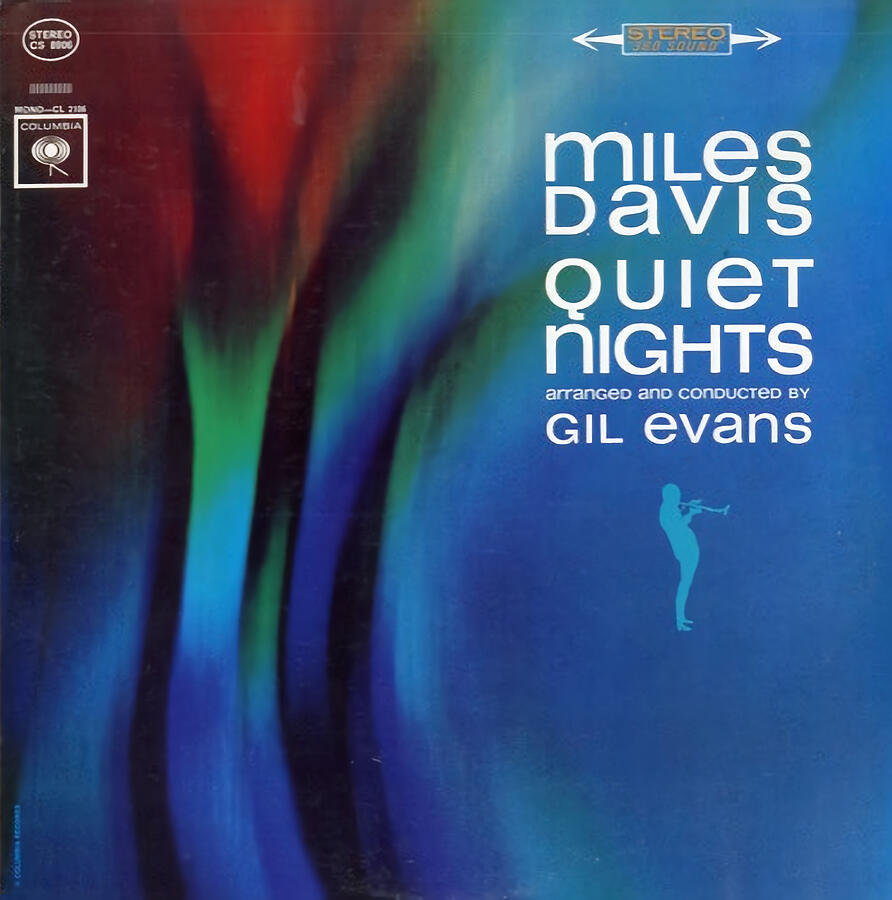
Last time I wrote about Miles Davis, I covered his nonet, when he was still very much at the start of his career. At the beginning of the ‘50s, he was struggling financially and falling deeper into his heroin addiction. At the same time, he was becoming a father again, so things can’t have been easy. While touring with Billy Eckstine and Billie Holiday, he was arrested for heroin possession, which was written about in Off Beat Magazine, making it even harder for him to find work. To say that the ‘50s got off to a rough start for Miles is an understatement, although musically, he was supposedly becoming more and more skilled.
Things seemed to change in 1951 when he was offered a one-year contract with Prestige Records, but in reality, things were probably getting rougher. Miles was still playing music, but mostly to support his heroin habit. He was also living the life of a hustler, exploiting prostitutes and receiving money from friends. As his habit started to affect his music, and an interview in DownBeat Magazine made his drug problem public, he decided to move back to St. Louis and stay with his father for a while, hoping to get his addiction under control. It seems he managed to get things somewhat under control in St. Louis before relocating to Detroit, where he played locally as part of the house band at the Blue Bird club for six months. From what I’ve read, Miles moved to Detroit on some pure junkie logic, thinking that the terrible quality of the Detroit heroin would help him kick his habit. Unfortunately, junkie logic isn’t something you should rely on, and Miles experienced that firsthand. To be fair, though, he did eventually get his head straight while in Detroit, but not without hitting what could be described as rock bottom.
In 1954, he returned to New York. Drug-free and feeling good, he informed Blue Note Records that he was ready to record. The label agreed, and the sessions resulted in the albums «Miles Davis Quartet» and «Miles Davis Volume 2». From here on, Miles’ career would really start taking off, but I’ll get back to that part of his career at a later point. For now, I’ll return to 1963 and focus on his latest release, «Quiet Nights».
Unfortunately, this album isn’t all that great. Personally, I can’t get a grip on any of the songs, and it quickly fades into the background as my attention wanders off to something else while listening to it. «Quiet Nights» is the fourth album on which Miles Davis collaborated with Gil Evans, and it would also be their last. They only managed to record twenty minutes of usable material, though, so to put an album together, the producer, Teo Macero, added a track that had been recorded earlier in 1963. When the album was released in December 1963, it had been about two years since the recording sessions began. According to Wikipedia, Miles was furious that what he considered an unfinished project had been released. Considering that even Miles seems to have been unhappy with this album, I guess it shouldn’t come as a surprise that most of the reviews I’ve read have been negative as well. I’ll conclude that «Quiet Nights» isn’t an essential Miles Davis album, and we should all just set our sights on his next release rather than linger on this one for too long.
LORETTA LYNN – SINGS
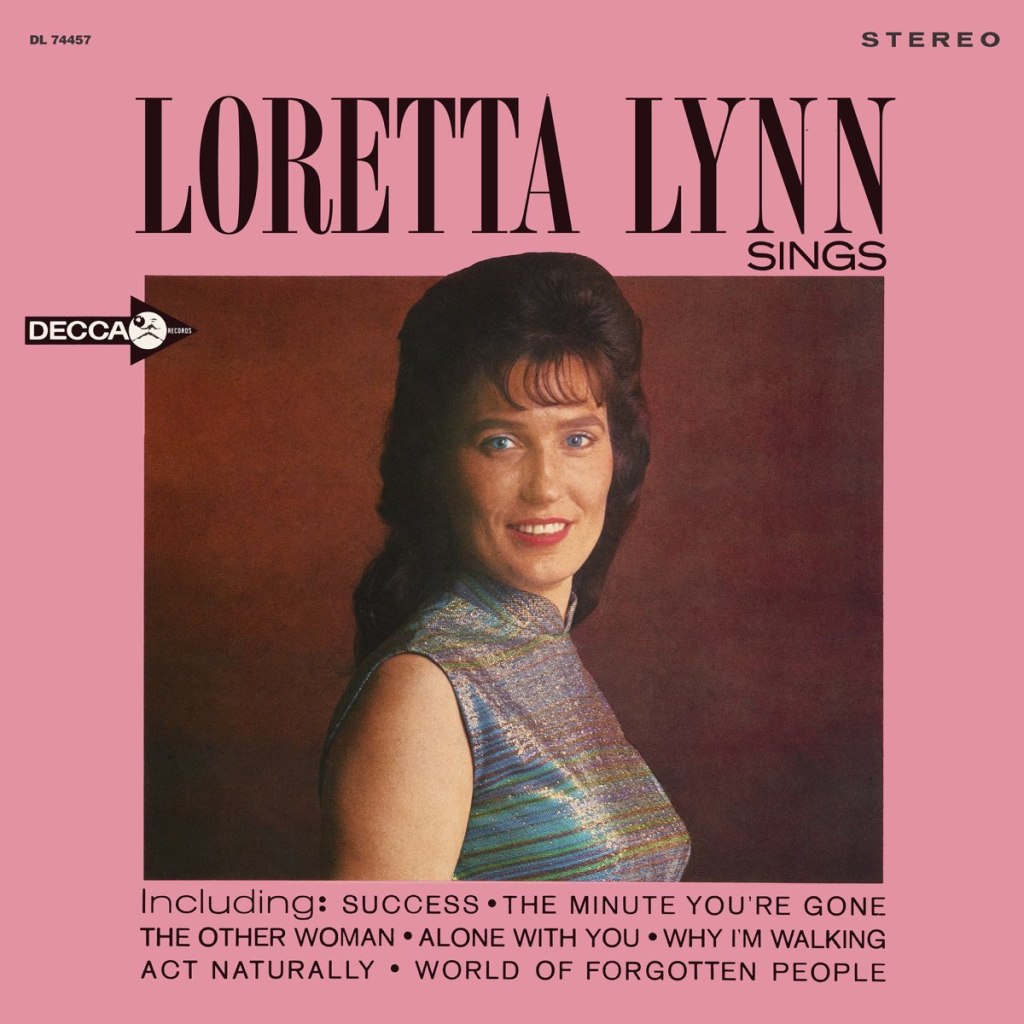
Loretta Lynn released her debut album this month, and to my surprise, it looks like I’ve missed all her single releases so far. Luckily, four of them are included on this album.
Loretta grew up with seven siblings during the Depression in Kentucky and fell in love with country music while listening to the radio at the age of eleven, when she heard Molly O’Day singing. According to The Encyclopedia of Popular Music, she got married at the age of 13 (!) and had four children by the time she was 18. This sounds pretty illegal and fucked up, considering the guy was ten years older than her. Statutory rape is what I would call it. But who knows what kind of laws they had in Kentucky, USA, in the ‘40s and ‘50s. Apparently, she became a grandmother at the age of 29 as well, which again creates a very dubious maths problem.
But enough about Loretta’s underage sex life. After mostly performing in local clubs, Loretta was discovered in 1960 by Don Grashey, who worked for Zero Records, and in March 1960, she released her debut single, «I’m a Honky Tonk Girl». Zero Records didn’t have any money for promotion, so Loretta and her husband took it upon themselves and drove 80,000 miles to promote it all around the USA. It turns out they did a good job, too, as the single sold reasonably well and even peaked at #14 on the Country chart. After releasing two more singles on Zero Records, «Heartaches Meet Mr. Blues» and «The Darkest Day» (all three Zero singles were written by Loretta Lynn), she signed a record contract with Decca Records. She had also started appearing regularly at the Grand Ole Opry and signed a management contract with The Wilburn Brothers.
Her debut album, «Sings», yielded four singles released over three years. «I Walked Away from the Wreck» was released in 1961. It didn’t chart, but it is included on this album. The second single, «Success», is the opening track on her debut album and her biggest hit so far. It was released in 1962 and peaked at #6 on the Country chart. The third single, also released in 1962, was another self-penned track called «World of Forgotten People», which failed to chart but made it onto this album. The fourth was released in March 1963 and bore the title «The Other Woman». This one also failed to chart but did make the final cut for her debut album.
«Sings» is a great country album, and Loretta proves that she’s here to stay with a quality performance. Out of the twelve tracks, three were written by Loretta herself: «The Girl That I Am Now», «A Hundred Proof Heartache», and the single «World of Forgotten People». Other notable tracks on the album are covers, such as «Act Naturally», «Lonesome 7-7203», and «The Minute You’re Gone», previously released by Buck Owens, Hawkshaw Hawkins, and Cliff Richard, respectively. The album received good reviews when it was released, and ended up peaking at #2 on the Country Album chart. A very good debut by this new country star, who seems ready to take over after her friend Patsy Cline passed away.
ETTA JAMES – ROCKS THE HOUSE
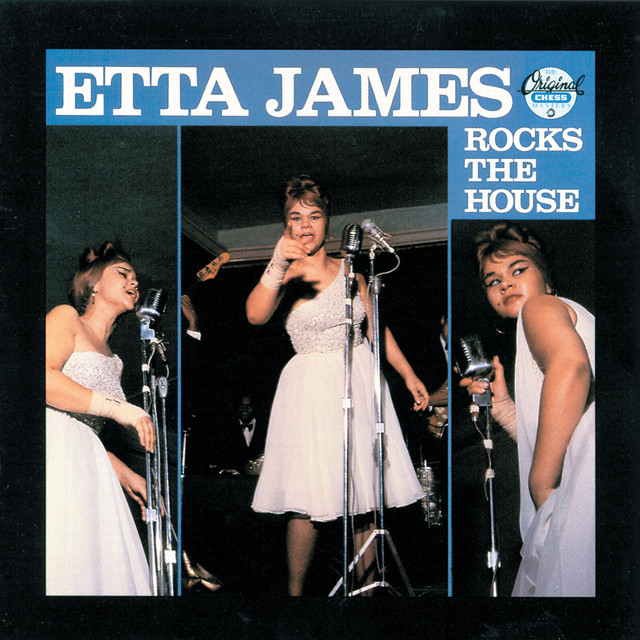
Etta James has spent the year 1963 well, mostly touring and recording, and while she hasn’t released any major studio albums this year, she has remained a strong presence, releasing a compilation called «Etta James Top Ten» and one hit single, Pushover, which peaked at #6 on the R&B chart. It was also a year that marked the beginning of some personal struggles, mainly battles with drug addiction, which would go on to have a big impact on her career in the coming years. But despite the challenges, 1963 was a defining year for James as a live performer, reinforcing her legacy as a dynamic and powerful voice in American music.
«Rocks the House» is Etta James’ first live album, and it sure captures her raw vocal power and electrifying stage presence. Recorded at the New Era Club in Nashville, the album showcases James at her most uninhibited, blending blues, R&B, and soul with great intensity. She is backed by a tight band and delivers stunning performances of songs like the opening track Something’s Got a Hold on Me (co-written by Etta, and a magnificent song) and Ray Charles’ What I’d Say, infusing them with passion and energy that seems hard to match.
She takes the stage on this album with a gritty, gospel-inflected vocal that shines through the entire set, but particularly on Baby, What You Want Me to Do. She seems to be in total control of everything from start to end, and the audience is heard throughout the album as an ecstatic backdrop to a live album that is unpolished, raucous, and generally marvelous. «Rocks the House» might not be the best album of the year, but it’s definitely one of the best live albums.
JUDY COLLINS – JUDY COLLINS #3
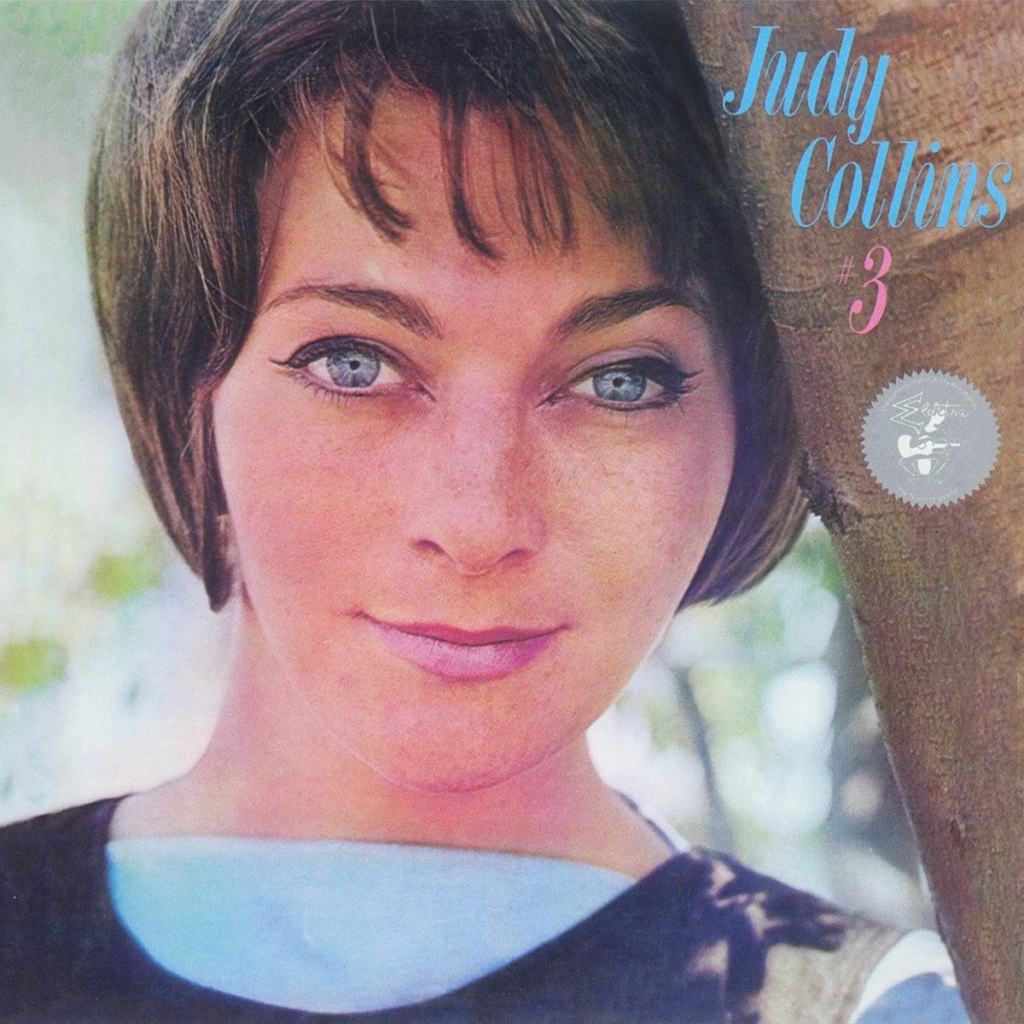
Before Judy Collins developed an interest in folk music, she studied classical piano. At the age of 13, she was playing pieces by Mozart, Chopin, and Debussy, but the allure of folk music and the acoustic guitar soon became too strong to overlook. After playing at smaller venues in Denver, Boulder, and Connecticut, she eventually moved to New York and started playing at clubs in Greenwich Village, the center of the folk revival, in 1960. It didn’t take long before she signed a record contract with Elektra Records, and in 1961 she released her debut album.
As this is her third album, I managed to overlook her second one. «Golden Apples of the Sun» was released in July 1962 and was mostly a collection of traditional songs arranged by Judy herself, and it received fair reviews at release. The Washington Post’s Richard Harrington wrote that the title song, Golden Apples of the Sun, was “brilliant“, and that she was “reinvigorating folk standards”.
«Judy Collins #3» showcases Judy’s crystalline soprano voice and her commitment to traditional, but also contemporary folk music. On this album, she has curated a selection of songs by influential artists like Bob Dylan’s Masters of War and Farewell, Pete Seeger’s Turn! Turn! Turn!, and Woody Guthrie’s Deportee, interpretations that are both heartfelt and powerful. Personally, I think this might be her best effort so far, bringing emotional depth to well-known classics like the ones mentioned, and still including traditional songs like Anathea. It’s also worth mentioning that Jim McGuinn (later known as Roger McGuinn of The Byrds) worked as an arranger and played guitar and banjo on the album.
Judy Collins is absolutely one of the frontrunners of the folk revival at the moment, and «Judy Collins #3» will help Judy solidify her as one of the most influential folk artists of her time.
UNKNOWN RELEASE DATE
The Jazz Crusaders released their fourth album, «Tough Talk», in 1963. It was recorded in Hollywood, Los Angeles, the city the group called home. The Crusaders are known as a hard-bop and soul-jazz group, mixing jazz with the sounds of R&B, blues, and gospel, making them easier on the ear for non-jazz fans, as well as a broader range of jazz enthusiasts. They were also considered a powerhouse on the live scene in Los Angeles, playing clubs and festivals regularly. Their third album was, in fact, a live album recorded at the Lighthouse Café, a nightclub located at Hermosa Beach in Los Angeles County.
«Tough Talk» is absolutely a swinging album, and The Jazz Crusaders are almost making a statement about their availability to fans of all genres. Even my 5-year-old son is loving some of the tracks, like Deacon Brown and Brother Bernard. I wrote about their fifth album in January (my bad), and they’re both awesome in the same way.
DUANE EDDY – DANCE WITH THE GUITAR MAN
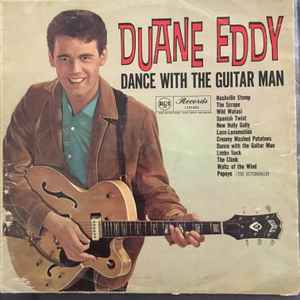
Duane Eddy might not be an artist I’m very enthusiastic about, but he was very popular in the late ‘50s, and he has had some impact on music history with his distinctive reverberating twang made with his guitar. Cause make no mistake, Duane Eddy is a guitar player first and foremost, and just like Dick Dale, he made a name for himself by creating instrumental guitar-based music with flair.
Duane released his album debut in 1958 and became an immediate success. «Have ‘Twangy’ Guitar Will Travel» eventually made it to #5 on the U.S. Billboard 200 chart, as well as #6 on the UK Albums Chart. One of the singles, Rebel Rouser, was also a major factor in Duane’s rise to stardom as it peaked at #6 on the Hot 100 chart and #8 on the R&B chart. He continued with two albums and a hit single, Forty Miles of Bad Road, in 1959, which kept him rolling, both albums reaching the Top 40 on the Albums chart in the US. But already in 1960 his popularity seemed to wane. He did release two albums, one in 1960 and one in 1961, which made it to the Top 40 on the Cashbox chart, and had a hit with the single Because They’re Young, but 1962 and 1963 were pretty unremarkable up until the release of «Dance With the Guitar Man».
Not that «Dance With the Guitar Man» was such a huge hit, but at least it made it to #30 on the Cashbox chart. He released three albums in 1963, and this year he reached a milestone with 12 million sold records which has to be some kind of proof about his stature as an artist. The album is Duane’s addition to the dance craze, and while it isn’t nearly as annoying as many of the other additions to this craze, it’s not a very cool album. He should get credit for writing eight out of the twelve tracks himself, but it’s just too little, too late. With the changes that are subtly happening in the music industry at the moment, with the British Invasion looming on the horizon, Duane’s instrumental music is quickly getting old, and something big has to happen for him and his contemporaries to stay relevant.
MIRIAM MAKEBA – THE WORLD OF MIRIAM MAKEBA
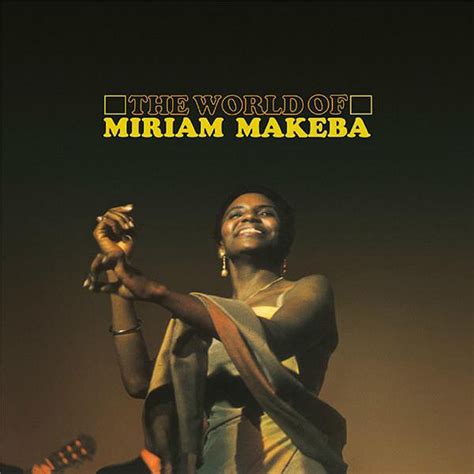
I fell in love with Miriam Makeba the second I put on her debut album for the first time, and her second album, «The Many Voices of Miriam Makeba», proved that she was not just some passing fancy. This year she released her third album, «The World of Miriam Makeba», which is a bit different from the first ones. The album is a bit more pop than the others, which could be because she’s working with the producers Hugo & Luigi for the first time, and because her future husband, Hugh Masekela, conducted the orchestra and arranged the tunes. I’m not a huge fan of her change towards more commercially sustainable music, but it’s not a total change at all.
What opened my eyes to Miriam was the fact that she brought African music, something new and invigorating, to a somewhat monotone Western music scene. Sure, I’m exaggerating a bit, but still, she was a very welcome addition and spruced up the place a bit, so to speak. And as I said, she has by no means left that behind, cause half the album is songs performed in her native tongue, and they are by far the best part of this album. Dubula, Pole Mze, and Kwedini will easily prove that statement.
It’s the other half that unfortunately drags this new album down a bit. When Miriam does songs like Forbidden Games, Little Boy, and Wonders and Things, she doesn’t stand out in any particular way, and those tracks kinda get in the way of what I came to hear. However, the album is her most commercially successful so far, so I guess the Western market (the American market) was more than ready for her to sing in their native tongue. She also performs a couple of songs in Spanish and Portuguese.
Before George Hamilton IV became a country artist, he was considered a teen idol. That was back in the late ‘50s, and he scored some hits like his debut single A Rose and a Baby Ruth and Why Won’t They Understand. To be honest, I can’t really say that his change from whatever a teen idol was to a country artist has made such a big difference to what his music sounds like, but his sound probably works better in the country section.
He’s also had better luck as a country artist, reaching the Top 10 with three singles so far, including the song Abilene which I’ve written about earlier. His latest album is also called «Abilene», and is a pretty good, but mostly unremarkable, country album. It’s more on the happy side for a country album, and that’s kind of refreshing. The album peaked at #17 on the US Country Album chart.
It’s always difficult to write about Frank Sinatra, cause his career so far has been nothing short of amazing. He’s almost consistently been at the top of his game since the ’40s, except for almost fading away in the early ’50s. He has been a champion recording artist, a leading live performer, an Oscar-winning actor, and a record company executive. I mean, is there anything he hasn’t excelled in? There’s so much to write about when it comes to this guy, and now his children are starting to make headlines as well. And even with all this awesome stuff he’s been doing, I just can’t seem to get a good grasp on it. I’m just not a Frank Sinatra fan. I acknowledge everything he has done, and there is no denying that he is a great singer, but the big band, crooning shit is just way too boring for me.
So his latest album, «The Concert Sinatra», does nothing for me. It was supposedly one of the most technically advanced recordings at the time, using new high-fidelity technology and featuring a 73-piece orchestra. All this sounds amazing, but the end product just isn’t what I hoped. And I can’t see Frank Sinatra staying at the top for much longer, considering the shift that’s beginning to take shape in music at the moment. For now, though, he’s still one of the main attractions in Las Vegas; his albums are still selling, and I believe he just sold his record company, Reprise Records, to Warner Bros., while still retaining a 1/3 interest in the label. So, even though I’m not a fan, Frank is doing well for himself.
DINAH WASHINGTON – BACK TO THE BLUES
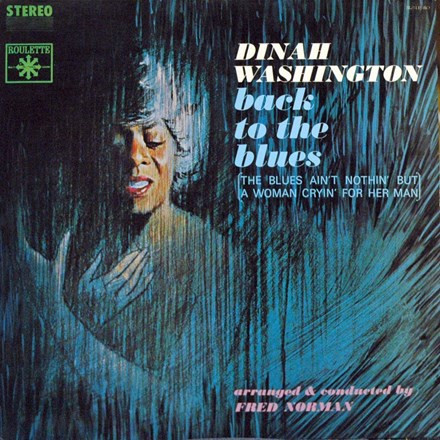
Dinah Washington’s new album, «Back to the Blues», is unfortunately not the biggest happening of her career this year. On December 14, Dinah’s husband woke up to find her unresponsive, and she was pronounced dead at the scene. The autopsy showed that she passed away from a lethal combination of prescription pills for her insomnia and her diet. Dinah Washington was only 39 at the time of her death, leaving this world way too early and marking the end of a great career.
During the ‘50s, Dinah was one of the most popular black female performers, to the point where she actually started calling herself the “Queen of Blues”, even though she was mostly considered to be a jazz vocalist. Dinah started out singing and playing piano in a church choir and eventually moved to playing local clubs in Chicago. It was at one of these clubs where she met a guy called Lionel Hampton, who hired her after hearing her sing, and in the period they worked together in the ‘40s she scored a couple of hits with Evil Gal Blues and Salty Papa Blues. After leaving Hampton, Dinah started singing R&B and continued to score some hits with songs like Blow Top Blues and I Told You Yes I Do, and according to The Encyclopedia of Popular Music, she “blended the sacred music of her childhood with the sometimes earthly salacious secularity of the blues”, a combination that drove her audiences crazy to the point of idolizing her.
Dinah did so well that she started earning the kind of money black artists of her generation rarely saw, and by god did she know how to spend it. She spent her money frivolously on cars, furs, drink, drugs, and men, living her life to the max and enjoying every second of it. But even though Dinah is considered to have been a big recording artist who made tons of money, she didn’t have an abundance of hits to her name. Her biggest hit came in 1959 with the song What A Difference A Day Makes, which only made it to #8 on the US charts, and September in the Rain, which is also considered to be one of her biggest hits, didn’t go higher than #35 in the UK. In the early ’60s, she did have some bigger hits with Brook Benton, with songs like Baby (You’ve Got What It Takes) and A Rockin’ Good Way (To Mess Around and Fall in Love) which went to #5 and #7, respectively, in the US.
So yeah, Dinah Washington might not have a bunch of hit records in her catalogue, but she is remembered for her incredible voice, which is apparent on this album as well, and her ability to make every song she sang, no matter how bad the material was, seem like something great.
A guy called Jimmy McGriff, hailing from Philadelphia and starting his jazz career in the local clubs there, released an album called «One of Mine» sometime during 1963. He plays the organ and can be compared to Jimmy Smith musically, mostly because they play the same instrument, but also for the style of music they play. I’ve seen him described as playing blues-based jazz, but that might be later in his career, cause I think I would describe «One of Mine» as soul-based jazz, which is more reminiscent of Jimmy Smith. The album contains ten energetic tracks that are pretty easy to like, and even though it seems like Jimmy McGriff might not have been the biggest player in jazz, I would recommend this album to almost anyone. As a taste, I would check out the opening track Gospel Time.
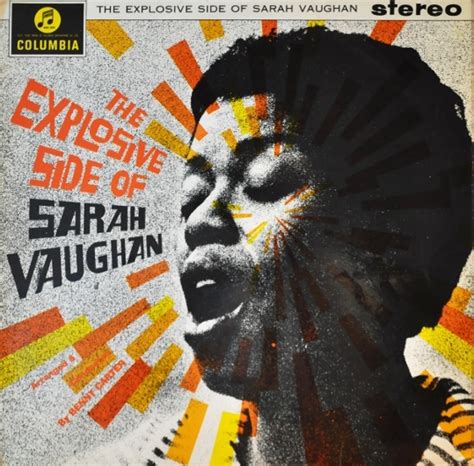
SARAH VAUGHAN – THE EXPLOSIVE SIDE OF SARAH VAUGHAN
“The Divine One” is someone I’ve never heard of. Probably because she was a jazz singer, which isn’t my thing at all, and the fact that her heyday seems to have been in the late ‘40s to the early ‘50s. Her career can be said to have started in 1942 when she entered an amateur night contest at the Apollo Theater in New York and won. She won $10 and a week’s engagement at the Apollo, which at least materialized in her opening for Ella Fitzgerald later that year. After this, she started singing and playing piano for Earl Hines in his big band, which included the likes of Dizzy Gillespie, Billy Eckstine, and Charlie Parker. Sarah joined Eckstine’s band when he decided to leave and start his own big band in 1944, and in 1945 she started her solo career. Her first recordings as a solo artist were done with a couple of Gillespie/Parker combinations, and later that year she signed her first recording contract with Musicraft Records.
It was at Musicraft that her success started, recording songs like Tenderly, It’s Magic, and Nature Boy, which all garnered some chart success in the late ‘40s. Not long after that, she switched to Columbia Records after Musicraft almost went bankrupt and didn’t pay her royalties, and her career went from good to great. The hits kept rolling from 1949 through 1953, and when she signed with Mercury Records, she kept straight on going. In 1954, she scored hits with tracks like Make Yourself Comfortable, How Important Can It Be, and Misty. In the latter part of the ‘50s, she was touring non-stop, appearing at the first-ever Newport Jazz Festival, touring Europe, and of course playing shows all over the US. In 1959, she reached her peak when her recording of Broken Hearted Melody became her first gold record.
It seems like her career has slowed down a bit in the ‘60s, at least when it comes to hit recordings. She signed with Roulette Records in 1960 and scored a hit with the song Serenata that same year, but after that it got a bit quiet. Her latest album, «The Explosive Side of Sarah Vaughan», was never a hit record, and the kind of music she’s recording will probably never be at the top of the charts again, but nevertheless, this is a pretty good collection of songs. Sarah’s voice is nothing short of amazing, and the material has its upside every now and then. I’m a fan of the track I Believe in You, and I can probably play this record at home for some relaxing background music.
LINK WRAY AND HIS RAYMEN – JACK THE RIPPER
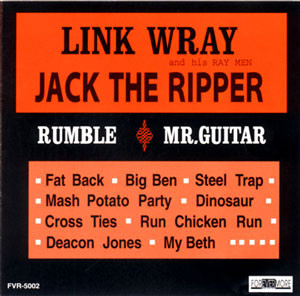
Fred Lincoln Wray Jr., better known as Link Wray, was ranked No. 45 on Rolling Stone magazine’s 2011 list of the 100 greatest guitarists of all time. When the magazine expanded the list to 250 guitarists in 2023, he was ranked No. 98. From what I’ve read, though, it seems that his contribution to music and his skill as a guitarist weren’t fully appreciated until later in his career. And Link Wray wasn’t just a great guitar player who influenced countless musicians with his style and flair; he is also widely credited with pioneering the power chord and was among the first to make extensive use of recorded guitar distortion.
Link began playing music with his brothers as a teenager, but his career was interrupted by military service during the Korean War. While serving, he contracted tuberculosis and eventually had one lung removed. This could certainly have contributed to why Link focused so heavily on instrumental music after returning home. Doctors reportedly told him that he would never sing again, so his brother Vernon took over vocal duties. The first recordings he made were in 1955 as a member of a country group called the Palomino Ranch Hands, although his earlier group had been known as Lucky Wray and the Lazy Pine Wranglers. However, it wasn’t until he began performing with the Ray Men that things really started happening for Link, and in 1958 he released the song Rumble.
This song is what put Link Wray and his Ray Men on the map, because Rumble was something new, innovative, and, I guess, dangerous. While the song might sound harmless, and maybe even a bit dull in 2026, it was regarded as something completely different in the late ’50s. It was actually banned from radio play in several markets because some feared it might incite violence. In New York, Boston, and Detroit, for instance, radio stations refused to play it. How an instrumental track can incite violence is beyond me, but I’ve read that some listeners thought it resembled the fight music in the stage musical «West Side Story», which might have contributed to its reputation. The ban certainly didn’t stop Rumble from becoming a hit, though, and it eventually peaked at No. 16 on the US Billboard Hot 100, becoming Link’s biggest-ever hit. As luck would have it, the song is featured on this album as well, so there’s no need to go digging in the vaults to find this track.
According to David Fricke in his piece over at Rockhall.com: “There was rock & roll guitar before «Rumble» – the fleet, country picking and blues intonation of Scotty Moore at Sun Records for Elvis Presley; the jubilant precedent in Chuck Berry’s chugging twang and spikes of treble; Cliff Gallup’s stabbing poise and slashing precision with Gene Vincent and the Blue Caps. But then there’s everything that happened after «Rumble»…”
This was written when Link Wray was inducted into the Rock & Roll Hall of Fame in 2023, in the Musical Influence category. And since Link Wray was of Shawnee ancestry, he was also inducted into the Native American Music Awards Hall of Fame in 2007. So yeah, I guess it’s plain to see that Link has definitely left his mark on the evolution of music.
With all that being said and done, we’re now in 1963, and Link’s latest release is called «Jack the Ripper». Since Rumble, Link Wray has only had one more song reach the US charts, and that was all the way back in 1959, when Raw-Hide peaked at No. 23. I’ve missed everything he’s released in the ’60s so far, which means I’ve got a lot of catching up to do, but if any of it is even close to being as good as the material on «Jack the Ripper», it’s well worth the effort.
This is probably one of the first instrumental albums that I genuinely love. There’s so much to put my finger on here, but the fact that many of the songs sound like they’re miles ahead of the rest when it comes to the sound of rock & roll (mainly thanks to the distortion) makes this album a must-listen for anyone interested in the genre.
It doesn’t look like the album made much of a commercial impact at the time of its release, but that doesn’t really matter. Check out tracks like Fat Back, Run Chicken Run, Steel Trap, and, of course, Rumble.
Peter La Farge released both his third and his fourth album in 1963, but I’ll only cover what I believe to be his fourth. «Peter La Farge Sings of the Cowboys: Cowboy, Ranch and Rodeo Songs, and Cattle Calls» is not what I would call a catchy title for this album, but it sure is descriptive. Before La Farge got into music, he spent three years in the Navy from 1950 to 1953, where he was awarded several medals for his efforts in the Korean War. After the war, he became a boxer and eventually started competing as a rodeo cowboy, something he had done as a young man as well.
It wasn’t until he moved to New York that he got into music. Here he became well known as a folk musician in Greenwich Village, and soon he signed a recording contract with Folkway Records. He released his first two records in 1962, and his debut album included the song Ballad of Ira Hayes, which would become his best-known song. The song is based on a true story about a Native American who became a hero at Iwo Jima, but his personal life in the real world was nothing but prejudice and despair. As a descendant of Native Americans, this became a recurring theme in La Farge’s songwriting.
This album is not necessarily about Native Americans, but rather about their counterpart, but it’s still an interesting listen. I’m not blown away by it, but it has its moments. Check out Chisholm Trail and Cowboy’s Dream to get a feel for the album.
I was made aware of Judy Henske when I watched and wrote about the movie «Hootenanny Hoot» earlier in 1963. She performed a couple of songs in that movie, and I believe it was her voice that first and foremost attracted me to her. Mainly, the raspy, low sound of Judy Henske.
It looks like «Judy Henske» is her debut solo album, and it definitely is a live album. While Judy is mostly described as a folk musician, she dabbles with some other genres as well on here, and while I’m absolutely partial to her folk material, she proves that she isn’t some one-trick pony. She’s also kinda funny in between songs, which all in all makes this album worth checking out. I’d recommend starting with songs like Wade in the Water and I Know You Rider to get the folk version of Judy Henske.
THE SINGLES
The Beach Boys delivered their first-ever Christmas song this month in the form of Little Saint Nick. The song does sound a bit familiar at first, and after reading a bit about the track, I found out that the band has borrowed a bit from its own Little Deuce Coupe. According to Wikipedia, some of the rhythm and structure are derived from «Little Deuce Coupe», and while I would call that a bit lazy, I’m gonna let it slide. Little Saint Nick is written by Brian Wilson and Mike Love, but Mike wasn’t credited until he won a lawsuit in the 1990’s.
Little Saint Nick made it to #3 on the Billboard Christmas Singles chart, which I guess is pretty good for a Christmas song, and in my personal opinion it’s a good track for any Christmas playlist as it brings some California vibes into the Christmas spirit. The B-side is an a capella version of a song called The Lord’s Prayer. I will give them credit for their harmonies on that one, but that’s as far as I’m gonna go.
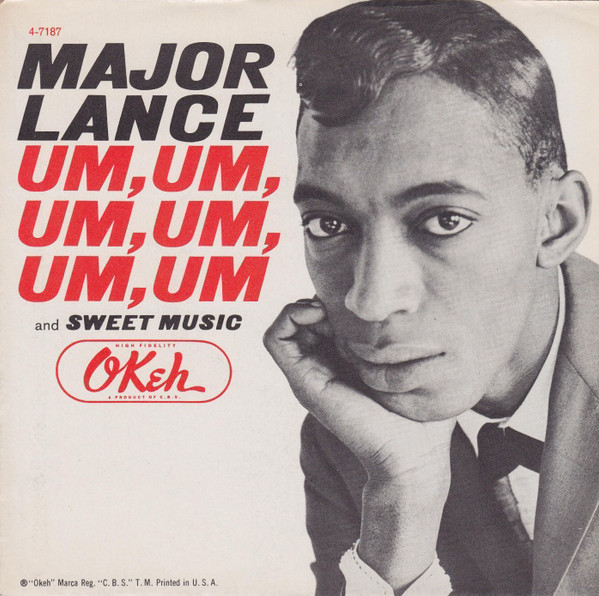
After releasing two almost identical singles, Major Lance is back with something that sounds a bit different. Um, Um, Um, Um, Um, Um will end up as Major Lance’s biggest hit, peaking at #5 on the Hot 100 chart, and it was also his only release that made an appearance on the UK chart, where it stopped at #40. This song, just like his last two releases, was written by Curtis Mayfield, who, as part of a writing team with Carl Davis and Johnny Pate, seems to have been Major Lance’s most prolific contributor. Um, Um, Um, Um, Um, Um is a pretty catchy tune which is described as Northern Soul, but compared to «Monkey Time» it’s lacking a bit.
The single’s B-side is called «Sweet Music» and was co-written by Major Lance himself, or by Curtis Mayfield and his team. It depends on where you get your information, it seems like, so I’m not gonna claim that I have the correct answer to that one. Sweet Music, while not a success on the charts, does help this single become more interesting.
Bill Anderson, probably one of my least favorite artists to surface while writing this project, released a song that I actually don’t hate this month. There is one major reason that Easy Come, Easy Go doesn’t get the same hate from me as songs like Still and 8×10, and that is because there’s none of that awful dialogue that Bill seems to have made his thing. That’s all. As long as Bill shuts up and sings, he kinda sounds like a normal country artist. Easy Come, Easy Go peaked at #14 on the Country chart and is an ok tune. Bill is still not even close to being on my good side, but at least he didn’t dig his grave any deeper with his latest release.
The B-side, Five Little Fingers, is a song I’ve skipped almost every time it started playing. I don’t think I need to explain why, but it has the same awful trait as the two other songs I mentioned earlier.
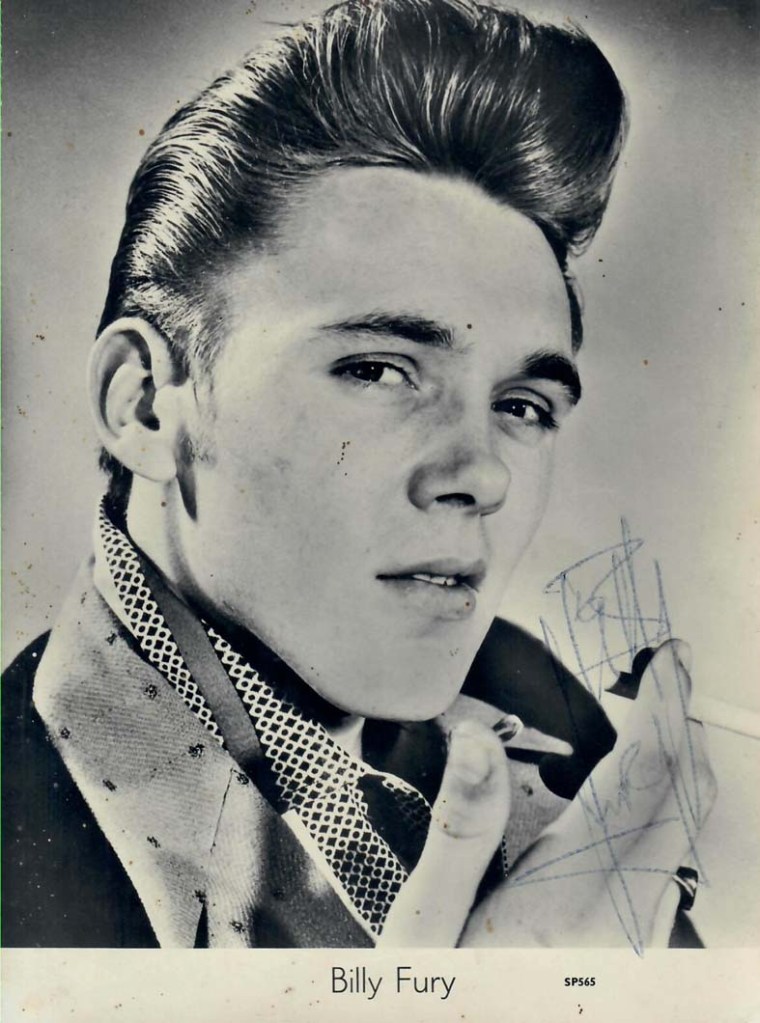
I’m pretty sure that I’ve completely overlooked Billy Fury up until now, and considering his most successful years (at least in the charts) were from 1961 to 1963, one could say that I messed up a bit. Fury, whose birth name was Richard Wycherley, scored his first Top 10 hit in the UK in 1960 with the self-penned Colette when the song went to #9. In 1961, he released his highest-charting song, a version of Jealousy originally written by Danish composer Jacob Gade in 1925. Billy’s version made it all the way to #2 in the UK, and #1 in Ireland. He kept releasing tunes like Last Night Was Made For Love, Like I’ve Never Been Gone, and When Will You Say I Love You, all of them reaching the Top 10 in the UK.
But while Billy Fury has had success with a style of music that resembles Elvis Presley’s ballads up until now, this month’s release is something a little bit different, and in my opinion a little bit better. Do You Really Love Me Too (Fool’s Errand) was originally released earlier this year by Barbara Chandler as a pure girlie pop tune; then Billy Fury decided to give it a little bit of that rock and roll vibe a couple of months later.
Compared to Billy’s hit songs up until now, it would seem that Billy wants to follow the trend that’s coming out of his native Liverpool at the moment, and even though he’s still lacking some ways, in the sense that he doesn’t rock as much, it’s definitely the best Fury song I’ve heard so far. It peaked at #13 in the UK, which would make it his second least popular single release of 1963.
The single is backed by What Am I Gonna Do, originally written and released by Neil Sedaka, and while I haven’t checked out Sedaka’s version, I’m pretty sure Fury’s is the better one.
A British instrumental band called The Outlaws started out as a backing band for Mike Berry before evolving into one of Joe Meek’s house bands at his studio in London. They eventually began recording under their own name in 1961, although they never achieved much commercial success. Their single released this month is called Law and Order, and while it’s actually a pretty cool tune, I guess the most interesting thing about it is that Ritchie Blackmore, the future founder and guitarist of Deep Purple, was part of the group at this point.
The B-side is a pretty tame version of Camptown Races, renamed Doo-Da-Day for the occasion.
The Shangri-Las made their recording debut this month with a single called Simon Says. The group was formed earlier this year when two pairs of sisters, Mary and Elizabeth (Betty) Weiss, and Marguerite (Marge) and Mary Ann Ganser, began performing at school shows and talent shows. They soon came to the attention of producer Artie Ripp, who arranged their first recording deal through Kama Sutra Productions. Their debut single was subsequently released on Smash Records.
There is some disagreement over the release date. Wikipedia lists it as an early 1964 release, while Discogs dates it to December 1963. At the time, the girls were still teenagers, with Mary being the youngest at 15 and Betty the oldest at 17. However, you would never guess that from listening to this single. They sing and perform with the confidence and conviction of women who have been in the music industry for years.
Simon Says doesn’t appear to have made any of the major US charts, but in my opinion, there’s no reason it shouldn’t have. It’s a great tune, and the backing band (whoever they were) does a fantastic job and deserves at least 50% of the credit for making this song so awesome. The single’s B-side, Simon Speaks, is at least just as good. A great debut from the Shangri-Las!
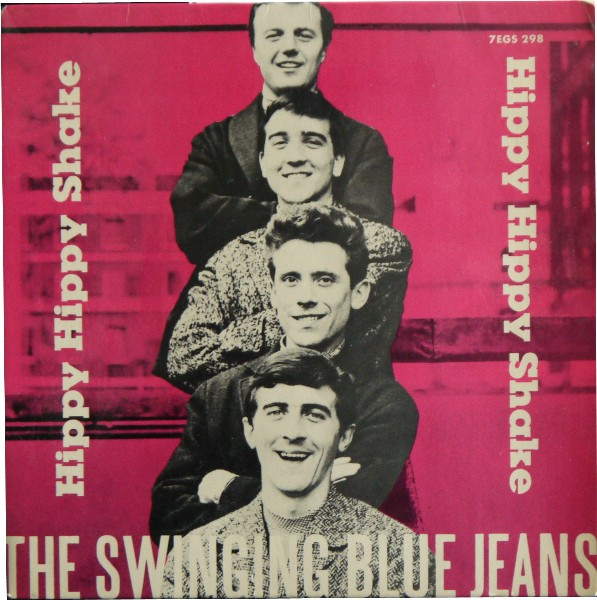
The Swinging Blue Jeans score their first major hit with the song Hippy Hippy Shake this month. The song was originally written and recorded by Chan Romero in 1959, when he was just 17 years old. It reached #3 in Australia that same year. The Beatles also recorded several versions of the song for BBC radio in 1963, although the version recorded on 10 July wasn’t released until 1994, when it appeared on the album «Live at the BBC».
Paul McCartney mentioned in «Anthology» that the song had been one of the Beatles’ regular numbers in their early days. He also recalled that other groups picked up songs from their repertoire, specifically mentioning the Swinging Blue Jeans and Hippy Hippy Shake, which he described as one of his own big numbers.
The Swinging Blue Jeans formed in Liverpool in 1961 under the name The Bluegenes. Much like the Beatles, they started out as a skiffle group before moving towards rock ‘n’ roll. They do a great job with the song. It has a wonderfully gritty feel to it, and the vocals are excellent, giving the recording a really cool sound. The band won’t enjoy sustained chart success for many more years, although they’ll have a couple more UK hits. Still, they’ve certainly got one great song to show for their efforts!
Their version of the song reached #2 in both the UK and Canada, as well as peaking at #24 on the Hot 100. It was released with another good number, Now I Must Go, on the B-side.
I’ve already written about Judy Henske this month as I needed to place her debut album somewhere. But she actually did release a single this month, so she’ll get double exposure this December.
And that’s well deserved also with this great single, something that has to be a couple of the best folk recordings in 1963. The A-side, Charlotte Town, is written by Judy Henske and is a somewhat up-tempo folk tune that is, after a while, impossible not to sing along to. But the B-side, High Flying Bird, is the highlight on this single. The song is written by a guy called Billy Edd Wheeler, but Judy gets the honor of recording it first. And this one is a gem. From what I understand, it will become quite influential for the folk rock genre, and that’s understandable, to say the least.
UNKNOWN RELEASE DATE
The comedian Allan Sherman attempts to make comedy of the Christmas song The Twelve Days of Christmas, but his version, The Twelve Gifts of Christmas, isn’t funny or good. I guess this kind of comedy was awesome back in the ‘60s; however, in 2025 it doesn’t really cut it. It peaked at #5 on the Christmas chart and was paired with a number called (You Came a Long Way From St. Louis) You Went the Wrong Way, Old King Louie.
The Angelic Brothers supposedly came into the studio, recorded these two songs for a single, and then disappeared. At least according to Discogs. The duo from Jamaica recorded Ten Virgins and My Sunshine at the session, and in my opinion, they are two good tunes that are worth checking out.
The Swedish group Trio me’ Bumba isn’t exactly what I would call exciting, but they did get their breakthrough in Sweden with this single, Spel-Olles gånglåt, in 1963. They also toured with The Beatles when they visited Sweden earlier this year, and I guess that has to be the highlight of their early career (if they ever actually managed to top it, is at this point unknown to me). Spel -Olles gånglåt spent 30 weeks at Svensktoppen (the Swedish chart), and it was paired with an instrumental tune called Sommar i Palma.
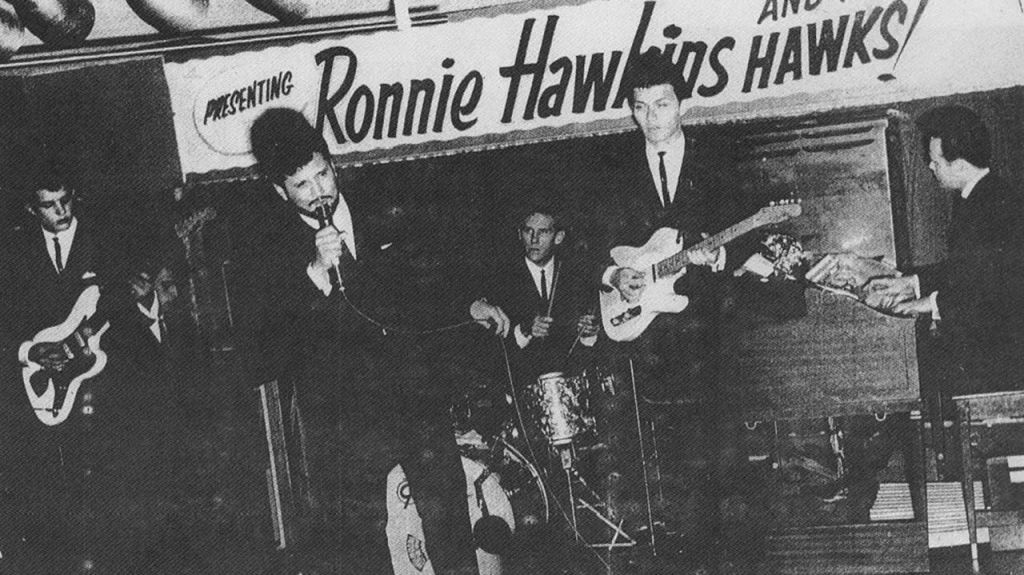
Ronnie Hawkins released what appears to be the final single credited to him and The Hawks (Levon Helm, Robbie Robertson, Rick Danko, Richard Manuel and Garth Hudson) in 1963. According to www.theband.hiof.no, the backing band (which would soon become better known as The Band) was growing increasingly frustrated with Ronnie’s overbearing personality and ego, and the relationship was deteriorating. The Hawks eventually parted company with him in the summer of 1963. It seems the split also marked a quieter period in Ronnie’s recording career, although he continued recording with other musicians in the years that followed.
High Blood Pressure is the A-side of this momentous single. It’s a cover of a 1958 recording by Huey “Piano” Smith & the Clowns, and a fairly straightforward rock’n’roll number. Garth Hudson gets to show off his organ-playing skills here, which is definitely one of the highlights for me.
The B-side is called There’s a Screw Loose. Co-written by Ronnie Hawkins, Henry Glover and Levy, it’s a rock’n’roll tune with some serious novelty vibes to it, which in turn makes it less interesting to me. Still, it’s an amusing little number and an interesting final chapter in the recording history of Ronnie Hawkins and this particular Hawks lineup.
The Big 3 released their self-titled debut album earlier this year, and their second single, Come Away Melinda, was probably released later. The folk trio from New York features Cass Elliot as the female voice, and while they never actually amounted to much while active, I have become a fan now, over 60 years later. The debut album was a great piece of folk music, and they continue in that vein with their latest single.
Come Away Melinda is a ballad about life after war, if I’ve understood the lyrics correctly, and I would say that this track is just as good as the best on their debut album. I guess it’s just fitting that the best song, and opening track, from their debut album, Rider, is the B-side here.
Herb Alpert formed the band Baja Marimba Band after the success of his own band Herb Alpert & the Tijuana Brass. Herb is not playing in Baja Marimba Band, but they are signed to his A&M Records, of course. This new band plays music in the same vein as the Tijuana Brass, but it’s not quite the same as well. It’s slower, more relaxed, but focused on what I guess we could call Latin sounds. They released their debut single in 1963, and Comin’ in the Back Door charted at #41 on the Hot 100 chart. The single was paired with a tune called December’s Child.
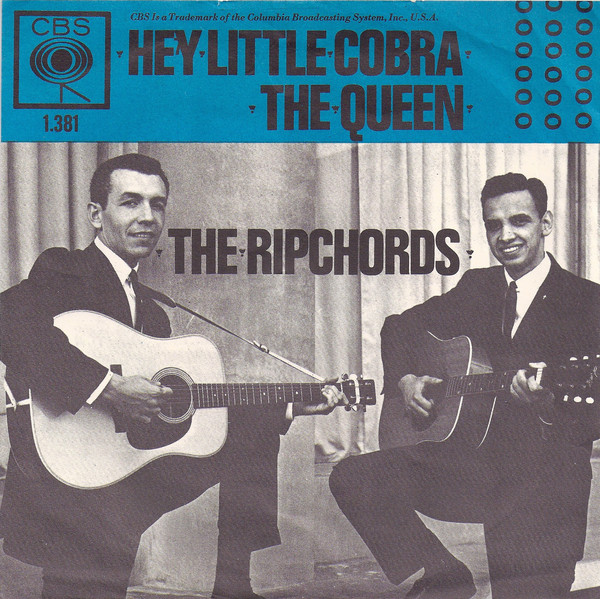
The Rip Chords were a vocal group similar to the Beach Boys, singing songs that would be associated with the hot-rod and surf genre. The Rip Chords consisted mainly of just two guys, Ernie Bringas and Phil Stewart, who didn’t play any instruments themselves. After first signing for Doris Day and her husband’s label, Arwin Records/Daywin Music, the band got signed to Columbia Records by Doris Day’s son Terry Melcher as one of Columbia’s first-ever rock acts. The Rip Chords released their first single, Here I Stand, in early 1963 and took it to #51 on the Hot 100 chart backed by musicians from the Wrecking Crew. After the first single, Melcher brought in future Beach Boy Bruce Johnston to help with backing/layered vocals. Their second single, Gone, did not fare as well, but their third single (which is the one I’m writing about this month), Hey Little Cobra, was a hit. It peaked at #4 on the Hot 100 chart. However, the band never managed to recreate that success and disbanded in 1965.
The single was paired with a song called The Queen, which is more of a ballad of sorts. Both songs are pretty good and worth a listen if you are somewhat into the kind of music the Beach Boys have to offer.
Another surf-themed band from 1963 was the obscure girl group The Surf Bunnies. They were high school friends from El Monte, California, and didn’t achieve much fame other than locally. The one single I found from them is called Surf City High and was released sometime in 1963. It’s a bit more rocking than both the Rip Chords and the Beach Boys and should be considered a fun listen. The single was paired with a song called Met the Boy I Adore, a ballad that isn’t as fun.
Doug Sahm released more music in 1963, and since I discovered that pretty late, I’ve decided to cram it in at the end of the year. This one is called Lucky Me, and it seems like this might be the last single he released at Renner Records before being dropped by them. “Lucky Me ” is another pretty great song from Doug, in my opinion, but I don’t think it amounted to anything more than some local recognition. His musical talent can’t have been the reason he was dropped by Renner Records, but I guess the lack of success made them give him up. The B-side on this one is another good song; both of them are pretty slow, by the way, and are called A Year Ago Today.
Michael Nesmith released his first single in 1963 under the name Mike Nesmith after getting a publishing deal from Randy Sparks of the New Christy Minstrels. Before this, he was a so-called “Hootmaster” at a hootenanny at The Troubadour in Hollywood. The debut single is called Wanderin’ and it is a nice folk tune very different from what he’ll perform with The Monkees some years from now. It was paired with Well, Well, Well, which is alright, I guess.
THE CHARTS
Billboard Top 10 Singles Chart
Week 1 (December 7. 1963)
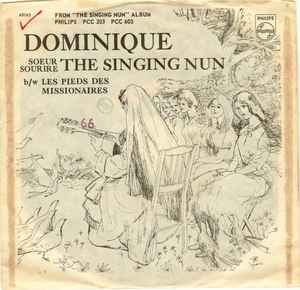
- Dominique – The Singing Nun
- I’m Leaving It Up To You – Dale & Grace
- Everybody – Tommy Roe
Week 2 (December 14, 1963)
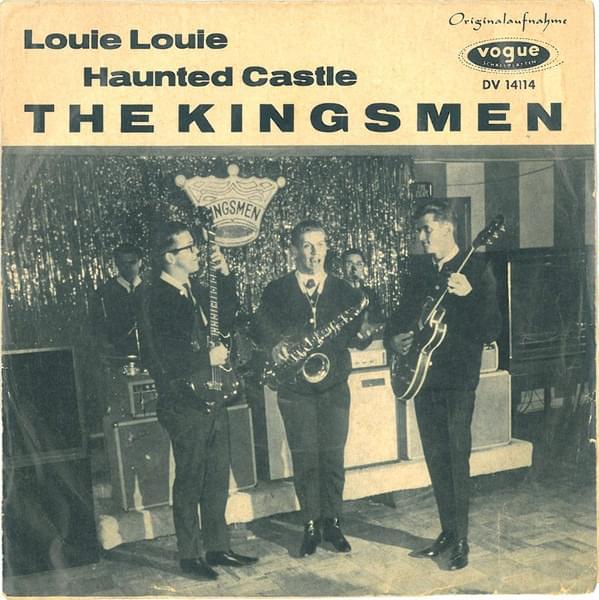
- Dominique – The Singing Nun
- Louie Louie – The Kingsmen
- Everybody – Tommy Roe
Week 3 (December 21, 1963)
- Dominique – The Singing Nun
- Louie Louie – The Kingsmen
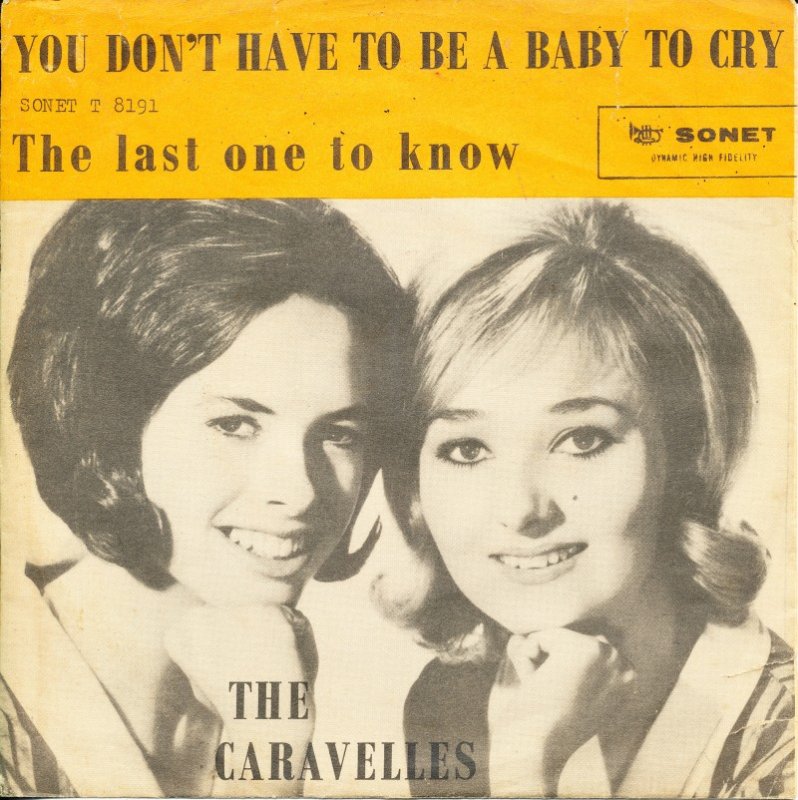
- You Don’t Have To Be A Baby To Cry – The Caravelles
Week 4 (December 28, 1963)
- Dominique – The Singing Nun
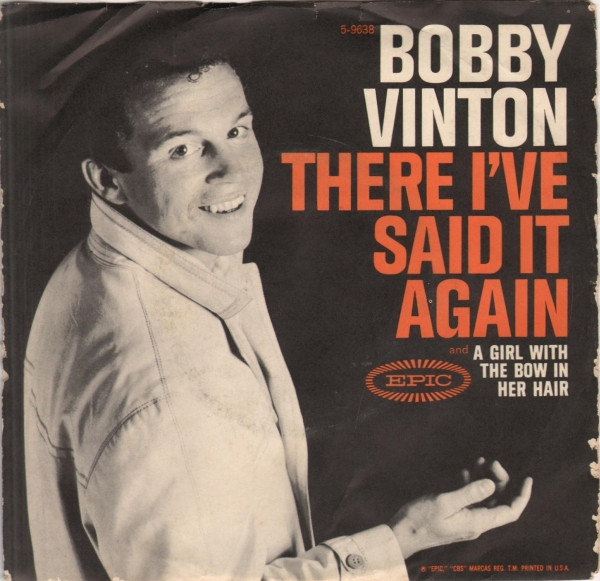
- There! I’ve Said It Again – Bobby Vinton
- Louie Louie – The Kingsmen
The Caravelles score the first British Top 40 hit in the US in 1964 with their version of You Don’t Have to Be a Baby to Cry. The duo will never manage to replicate the success of this single and will eventually fade into obscurity. The song peaked at #3 in the US and #6 in the UK.
Since I Fell For You is Lenny Welch’s biggest hit and made it to #4 on the Hot 100. He signed with Cadence Records in 1960 but had to wait three years for his first taste of success. The song was originally written in 1947 as a blues ballad by Buddy Johnson, then popularized by his sister, Ella Johnson, as a big band tune. Lenny Welch’s version is a pop version, I guess, and I kinda like it.
Bobby Vinton is back in the Top 10 with a tune called There! I’ve Said It Again, and Johnny Tillotson takes his last trip to the Top Ten with the song Talk Back Trembling Lips.
COUNTRY CHART
Jimmy “C” Newman had his most successful spell in the ‘50s, visiting the Top 10 no less than eight times, with his highest charting single, A Fallen Star, peaking at #2 in 1957. While the ‘60s saw him enter the Top 10 at a less frequent rate, he still charted with almost every single he released, so I guess it’s not a valid point that he wasn’t successful in this decade. Anyway, this month his single D.J. for a Day entered the chart and would eventually peak at #9, making it his tenth song in the Top 10 on the Country chart.
The other artist starting his climb to the Top 10 this month is Dave Dudley with his song Last Day in the Mines. This will be his third consecutive single in the Top 10, which makes 1963 a very good year for Dave.
R&B CHART
Billboard Magazine stopped publishing the R&B chart in 1963 and it was down at least through 1964. I might add Top 10 additions from another R&B chart in 1964.
Petter Milde
This Band Could Be Your Life

